

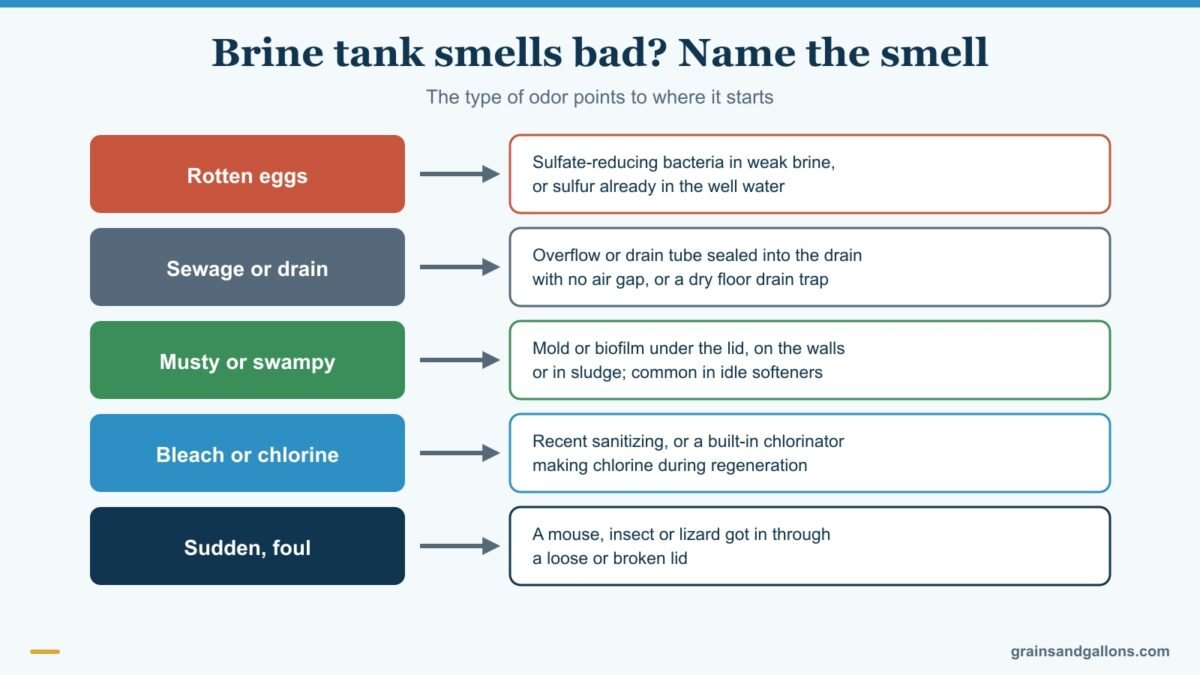
Quick Answer: When a brine tank smells bad, it's usually bacteria growing in weak brine (a rotten-egg smell) or sewer gas coming back up an overflow or drain tube with no air gap. Keep undissolved salt above the water so the brine stays saturated, clean out the sludge, and sanitize the softener with the bleach dose your manual specifies. If it smells like sewage, pull the tubes out of the drain and give each one an air gap.
A brine tank should smell like nothing much, maybe faintly of salt. If your brine tank smells bad when you lift the lid, the type of smell is the quickest clue to the source.
In this guide
Rotten eggs: sulfur bacteria or sulfur water

That's hydrogen sulfide, and it has two common routes.
Sulfate-reducing bacteria are living in the tank. They thrive in still, dark, low-oxygen water and give off hydrogen sulfide. Penn State Extension notes that in rare cases a water softener can create the conditions these bacteria need (Penn State on hydrogen sulfide). Fully saturated brine is hostile to most microbes, but when salt runs low or bridges, the water at the bottom becomes barely salty, and that's where growth starts.
Your well water already has sulfur. Brine refill water comes straight from your supply, untreated. Smell a cold tap that bypasses the softener, such as an outdoor spigot. If it smells too, the problem starts upstream, and cleaning the tank won't fix it for long. If the smell is only in hot water, the water heater's anode is a more likely culprit; see rotten egg smell only in hot water.
Sulfur and iron bacteria often travel together in wells; the Minnesota Department of Health's page on iron bacteria explains how they cause odors and slime, and our guide to iron bacteria in well water covers shock chlorination.
Sewage smell means the drain is breathing back
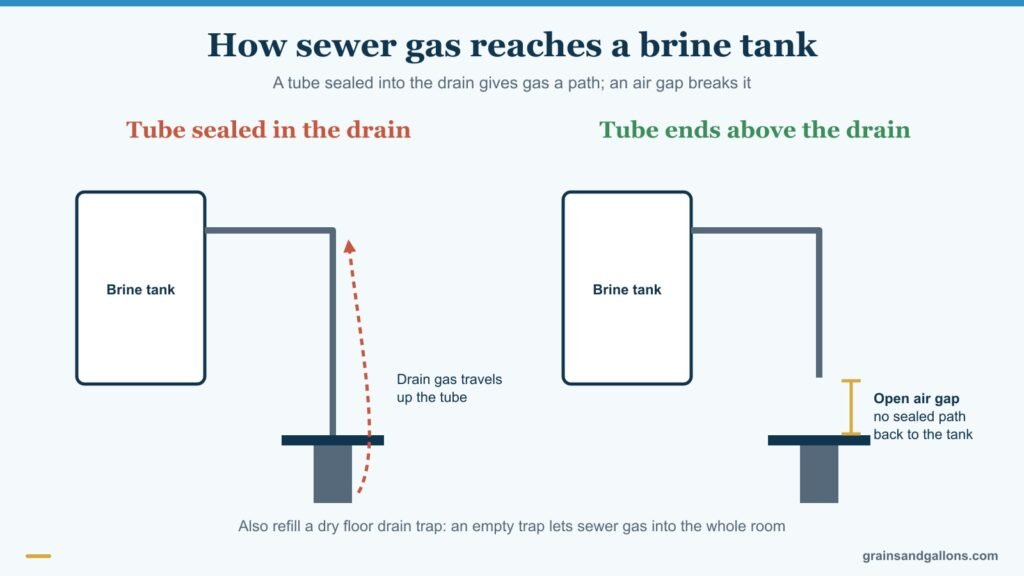
A brine tank shouldn't smell like a sewer. When it does, drain gas is usually getting into the tank.
The overflow line is a gravity line that should end above the drain through an air gap. If the tube is pushed into a floor drain or trap, or connected to drain piping with a fitting, sewer gas can travel up it. The same goes for the valve's drain line.
- Pull both tubes out of the drain. Each should end above the drain rim or into a proper air gap fitting; see our air gap fitting picks and brine tank overflow line requirements.
- Check the floor drain trap. A dry trap lets sewer gas into the whole room. Pour a bucket of water down it.
- Then clean and sanitize the tank to clear what's already in there.
Musty, bleach or dead-animal smells
A musty, earthy smell usually means mold or biofilm under the lid, on the walls above the waterline, or in sludge at the bottom. It's common in warm garages and in homes left empty for weeks, where the brine sits unused. Clean the tank, scrub under the lid and inside the brine well (the tube that holds the float), and sanitize.
A bleach smell right after sanitizing fades after a regeneration or two. Some softeners also have a built-in chlorinator that makes chlorine from brine during regeneration; a faint smell then is normal, a strong one isn't.
A sudden, truly foul smell often means a mouse, insect or lizard got in. Check the salt surface and down the brine well, remove it with gloves, clean, sanitize, and replace a broken brine tank lid.
Clean and sanitize when a brine tank smells bad

- Bypass the softener and run a manual regeneration to use up the brine, or scoop the water out.
- Remove the old salt and sludge. Scrub the walls, salt grid and lid with dish soap and water, then rinse. Our guide to cleaning a brine tank walks through it.
- Sanitize the system, not just the tank, because bacteria also sit in the resin and valve. Most manufacturers specify plain, unscented household bleach poured into the brine well before a manual regeneration. Use the dose in your manual, not a guess; some brands specify a different sanitizer. See how to sanitize a water softener.
- Refill with clean salt and return the softener to service.
Wear gloves and eye protection, ventilate the room, and never mix bleach with resin cleaners, iron removers, vinegar or ammonia. If you smell sewer gas through the house and can't find the source, call a plumber.
Keep the brine salty and the smell gone
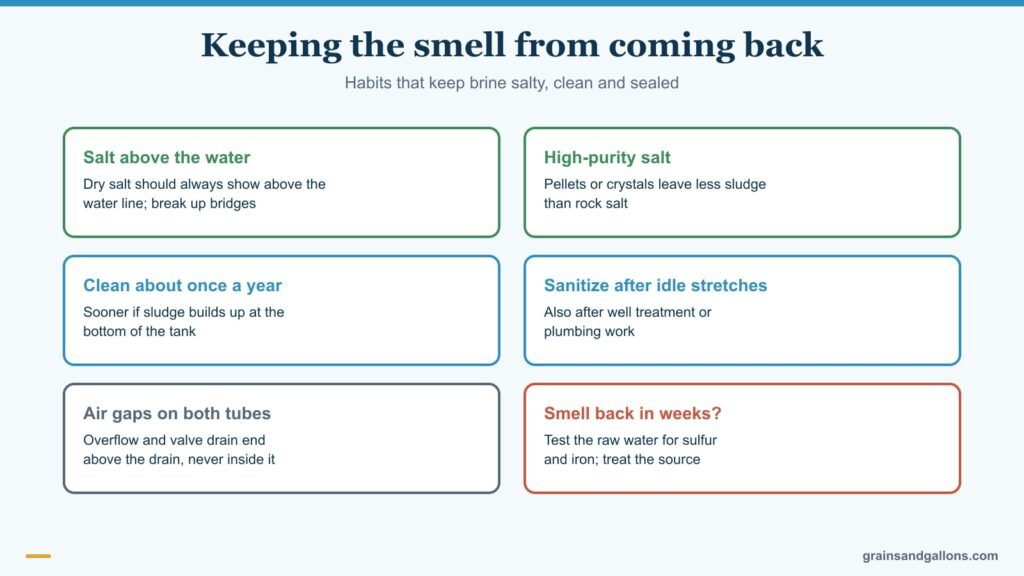
- Keep salt in the water. You should always see dry salt above the water line. Most smells start in weak brine.
- Use clean salt. High-purity pellets or crystals leave less sludge for bacteria to feed in; rock salt leaves a lot. See our picks for the best water softener salt.
- Clean the tank about once a year, more often if you see sludge.
- Sanitize after idle stretches, a well treatment or plumbing work.
- Fix the source water if the smell comes back within weeks; test for sulfur and iron.
FAQ
Why does my brine tank smell like rotten eggs?
Usually sulfate-reducing bacteria growing in weak, still brine, or sulfur already present in your well water. Check an untreated tap first. If it smells too, treat the well; if not, clean and sanitize the tank and keep salt above the water.
Can bacteria grow in a water softener brine tank?
Yes. Saturated brine discourages most microbes, but when salt runs low or bridges, the water underneath turns weak enough for bacteria and biofilm to grow, especially in warm rooms and idle systems.
Can I put bleach in my brine tank?
Many manufacturers specify a small amount of plain, unscented household bleach in the brine well before a regeneration to sanitize the system. Follow your manual's dose and product; some brands specify a different sanitizer.
Is a smelly brine tank dangerous?
Usually not. Penn State Extension says sulfur-reducing bacteria cause taste and odor problems rather than health concerns. Sewer gas is different: if you smell it in living areas, fix the drain connection or call a plumber.
Keep salt above the water and the smell stays away
When a brine tank smells bad, the nose tells you where to look: rotten eggs points to bacteria or sulfur water, sewage points to a missing air gap, musty points to biofilm. Fix that source, clean and sanitize once, then keep the brine saturated with clean salt.
More brine tank help: How to clean a water softener brine tank · How to sanitize a water softener · Brine tank overflow line requirements