

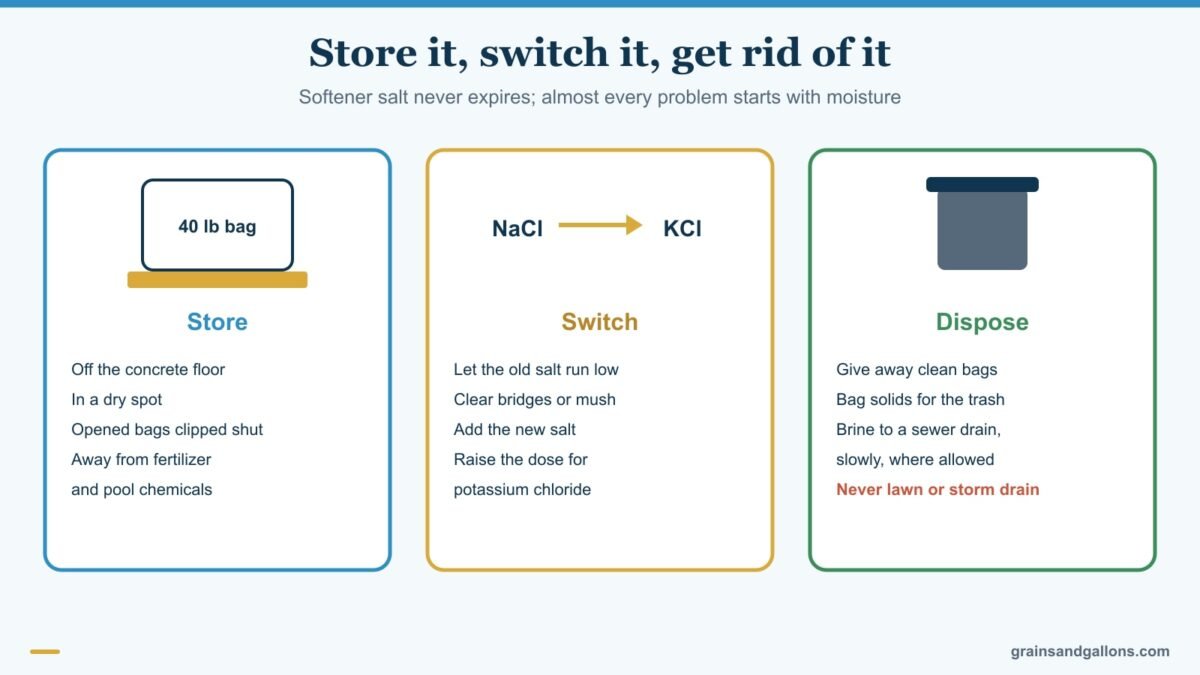
Quick Answer: Disposing of softener salt is simple: give away clean bags, put scooped-out solids in the household trash, and send leftover brine slowly down a household drain on city sewer where local rules allow. Never dump it on the lawn, near a well or into a storm drain. To store salt, keep bags sealed, off the concrete and away from humidity; it doesn't expire, it just cakes when damp. To switch types, run the old salt low, add the new one, and raise the salt setting if you're moving to potassium chloride.
That forty-pound bag you bought in spring and forgot about on the garage floor? It's probably a pillow-shaped brick now. Softener salt is easy once you know two things: it never "goes bad," and nearly every problem with it comes from water getting where it shouldn't. This guide covers keeping salt usable, switching to a different salt, and disposing of softener salt you don't want.
In this guide
Store softener salt so it stays pourable

Sodium chloride and potassium chloride don't spoil, lose strength or have a real shelf life. They absorb moisture from the air, dissolve slightly on the surface, then dry and fuse. Pellets cement together, crystals turn into a block, and fine, dusty salt is the worst of all.
Where to keep it:
- Off the floor. Concrete wicks moisture into the bottom of the bag. A plastic pallet, a shelf or a couple of two-by-fours fixes most caking.
- Somewhere dry. A basement next to a dehumidifier beats a damp crawl space. A garage is fine in dry climates, less so where summers are humid.
- Bag closed. Fold and clip a partly used bag, or pour the rest into a lidded bucket or bin.
- Away from fertilizer, pool chemicals and fuel. Salt bags aren't airtight, and you don't want anything drifting into salt that ends up in your water.
How much to keep on hand. There's no benefit to stockpiling a year's worth unless you get a bulk discount and have dry space. A typical household uses a bag every month or two; a big family with very hard water can use much more (see how much salt a water softener uses). Two to four spare bags covers most homes through a snowstorm or a sold-out store.
A bag that's already caked. Drop it on its edge a few times or tap it with a rubber mallet. Most bricks break back into pourable pieces. Smash fist-size chunks smaller before adding them, since big chunks can wedge in the tank and start a salt bridge.
Switch salt types without letting hard water through

People switch from crystals to pellets (or back), to a rust-fighting formula, or from sodium chloride to potassium chloride for less sodium in the water. If you're still comparing, start with our best water softener salt breakdown.
- Use up most of what's in there. Let the salt drop to a few inches above the water line. You don't need to empty the tank.
- Look for problems while it's low. A crust across the middle (a bridge) or sludge on the bottom is easiest to deal with now. See salt mushing in the brine tank and how to clean a brine tank.
- Add the new salt to the level your manual recommends, usually a few inches below the top of the tank.
- Adjust settings if the chemistry changed. Potassium chloride regenerates resin less efficiently than sodium chloride, so many manufacturers tell you to raise the salt dose or pick a potassium setting. Our guide to setting the salt dose shows where to find it. Skip this and the softener may let hardness through before it regenerates.
- Test a cold tap after a week, once a couple of regenerations have run on the new salt.
Can you mix them? Pellets and crystals of the same chemistry mix fine. Sodium and potassium chloride can share a tank, but your dose setting can only be right for one of them; see whether you can mix softener salts. If you're going potassium for health or garden reasons, our potassium chloride salt picks explain why it costs more.
One combination to avoid: rock salt in a household softener. Its insoluble grit ends up as sludge in the brine tank and can foul the injector.
Disposing of softener salt you no longer need
Unwanted salt usually comes from one of three jobs: cleaning a brine tank full of mush, leftover bags after a switch, or removing a softener entirely.
Unopened or clean leftover bags. Don't throw good salt away. Give it to a neighbor with a softener or list it locally. You can use it as de-icer, sparingly: sodium chloride harms many plants and can damage newer concrete. Potassium chloride is marketed as gentler, but it's still a salt.
Mush, sludge and dirty salt from the brine tank:
- Put the softener in bypass before you start scooping.
- Scoop solids into a heavy trash bag or bucket. Wet sludge is heavy, so don't overfill. Wear gloves; strong brine stings cuts.
- Put the solids in your household trash. Small amounts are generally accepted. For a full tank's worth, check with your trash hauler or solid-waste office, and keep salt bags out of recycling.
- Pour remaining brine down a household drain slowly, with plenty of running water, if you're on city sewer and local rules allow it. Some areas restrict brine discharge, so check if you're unsure.
On a septic system. Small amounts of brine are what your septic already sees from regeneration, but a big one-time dump of concentrated salt water isn't ideal. Spread it over several days, or let the brine evaporate in a bucket and trash the residue. Our guide to softeners and septic systems explains why.
Where salt and brine must never go
- The lawn, garden or flower beds. Extension horticulturists warn that salt is toxic to most plants even at modest concentrations, and it builds up in soil. One dump can leave a dead patch for a long time.
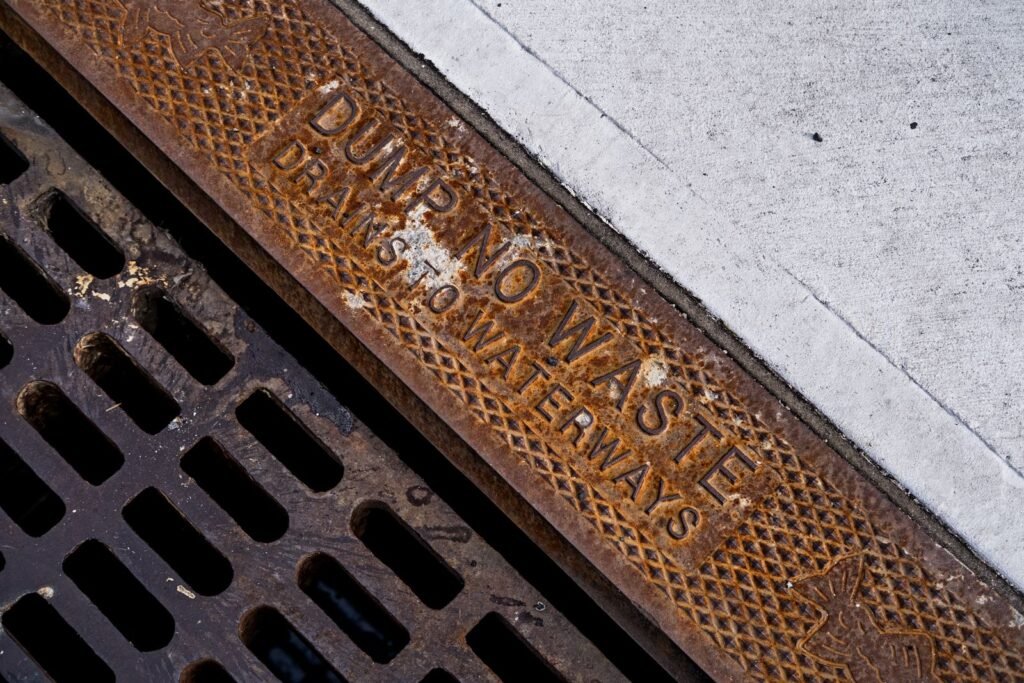
- A storm drain or ditch. Storm drains usually run straight to streams and lakes with no treatment. Carroll County, Maryland's salt management guide for homeowners notes that chloride enters surface water quickly through stormwater runoff, and that investigations have traced some local chloride problems to water softeners.
- Near a well head. Keep salt away from the ground around your drinking water source.
Even the sewer isn't a perfect sink. The Minnesota Department of Health's home water softening FAQ points out that wastewater plants aren't designed to remove chloride, so it ends up in lakes and streams. That's why the trash is the better home for solids, and why brine should go down the drain in small amounts, not all at once. Some regions, especially parts of California, regulate softener brine discharge strictly, and local rules may cover bulk salt disposal too.
FAQ
Does water softener salt go bad?
No. Sodium and potassium chloride don't expire or lose strength. They only cake when they absorb moisture, and caked salt still works once broken up.
Can I throw water softener salt in the trash?
In most areas, yes, for household amounts. Bag it securely, keep it out of recycling, and ask your hauler before throwing out a large quantity.
Can I pour water softener brine down the drain?
On city sewer, small amounts poured slowly with running water are usually acceptable, but some areas restrict brine discharge. Check local rules, and never use a storm drain.
Is it OK to use softener salt on my driveway?
Sparingly. Sodium chloride melts ice but harms plants and can damage newer concrete, so keep it off lawns and garden edges.
Do I need to empty the brine tank to switch salt?
No. Let the old salt run low, clear any bridges or mush, then add the new salt and adjust the dose if you switched to potassium chloride.
Keep it dry, switch it slowly, and keep it off the ground
Salt that stays dry stays useful, and a switch only needs a low tank and the right setting. When disposing of softener salt, bag the solids for the trash, send brine to a sewer drain a little at a time where allowed, and never let it reach a lawn, a well or a storm drain.