

Quick Answer: If you find your brine tank water frozen, put the softener in bypass and unplug it, then warm the room slowly with a space heater kept at least 3 feet from the tanks. No torches, heat guns or boiling water on plastic. Once everything has thawed, check the tank, safety float, brine line, control valve and bypass for cracks before returning to service. The ice is rarely in the salt itself; it forms in the fresh refill water, the lines and the valve.
Disclosure: As an Amazon Associate, Grains & Gallons earns from qualifying purchases.
A cold snap drops the garage below freezing overnight, and now you have brine tank water frozen solid, a softener that isn't working, or both. Here's why it happens, how to thaw a frozen water softener without breaking anything, and how to stop a repeat. If it has to stay in the garage, see our picks for outdoor water softener covers and enclosures.
In this guide
Why brine tank water freezes when salt water supposedly can't
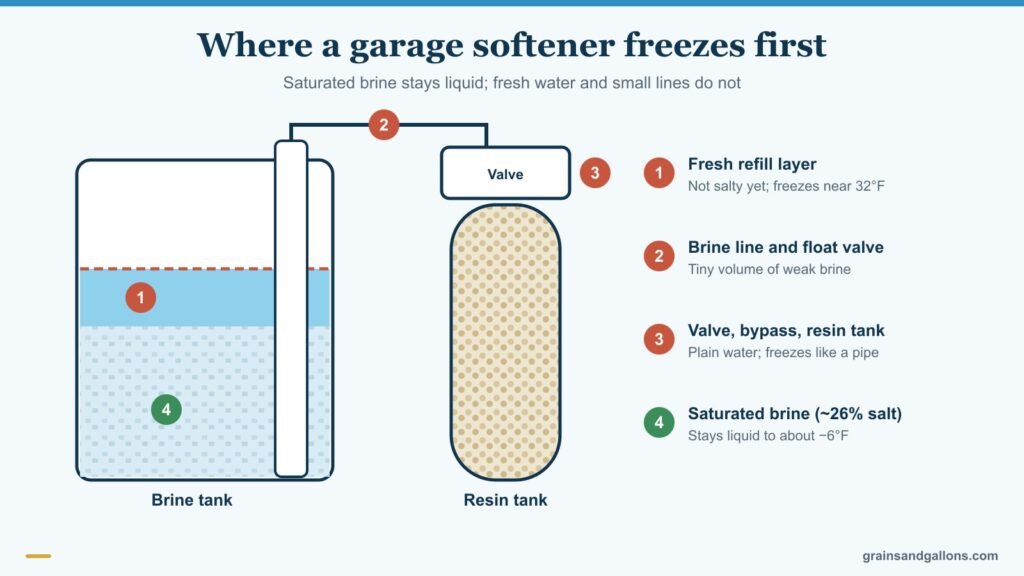
Fully saturated brine (about 26% salt) doesn't freeze solid until roughly −6°F. The catch is that brine tank water isn't always saturated:
- Right after a regeneration, the tank refills with fresh water that takes hours to reach full strength. On a cold night that fresh layer, especially at the top, can freeze first.
- If salt is low or bridged, the water may never reach saturation. A crust over an empty pocket is a common cause; see how to break a salt bridge.
- The brine line, safety float and control valve hold small volumes of weak brine, which freeze first.
- The resin tank, bypass and plumbing carry plain water and freeze like any pipe.
Partly frozen brine also turns to slush that can plug the brine pickup until it melts. Ice in the brine tank is usually a symptom; the serious freezing is often elsewhere.
Brine tank water frozen? Thaw it without cracking the plastic
- Bypass and unplug so no regeneration pulls water through a frozen valve. If the bypass handle won't turn, don't force it; close the main shutoff instead.
- Warm the space, not the parts. Point a space heater at the room, not the tank. The U.S. Fire Administration's heating safety guidance says to keep anything that can burn, salt bags and cardboard included, at least 3 feet from heat sources, and to skip extension cords.
- Give it time. A tank full of slush can take most of a day. Direct heat can warp plastic or crack a cold fitting.
- Don't chip ice inside the tank; frozen plastic cracks easily.
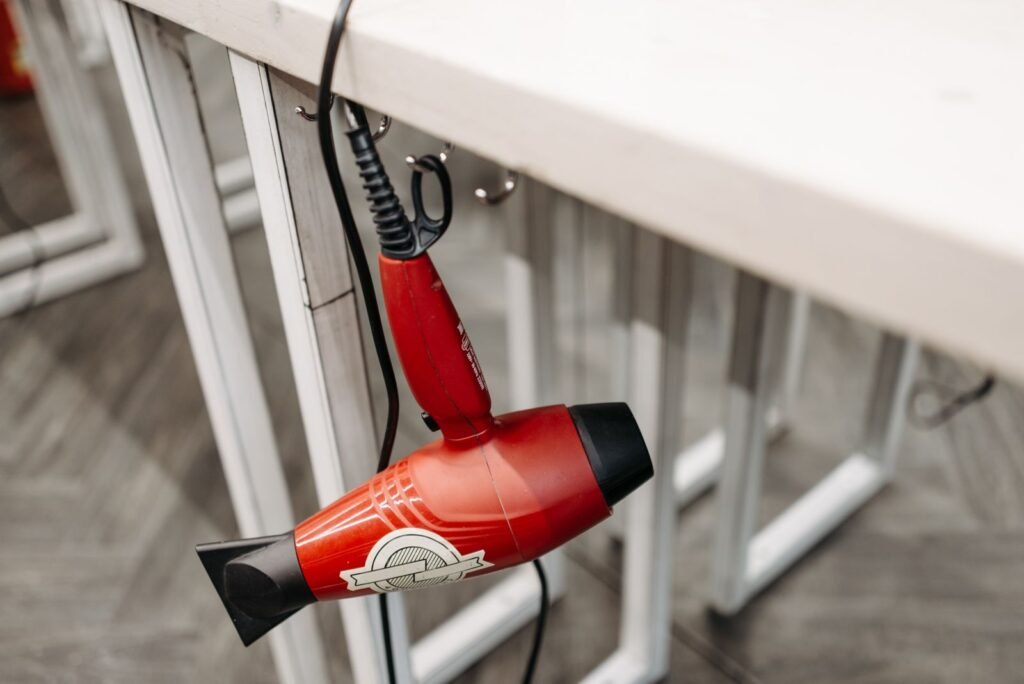
A hair dryer on low, kept moving, is fine for a small fitting or the brine line. The Red Cross gives the same advice for thawing frozen pipes: gentle heat, never an open flame.
Six spots where softener freeze damage shows up
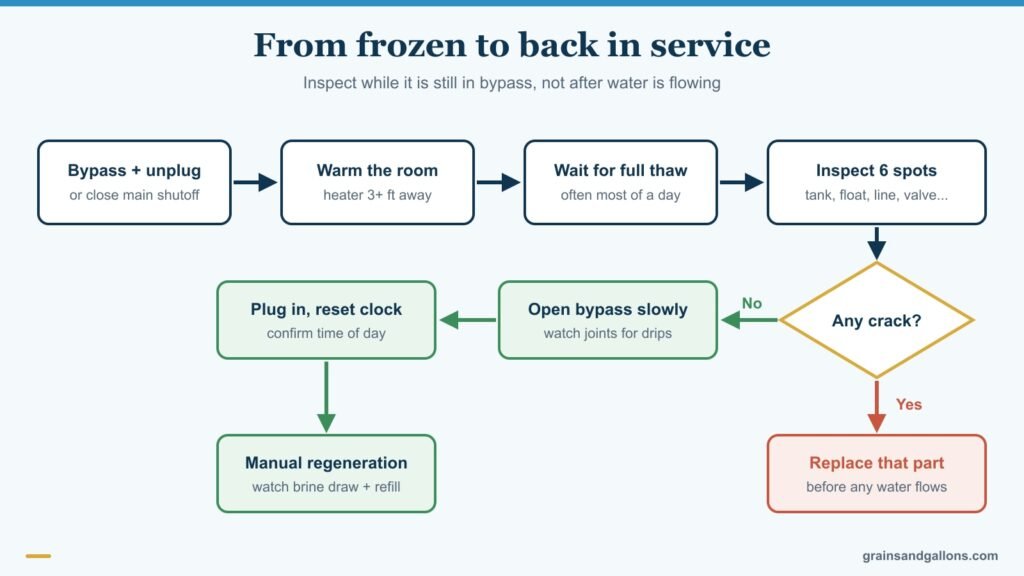
Ice expands, and the weak spots are predictable. Check these with a flashlight while the softener is still in bypass:
- Brine tank walls and floor. Hairline cracks and wet spots; see a cracked brine tank if one is below the water line.
- Safety float. A cracked float fills with water and stops shutting off; our stuck brine float guide covers testing it.
- Brine line. Splits in the tubing or its compression nuts.
- Control valve. A cracked housing, split meter cap or seeping valve body means replacement.
- Bypass and connectors. Plastic bypasses split; look for drips at every joint.
- Resin tank. Fiberglass tanks tolerate cold better than the plastic around them, but look anyway.
When it's all dry, open the bypass slowly and watch for leaks for a few minutes. Plug it in, reset the clock, and run a manual regeneration while you watch the brine draw and refill. Our frozen water softener guide covers replacing parts that cracked.
Keeping a garage softener above freezing

Protect the space, then the tanks
If the garage drops below freezing, the softener shouldn't live there unprotected. Options, cheapest first:
- Insulate and seal the garage. Weatherstrip the overhead door, insulate the wall behind the softener, and don't leave the door open on a frigid day.
- Wrap the resin tank. A neoprene jacket like the Oceanic sweat jacket for 10×54 tanks slows freezing (match it to your tank size), but it isn't a heat source and won't save a tank in a long hard freeze.
- Enclose the system. A cover that holds both tanks and the valve traps heat and blocks wind. Make sure it fits the brine tank, not just the resin tank.
- Add gentle, safe heat. A thermostatic heater in a closed enclosure keeps it above freezing. Heat cable rated for the pipe material, on a GFCI outlet, protects exposed lines.
Keep the salt up
A full, unbridged tank reaches saturation faster after each refill. It isn't freeze-proofing, but weak brine freezes sooner.
Move it or shut it down
Where garages routinely sit in the teens, moving the softener indoors is the real fix; see placing a softener in a basement, garage, crawl space or closet. If a space will sit unheated for weeks, drain it using our softener winterizing guide. Penn State Extension's overview of how water softening works explains what each tank does.
FAQ
At what temperature does brine freeze?
Saturated softener brine, about 26% salt, stays liquid to roughly −6°F. Weaker brine freezes at higher temperatures and fresh water at 32°F, so a freshly refilled tank can ice over on a night saturated brine would survive.
Can a water softener stay in an unheated garage?
Only if the garage stays above freezing or the softener is enclosed and heated. Insulation alone only slows freezing, so in cold climates moving it indoors or winterizing it is safer.
Does adding more salt stop a brine tank from freezing?
No. A full tank reaches saturation faster, but the fresh layer, brine line, valve and resin tank still freeze near 32°F.
How long does a frozen water softener take to thaw?
With the room warmed gently, a tank of slush can take most of a day. Small fittings and the brine line thaw faster with a hair dryer on low.
Will a frozen brine tank ruin the resin?
The resin can't soften while frozen, but the bigger risk is cracked plastic: tank, float, valve housing and bypass. Inspect those, then run a manual regeneration to confirm it draws brine and softens again.
Warm the room, inspect every part, then regenerate
With brine tank water frozen, the fix is patience: bypass, gentle room heat, a full thaw, then a careful look at every plastic part before water flows. Replace whatever cracked, regenerate, and then insulate, enclose or relocate the softener so the next cold snap doesn't repeat it.