


Quick Answer: To deal with a frozen water softener, unplug it, close the main shutoff (or put it in bypass only if the handle turns easily), and open a faucet so melting ice has somewhere to go. Warm the room or the valve gently with a space heater at a safe distance, a hair dryer, or warm wet towels. No open flame and no boiling water on plastic. Once thawed, restore water slowly and check every joint before plugging it back in.
Disclosure: As an Amazon Associate, Grains & Gallons earns from qualifying purchases.
It's 14 degrees outside, the taps are dry or barely trickling, and the softener lives in the garage. A frozen water softener is fixable, but slow down before you start yanking handles. The control valve, bypass and meter are mostly plastic, and frozen plastic that's forced or heated too fast is how a thaw turns into a replacement.
In this guide
Signs your water softener froze
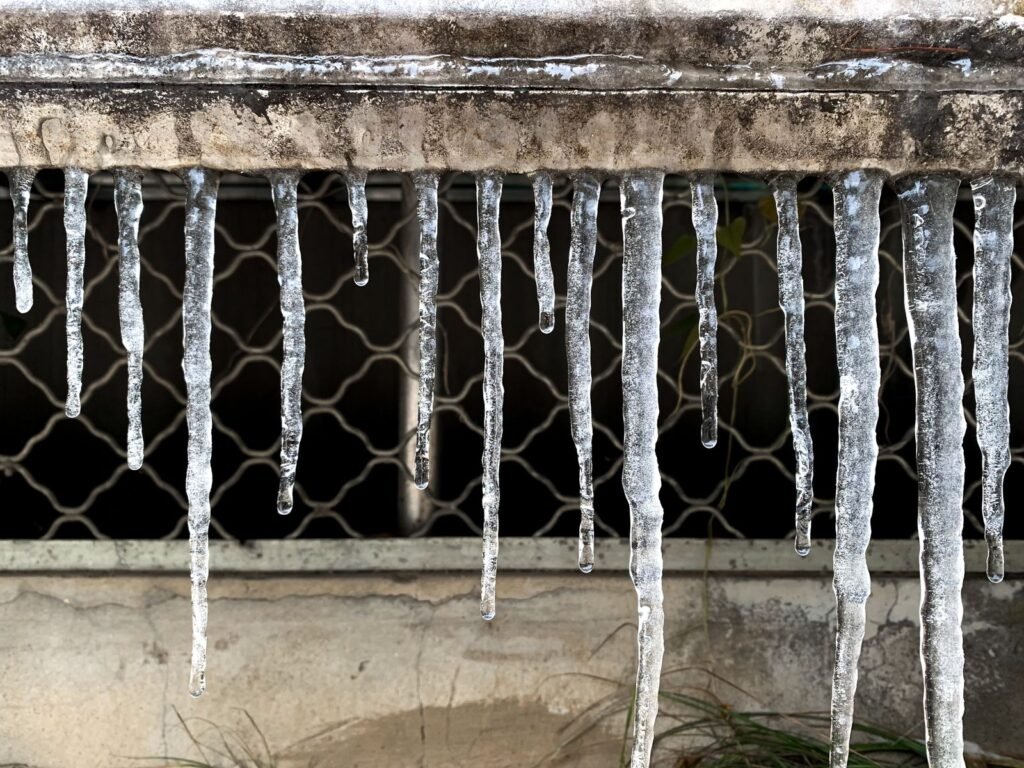
Freezing usually announces itself after the first hard night below 32°F in an unheated garage, crawlspace or outdoor install:
- No water, or a trickle, at taps fed through the softener, while an outside spigot ahead of it still runs.
- A bypass handle that won't budge with normal hand pressure.
- Frost or ice on the valve, the inlet and outlet pipes, or the drain line.
- Bulging or weeping fittings, or a puddle that appears as the day warms up.
- Hard water a few days later, because the drain or brine line froze and the softener couldn't regenerate.
If every tap in the house is dry, the freeze may be in the supply line rather than the softener. The Red Cross guide to preventing and thawing frozen pipes says to suspect pipes against exterior walls or where the service enters through the foundation, and to call a licensed plumber if you can't find or reach the frozen section.
Thaw a frozen water softener in five steps
1. Kill the power. Unplug the softener or switch off its circuit. If it tries to regenerate while frozen, the motor strains against a piston that can't move. You may lose the time of day; you'll reset it later.
2. Stop water to the softener. Try the bypass gently. If it moves with normal hand pressure, put it in bypass. If it's stiff, don't force it: a frozen handle can snap or crack the body. Close the main shutoff instead. Our guide to a stuck bypass valve covers freeing one once it's warm, and if it cracked, our roundup of the best water softener bypass valves lists which fit which valves.
3. Open a faucet downstream. A cold tap at the lowest point in the house gives melting ice somewhere to go. The Red Cross advice for pipes is the same: keep the faucet open, because moving water helps melt the rest.
4. Warm it gently. Raise the temperature of the whole space if you can, with a space heater a few feet away, kept clear of anything flammable and never unattended. Then work on the valve and nearby pipes with a hair dryer kept moving, or towels soaked in warm (not boiling) water, replaced as they cool. Never use a propane torch or other open flame, hold a heat gun close, or pour boiling water over the valve. Sudden heat can warp or crack the housing.
5. Inspect before you restore pressure. Use the checklist in the next section. Expect condensation on the valve first, then the open faucet sputters with air and slush, then flow becomes steady.
The brine tank usually needs less help. Saturated brine freezes far below fresh water, so a salt tank with plenty of salt often rides out a cold snap. A low-salt tank can freeze into an ice cap; let it thaw on its own rather than chipping at it. Our guide to brine tank water frozen in a garage covers that part in detail.
Inspect for cracks before you turn the water back on

Water expands about 9% when it freezes, and plastic doesn't stretch much. Look closely at each point, first with the water off, then again under slow pressure.
| Where to look | Damage sign | What it means |
|---|---|---|
| Control valve body | Hairline crack, weeping seam, drip at a screw | Valve body or cover may need replacing |
| Bypass valve | Crack, leak at the handle or O-rings | Replace the bypass; usually sold separately |
| Fittings and connectors | Drip at a nut or adapter | Retighten or replace the fitting or O-ring |
| Flow meter (metered valves) | Display stops counting gallons | Turbine or sensor may be damaged |
| Resin (mineral) tank | Bulge, crack, or water at the base | Tank failure; stop and replace |
| Brine line and float | Kinked, cracked or detached tube | Replace tubing or float assembly |
Restore water slowly: open the main or bypass a little at a time and watch every joint for several minutes. A small drip under pressure becomes a puddle overnight. For leaks you can't place, check the valve body seams first, since that's where freeze cracks tend to show.
Is the resin ruined?
Not necessarily. Freezing can crack resin beads, but a single freeze doesn't always do serious harm. If the tank and valve are intact and the water tests soft after a regeneration, watch over the next few weeks for tiny amber beads at faucet aerators or in the drain line. Our guide to resin beads in the drain line explains what they mean.
Restart, regenerate and retest

- Plug it back in and reset the time of day. Check that hardness and other settings didn't reset.
- Run a manual regeneration so the resin is fully recharged and air is purged.
- Watch it through each cycle, especially backwash, when flow is highest, and check the drain line isn't still iced.
- Test a cold tap afterward. Our water softener startup procedure covers the same steps you'd use on a new install.
Stop the next freeze in a garage or outdoor install

Manufacturers set a floor above freezing. Pentair's 5600SXT installation manual gives an operating ambient temperature between 34°F and 120°F and warns that freezing will damage internal valve parts and the plumbing. Other brands publish similar limits.
Your options, from best to most compromised:
- Move it inside the heated envelope. A basement, utility room or conditioned closet solves the problem for good.
- Heat the space. Insulate the garage wall it sits against, keep garage doors closed (the Red Cross gives the same advice for supply lines in a garage), and use a thermostatically controlled heater rated for the space.
- Enclose it. An insulated enclosure holds heat around the tanks and valve but creates none, so in a real cold snap it still needs a heat source. Our guide to the best outdoor water softener covers and enclosures compares both. A fitted jacket like the SUNICO insulated softener cover helps on mild-winter installs, but don't rely on it alone in a hard freeze.
- Heat-trace exposed pipe with a cable listed for the pipe material, installed exactly as its instructions say.
- Drain it for the season if the home sits empty and unheated. Our guide on how to winterize a water softener walks through it.
If the softener is outdoors by design, see our notes on outdoor water softener installation, which also covers sun, rain and power protection.
Slow heat and a slow restart save the valve
A frozen water softener is rarely ruined by the freeze alone. The damage usually comes from forcing a stiff bypass, using flame or boiling water, or slamming full pressure back on before checking for cracks. Unplug it, shut the water off, warm it gently with a faucet open, inspect, then restore water a little at a time and regenerate. After that, fix the location so it never sits below 34°F again.
FAQ
Can I run water through the softener while it's still partly frozen?
No. Keep it in bypass or shut off until it's fully thawed. Partial ice can force water past seals and crack a part that's already weakened.
How long does it take a water softener to thaw?
It depends on how cold the space is and how much ice formed. Warming the whole room is gentler but slower than working on the valve directly with a hair dryer. Keep applying gentle heat until full water pressure returns at the open faucet.
Will a water softener freeze in a garage?
It can. An unheated garage that drops below 32°F can freeze the valve, pipes and drain line, and Pentair's 5600SXT manual sets 34°F as the minimum operating temperature. Keep the space heated or move the softener indoors.
Does a full salt tank stop a softener from freezing?
It helps the brine tank, because saturated brine freezes well below fresh water. It does nothing for the control valve, bypass, meter or pipes, which hold plain water and freeze at 32°F.
Should I put antifreeze in my water softener?
No. A softener treats your drinking water, so never add antifreeze. Drain it for winter instead if the space can't be kept above freezing.