

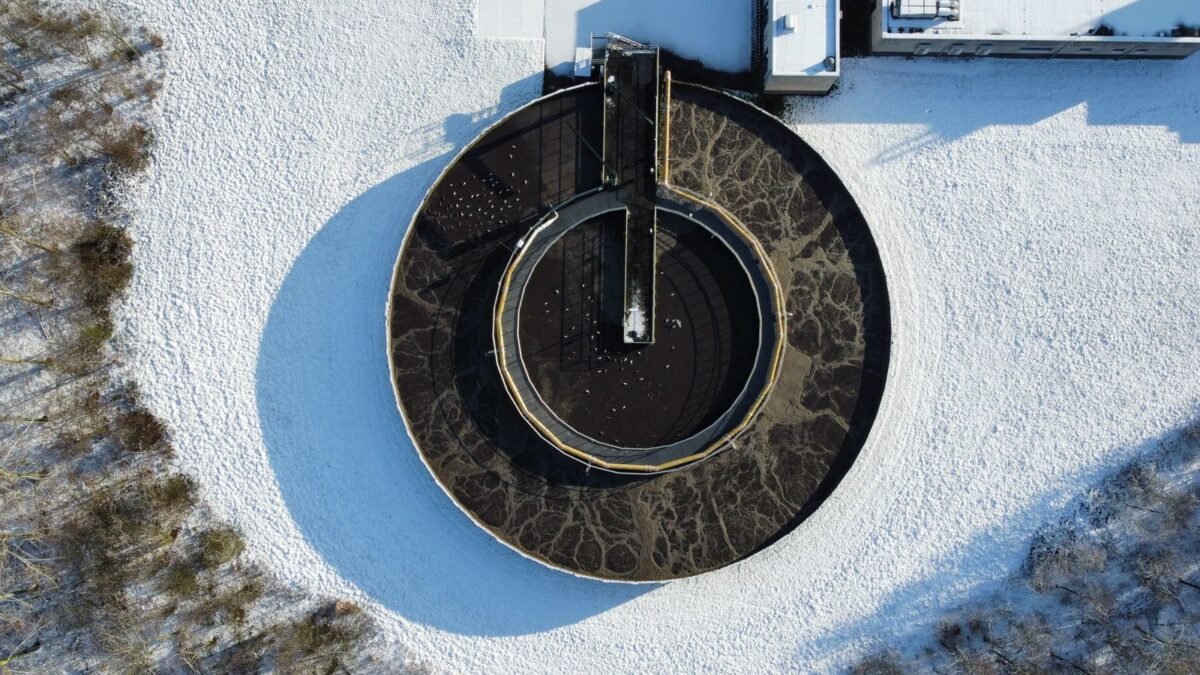
Quick Answer: Water softener brine restrictions exist in a handful of US sewer districts because the chloride in softener brine passes straight through wastewater treatment and ends up in rivers, groundwater and recycled irrigation water. Rules range from free tune-ups and rebates to "new units must be high-efficiency" to "no new automatic softeners at all." Most of the country has no such rule, but before you buy, call your sewer district (not just the city building department) and ask whether self-regenerating softeners are restricted.
Water softener brine restrictions usually surprise people the hard way. A dealer quotes you a softener, the installer shows up, and then someone mentions the neighbors had to pull theirs out. The rules aren't common, but where they apply they're enforced, and they can catch out someone who bought a unit online.
Here's what's behind them, what the rules tend to look like, which systems they leave alone, and how to find out where you stand.
In this guide
- Why water softener brine restrictions target chloride, not sodium
- Five kinds of rules you might run into
- When a town softens the water for you
- What happens to a unit installed anyway
- Who restrictions usually don't touch
- Efficiency is your friend if you live somewhere with rules
- How to find out if your area restricts softeners
- FAQ
- Water softener brine restrictions are local, so ask first
Why water softener brine restrictions target chloride, not sodium
Every time a salt-based softener regenerates, it rinses a strong salt solution through the resin and sends it down the drain. That discharge carries the hardness minerals it pulled out plus a lot of leftover sodium chloride. The chloride is the part regulators worry about.
Municipal treatment plants are built to remove solids, organic matter and bacteria. They don't remove dissolved salt. Whatever chloride enters the sewer leaves the plant in the treated water. If that water goes into a small creek, gets reused for farm irrigation, or recharges a groundwater basin, the salt goes with it.
Chloride harms freshwater life at elevated levels. The EPA's national recommended aquatic life criteria put chloride at 860 mg/L for short-term (acute) exposure and 230 mg/L for long-term (chronic) exposure (EPA aquatic life criteria table). States use numbers like these when they write chloride limits into a treatment plant's discharge permit. It's also hard on salt-sensitive crops, which is why farm regions that irrigate with recycled water push hardest.
In most cities, softener discharge is a small slice of a big flow and nobody notices. Restrictions show up where three things overlap:
- Hard water, so a lot of homes run softeners.
- A sensitive receiving water or a recycled-water program downstream of the plant.
- A regulator that has put a chloride limit on the plant's permit, so the utility has to find the salt and cut it.
When all three line up, household softeners can be a big share of the problem. Pipestone, Minnesota estimated that about 75% of the chloride reaching its wastewater plant came from brine used to regenerate home softeners (Minnesota Department of Health).
Five kinds of rules you might run into
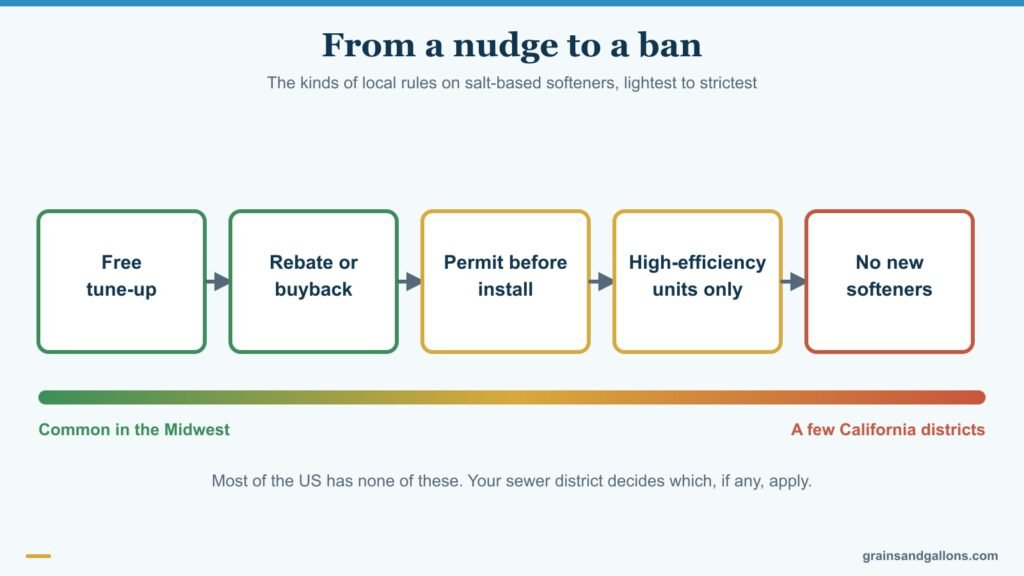
There's no single national rule. What exists is a patchwork of local measures, and they fall into a few patterns.
| Type of rule | What it means for you | Where you'd see it |
|---|---|---|
| Outright ban on new automatic softeners | You can't install a self-regenerating unit; existing ones may have to come out | A few California districts |
| Efficiency requirement | New units must be certified, high-efficiency models | Areas trying to cut salt without banning |
| Permit before installation | Someone checks the unit and the drain before it goes in | Some cities, often bundled with plumbing permits |
| Rebate or buyback program | You're paid to remove, replace or tune an old, salt-hungry unit | California and several Midwest towns |
| Free optimization | A contractor resets hardness and salt dose to cut salt use | Midwest chloride-reduction programs |
California has the most formal framework
California law (Water Code § 13148) lets certain local sewer and water-recycling agencies regulate residential self-regenerating softeners, but only after a regional water board has found, at a public hearing and based on evidence, that controlling household salt will help meet water-quality goals. The agency then has to adopt an ordinance after its own public hearing. The menu of options in the statute includes requiring plumbing permits, requiring units rated at the highest efficiency commercially available, prohibiting new installations, and even requiring removal of existing units. If removal is required, the agency has to offer compensation for the units' reasonable value. The law applies to specific regions, including the Central Coast, South Coast, San Joaquin River and Tulare Lake regions, plus several Sacramento Valley counties.
The best-known example is the Santa Clarita Valley north of Los Angeles. Its sanitation district banned installation of new automatic softeners in 2003 because the salty discharge couldn't be removed at the treatment plant. The district runs a rebate and free-removal program for owned units, and it says portable exchange tanks, the kind a service company swaps out and regenerates off-site, are still legal. Other California cities have their own versions; Brentwood, for example, has prohibited installing new brine-discharging self-regenerating softeners since October 2015.
In the Midwest, it's mostly carrots
Cold-climate states watch chloride closely because road salt already loads streams in winter. Here the response has mostly been incentives rather than bans. Worthington, Minnesota is a good illustration: its treatment plant has to cut chloride going to a local creek, so the utility funded free softener tune-ups and rebates to replace old timer-based units, rental exchange tanks and models with a salt efficiency below 3,350 grains per pound of salt. It reports participants cutting salt use by an average of about 79%. Other towns with chloride limits have run similar programs.
When a town softens the water for you
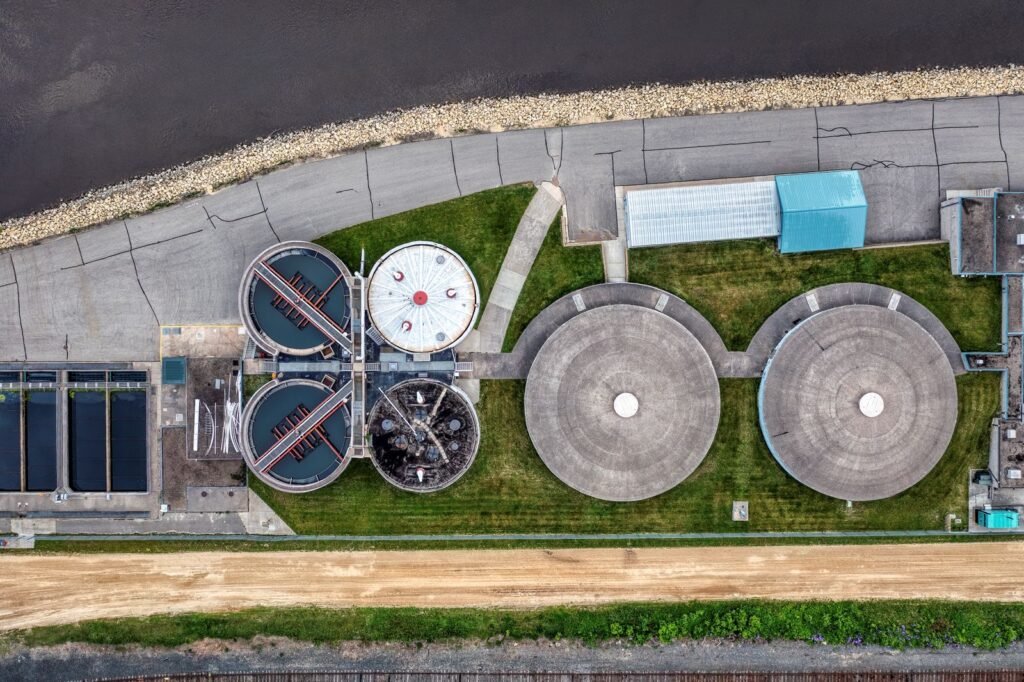
A few utilities skip the rule-writing and remove the reason people buy softeners in the first place. This is called centralized softening: the city softens drinking water at the treatment plant, so households can turn their own units down or retire them.
Pipestone is the clearest case. Its raw water carried about 40 grains (680 ppm) of hardness, so nearly everyone softened at home. After the city's softening plant came online in 2019, residents adjusted or removed their softeners and the city met its chloride discharge limits. The project cost $15.4 million, funded by a state loan and a point-source implementation grant. The Minnesota Department of Health's brief on chloride and centralized softening explains why other plants facing chloride limits are looking at the same approach.
If you live in a town that softens at the plant, test your tap water before buying anything. You may need far less softening than your old unit was set for, or none at all.
What happens to a unit installed anyway
Where a ban exists, it's enforced through the sewer agency rather than the building department. In Santa Clarita, the sanitation district has found illegally installed self-regenerating softeners through on-site inspections, including at commercial businesses, and the prohibition applies whether you add the salt yourself or pay a service company to do it.
The practical consequences of ignoring a local rule:
- A removal order. The unit has to be disconnected, and in a ban area you won't get the buyback money offered to people who removed theirs voluntarily.
- Penalties under the local ordinance. Amounts vary by district; the ordinance itself is the place to look.
- A wasted purchase. A softener you can't legally run is just an expensive tank. That's the most common loss, and it's the reason to call before you buy.
Who restrictions usually don't touch
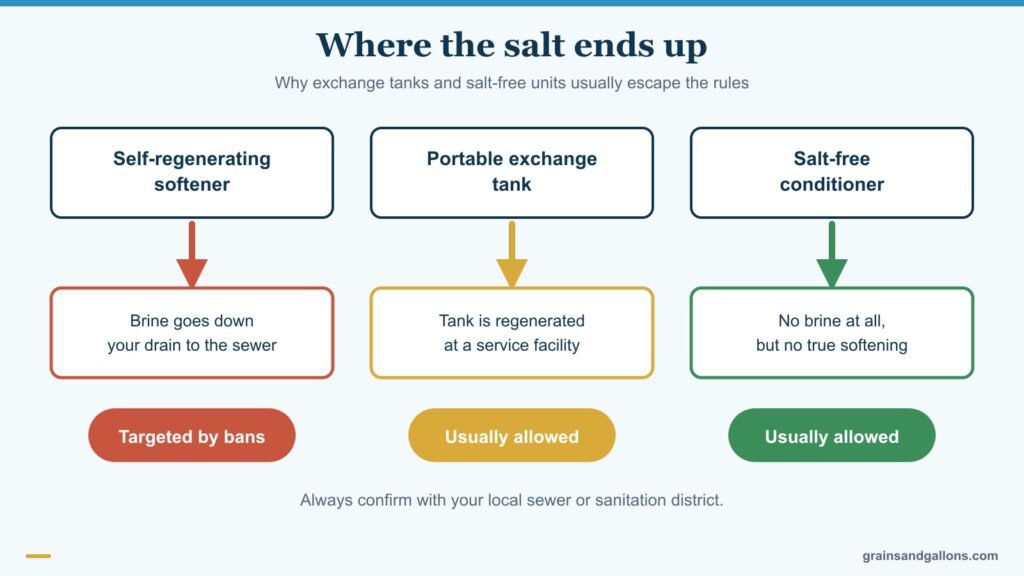
- Portable exchange service. Because the tank is regenerated at a central facility, there's no brine going into your home's sewer. Santa Clarita explicitly allows them, and the California statute leaves them alone.
- Salt-free conditioners. No brine, no discharge. They don't truly soften water, though; our explainer on whether a salt-free system actually softens water covers what they can and can't do. Our guide to water softener alternatives lays out every option side by side.
- Existing units, in most places. Where a rule targets "new installations," older units often stay legal until they're replaced. That's not universal, so ask.
Efficiency is your friend if you live somewhere with rules
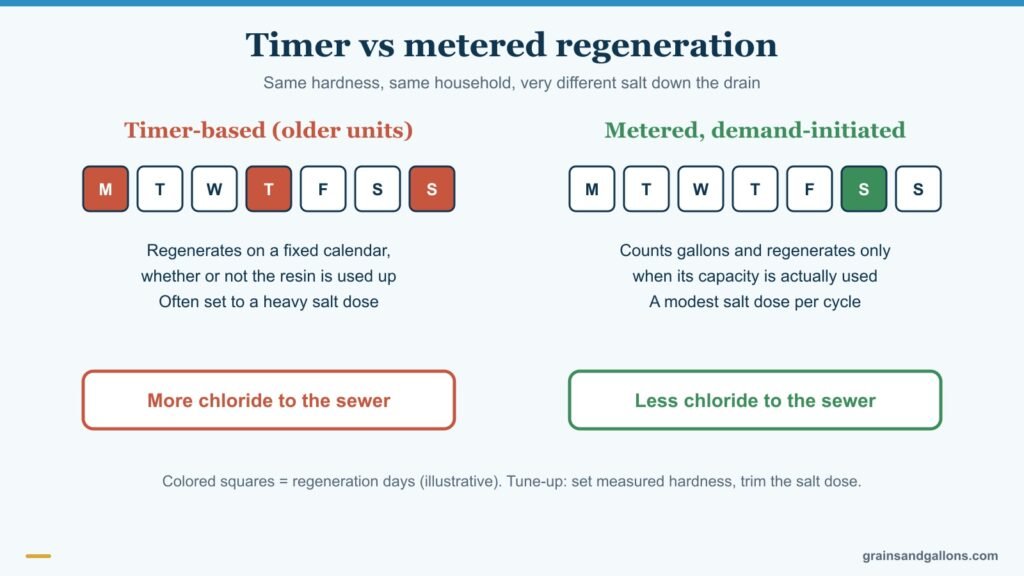
Even where nothing is banned, the direction of travel is clear: less salt per grain of hardness removed. A metered, demand-initiated softener that regenerates only when it needs to, with a modest salt dose, sends far less chloride down the drain than an old timer-based unit set to a heavy dose. If you're shopping in an area that cares about this, start with our picks for high-efficiency water softeners and look for the salt-efficiency rating on the spec sheet. Our list of metered on-demand softeners covers the regeneration control side.
For an existing unit, the free fix is a tune-up: set the hardness to your measured value instead of a guess, trim the salt dose and make sure it isn't regenerating on a timer every few days. Our explainer on how much salt a water softener uses shows what a reasonable number looks like for your household.
How to find out if your area restricts softeners

The building department may not know. Brine rules usually come from whoever runs the sewer, which can be a separate sanitation district.
- Look at your sewer bill. The name on it is the agency to call.
- Ask a specific question: "Are there any restrictions on installing a self-regenerating water softener that discharges to the sewer?" Use that phrase; "water softener" alone can get you a shrug.
- Ask about rebates while you're at it. Some agencies pay you to upgrade or tune your unit.
- Check permits separately. A plumbing permit may be required even where softeners are legal. Our guide on whether you need a permit for a water softener covers that side.
- On a septic system, the question changes. Some states regulate softener discharge into septic systems rather than sewers. Ask your county health department, and see our guide to running a water softener with a septic system.
Be wary of online "ban maps" and city lists, especially ones published by companies selling salt-free systems. Some are accurate; some mix real ordinances with proposals that never passed. The ordinance or the agency's own page is the only source that counts.
Also confirm where the discharge is going. Brine into a storm drain, ditch or yard is a separate problem and is generally not allowed anywhere; see where a water softener can drain.
FAQ
Are water softeners illegal in California?
No. They're legal statewide. Specific local agencies in certain regions can restrict self-regenerating softeners after the hearings the state law requires, and a few have. Check with your local sewer or sanitation agency.
Can I be forced to remove a softener I already own?
Only where a local ordinance requires removal. Under the California framework, agencies that require removal must offer compensation for the unit's reasonable value. Elsewhere, removal requirements are rare.
Does using potassium chloride get around the rules?
Not automatically. Potassium chloride salt still discharges chloride, so some programs treat it exactly like sodium chloride. Ask before assuming it's exempt.
Is a portable exchange softener allowed where self-regenerating units are banned?
Usually, yes. The tank is regenerated off-site, so no brine enters your sewer. Santa Clarita, the best-known ban area, explicitly allows them. Confirm with your district, since the ordinance wording is what matters.
Why don't treatment plants just remove the salt?
Removing dissolved chloride takes processes like reverse osmosis or dedicated salt-removal facilities, which are expensive to build and run and produce their own concentrated waste. For most utilities, cutting salt at the source is far cheaper, which is why they target softeners.
Water softener brine restrictions are local, so ask first
Water softener brine restrictions come down to one thing: chloride that a treatment plant can't remove. Most US homeowners will never face one, but where a sewer district has a chloride limit, rules can run from a free tune-up all the way to a ban on new units. A five-minute call to the agency on your sewer bill settles it. If the answer is yes, a portable exchange service, a salt-free conditioner or a high-efficiency metered softener (where allowed) keeps you on the right side of the rule.