


Quick Answer: Is softened water safe to drink? For most healthy adults, yes. A salt-based softener swaps calcium and magnesium for sodium, adding roughly 8 mg of sodium per liter for every grain per gallon (gpg) of hardness it removes. At 10 gpg that's about 80 mg/L, a small slice of a normal day's intake. People on a doctor-ordered low-sodium diet, people with kidney disease, and anyone mixing infant formula should drink from an unsoftened or reverse osmosis (RO) tap instead.
If you're asking whether softened water is safe to drink, you probably just had a softener installed, poured a glass from the kitchen tap, and noticed it tastes a little different. Maybe flatter, maybe faintly salty. It's a fair moment to ask.
The short version: softening doesn't make water unsafe. It changes two things. It removes hardness minerals, and it adds sodium (or potassium, if you use potassium chloride). Whether that matters depends on how hard your water was to start with and on your own health.
In this guide
- Is softened water safe to drink for most people?
- Run the sodium numbers for your own water
- What the EPA and FDA numbers mean
- Who should drink from an unsoftened tap
- Three easy ways to keep a low-sodium drinking tap
- A softener is not a drinking-water filter
- Salty or flat: what the taste is telling you
- Can softened water pull lead or copper from pipes?
- FAQ
- Drink it freely unless sodium is your doctor's concern
Is softened water safe to drink for most people?
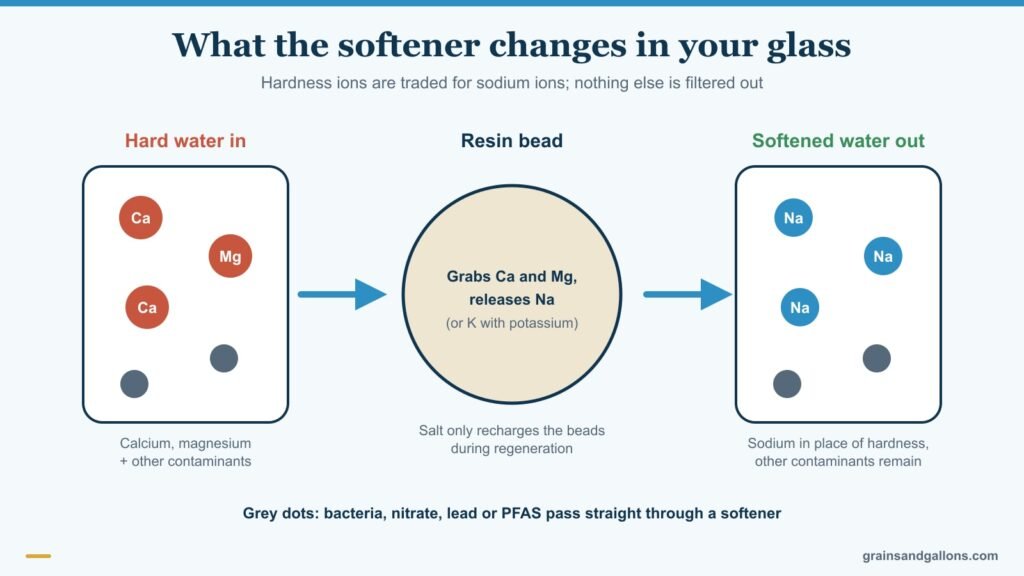
Yes, and the reason is in how a softener works. Inside the resin tank, millions of plastic beads hold sodium ions. As hard water passes through, the beads grab calcium and magnesium and release sodium in exchange. No salt crystals end up in your glass, and the water doesn't become brine. The salt you pour into the brine tank only recharges the beads during regeneration, then goes down the drain.
What you get is a fixed chemical swap: every bit of hardness removed is replaced with an equivalent amount of sodium. That's why the sodium level tracks your raw hardness so closely, and why very hard water produces noticeably saltier softened water. Drinking softened water every day is fine for a healthy adult whose water started at moderate hardness. The question is really about the sodium dose, so let's put a number on it.
Run the sodium numbers for your own water
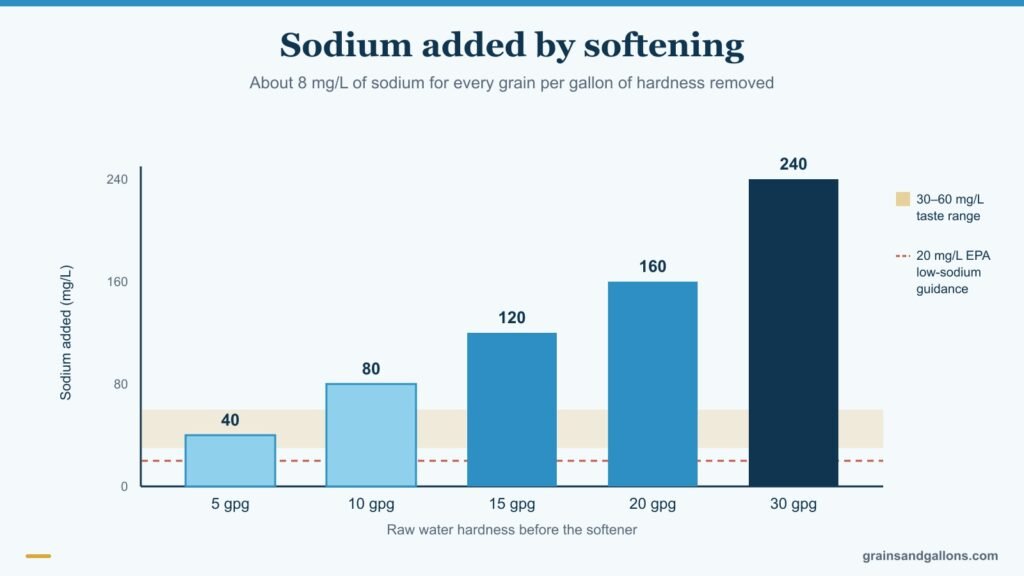
One grain per gallon of hardness equals 17.1 mg/L as calcium carbonate. Swapping that out adds about 7.9 mg/L of sodium. Penn State Extension puts the same rule as 7.5 mg per quart for each gpg removed. Round it to 8 mg/L and you can do the math in your head.
| Raw hardness | Sodium added (approx.) | In 2 liters (about 8 cups) |
|---|---|---|
| 5 gpg | 40 mg/L | 80 mg |
| 10 gpg | 80 mg/L | 160 mg |
| 15 gpg | 120 mg/L | 240 mg |
| 20 gpg | 160 mg/L | 320 mg |
| 30 gpg | 240 mg/L | 480 mg |
This is added on top of whatever sodium your water already had. City customers can find the baseline in their utility's annual Consumer Confidence Report; well owners need a lab test.
For perspective, the FDA's Daily Value for sodium is 2,300 mg. Someone drinking two liters a day of water softened from 15 gpg takes in around 240 mg from it, about a tenth of that limit and far less than most people get from food. At 30 gpg the share roughly doubles.
Don't know your hardness? Our guide to the sodium in softened water walks through finding it and covers edge cases like iron, which a softener also exchanges for sodium.
What the EPA and FDA numbers mean
There's no federal enforceable limit on sodium in drinking water. The EPA has two advisory numbers, and they apply to different people:
- 20 mg/L is a guidance level for people whose doctors have restricted them to about 500 mg of sodium a day. The EPA's sodium advisory says plainly that it shouldn't be applied to the whole population.
- 30 to 60 mg/L is a taste threshold, the range where most people start to notice salt. It's about flavor, not health.
The same EPA document notes that home softeners can push sodium above 300 mg/L in very hard water areas. Softened water passes the 20 mg/L figure from about 3 gpg up. That matters a lot if you're in the restricted group and very little for everyone else.
Who should drink from an unsoftened tap

Talk to your doctor if you're unsure, but these groups usually do better with water that hasn't been through the softener:
- People on a sodium-restricted diet, often for high blood pressure, heart failure or certain kidney conditions. Your doctor's sodium target is the number to compare against the table above. Softened water and high blood pressure are a real combination to watch only when the raw water is hard and the diet is tight.
- People with kidney disease who also limit potassium. Switching to potassium chloride removes the sodium but adds potassium. For most people that's harmless. For someone told to limit potassium, it isn't, so get medical advice first.
- Babies. Formula mixed with heavily softened water adds sodium a small body doesn't need. Use unsoftened cold tap water or water labeled for infants. Our page on softened water for baby formula has the details.
- Houseplants and gardens. Not a health issue, but sodium builds up in potting soil. Water plants from an outdoor spigot that bypasses the softener, or with rainwater.
Pets are generally fine with softened water at typical hardness. If your vet has your pet on a low-sodium diet, treat them like the human cases above.
Three easy ways to keep a low-sodium drinking tap
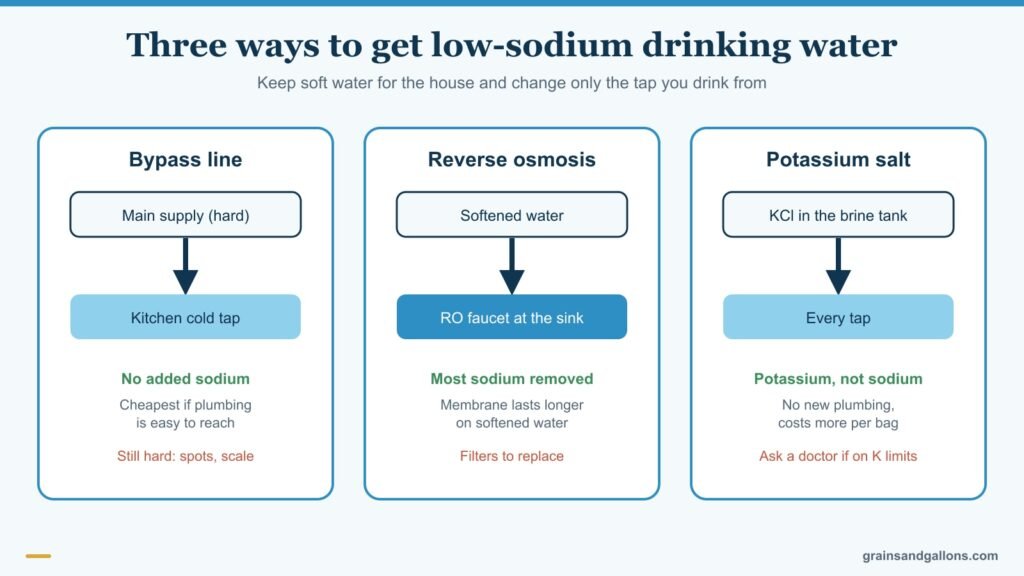
Leave the kitchen cold tap on hard water. Many installers run a separate cold line to the kitchen sink that bypasses the softener. It's the cheapest fix if you can reach the plumbing, and it also covers cooking water. Whether your kitchen tap should bypass the softener covers the plumbing options.
Add reverse osmosis at the sink. Reverse osmosis removes most of the sodium the softener added, plus a long list of other dissolved solids. The membrane actually lasts longer on softened water, because hardness is what scales it up. If running a new line isn't practical, our picks for the best countertop reverse osmosis systems need no plumbing. Ordinary pitcher and fridge filters don't remove sodium.
Switch to potassium chloride. With potassium chloride in the brine tank, the resin releases potassium instead of sodium at every tap. It costs more per bag and can need a higher salt setting, and the medical caveat above applies. Our roundup of the best potassium chloride softener salt compares the main options.
A softener is not a drinking-water filter
This trips people up. A water softener removes hardness. It won't remove bacteria, nitrates, arsenic, PFAS, most organic chemicals or chlorine taste, and it isn't certified to remove lead. If your water was unsafe to drink before the softener, it's still unsafe after. On a private well, keep up regular lab testing whether or not you soften. The full list is in what a water softener does not remove.
The flip side: if your water was safe to drink before, softening it doesn't add anything harmful beyond the sodium covered here. You do lose the calcium and magnesium the hard water carried, but water supplies only a small share of those minerals compared with food.
Salty or flat: what the taste is telling you

Softened water that tastes mildly flat is normal. Hardness minerals give water a bit of body, and once they're gone some people miss it.
Water that tastes distinctly salty, like sea water, is a different story. The usual cause is brine that didn't fully rinse out during regeneration. It can happen when someone runs water during the cycle, when the rinse step is too short, or when the drain line is restricted. Run the cold tap for a few minutes. If it clears, it was leftover brine. If it happens after every regeneration, the softener needs a look; our guide to why softened water tastes salty walks through the fixes.
Can softened water pull lead or copper from pipes?
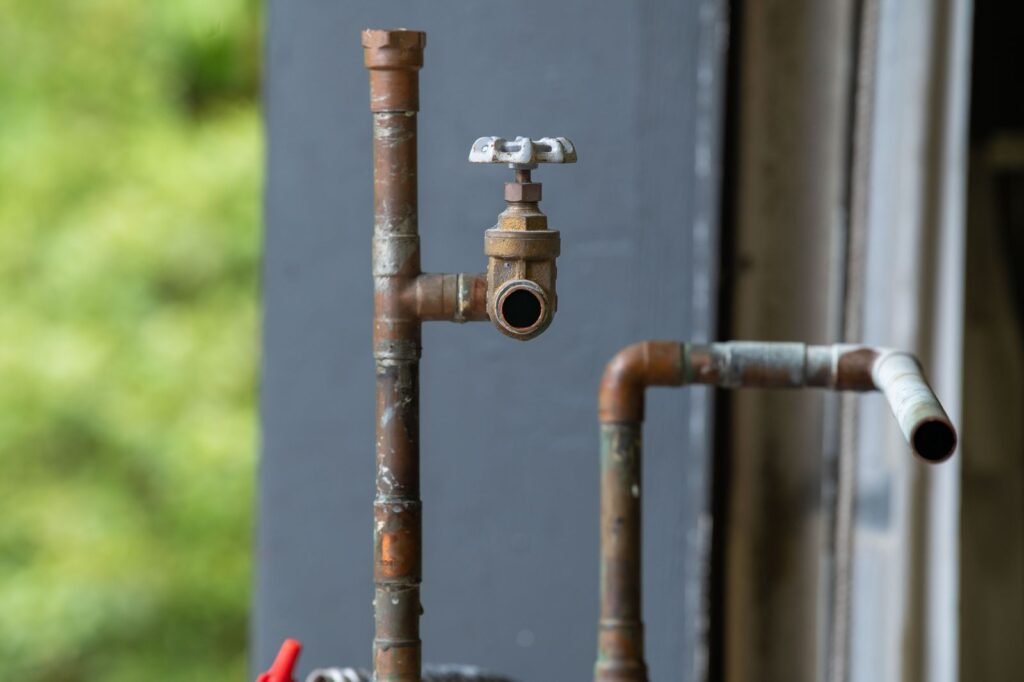
Softened water is slightly more aggressive toward some metals than hard water, because it no longer leaves a protective scale layer behind. In most city systems, corrosion control at the treatment plant handles this. If your home has old lead or lead-soldered plumbing, test for lead whether or not you have a softener, and don't drink or cook from the hot tap. Hot water picks up more metal from pipes. If water has sat in the pipes overnight, run the cold tap until it turns noticeably colder before filling a glass.
FAQ
Can you drink softened water every day?
Yes, if you're a healthy adult and your raw water isn't extremely hard. At 10 to 15 gpg, two liters of softened water adds roughly 160 to 240 mg of sodium, about 7 to 10 percent of the 2,300 mg daily value. If your doctor has you on a sodium limit, compare that figure against your target first.
Is softened water bad for people with high blood pressure?
It can be, depending on your diet and your hardness. The EPA's 20 mg/L guidance is aimed at people restricted to about 500 mg of sodium a day, and softened water exceeds it from around 3 gpg. If you've been told to cut sodium, use a bypass tap or reverse osmosis for drinking and cooking.
Does reverse osmosis remove sodium from softened water?
Yes. An RO system removes most of the sodium a softener adds, along with other dissolved solids. Pairing a whole-house softener with an under-sink or countertop RO unit is the most common setup for households that want soft water and low-sodium drinking water.
Does a salt-free water conditioner add sodium?
No. Salt-free conditioners don't use ion exchange, so they add no sodium or potassium. They also don't remove hardness minerals; they're meant to reduce scale, so you won't get the slippery feel or soap savings of true softened water.
Is it safe to boil softened water for cooking?
Boiling doesn't remove sodium. It concentrates it slightly as water evaporates. For most people that's still a minor amount, but if you're on a low-sodium diet, cook with water from your unsoftened or RO tap.
Drink it freely unless sodium is your doctor's concern
So, is softened water safe to drink? For most households it is: the sodium it adds is small next to food, and you can work it out from your hardness with the 8 mg/L rule. The exceptions are people on medically restricted sodium or potassium diets, babies on formula, and anyone whose water was already unsafe before it reached the softener. If you fall into one of those groups, keep one tap on unsoftened or RO water and enjoy soft water everywhere else.