

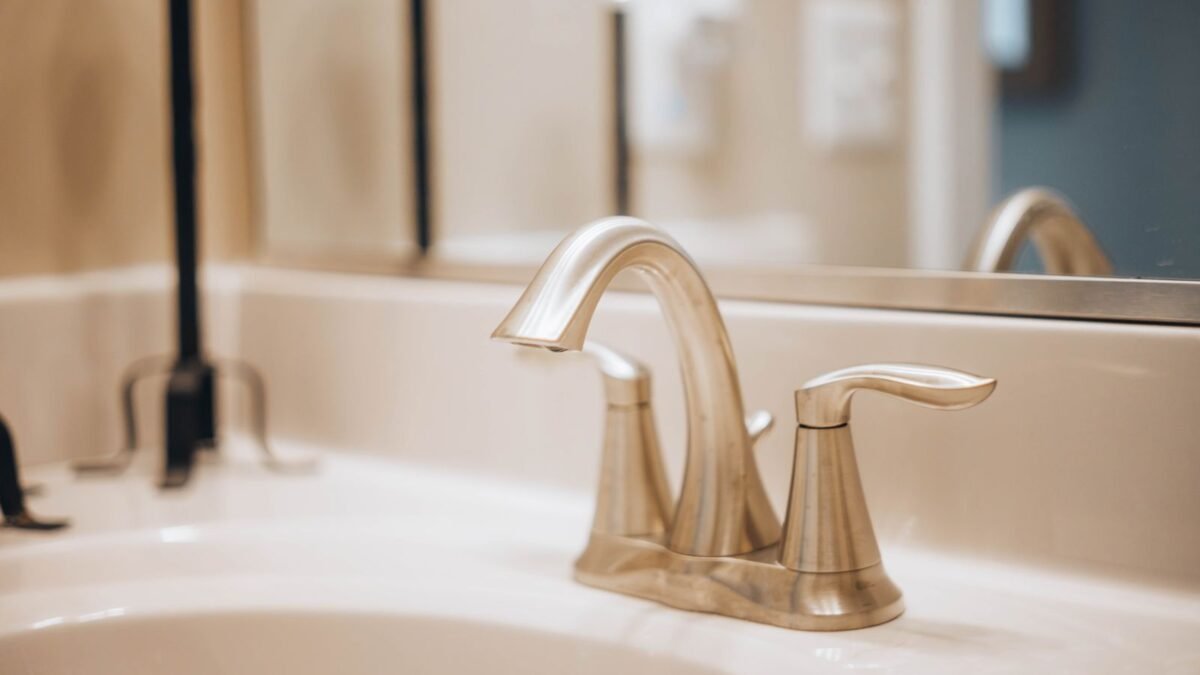
Quick Answer: For polished chrome faucets and crusty aerators, CLR Calcium, Lime & Rust Remover cut 50/50 with warm water is still the strongest easy fix. Just keep contact to about two minutes. If you have brass or copper fixtures, or a stainless sink around the faucet, switch to Bar Keepers Friend MORE Spray + Foam, because its label lists copper and brass as fine and CLR's doesn't. For matte black, brushed, or coated finishes, start with a gentle daily shower spray like ATTITUDE Shower & Tile Cleaner and test it first.
Disclosure: As an Amazon Associate, Grains & Gallons earns from qualifying purchases.
Most bad faucet-cleaning stories aren't about weak cleaners. The cleaner worked fine. It also took the finish off along with the scale.
Limescale is calcium and magnesium carbonate, and every product here dissolves it with acid. The acid can't tell a mineral crust from the thin layer of plating, lacquer, or PVD coating that gives your faucet its color. So the right question isn't "what's the strongest limescale remover?" It's "what's the strongest one my finish can take?" This list is built around that.
In this guide
- Start with the finish, not the bottle
- How these five made the cut
- CLR Calcium, Lime & Rust Remover
- Bar Keepers Friend MORE Spray + Foam
- Lysol Power Limescale Removing Bathroom Cleaner Spray
- ATTITUDE Shower & Tile Cleaner Spray
- Stone Pro Stone and Glass Scrub
- Picking two, not five
- The bag trick for a fixed spout or showerhead
- If you're doing this every week
Start with the finish, not the bottle
Walk to the sink and figure out what you actually have:
- Polished chrome (shiny, mirror-like, slightly blue-silver). Chrome holds up well. Any product on this list works. Use the strong stuff for heavy crust.
- Stainless steel (common on kitchen faucets and sinks). Durable, but scratches show. Avoid harsh scrubbing pads and rinse well.
- Brass, copper, or "living" finishes. CLR's label specifically lists brass and copper as surfaces to avoid. Use a product that says those metals are OK, and test.
- Matte black, brushed nickel, champagne bronze, oil-rubbed bronze, or any colored finish. These are usually coatings. Most faucet makers' care guides say to clean them with mild soap and water and avoid abrasives and harsh chemicals. Check your faucet brand's care page before you use any acid, start with the mildest one, and rinse right away.
- Faucet mounted in granite, marble, or quartz. The fixture might be fine, but drips of acid on the stone around it can etch it. Protect the stone or use a stone-safe product.
If the white buildup is mostly at the base of the spout and around the handles, our explainer on white spots on faucets covers why it gathers there.
How these five made the cut
We aren't ranking by "dissolves the most scale in a lab." We looked at what each manufacturer says the product is for, which surfaces its label approves or warns against, contact time, and whether owners report damaged finishes. Each pick covers a different finish or job, so you shouldn't need more than two. We haven't run our own side-by-side tests. This is based on published labels, manufacturer guidance, and owner reviews.
CLR Calcium, Lime & Rust Remover
Best soak for chrome and aerators · Check price on Amazon
CLR is the bottle most people already have under the sink, and on chrome it earns its spot. The formula uses lactic acid and gluconic acid, which help minerals dissolve and wash away. Jelmar, which makes CLR, gives clear directions: mix it 50/50 with warm water, apply with a cloth or brush, leave it for about two minutes, and rinse with cold water. For showerheads, it says to soak for no more than two minutes and repeat at full strength if needed. That short contact time is the rule people skip, and it's where the damage stories come from.
The surfaces-to-avoid list is long and very relevant to faucets: brass, copper, aluminum, galvanized metal, natural stone (including marble and granite), and painted, coated, or sealed surfaces. In plain terms, CLR is for chrome, stainless, and removable chrome-plated or plastic parts like aerators. It's the wrong pick for an oil-rubbed bronze bar faucet.
Where it shines: Unscrew a crusty aerator, drop the screen and insert in a small cup of diluted CLR, wait a couple of minutes, brush, rinse. Flow often improves noticeably. Our walkthrough on scale on faucet aerators covers the disassembly.
Downside: It's the least forgiving product here if you get the finish wrong. It also has to be rinsed off. It's not a spray-and-walk-away cleaner.
Bar Keepers Friend MORE Spray + Foam
Best for stainless sinks and mixed metals · Check price on Amazon
This is our pick for most kitchens. The ingredients are water, citric acid, oxalic acid, a surfactant, and fragrance. What sets it apart is the surface list: stainless steel, chrome, porcelain, ceramic, copper and brass, faucets, sinks, and glass are all listed as suitable. So a brass bar faucet or copper-accented fixture that CLR warns against is fair game here, after a spot test.
The trigger has two settings. Use the foam on faucet bodies and backsplashes because it clings. For foam, the directions say to let it stand one minute, scrub, and rinse. It handles the hard-water haze on a stainless basin at the same time, which matters because the sink and faucet usually scale together. More on that in our stainless sink hard-water guide.
Who should skip it: Anyone whose faucet is set in natural stone, unless you mask the counter. Granite and marble aren't on the approved list. Also, oxalic acid is no joke. Wear gloves for longer jobs and rinse anything that touches food.
Lysol Power Limescale Removing Bathroom Cleaner Spray
Best quick spray for chrome · Check price on Amazon
Lysol's 32-oz Power Limescale spray is built for exactly what most people mean by "faucet limescale": the chalky ring around a chrome spout and the haze that comes back a week after you cleaned. You spray, let it work briefly, wipe, and rinse, with no mixing. Lysol lists chrome fixtures, glazed tile, porcelain, fiberglass, shower doors, and sink areas as surfaces it's meant for, and it's bleach-free. For a bathroom with plain chrome fixtures and moderately hard water, it's the most convenient option here.
Treat it like CLR on finishes. It's a strong cleaner built for hard-water buildup, so keep it on chrome and ceramic, and read the label's surface warnings before using it on anything coated, plated in a color, or sitting on stone.
Downside: It's a convenience product, not a soaking solution. Thick, years-old crust under the aerator still calls for a removable-parts soak with CLR.
ATTITUDE Shower & Tile Cleaner Spray
Gentlest option for regular upkeep · Check price on Amazon
ATTITUDE sells this as a daily shower spray: it's meant to dissolve soap scum and hard-water film on walls, doors, tile, tubs, and fixtures, either after each shower or as a weekly clean. The formula is 98% naturally derived, EWG Verified, and made without chlorine bleach, and the company pitches it as gentle enough to use around kids and pets.
We like it for two jobs. First, upkeep: a regular spray on chrome or stainless fixtures stops scale from building into the thick crust that needs the harsh stuff. Second, it's the first thing to test on a coated finish where you're nervous about anything stronger. Spray a hidden spot on the back of the spout, wait a minute, rinse, and check under good light. Keep it off marble and other porous stone unless the label says otherwise.
Downside: It's slower on old, thick scale. If the crust has been building for a year, it will take repeat passes, and you might still need CLR on the removable parts.
Stone Pro Stone and Glass Scrub
Best when the faucet sits on stone · Check price on Amazon
Here's the situation the other four handle badly: a faucet set into a granite, marble, or quartz vanity, with a white ring of scale where the fixture meets the counter. Use CLR or an oxalic spray there and you risk the stone as well as the scale.
Stone Pro is a stone-care brand, and its Stone and Glass Scrub is sold as a hard water stain remover for glass, natural stone, quartz, and metal fixtures. That combination is the point: one product you can work around the base of the faucet without switching bottles at the stone line. It's a scrub, so let the product do the work with a soft cloth rather than heavy pressure, and test a hidden spot on both the stone and the fixture first.
Who it's for: Vanity and kitchen faucets mounted in stone, and glass shower doors in the same bathroom.
Downside: It's a slower, hands-on cleaner. On a chrome faucet that isn't near stone, the acids above will clear heavy scale faster.
Picking two, not five
Most homes need a strong remover for removable parts and a gentle one for upkeep:
| Your fixtures | Heavy crust | Weekly upkeep |
|---|---|---|
| Chrome bathroom faucets | CLR (aerators, 2 min max) | Lysol Power Limescale spray |
| Stainless kitchen faucet + sink | BKF MORE Spray + Foam | ATTITUDE Shower & Tile |
| Brass or copper fixtures | BKF MORE Spray + Foam (test first) | Mild soap, dry with a towel |
| Matte black / brushed / colored coating | ATTITUDE spray after a spot test, or soap only per your faucet maker | Dry after use |
| Faucet set in granite, marble, or quartz | Stone Pro Scrub | Stone Pro Scrub or a dry towel |
The bag trick for a fixed spout or showerhead
When you can't remove the part, bring the soak to it. Fill a sandwich bag with a 50/50 mix of CLR and warm water, slide it over the spout or showerhead, and hold it with a rubber band. Here's the key change from the usual vinegar version: with CLR, take it off after two minutes, not overnight. Brush, rinse with cold water, and repeat if needed. Vinegar overnight is gentler, slower, and fine on chrome, but test it on coated finishes too. Showerheads have their own quirks (rubber nozzles you can rub clear, flow restrictors that clog), and our clogged showerhead guide covers them.
Two habits make every product on this list work better. Dry the faucet with a towel after the evening dishes, because scale forms where droplets evaporate. And don't let cleaner drip onto stone or a colored sink while it works.
If you're doing this every week
Cleaning faucets weekly on moderately hard water is normal. Scrubbing heavy crust off every fixture every week means the water is the real issue. A cleaner treats what you can see. It does nothing for the same scale building inside your water heater and shower valves. If you're there, compare options in our guide to water softener alternatives and decide whether treating the water is cheaper than buying cleaner forever.