

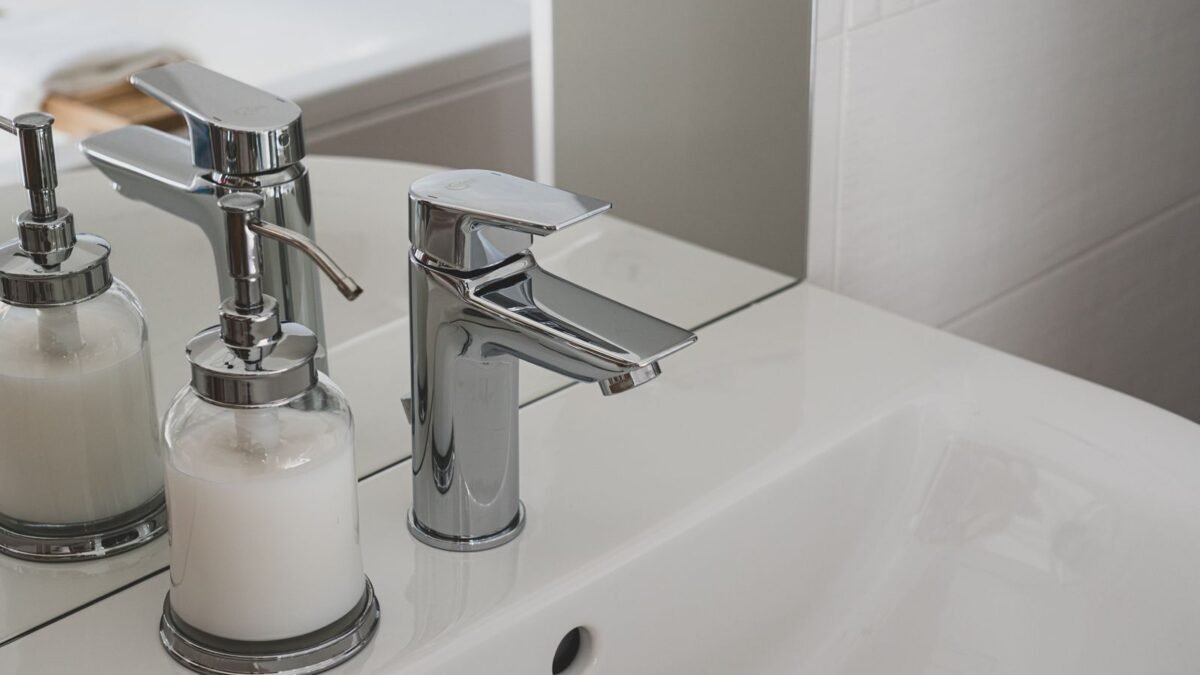
Quick Answer: White spots on faucets are calcium and magnesium left behind when hard water dries. Wrap the spotted area in paper towels soaked in white vinegar (or a 50/50 vinegar and water mix on PVD and coated finishes) for 15 to 60 minutes, wipe with a soft cloth, rinse and dry. For thick crust on chrome, a diluted descaler like CLR Calcium, Lime & Rust Remover works faster. Check your faucet maker's care guide first, because some finishes can't take any acid at all.
Disclosure: As an Amazon Associate, Grains & Gallons earns from qualifying purchases.
You wiped the faucet this morning and there are already new white spots around the base and under the spout. You're not cleaning wrong. Every drop that dries on the metal leaves its minerals behind, and in hard water that adds up fast. The Water Quality Association lists scale build-up on sinks, tubs, faucets and appliances among the classic signs of hard water.
In this guide
Rule out soap film and corrosion first
Not every white mark is mineral scale. A minute of checking saves you from scrubbing the wrong thing:
- White or gray, chalky, slightly raised, softens with vinegar: mineral deposits from hard water. This is the most likely answer.
- White film that wipes off with a damp cloth: soap or toothpaste residue, not scale.
- Blue-green crust at a joint or under the base: corrosion of copper or brass, often from a slow drip. That's a leak to fix, not just a stain.
- Dull or cloudy patches that nothing removes: the finish itself may be worn or etched, and cleaning won't bring it back.
If it's the first one, keep going.
Match the cleaner to your faucet finish
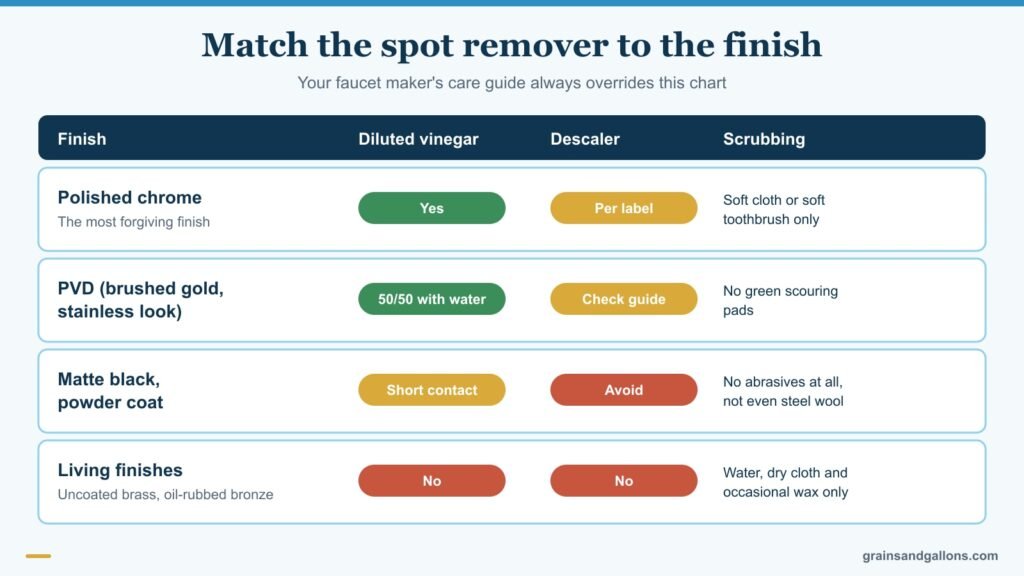
Chrome is the toughest common finish. Others need more care, and faucet makers spell it out. Moen's faucet finish care guide allows a 50/50 blend of household vinegar and water on its PVD, electroplated and powder coat finishes, warns that most green scouring pads contain mineral particles that scratch, and says ignoring its instructions may void the warranty. Cal Faucets goes further for what it calls living finishes such as uncoated brass and oil-rubbed bronze: never use vinegar, cleaners or abrasive pads on them, because the damage is irreversible.
So find your faucet's brand and finish name (often on the box, receipt or the maker's website) and read its care page before anything acidic touches it. If you can't find it, use diluted vinegar, keep contact time short, and test a hidden spot first.
Remove white spots on faucets with a vinegar wrap

White vinegar is a weak acid. It dissolves calcium carbonate slowly, which is exactly what you want on a finish you care about.
- Soak paper towels in white vinegar, or in a 50/50 mix with water for PVD, coated or matte finishes. Damp, not dripping.
- Wrap them around the spout, handle base or wherever the spots are, pressing into the crevices. Wet towels cling on their own.
- Wait 15 to 30 minutes for light spotting, up to an hour for heavier crust. Peek: the spot edges should soften or fade.
- Wipe with a soft, damp microfiber cloth. Work the seam where the faucet meets the sink with an old soft toothbrush.
- Rinse with clean water and dry completely. Any leftover haze shows up as you buff.
For the spout tip, fill a small plastic bag with vinegar, slip it over the end and hold it with a rubber band for about an hour, then run the water to flush loosened bits. If flow is weak too, see our guide to scale on faucet aerators. Use plain distilled white vinegar; it's clear, cheap and leaves no color behind.
When vinegar isn't enough: descalers and paste

Thick, layered buildup can take several rounds of vinegar. Two next steps:
- Baking soda paste. Mix baking soda with a little vinegar or water, spread it on the crust, wait, then wipe off with a soft cloth. It adds gentle mechanical action without a scouring pad.
- A commercial calcium and lime remover. These work much faster on chrome. Follow the label's dilution and contact time, ventilate, wear gloves and rinse well. Never leave it on longer than directed, and never mix it with bleach-based cleaners. Skip it on specialty finishes unless the faucet maker approves.
Don't reach for steel wool, scouring powder or green pads on plated finishes, and skip harsh acids like muriatic acid entirely; they're not meant for household fixtures. We compare two popular removers in CLR vs Lime-A-Way, and our list of the best limescale removers for faucets includes gentler formulas for delicate finishes.
Protect the sink and countertop
Descalers and vinegar can etch natural stone. On granite or marble, keep the acid on the faucet, wipe up drips right away, and see our guide to hard water stains on granite. A stainless sink needs a non-scratch cleaner used with the grain; our page on hard water stains on a stainless steel sink covers that.
How to keep the spots from coming back
Cleaning is only half the job. A few habits make a big difference:
- Wipe dry after use. Keep a microfiber cloth by the sink. A dry faucet can't spot.
- Fix drips. A slow drip keeps one area constantly wetting and drying, which builds crust quickly.
- Wax it, if allowed. Moen suggests a non-abrasive wax on matte and textured PVD finishes so water beads off instead of drying in place.
- Clean lightly and often. A quick weekly wipe with diluted vinegar on finishes that allow it stops buildup before it hardens.
- Test your water. A water hardness test kit tells you how hard it is. Very hard water will keep spotting no matter how often you clean, and that number tells you whether a softener is worth it.
Spots even with a softener
That points to a different problem. Either the softener isn't fully removing hardness, or the spots are from things a softener doesn't remove, like sodium, silica or other dissolved solids. Our guide to white spots that remain after softening walks through how to tell which.
FAQ
Can vinegar damage a faucet finish?
It can. Vinegar is safe on polished chrome with normal contact times, but long soaks can dull some finishes, and makers of uncoated brass, oil-rubbed bronze and other living finishes say never to use it. Dilute it 50/50 on coated finishes and check the care guide.
How long should I leave vinegar on white spots?
15 to 30 minutes is enough for light spots. Heavier crust can take an hour or a second round. Overnight soaks are for removable aerators, not the whole faucet.
What removes white spots on a matte black faucet?
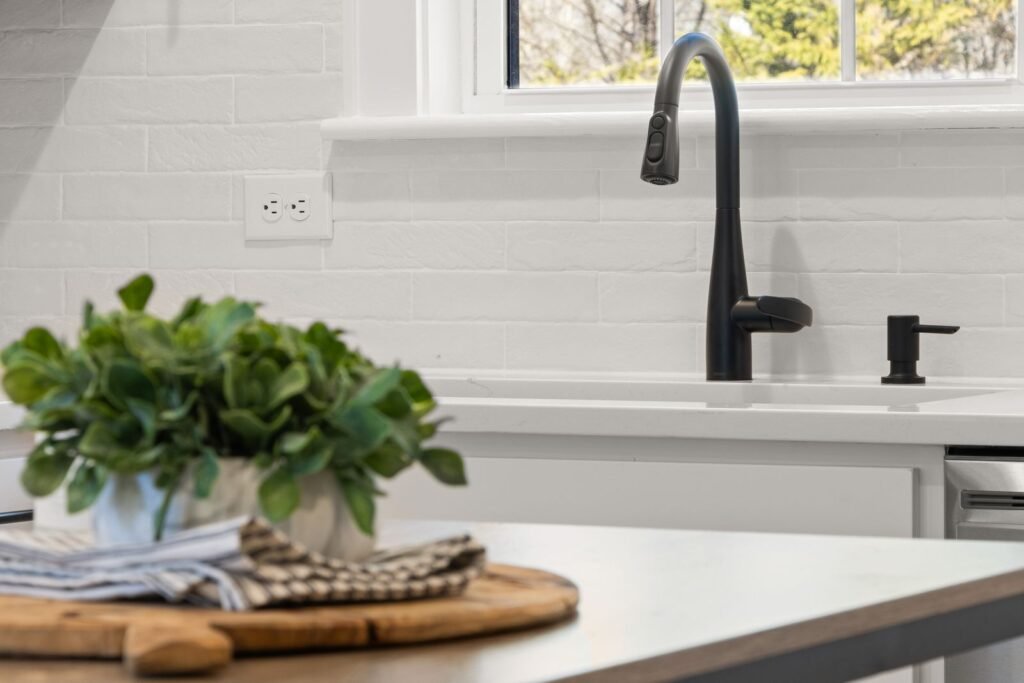
Start with mild soap and water. If spots stay, use a 50/50 vinegar and water mix for a short time if the maker allows it, then rinse and dry. Never use abrasive pads or steel wool on matte black or powder coat.
Why do white spots keep coming back so fast?
Because each drop of hard water leaves minerals when it evaporates. Drying the faucet after use, fixing drips and, in very hard water, softening the supply are the only lasting fixes.
Is lemon juice or citric acid better than vinegar?
They work the same way, as mild acids that dissolve calcium carbonate, and they smell better. The same finish rules apply: if a maker says no acids, that includes lemon and citric acid.
Wipe it dry and the white spots stay gone
White spots on faucets come off easily with the right acid for your finish: diluted vinegar first, a descaler only on chrome or approved finishes, and nothing abrasive. What actually keeps them away is drying the faucet, fixing drips and, if your water is very hard, dealing with the hardness itself.