

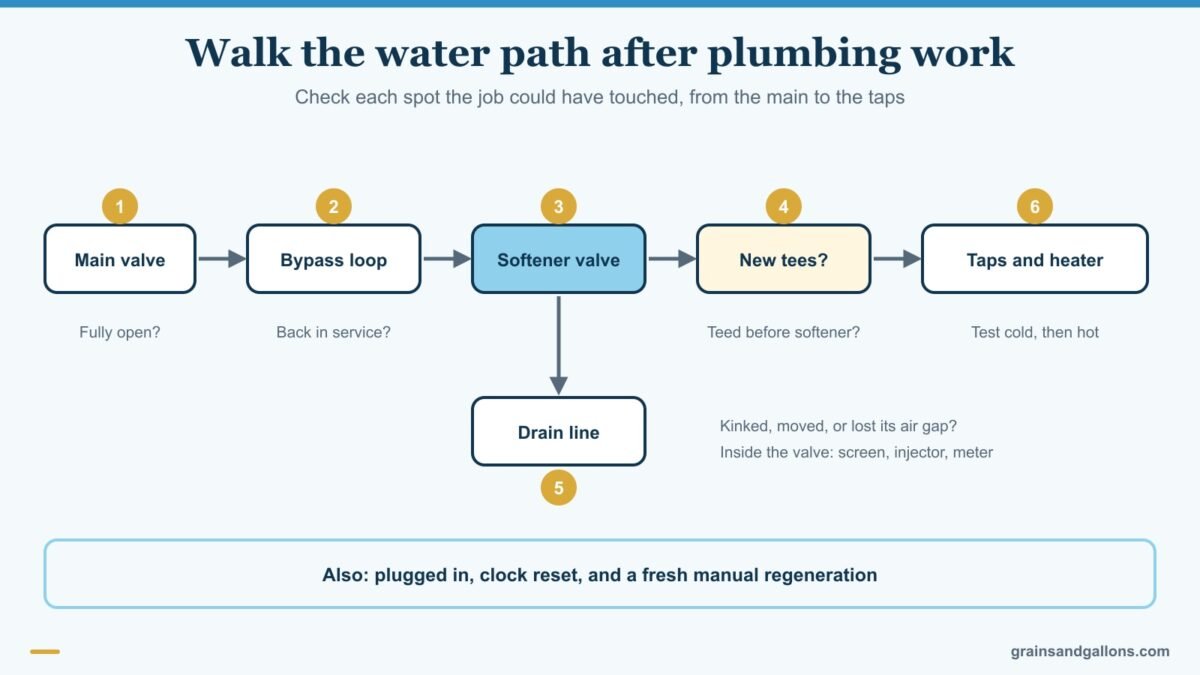
Quick Answer: When a softener stopped working after plumbing work, the usual cause is the bypass left in bypass, or one handle on a three-valve loop left partly open. Check those first. Then look for a new pipe teed in before the softener, a moved or kinked drain line, and debris in the injector or inlet screen from the water shutoff. Plug the softener back in, reset the clock and run a manual regeneration.
The plumber came to fix a leak under the sink, swap a water heater, or add a bathroom. A few days later the shower feels squeaky again. It's tempting to think the softener chose this exact week to die, but that's rarely what happened. Plumbing work changes things around the softener, and the change is usually easy to spot once you know where to look.
The simplest way to find it is to follow the water: start where it enters the house and walk the path to the taps, checking each thing the job could have touched. If the main valve was shut off, make sure it's fully open again; old gate valves sometimes get opened only partway, which lowers pressure and can upset brine draw.
In this guide
- Softener stopped working after plumbing work? Start at the bypass loop
- A new tee in front of the softener
- Debris shaken loose when the water came back on
- Drain line and connectors the job may have moved
- Left in bypass on purpose? Ask about new copper pipe
- Bring the softener back online after the job
- FAQ
- Follow the water and the fault usually shows itself
Softener stopped working after plumbing work? Start at the bypass loop
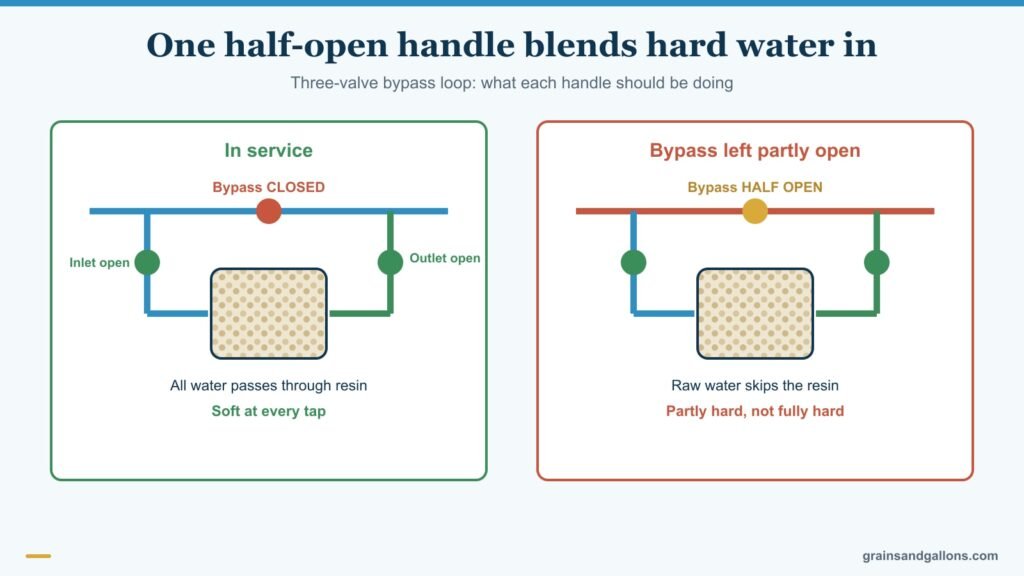
Plumbers often put the softener in bypass before they start, so it can't take on air or debris. If it's still in bypass, the house is getting raw water. Pentair's Fleck 5600SXT service manual lists "by-pass valve is open" as the first cause of hard water in its troubleshooting table.
Your softener has either a bypass valve on the back of the control head or a three-valve loop of separate shutoffs. On a three-valve loop all three handles matter: inlet open, outlet open, bypass closed. One handle left half open on the bypass leg blends raw water into your soft supply, so the water tests partly hard rather than fully hard, which is easy to misread as a weak softener.
A built-in bypass that's stiff can be coaxed: Pentair's 5600SXT system manual suggests rotating the handles 2–3 times before turning water on to seat the O-rings. One that won't move at all is covered in water softener bypass valve stuck. If yours is leaking or cracked, it's a good time to replace it; see our picks for water softener bypass valves.
A new tee in front of the softener
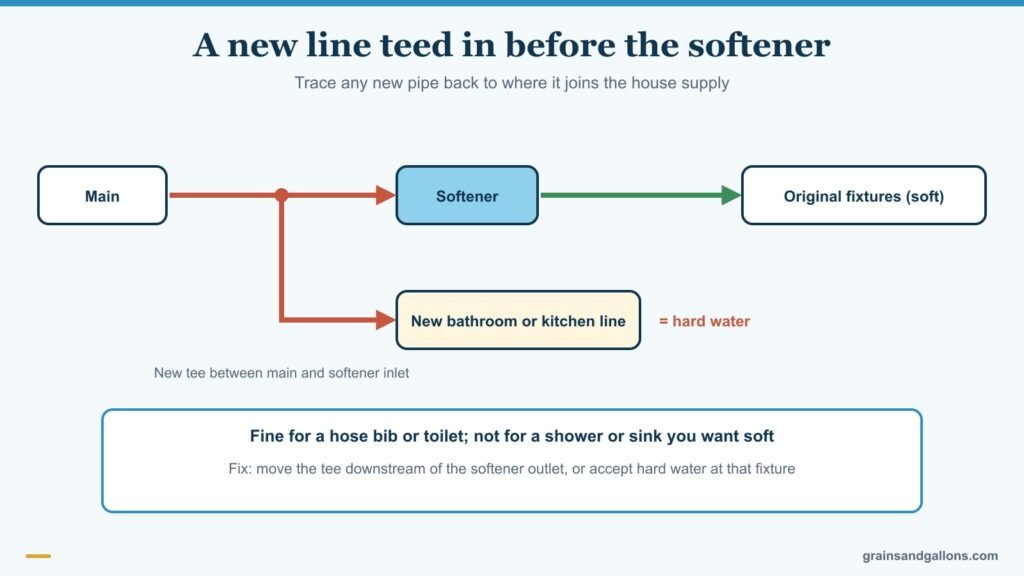
This is the sneaky one. A plumber adding a line may tee into the nearest cold pipe, which could be the raw line on its way into the softener. That sends unsoftened water to the new fixture, or, if pipes were rerouted, to more of the house than before.
Trace the new work back to where it joins the supply. If it comes off between the main and the softener inlet, anything it feeds gets hard water. That's fine for a hose bib or toilet, not for a bathroom you expect to be soft. The fix is to move the connection downstream of the softener outlet.
If the job was a water heater swap and only the hot water turned hard, the heater's cold feed is the prime suspect; see softener stopped working after a new water heater.
Debris shaken loose when the water came back on
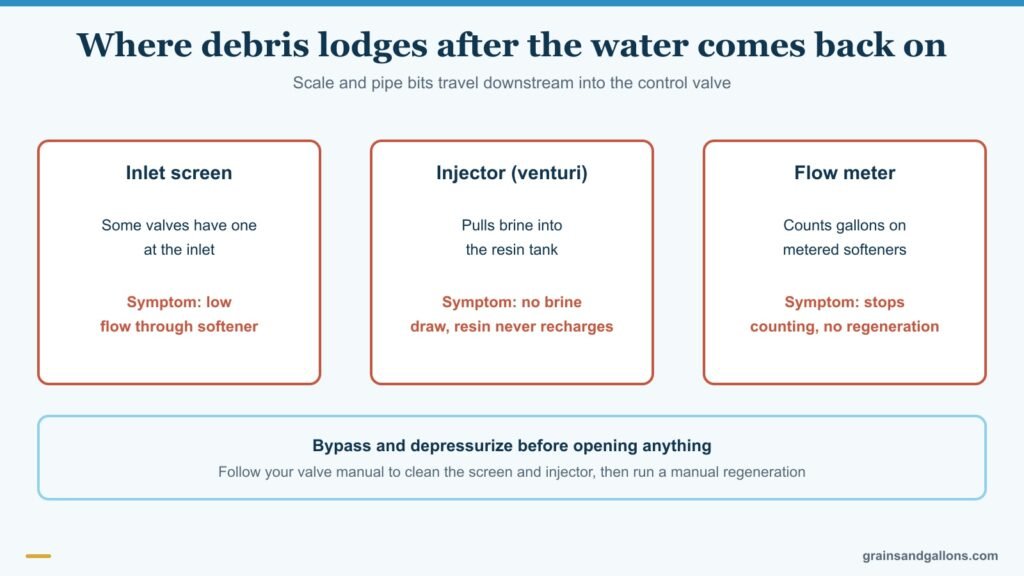
Shutting off and restarting the supply stirs up sediment, scale flakes and bits of old pipe. That debris flows downstream and can lodge in:
- The inlet screen on valves that have one, cutting flow through the softener
- The injector (venturi), which pulls brine. The Fleck table lists a plugged injector and a plugged injector screen as causes of a softener that won't draw brine, so the resin never recharges
- The flow meter turbine on metered softeners, which then stops counting gallons and never calls for regeneration
If the softener stopped softening right after the water came back on, cleaning the injector is a strong bet. Bypass and depressurize first, then follow how to clean a water softener injector.
Drain line and connectors the job may have moved
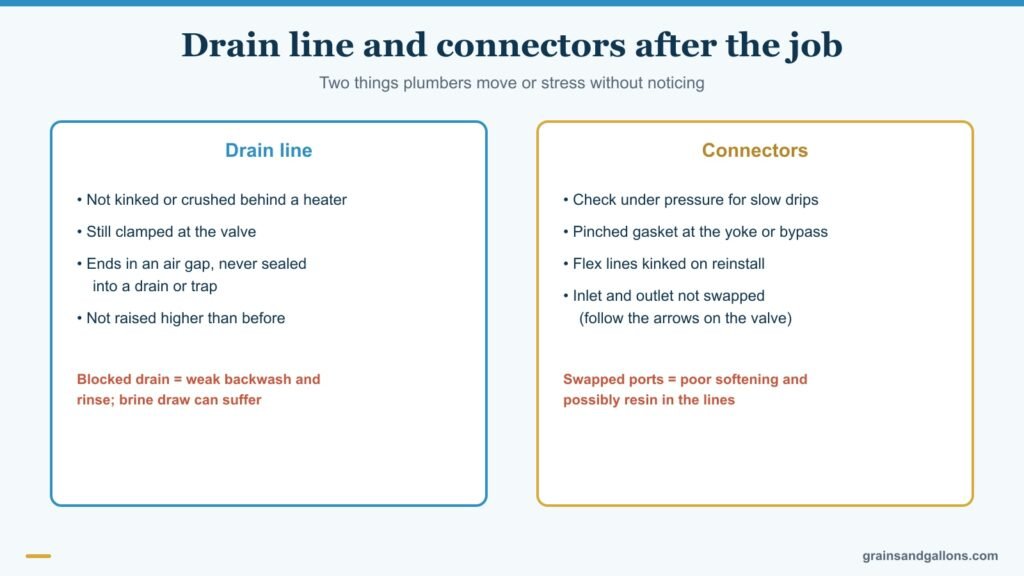
Plumbers moving a laundry standpipe or relocating a water heater sometimes kink or move the softener's drain tubing. If the drain is blocked, kinked or raised too high, the softener can't backwash and rinse properly, and brine draw can suffer. Follow the line from the valve to where it empties: unkinked, clamped at the valve, and ending in an air gap. Pentair's system manual calls for an air gap of 2 pipe diameters or 1 inch, whichever is larger, and warns never to insert the drain line directly into a drain, sewer line or trap. Full rules are in water softener drain line requirements.
If the softener was disconnected, check the connections under pressure. Slow drips at flexible connectors or yoke fittings mean a pinched gasket or a kinked connector; tired ones are worth replacing with sturdier flexible connectors for water softeners. Also confirm the inlet and outlet weren't swapped. Most valves have arrows or IN/OUT markings, and the Pentair manual warns that when existing valves are replaced, inlet and outlet plumbing can end up reversed. A backwards softener can soften poorly and push resin into the lines; see signs a softener is plumbed backwards.
Draining the plumbing can also leave air in the softener. It usually purges during normal use and the next regeneration, but sometimes a drained softener can't draw brine until it's refilled properly; see softener lost prime.
Left in bypass on purpose? Ask about new copper pipe
Not every bypassed softener is a mistake. The Minnesota Department of Health's home water softening FAQ advises that if your home has new copper plumbing, you shouldn't run the softener for at least the first few weeks, so the pipes can form a protective mineral layer that reduces the risk of excess copper in drinking water.
So if the job included new copper lines, ask the plumber before you flip the bypass back. If they left it bypassed deliberately, put a date on the calendar to return it to service, and treat the hard water in the meantime as expected, not as a failure.
Bring the softener back online after the job
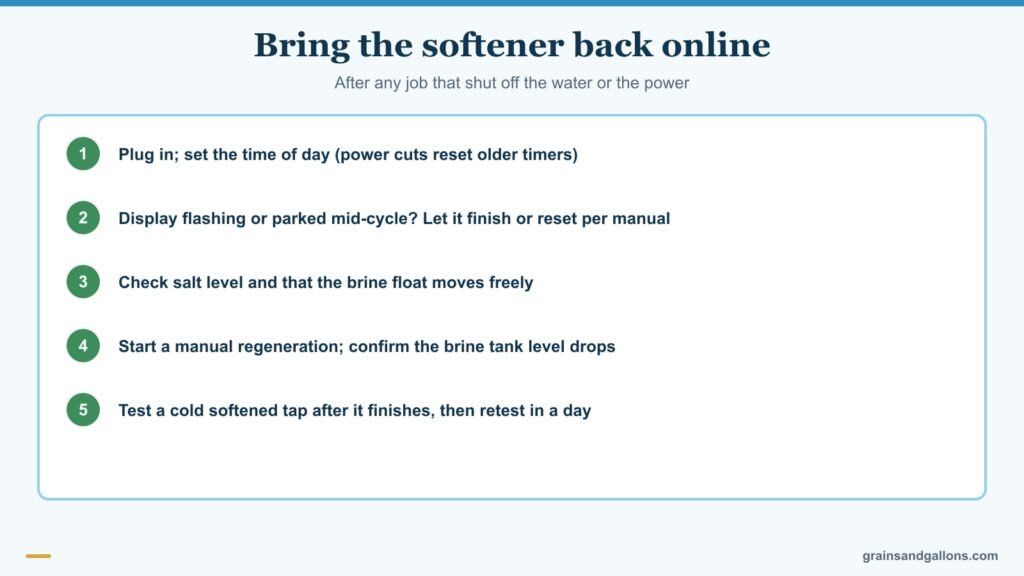
Softeners get unplugged to make room for a ladder or a power tool, and the water may have been shut off mid-regeneration. Work through these in order:
- Power and clock. Plug it into a live outlet that isn't on a wall switch. The Fleck manual's fix for a power failure is to reset the time of day, so regeneration happens overnight instead of mid-afternoon.
- Interrupted cycle. If the display is flashing or parked in a cycle position, let it finish or reset it as your manual describes.
- Salt and float. Make sure there's salt and that the brine float moves freely.
- Manual regeneration. Start one and watch the brine tank level drop during brine draw. Our water softener startup procedure shows what each cycle should look like.
- Test. Check a cold softened tap after the regeneration, then again the next day.
If you checked the valves, traced the new pipe, confirmed the drain, cleaned the injector and reset the clock, and the water is still hard, the plumbing work may be a coincidence. Test raw and softened water side by side, and call the plumber to ask exactly what they shut off and reconnected.
FAQ
Why is my water hard after a plumber worked on my pipes?
Most often the softener was left in bypass, or one handle on a three-valve loop was left partly open. Next come a new line teed in before the softener, debris in the injector from the shutoff, and a softener that was unplugged and missed regenerations.
Can turning off the water damage a water softener?
Usually not. The bigger risks come afterward: debris knocked loose when the water comes back on can clog the injector or screen, and a softener drained during the work may need a regeneration to draw brine again.
What happens if the water is shut off during regeneration?
The cycle can't run properly without water, so the softener may skip it or stop mid-cycle. Once water is back, let the valve return to service or reset it per the manual, then run a manual regeneration.
How do I know if my softener is in bypass?
Look at the bypass handle or knob on the valve; it's usually labeled service and bypass. On a three-valve loop, the softener is bypassed if the middle valve is open or either softener valve is closed.
Should a softener stay off after new copper plumbing?
Minnesota's health department advises not running the softener for at least the first few weeks with new copper plumbing, so the pipes can build a protective mineral layer. Ask your plumber whether the bypass was left on for that reason.
Follow the water and the fault usually shows itself
A softener stopped working after plumbing work is almost always reacting to something the job changed. Walk the path from the main: bypass loop in service, no new tee ahead of the softener, a clean injector and screen, a free-flowing drain with its air gap, and power and clock restored. Then run a manual regeneration and test a cold tap.