

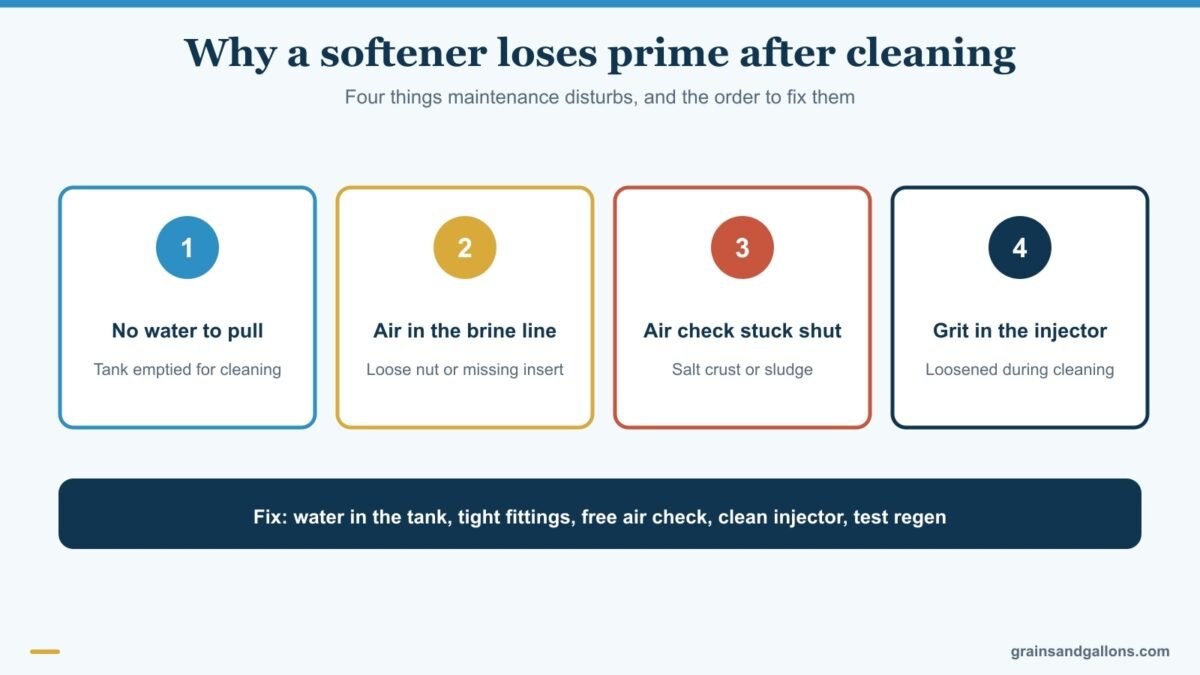
Quick Answer: When a water softener lost prime after you emptied or cleaned the brine tank, it's usually because there's no water at the bottom for the injector to pull and the brine line is full of air. Pour water into the brine tank until the air check is covered, tighten both brine line fittings, then start a manual regeneration and watch the level drop during brine draw. If it doesn't, free the air check and clean the injector.
"Lost prime" isn't a term most manuals use, but anyone who's cleaned a brine tank knows the feeling. Everything went back together, the cycle ran, and the salt sat there untouched. Two days later the water is hard. A water softener that lost prime isn't broken. Its brine draw relies on suction from a small venturi, the injector, and that only works if there's water to pull and no air leaking in. Maintenance tends to take away both.
In this guide
Why cleaning the brine tank breaks brine draw
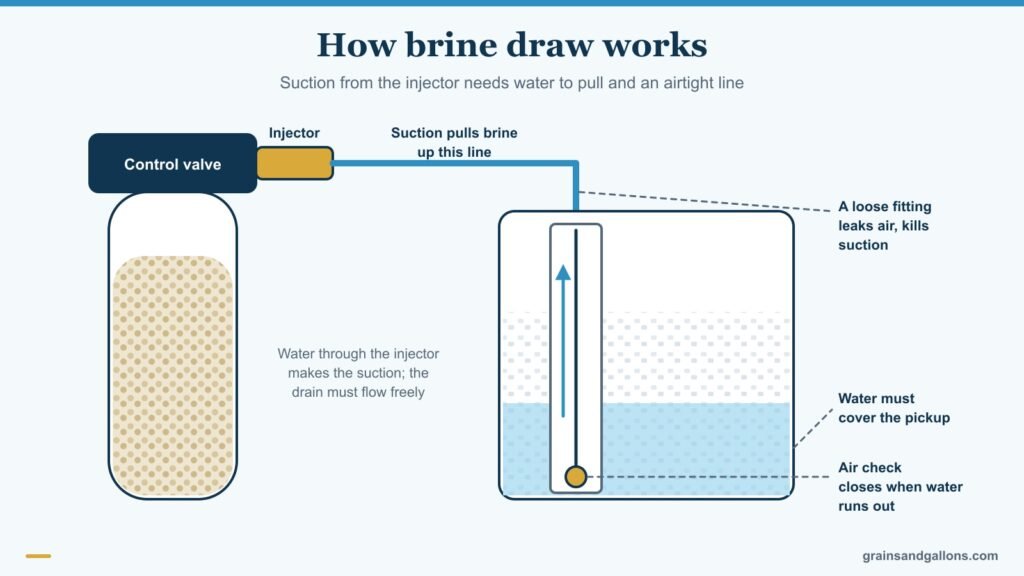
During the brine step, water rushes through the injector and creates suction on the brine line, pulling salty water up from the brine tank and through the resin. Our explainer on how regeneration works covers the full cycle. After maintenance, a few things stop it:
- No water in the brine tank. If you emptied it, there's nothing to draw, and most valves only refill the tank after the draw step.
- Air in the line. A dry line full of air is harder to pull water through, especially with a small leak at a fitting.
- The air check closed. Most brine wells have an air check, a float or ball at the bottom of the safety float assembly that shuts when the water runs out so the valve doesn't suck air. In an emptied tank it sits closed, and salt or sludge can glue it there.
- A fitting not fully tight. The brine line can slip at the valve or the safety float during cleaning. A tiny air leak kills suction.
- Debris in the injector. Cleaning stirs up sludge and grit, which gets pulled into the injector screen on the next cycle.
Water softener lost prime? Re-prime it in six steps
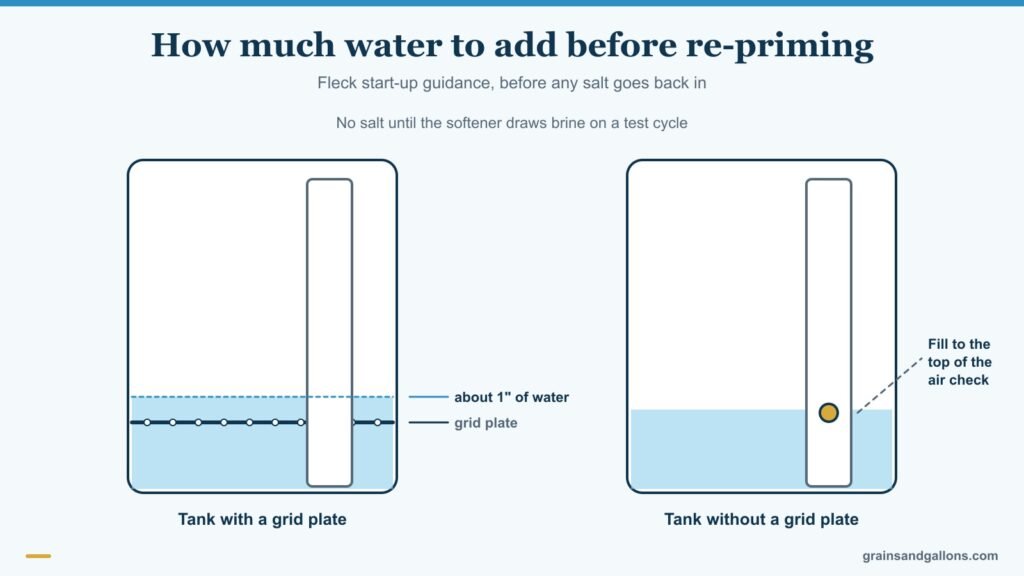
1. Put water in the brine tank. The Fleck 5600SXT service manual's start-up procedure calls for about 1 inch of water above the grid plate, or to the top of the air check if there's no grid, with no salt added yet. What you'll see: water inside the brine well and the float lifted off the bottom.
2. Check the brine line at both ends. The tubing should be pushed fully into its fitting at the valve and at the safety float, with the insert in place and the nut snug. Look for cracks near the ends. What you'll see: tubing that won't pull out with a gentle tug.
3. Free the air check. Lift the safety float assembly out of the brine well, rinse salt crust and sludge off in warm water, and make sure the check ball or float moves freely. If it's cracked or still sticks, replace the assembly; our picks for the best brine tank safety floats cover fit by brand. What you'll see: a ball or float that moves when you tip the assembly.
4. Start a manual regeneration and watch. Let it run through backwash into brine draw. Fleck's start-up steps say to make sure the unit is drawing water from the brine tank and note that this step may need to be repeated, so don't panic if air clears only on the second try. What you'll see: the brine tank level dropping steadily, often with a soft sucking sound at the valve.
5. Let it finish and refill, then add salt. After the rinses, the valve refills the brine tank. Check that the water stops at a sensible level, then add salt.
6. Test the water the next day. If hardness is down, it's primed. If it's still hard, run one more regeneration now that the tank holds real brine.
Some valves let you step to a brine fill or refill position manually, which puts water back before a regeneration and helps purge air from the line. Non-electric twin-tank softeners have their own regeneration logic. Check your model's manual for what each step is called.
Run the bucket test to split the problem
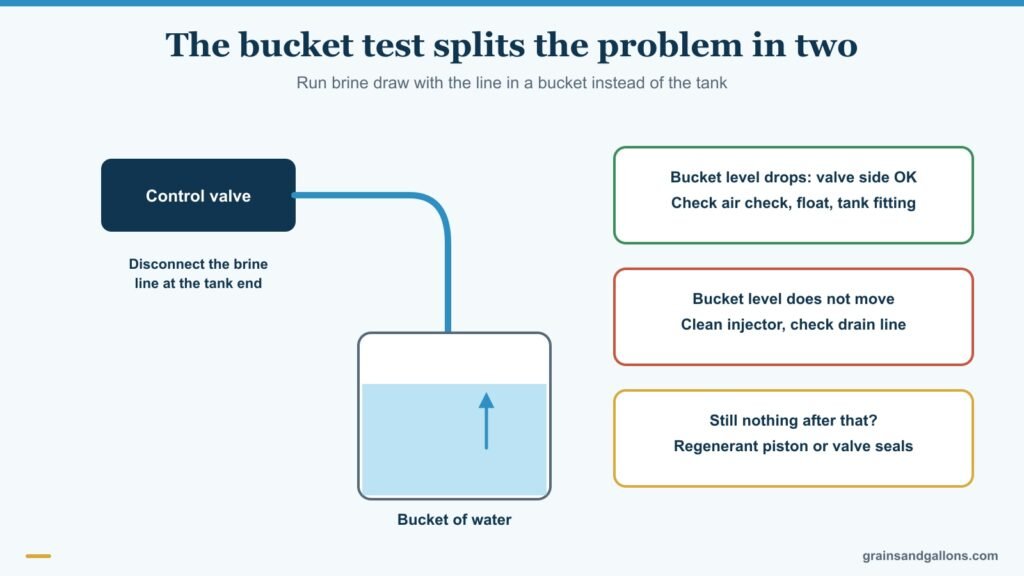
If the tank level still won't move, find out which side of the system is at fault. Disconnect the brine line at the brine tank end, drop it into a bucket of water and run the brine draw step again.
- The bucket level drops: the valve, injector and line are pulling fine. The problem is in the tank: a stuck air check, a bad float assembly or a loose fitting at the brine well.
- The bucket level doesn't move: the problem is at the valve. Clean the injector and check the drain line before anything else.
This test takes ten minutes and stops you from buying a float assembly when the injector is the real issue.
If it still won't draw
Work through these, cheapest first. The Fleck and Clack troubleshooting tables list the same suspects.
Air leak in the line. Bubbles moving in the brine line during draw, or a level that drops and then stops, mean air is getting in. Clack lists a regenerant line connection leak as a cause of failing to draw. Our guide to brine line air leaks shows how to find them.
Clogged injector or screen. Both manuals list a plugged injector, and Fleck also a plugged injector screen. Turn off water and power, remove the injector cap, and clean the nozzle and throat with a soft brush or toothpick, never a metal tool. See how to clean a water softener injector.
Restricted drain line. The injector needs water flowing to drain to make suction. Fleck lists a plugged drain line flow control as a cause of "fails to draw brine," and Clack lists drain line restrictions and a line that's too long or too high. Check for kinks, debris or a long upward run.
Low pressure. Fleck lists low line pressure as a cause of failing to draw brine, with the fix of raising it to at least 20 psi. A well whose pressure tank wasn't recharged after maintenance can fall below that.
Valve parts. If the bucket test fails with a clean injector and a clear drain, Clack points to a faulty regenerant piston. That's a valve repair.
Brine tank stays dry after the cycle. That's a refill problem, not a draw problem. No water in the brine tank walks through the refill controls.
FAQ
How do I know if my water softener is drawing brine?
Mark the water level in the brine tank, start a manual regeneration and check it during the brine draw step. A level that drops steadily means it's drawing. Testing the softened water the next day confirms it.
Should I add water to the brine tank after cleaning it?
Yes. Without water at the bottom the injector has nothing to pull, and many valves refill only after brine draw. Add enough to cover the bottom of the brine well and the air check, then let the softener manage the level.
Can air in the brine line stop regeneration?
It can stop the brine part of it. The cycle still runs on the timer, but if air leaks in, the injector pulls air instead of brine and the resin isn't recharged, so the water turns hard.
How long does brine draw take?
It varies by valve, tank size and settings, so check your manual for the brine draw time. What matters for priming is that you see the level move during that step.
Do I need to re-prime after adding salt?
No. Adding salt to a tank that still has water doesn't affect prime. Priming problems come from emptying the tank, disconnecting the brine line or disturbing the air check.
Water first, then a sealed line and a clean injector
A water softener lost prime after maintenance almost always comes back with the same fixes: water in the tank to cover the air check, tight brine line fittings, a free-moving air check and a clean injector. Run a manual regeneration the same day you finish cleaning, while you can watch it. Next time, avoid emptying the tank completely, photograph the brine line fittings before you disconnect them, and follow our guide on how to clean a water softener brine tank.
Sources: Pentair Fleck 5600SXT downflow service manual; Clack WS1 drawings and service manual.