

Quick Answer: Water softener drain line slime is almost always biofilm: bacteria (and sometimes mold) living in the water that sits in the tubing between regenerations. Bypass the softener, pull the tube off the valve without losing the small flow control washer, and replace the tubing rather than scrubbing it. Then reroute it short and sag-free, and make it end above a real air gap instead of pushed down into the standpipe. Orange slime on a well usually means iron bacteria upstream, which needs its own fix.
You pulled the drain hose off the softener for some other reason, and something gray, black or orange slid out, the texture of wet jelly. Or you can see dark streaks through the clear tubing. It looks alarming, but in normal use, treated water doesn't flow back up the drain line, so the slime is on the waste side of your softener, not in what you drink.
This guide covers why it grows, what the color tells you, the cleanup, and the two routing changes that stop it coming back.
In this guide
Why water softener drain line slime grows between regenerations

The drain line is a near-perfect place for bacteria. Water sits in it for days between regenerations, at room temperature, in the dark. During backwash, the softener flushes out whatever the resin bed has caught: sediment, iron, organic matter. Some of it coats the tubing wall. Bacteria that land there have food, moisture and time. The result is biofilm, a slippery mat of microbes glued together by the slime they produce.
Three conditions make it much worse:
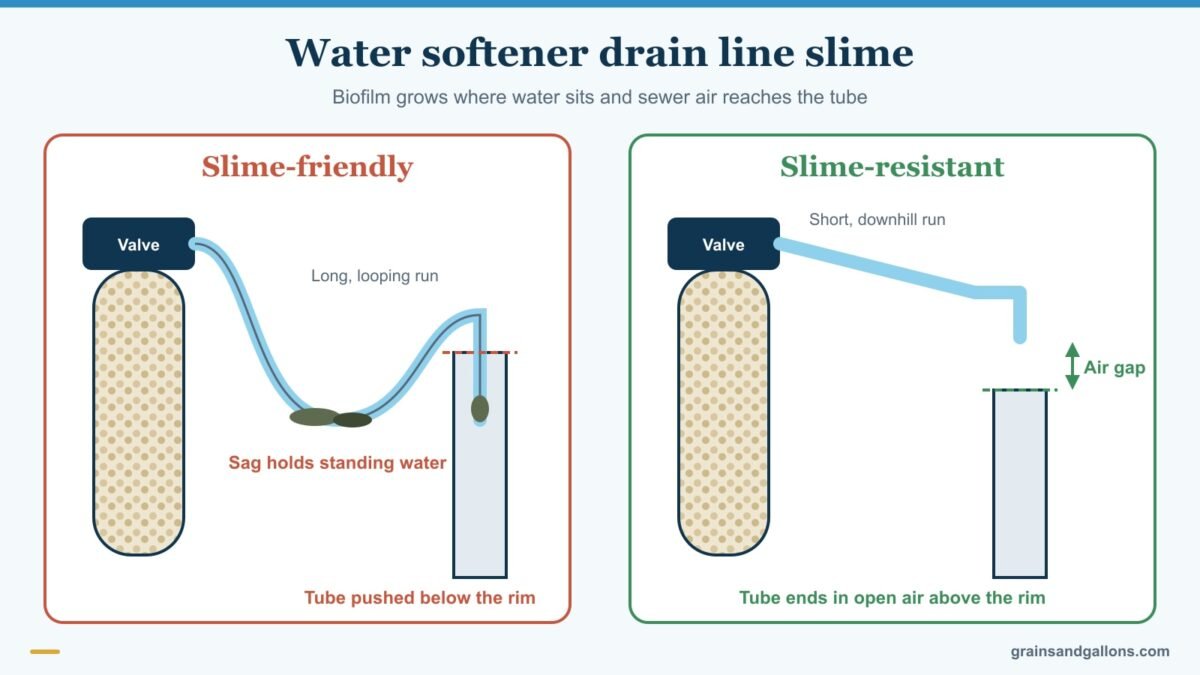
- Low spots and long runs. A tube that sags or loops holds a puddle that never fully drains. That puddle is where most of the growth starts.
- No air gap. If the tube is pushed deep into a standpipe or zip-tied below the rim of a laundry sink, sewer air and splash-back reach the end of it. Drain bacteria get a head start, and the tip is usually the slimiest part.
- Iron or manganese in the water. On many wells, backwash water carries iron and manganese that feed specific bacteria and add color to the slime.
A slimed line isn't only ugly. Growth that narrows the tube or coats the flow control washer restricts drain flow, and a restricted drain is one of the classic causes of a softener drain line backing up or a brine tank that won't empty during regeneration.
Match the slime's color to its cause

| What you see | Most likely | What it means for you |
|---|---|---|
| Clear to gray, slippery film | General biofilm | Replace the tube and fix the air gap |
| Black or dark green specks, fuzzy patches | Mold or dark biofilm | Same fix. Check that the room isn't damp |
| Orange, rust or reddish-brown slime | Iron bacteria, if you're on a well | The bacteria are probably in your well and plumbing too, not just the drain line |
| Black, gritty slime that smears black on a paper towel | Manganese, often with bacteria | Test the water for manganese and iron |
| Tiny amber or yellow beads mixed in | Resin beads | A different problem: a damaged distributor or valve. See below |
The Minnesota Department of Health describes iron bacteria as leaving yellow, orange, red or brown stains and slimy deposits that can be rusty, yellow, brown or gray. It says they aren't known to cause disease, but they can make conditions better for organisms that do and they can clog well equipment. If your slime is orange and you have a well, read our iron bacteria in well water guide. Swapping the drain tubing helps, but the source is upstream. A home iron test kit is a quick first check before you pay for a lab.
Black slime is the other one worth a closer look. Penn State Extension notes that manganese often leaves a dense black stain, while iron stains orange or brown. Dark gritty residue that smears like soot points to manganese more than mold.
Pull, clean or replace the tubing

1. Bypass the softener and make sure it isn't mid-regeneration. If the valve is in a cycle, wait for it to finish, or check your manual for how to advance it safely. You don't want brine or backwash coming out of an open drain port.
2. Take the tubing off the valve. On most valves the drain line pushes onto a barbed fitting or into a compression nut. What you'll see: a small plastic or rubber disc with a hole in it, inside the fitting. That's the drain line flow control. Don't lose it, and note which side faces up, because it only works one way. If it's slimed over, rinse it with warm water and a soft brush. Our clogged drain flow control guide shows what a healthy one looks like.
3. Decide whether to clean or replace. Most softener drain tubing is inexpensive vinyl or poly tubing. Unless the run is long and hard to reach, replacing it is faster and more thorough than scrubbing the inside, because biofilm hangs on in bends and fittings. Replace it outright if it's cloudy, stiff, cracked, kinked or stained all the way through.
4. If you're cleaning it, flush the tube with warm water first, then fill it with a dilute household bleach solution and let it sit for about 15 to 30 minutes. Flush it well afterward. Wear gloves and eye protection, work somewhere ventilated, and never mix bleach with vinegar, ammonia or other cleaners. Keep the bleach out of the softener valve itself: chlorine can damage resin and seals, and sanitizing the softener is a separate job with its own dose.
5. Clean the drain end. Wipe out the standpipe opening, the air gap fitting or the sink edge the tube drains into. What you'll see: often more slime there than in the tube.
6. Reinstall with a better route and test it. Keep the run as short as practical, with no sags, and secure it so it can't flop around during backwash. Use at least the tubing size your valve's manual calls for (most residential valves want 1/2-inch inside diameter or larger; see the drain line requirements for length and height limits). Our walkthrough on connecting softener drain tubing covers clamps, fittings and routing. Then run a manual regeneration and watch the drain end: you want strong, steady flow during backwash and no drips at the valve.
Cleaning versus replacing at a glance:
| Bleach soak | New tubing | |
|---|---|---|
| Cost | A cup of bleach | A few dollars for most runs |
| Time | 30 to 45 minutes with flushing | About the same, less mess |
| Gets slime out of bends | Partly | Completely |
| Best when | The run is long, buried or hard to reach | You can reach both ends, which is most installs |
An air gap starves the slime of sewer air
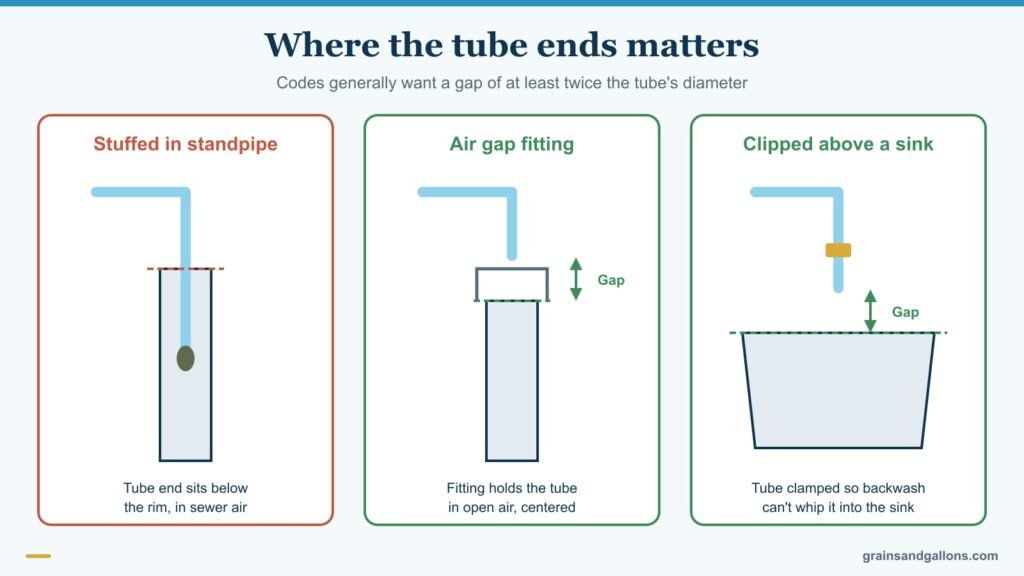
Plumbing codes generally require the softener drain line to discharge through an air gap: an open vertical space between the end of the tube and the flood rim of whatever it drains into. Most codes set that gap at no less than twice the diameter of the drain tube, and some manufacturers' manuals give a fixed figure, so your local inspector has the final word. The gap keeps sewer water from being siphoned back toward the softener.
A lot of DIY installs skip it by stuffing the tube down a standpipe. That breaks the rule, and it also feeds the slime, because the tube tip sits in the warm, humid, bacteria-rich air of the drain. Pulling the tube up so it ends in open air means the line drains completely and dries between cycles.
The neat way to get a gap and a secure tube at the same time is a clip-on air gap fitting that seats in the standpipe. Our list of the best air gap fittings for softener drain lines covers the common styles. A tube that simply dangles an inch above the pipe will eventually jump out under backwash flow and spray the floor, so clamp it.
When the slime starts upstream of the drain
If the brine tank smells, has slime on the walls, or the softened water itself smells musty or like rotten eggs, the drain line isn't the only problem. Bacteria can colonize the brine tank and resin bed, especially in homes on a well or with a softener that sat unused for weeks. Follow our steps to sanitize a water softener, using the manufacturer's recommended sanitizer and dose, because some resins and valves don't tolerate strong chlorine.
On a well with orange or black slime, the bacteria and the metals are coming in with the raw water. A drain cleanup buys time, but the lasting fix is at the well: shock chlorination for iron bacteria, and iron or manganese treatment sized to your test results. Penn State notes that softeners only handle iron and small amounts of manganese under certain pH and hardness conditions, and that oxidized iron and manganese foul resin.
Beads in the slime? Small, round amber or yellowish beads aren't slime. They're resin. A few after a new install can be normal fines. A steady stream every regeneration points to a cracked distributor, a broken bottom basket or the wrong backwash flow. See resin beads in the softener drain line for that repair.
FAQ
Is slime in a water softener drain line dangerous?
Not to your drinking water in normal use. The drain line carries waste water away from the softener, and the air gap stops it flowing back. The slime is a sign of standing water and missing air, not contamination of your softened water. Wear gloves when you handle it and wash up afterward.
Can I pour bleach down the softener drain line to kill the slime?
You can soak the tubing once it's off the valve, but don't push bleach back toward the control valve or into the resin tank through the drain port. Chlorine can damage resin and seals. If the softener itself needs disinfecting, use the manufacturer's sanitizing method through the brine tank.
Why is the slime in my drain line orange?
Orange or rust-colored slime on a private well usually means iron bacteria. They live in the well and plumbing as well as the drain line, so replacing the tubing only treats the symptom. Test for iron and consider shock chlorinating the well.
How often should I check the softener drain line?
Once or twice a year is enough for most homes. Doing it when you add salt makes it easy to remember, and clear tubing lets you spot dark streaks without disconnecting anything.
Can drain line slime stop a softener from regenerating?
It can stop it regenerating properly. Heavy growth narrows the tube and can coat the drain line flow control washer, which cuts backwash flow and can leave brine in the tank. If your brine tank stays full after a cycle, check the drain line first.
Should I use clear or opaque drain tubing?
Clear tubing makes slime easy to see and is fine for most indoor installs. Opaque tubing can slow growth a little in a bright room, but it hides problems. The routing and the air gap matter far more than the tube color.
New tubing and an open air gap keep it gone
Water softener drain line slime comes back when water sits in a sagging tube and the tip breathes sewer air. Replace the tubing rather than fighting it with a brush, put the flow control washer back the right way up, keep the run short and sag-free, and make the tube end above a proper air gap. If the slime is orange or black and you're on a well, test the water too, because the real source is upstream. Then glance at the line each time you add salt.