


Quick Answer: White dust from ultrasonic diffuser mist is dissolved minerals from your tap water. The diffuser shatters water into a fine mist, and everything in that water, including calcium and magnesium, goes airborne and settles as powder when the droplets dry. Switch to distilled water and clean the reservoir and ultrasonic disc with white vinegar to remove the scale already there. The dust should stop within a day or two.
If you're wiping up white dust from ultrasonic diffuser mist every few days, you're not imagining it. It shows up on the dark stuff first: a fine gray-white film on the TV stand, the nightstand, the black speaker beside the diffuser. Wipe it and it smears a little, then it's back by the weekend.
Nothing's wrong with the diffuser. It's doing exactly what it was designed to do, with water that has more in it than you'd think.
In this guide
- White dust from ultrasonic diffuser mist: what it is
- Dust, film or slime: read the residue
- Pick water by how much is dissolved in it
- Descale the reservoir and ultrasonic disc
- Is diffuser mineral dust safe to breathe?
- Running it for dry air? Use a humidifier instead
- FAQ
- Distilled water stops the dust; vinegar clears what's left
White dust from ultrasonic diffuser mist: what it is
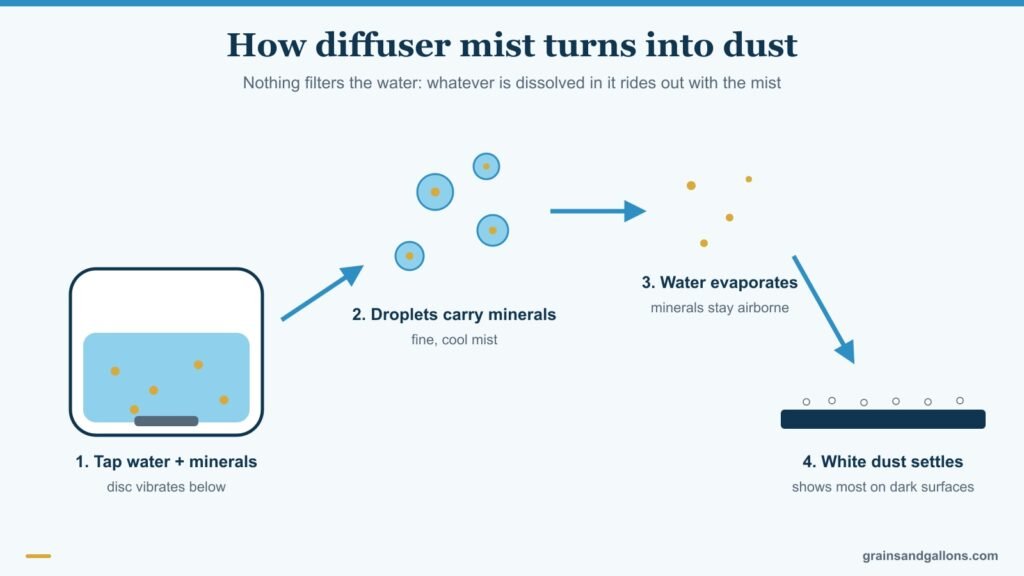
Most essential oil diffusers are ultrasonic. A small disc at the bottom of the reservoir vibrates very fast and breaks the water surface into a cool, visible mist. There's no boiling and no filtering, so every droplet carries the same dissolved solids your tap water had.
When those droplets evaporate in the room, the water leaves and the minerals don't. They drift down as a very fine dust. The EPA notes that ultrasonic and impeller humidifiers are "very efficient at dispersing minerals in tap water into the air," and says some users are bothered by the "white dust" that shows up on surfaces (EPA: Use and Care of Home Humidifiers). A diffuser is a tiny version of the same machine, so the same advice applies.
How much dust you get tracks closely with how hard your water is. In a soft-water city you might never notice. On hard well water, a diffuser running every night can coat a shelf in a week.
Dust, film or slime: read the residue
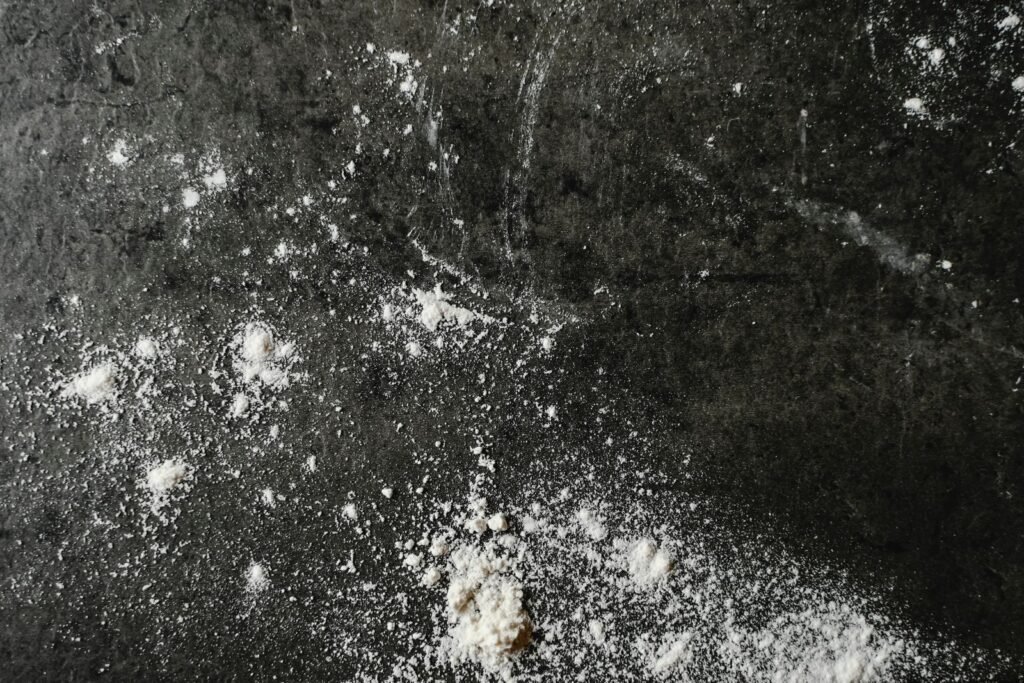
Not everything near a diffuser is mineral dust. Use this to sort it out:
| You notice | What it means |
|---|---|
| Fine white or gray dust near the diffuser, wipes off easily | Normal for tap water. Mineral dust. |
| Crusty white ring inside the reservoir or on the disc | Scale building up. Clean it, or mist output will drop. |
| Mist output weaker than when new | Usually scale on the ultrasonic disc. |
| Oily, sticky film on nearby surfaces | That's the essential oil, not minerals. Use fewer drops or move the diffuser. |
| Slimy feel or musty smell in the reservoir | Growth in standing water. Empty, clean and dry it daily. |
| Dust continues with distilled water | Check the bottle label, look for leftover scale, or rinse out cleaning residue. |
Pick water by how much is dissolved in it
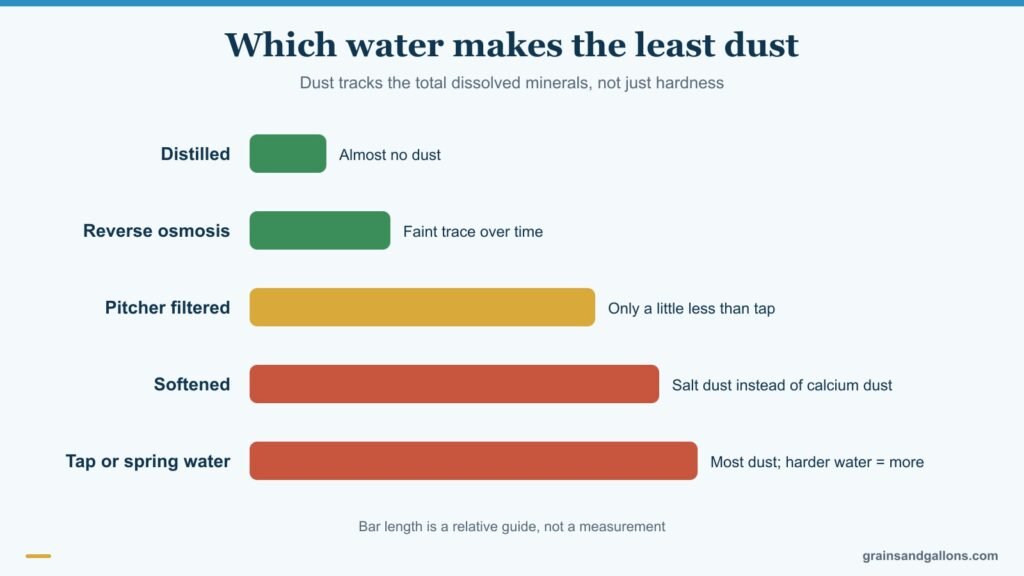
1. Distilled water. The EPA says "distillation is the most effective method for removing minerals from water" and recommends bottled water labeled distilled. The dust stops. It's cheap by the gallon at most grocery stores, and a diffuser uses very little. If you run several diffusers or a humidifier too, a home unit can make sense; our roundup of the best countertop water distillers compares them.
2. Deionized or reverse osmosis water. Both remove most dissolved solids. RO water from an under-sink system may still leave a faint trace of dust over time, but far less than tap water.
3. Filtered pitcher water. Most standard pitcher filters target taste, chlorine and some metals. They don't remove much calcium, so they reduce the dust only a little.
4. Softened water. This one surprises people. A water softener swaps calcium and magnesium for sodium. The total amount of dissolved minerals barely changes, so you trade calcium dust for sodium-salt dust: less scale inside the diffuser, but still residue in the room. We go into this in should a humidifier use softened water.
5. Spring, artesian or "mineral" bottled water. The EPA points out these haven't been treated to remove minerals, so they may contain more than your tap. Don't use them for this.
What about demineralization cartridges and filter beads? The EPA says their "ability to remove minerals may vary widely." They're made for humidifiers, rarely fit small diffusers, and are no match for distilled water; see why a humidifier demineralization cartridge may not be working.
Want to know how much is in your tap water first? A TDS meter gives a quick total dissolved solids number, and distilled water should read close to zero. Our guide on how to use a TDS meter explains what the reading means and what it misses.
Descale the reservoir and ultrasonic disc

Switching water stops new dust, but scale left inside the diffuser can keep flaking off for a while and weakens the mist. Check your diffuser's manual first, since some makers give their own cleaning method. The general approach:
- Unplug the diffuser and empty it.
- Fill the reservoir about halfway with water and add a capful (about a tablespoon) of white vinegar. Some manufacturers say to run it on this mix for a few minutes; others say just let it sit. Follow yours.
- After 5 to 10 minutes, empty it. Dip a cotton swab in plain vinegar and gently clean the ultrasonic disc. Don't scrape it with anything hard or metal; it's fragile.
- Wipe the inside with a soft cloth, rinse with clean water and let it dry with the lid off.
On tap water, do this at least weekly. The EPA's advice for portable humidifiers, which use the same misting method, is to empty, dry and refill daily and to clean every third day to reduce scale and microorganisms, and that's a sensible standard for a diffuser you run every night. On distilled water, a cleaning every week or two is usually enough, mostly to clear oil residue.
Is diffuser mineral dust safe to breathe?

The minerals themselves are mostly the same calcium and magnesium compounds you drink every day. The concern is that fine particles end up in the air you breathe, and the EPA says the health effects of minerals and microorganisms dispersed by home humidifiers "are not fully understood."
That's not a reason to panic, but it is a reason to take the easy precaution. If anyone in the house has asthma, allergies or other breathing problems, use distilled water. A diffuser running all night in a small bedroom puts far more mineral dust in the air than one used for an hour in a large living room. If you have specific health concerns, talk to your doctor.
The dust itself cleans up like any household dust. A damp microfiber cloth works better than a dry duster, which just pushes the fine powder back into the air.
Running it for dry air? Use a humidifier instead
A lot of people end up running a diffuser for hours because the air feels dry. Diffusers hold very little water and aren't built for that. If dry air is the real goal, a humidifier sized for the room does the job better, and evaporative and steam (warm mist) types don't throw minerals into the air the way ultrasonic units do.
Don't overdo it either way. The EPA warns against humidifying above 50 percent relative humidity, and its mold and moisture guide puts the ideal indoor range at 30 to 50 percent. See our list of the best humidifiers for hard water, and our main guide to humidifier white dust for which humidifier types cause it.
FAQ
Why is my diffuser leaving white powder everywhere?
The powder is minerals from the water, mostly calcium and magnesium, carried out in the mist and left behind when the droplets dry. Harder tap water means more powder. Distilled water stops it.
Does distilled water completely stop diffuser dust?
Nearly. Distilled water has almost no dissolved minerals, so new dust stops. If you still see some, it's usually old scale flaking off the disc or reservoir. Descale once and it should clear up.
Can I use boiled tap water in a diffuser?
It won't help. Boiling kills microbes but doesn't remove dissolved minerals. In fact, as some water boils off, the minerals left behind become slightly more concentrated.
Will the white dust damage electronics or furniture?
It's mostly a cleaning nuisance. A light film wipes off with a damp cloth. Keep the diffuser a few feet from TVs, speakers and wood furniture so the mist and any oil don't settle directly on them.
How often should I clean an ultrasonic diffuser?
At least weekly on tap water, and more often if you run it daily. Empty it between uses rather than letting water sit. On distilled water, every week or two is usually enough.
Distilled water stops the dust; vinegar clears what's left
White dust from ultrasonic diffuser mist is just your tap water's minerals landing on the furniture. Fill the diffuser with distilled water, descale the disc and reservoir once with white vinegar, and empty it between uses. If you're running it for hours to fight dry air, switch that job to a humidifier and keep indoor humidity between 30 and 50 percent.