


Quick Answer: If your water tastes like soap, drink the same water from a hand-rinsed glass. If the taste disappears, it's detergent or rinse-aid residue on your dishes, so use less of both. If it's still soapy, test the pH: EPA describes water above pH 8.5 as slippery with a soda taste. A new softener can also make water taste smoother. Soapy water that also foams is the rare case to take seriously.
When water tastes like soap, sometimes that's exactly what it is: a film on the glass you can't see but can taste. Other times the water itself has a high pH or a lot of dissolved bicarbonate. And very rarely, real detergent has gotten into the supply. Here's how to tell them apart.
In this guide
Drink from a different glass first
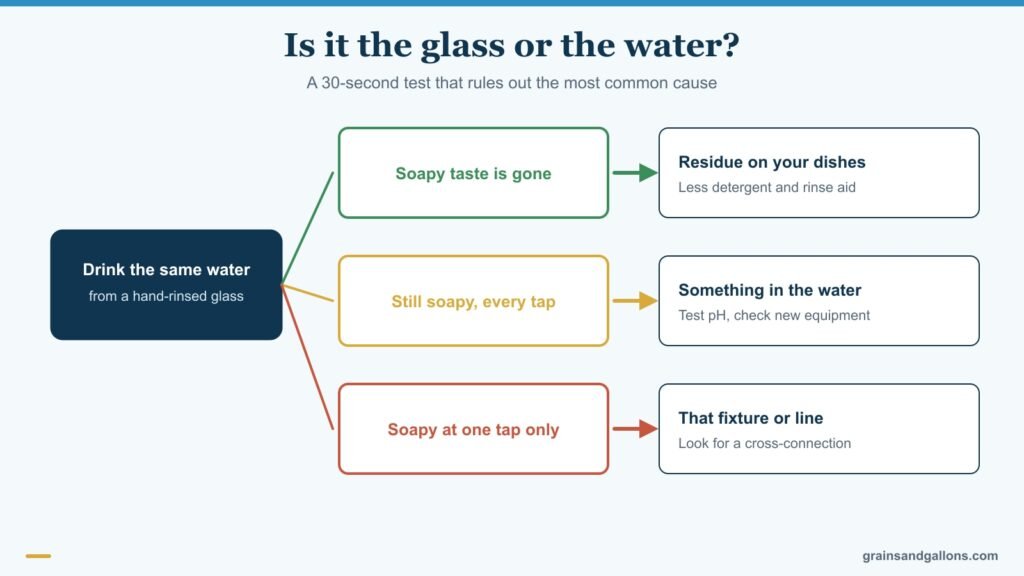
This takes 30 seconds and rules out the most common cause. Rinse a glass by hand under hot water with no soap, or use a disposable cup, and taste the water again.
- Soapy taste gone: it's your dishes.
- Still soapy at every tap: it's the water, so check pH and any new equipment.
- Soapy at one faucet only: look at that fixture and anything connected near it.
If food and other drinks taste soapy too, the cause may not be the water at all. Some medications and dental problems can leave a soapy taste in the mouth, which is worth raising with a doctor if it lingers.
Dishwasher residue after a new softener
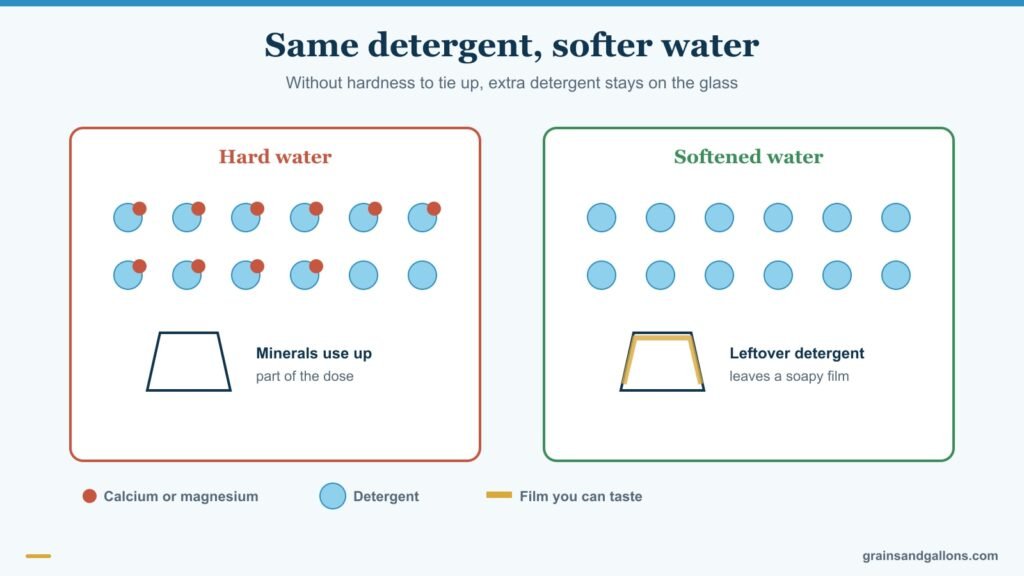
Rinse aid is designed to stay on dishes as a thin film so water sheets off, and some of it stays on glasses where you can taste it. Detergent residue happens too, mostly from using too much.
This often starts right after a water softener goes in. Part of each detergent dose is there to tie up calcium and magnesium; take those away and the extra stays behind. Cut detergent roughly in half, turn rinse aid down a step, and use the dishwasher's lowest hardness setting if it has one. Our guides to how much detergent to use with soft water and adjusting a dishwasher after a water softener cover the details. If you're still on hard water and need rinse aid, see the best rinse aids for hard water.
When the water tastes like soap from every glass, test pH
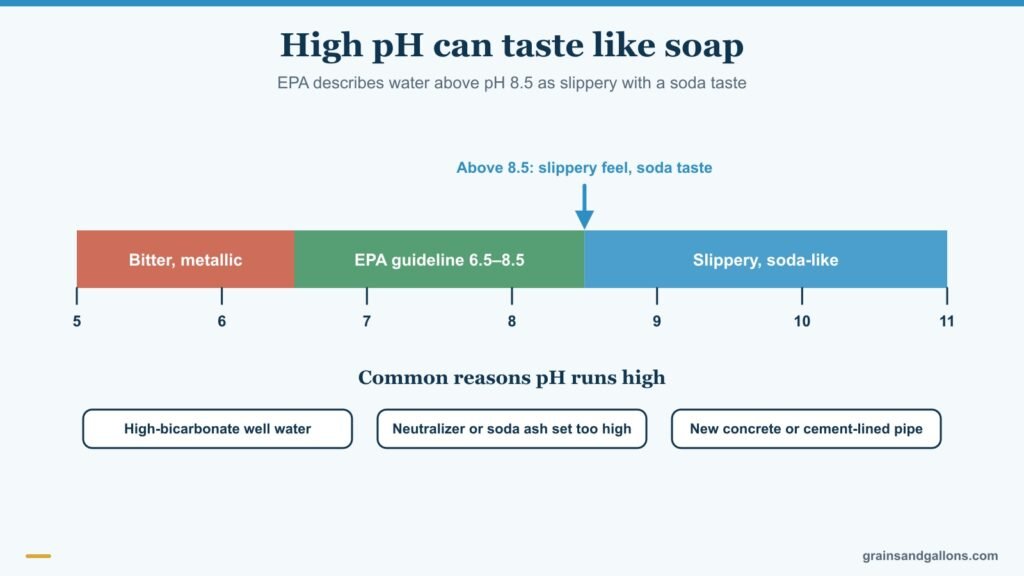
EPA's secondary drinking water standards set a pH guideline of 6.5 to 8.5 and describe high-pH water as having a "slippery feel" and "soda taste." Plenty of people would call that soapy. Common reasons pH runs high:
- Well water rich in bicarbonate. Some aquifers naturally produce alkaline water.
- An acid neutralizer overdoing it. A calcite tank or soda ash feed pump set too high can push pH up, a common cause of a sudden soapy taste in rural homes.
- New concrete or cement-lined pipes and tanks, which leach lime for a while.
- City corrosion control, where some utilities raise pH on purpose.
Test it with strips, drops or a meter; our guide to testing water pH at home covers sampling. If pH is high and you have a neutralizer, have it adjusted. If the water comes in high, a reverse osmosis unit for drinking water is the practical fix, and countertop RO systems need no plumbing.
New softeners, filters and pipes can change the taste
A softener swaps calcium and magnesium for sodium. Water with almost no hardness tastes flatter or smoother, and because it also feels slippery on skin, some people describe it as soapy. That's normal; why soft water feels slippery explains it. If the taste is strong, check that the softener isn't stuck in a rinse or leaking brine (brine tastes salty, but people sometimes confuse the two).
New equipment and plumbing can add a temporary taste too:
- A new softener or filter cartridge that wasn't flushed per its instructions.
- Soldering flux left inside new or repaired copper pipe, which usually clears after thorough flushing.
Run cold and hot lines at full flow for several minutes. If the taste doesn't fade within a few days, look further.
Real detergent in the water: backflow or septic
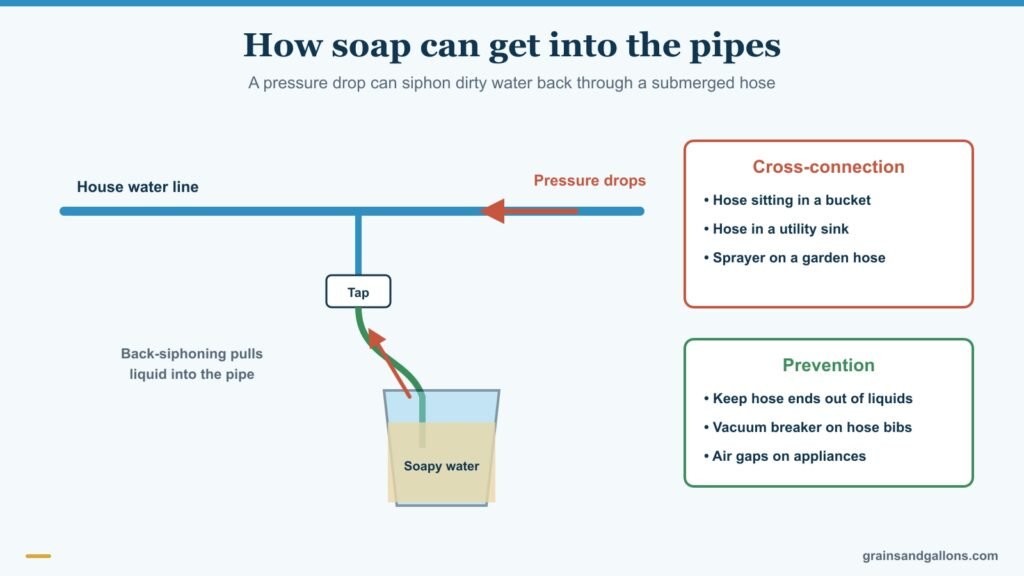
Detergent in drinking water is rare but possible, and it's the reason not to ignore a strong soapy taste.
A cross-connection. The Minnesota Department of Health explains that when pressure drops, a hose left in a bucket, tub or slop sink can siphon its contents back into the drinking water. Washing machines, dishwashers and boilers need air gaps or check valves for the same reason. If the taste appeared after plumbing work or a new appliance, or it's strongest at one fixture, stop drinking it and check those connections. Our guide to softener backflow protection explains air gaps and check valves; call a plumber if you're unsure.
Septic or graywater reaching a well. If the water also foams in the glass and you're on a well near a septic system, wastewater may be getting in. EPA's guideline for foaming agents is 0.5 mg/L. Switch to bottled water and have a certified lab test for coliform bacteria and nitrate; EPA advises testing right away whenever taste, odor or color changes.
FAQ
Is it safe to drink water that tastes like soap?
Usually. Dish residue and high pH aren't acutely harmful to healthy people. Stop drinking it if the water foams, if the taste appeared after plumbing work or is strongest at one tap, or if you're on a well near a septic system, until you've tested.
Can high pH make water taste soapy?
Yes. EPA describes water above pH 8.5 as having a slippery feel and soda taste, which many people call soapy. High-bicarbonate well water and over-adjusted neutralizers are common causes.
Why does my water taste soapy after installing a water softener?
Usually it's leftover detergent on dishes, because softened water needs less of it. Softened water also tastes smoother and feels slippery, which people sometimes read as soapy. Cut detergent and rinse aid first.
How do I get rid of a soapy taste in my water?
Match the fix to the cause: less detergent and rinse aid for dish residue, an adjusted neutralizer or RO filter for high pH, flushing for new pipes, and a plumber or lab test for backflow or a well problem.
Rule out the glass first, then test pH
Most of the time when water tastes like soap, the fix is a hand-rinsed glass and less detergent, or a pH test and a neutralizer adjustment. Work through those two first. Save the plumber and the lab for water that foams, a taste that's strongest at one tap, or a well near a septic system.