

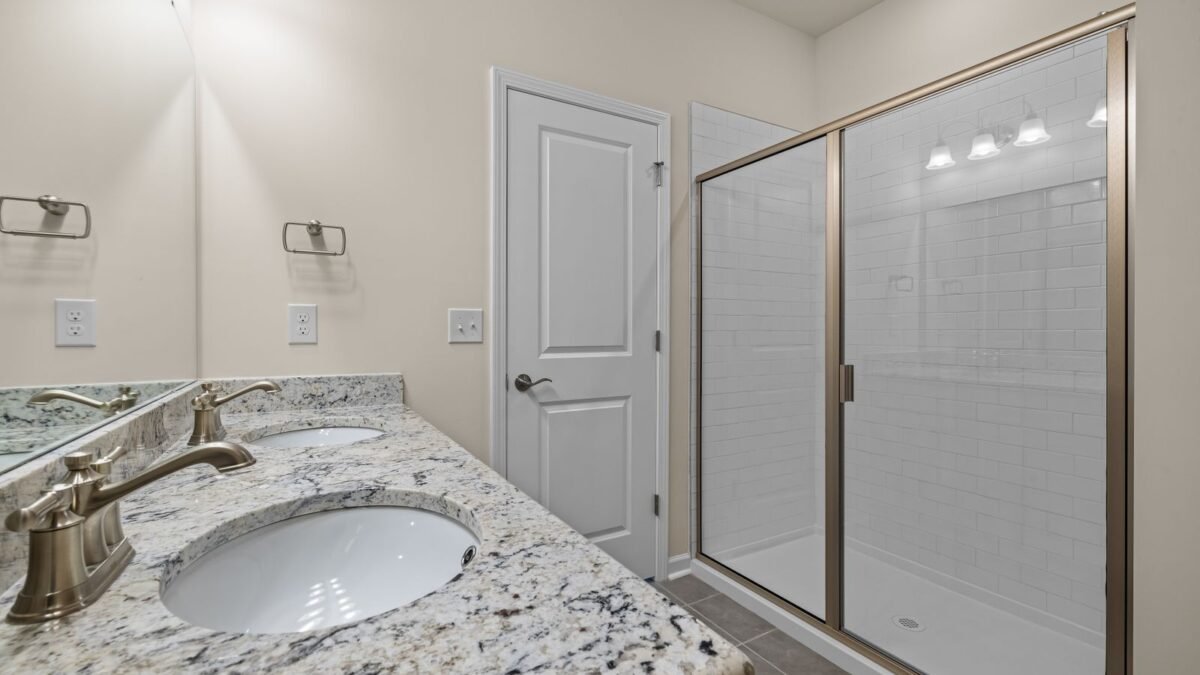
Quick Answer: A shower filter does not soften water. It mainly reduces chlorine. A water softener is the only one of the two that removes the calcium and magnesium behind scale and soap scum. If you own your home and the problem is spotty glass, crusty showerheads or soap that won't lather, get a softener like the Kenmore 420. If you rent, or your complaint is chlorine smell and dry, squeaky hair on city water, a shower filter like the AquaBliss SF100 is the cheaper, sensible fix.
Disclosure: As an Amazon Associate, Grains & Gallons earns from qualifying purchases.
You've got a bathroom that never looks clean, hair that feels like straw, and two very different price tags in front of you. One is a shower filter you can install in five minutes. The other is a whole-house system that needs a drain, an outlet and a few hours of plumbing.
They aren't two sizes of the same fix. They mostly fix different problems, and buying the wrong one is the most common mistake I see on this topic.
In this guide
What each one actually takes out of the water
A water softener swaps calcium and magnesium for sodium (or potassium) through ion exchange. That's what stops scale on fixtures, spots on glass, and the soap-scum film that makes shampoo hard to rinse. It does very little about chlorine.
A shower filter is a small cartridge, usually KDF, carbon, calcium sulfite or vitamin C. These media go after chlorine (and sometimes chloramine), plus some metals. They aren't built to remove hardness.
This isn't just theory. When Water Filter Guru tested the Hello Klean shower filter, sold specifically as a "hard water" filter, total hardness after filtration was about the same as before (it actually read about 3% higher, which the reviewer put down to normal sample variation). Their write-up quotes the manufacturer itself saying that no shower filter removes calcium and magnesium.
So when a shower filter box says "for hard water," read it as "for people who have hard water and want their shower to feel better." It doesn't mean the water comes out soft.
Match your symptom to the fix
| What's bothering you | Main cause | Fix that works |
|---|---|---|
| White crust on showerhead, faucets, glass | Hardness | Softener |
| Soap scum, shampoo won't lather or rinse | Hardness | Softener |
| Chlorine or "pool" smell in the shower | Chlorine/chloramine | Shower filter |
| Dry, itchy skin on city water | Could be either | Start with a hardness test; often a softener, sometimes a filter helps |
| Dull, brittle or "coated" hair | Mostly hardness; chlorine plays a part | Softener first; filter if you rent |
| Scale in water heater, dishwasher, kettle | Hardness | Softener |
Hair and skin are the gray zone. Hardness leaves a mineral and soap film that can make hair feel rough and skin feel tight, and chlorine can dry both out. Neither fix is a medical treatment, but removing the actual cause may help. Our guides on hard water and hair and hard water and dry skin cover what the evidence does and doesn't say.
When the softener is the right buy
Pick a softener if all three of these are true:
- You own the place (or your landlord says yes).
- Your water tests above roughly 7 grains per gallon.
- Your complaints include scale, spots, soap scum or appliances, not just the shower.
A softener treats every tap, which is why the cost is in a different league. It also adds jobs: salt bags, a drain connection, and settings to dial in. If you're on the fence, do you need a whole-house water softener walks through the borderline cases.
Kenmore 420 40,000-grain softener: a sensible all-in-one cabinet unit for a typical family. Kenmore's listing gives:
- 40,000-grain capacity, aimed at households of 1–5 people
- Softens hardness and reduces clear-water iron
- IntelliSoft demand regeneration that learns your water use and regenerates only when needed, which can cut salt use
- A sediment pre-filter and built-in sediment screen, pitched at well water as well as city water
- Warranty: 1 year full, 3 years on electronics, 10 years on the tank
The downside: Kenmore doesn't publish a service flow, maximum hardness or certification on the listing, so check those with the seller if you have a bigger home or very hard water, and size it using how to size a water softener. Stock on this listing was limited when we checked. Check price on Amazon
When the shower filter is the right buy
Pick a shower filter if:
- You rent and can't touch the plumbing.
- Your water is only moderately hard, but the chlorine smell is strong.
- You want to try something cheap first and see whether your hair or skin improves.
- You already have a softener, and you're on chlorinated city water. (Softeners don't remove chlorine, so the two can work together.)
AquaBliss SF100: a screw-on inline filter that fits between the shower arm and your existing head. It uses a 12-stage replaceable cartridge (the SFC100). Install takes a wrench and some plumber's tape. The downside: like all of these, it does nothing for scale, so you'll still be descaling the glass. Replace the cartridge on schedule, because a spent one does nothing at all. Here's when and how to replace a shower filter cartridge. Check price on Amazon
What each one asks of you over a year
Price tags aside, these two fixes cost you very different amounts of time and upkeep.
Shower filter: a cartridge swap a few times a year, depending on the model and how many people shower. It takes a couple of minutes, with no tools beyond your hands or a wrench. If you have two bathrooms, double everything.
Softener: salt, mostly. Here's the rough math for a family of four at 15 gpg, about 4,500 grains of hardness a day. At an efficient salt setting (roughly 4,000–5,000 grains per pound of salt for this class of softener), that's about a pound of salt a day, so roughly 330–410 pounds a year. That's somewhere around eight to ten 40-lb bags, more if you run higher salt doses. Add a yearly look at the brine tank, plus the occasional settings check after a power outage or a change in household size.
So a softener means hauling a bag of salt every month or two. A shower filter means a cartridge swap a few times a year. Neither is a big chore, but if you know you'll never lift a salt bag, be honest with yourself before buying a softener.
Renting? Here's what you can actually do
If you rent and the hard water is driving you nuts:
- Use a shower filter for the chlorine, and keep the old showerhead to reinstall when you move out.
- Swap in a new showerhead if the current one is crusted shut. That alone restores pressure.
- Ask the landlord about a softener. In some areas, landlords install them to protect water heaters and fixtures. The pitch "it'll extend the water heater's life" lands better than "my hair feels dry."
- Use vinegar or a citric acid cleaner on glass and fixtures weekly, before scale builds up into something that needs scraping.
Other shower filters worth considering
- Sprite HO2 High Output: a long-running universal inline filter that uses Sprite's Chlorgon cartridges, with refills sold separately. It's a good choice if you want a no-frills housing and easy-to-find refills. Check price on Amazon
- Aquasana AQ-4100 Deluxe: a filter that comes with its own adjustable showerhead. That's handy if your current head is already clogged with scale and you'd replace it anyway. Check price on Amazon
Can you do both?
Yes, and plenty of homes end up there eventually. On chlorinated city water with real hardness, that's the full fix: a softener for the minerals and a shower filter for the chlorine. Do it in that order, though. If hardness is your main problem, a shower filter first will only leave you disappointed and still scrubbing glass.