


Quick Answer: The best water softener for family of 4 homes on 10–22 gpg water is a metered 48,000-grain unit. We pick the DuraWater Fleck 5600SXT 48k for most families. If the softener sits above a finished room or you travel a lot, the Wi-Fi GE Smart 35,000-grain warns you about leaks. Families on well water harder than 25 gpg should step up to the DuraWater Fleck 64k.
Disclosure: As an Amazon Associate, Grains & Gallons earns from qualifying purchases.
"Family of four" doesn't tell you much about which softener to buy. Four people on 6 gpg city water and four people on a 28 gpg well need softeners nearly three times apart in capacity. What the headcount does tell you is how the water gets used: back-to-back showers before school, a dishwasher every night, laundry most days, and at least one person who stays in the shower until the hot water runs out.
So before answering what size water softener for family of 4 homes actually need, this guide starts with the one number you need to look up, works out the grains your household actually uses, and then matches that to five softeners that cover the common family situations. The picks were verified as available on Amazon in October 2026.
In this guide
- Find your hardness, then find your row
- Is a 32,000-grain softener enough for 4 people?
- Peak flow: what four people pull at 7 a.m.
- What a family of 4 spends on salt and water
- Salt-based, salt-free, or magnetic?
- Why these five made the cut
- The best water softener for family of 4 homes, compared
- Install it yourself or hire a plumber?
- Drinking water is a separate decision
- Three setup mistakes that make a 48k feel too small
- How long a family softener lasts
- FAQ
- Buy the 48k unless your water says otherwise
Find your hardness, then find your row
A dip strip is too rough for choosing a size. Use a titration kit, a lab test, or your utility's annual water quality report. The EPA keeps a directory of these Consumer Confidence Reports by utility. Our guide on testing water hardness at home explains which home tests are worth trusting.
If your report gives hardness in mg/L or ppm, divide by 17.1 to get grains per gallon (gpg). Penn State Extension classes anything from 7 to 10.5 gpg as hard and anything above 10.5 gpg as very hard (Penn State Extension, Water Softening).
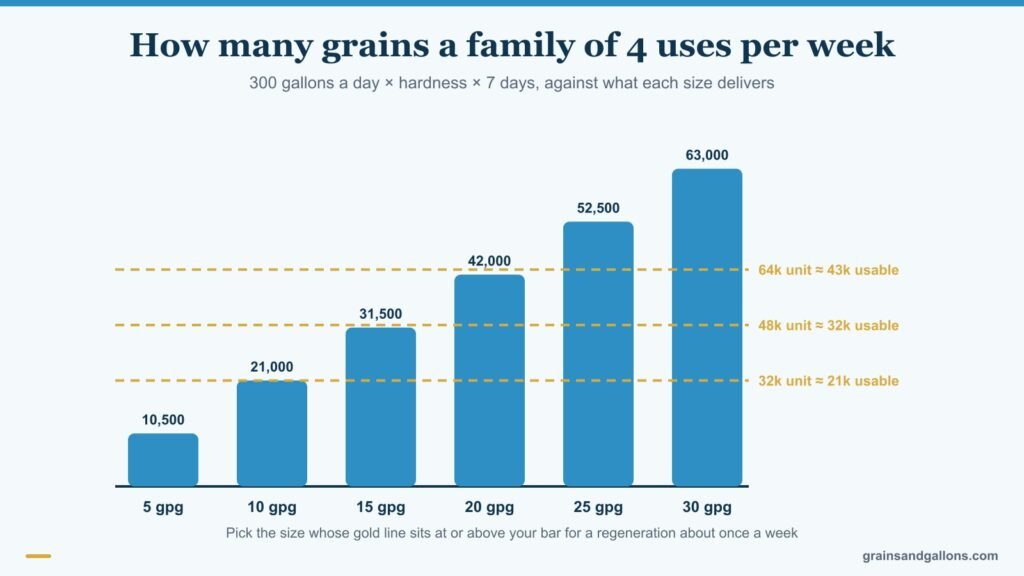
Then use this chart. It assumes four people using about 75 gallons each per day, or 300 gallons total, which matches EPA WaterSense's figure that the average American family uses more than 300 gallons a day at home.
| Your hardness | Grains your family uses per day | Grains per week | Size we'd buy | Rough regen interval |
|---|---|---|---|---|
| 5–9 gpg | 1,500–2,700 | 10,500–18,900 | 32k | ~8–14 days |
| 10–15 gpg | 3,000–4,500 | 21,000–31,500 | 40k–48k | ~7–10 days |
| 16–22 gpg | 4,800–6,600 | 33,600–46,200 | 48k (64k on a well) | ~5–7 days |
| 23–30 gpg | 6,900–9,000 | 48,300–63,000 | 64k | ~6–8 days |
| Over 30 gpg, or iron above 3 ppm | 9,000+ | 63,000+ | 64k–80k + pre-treatment | — |
The intervals assume an efficient salt setting, where a softener delivers roughly two-thirds of its box rating. On a well, add about 1 gpg for each ppm of iron before you look up your row. Our guide to sizing a water softener covers the full formula for other household sizes.
Is a 32,000-grain softener enough for 4 people?
Sometimes, but only on soft-to-moderate water. The 32,000 vs 48,000 grain water softener question is where a lot of sizing advice goes wrong. At 15 gpg, four people use about 31,500 grains a week. A 32k softener at an efficient salt setting delivers closer to 21,000–24,000 usable grains, so it would regenerate every five days or so. It works, but it uses more salt and water per gallon of soft water than a larger tank would, and resin that cycles that often wears out sooner.
The rule of thumb we use: a family of four should regenerate no more often than every 6–7 days. If the 32k math puts you under that, move up to 40k or 48k. Going larger than you need isn't free either. A 64k on 6 gpg water barely uses its resin, and the meter ends up regenerating on its backup day counter instead of on actual use.
Peak flow: what four people pull at 7 a.m.
Capacity is how much hardness a softener can remove between regenerations. Flow rate is how fast water can pass through it without the pressure dropping. Families feel flow rate first.
Two showers (about 2 gpm each), the dishwasher, and the washing machine running together can pull 8–10 gallons per minute. A softener sized right for capacity but with a small valve or a short resin bed will lose pressure exactly when everyone is getting ready. Here's what to look for:
- Valve size: a 1-inch valve (Fleck 5600SXT, GE Smart) handles family peaks. A 3/4-inch valve is fine for two bathrooms with staggered showers.
- Bathroom count: for three or more bathrooms, rule out the compact cabinets and choose a two-tank system of 48k or larger.
- Service flow rating: compare the "gpm at 15 psi drop" figure if the listing gives one. That's the number that tells you whether pressure will hold.
What a family of 4 spends on salt and water
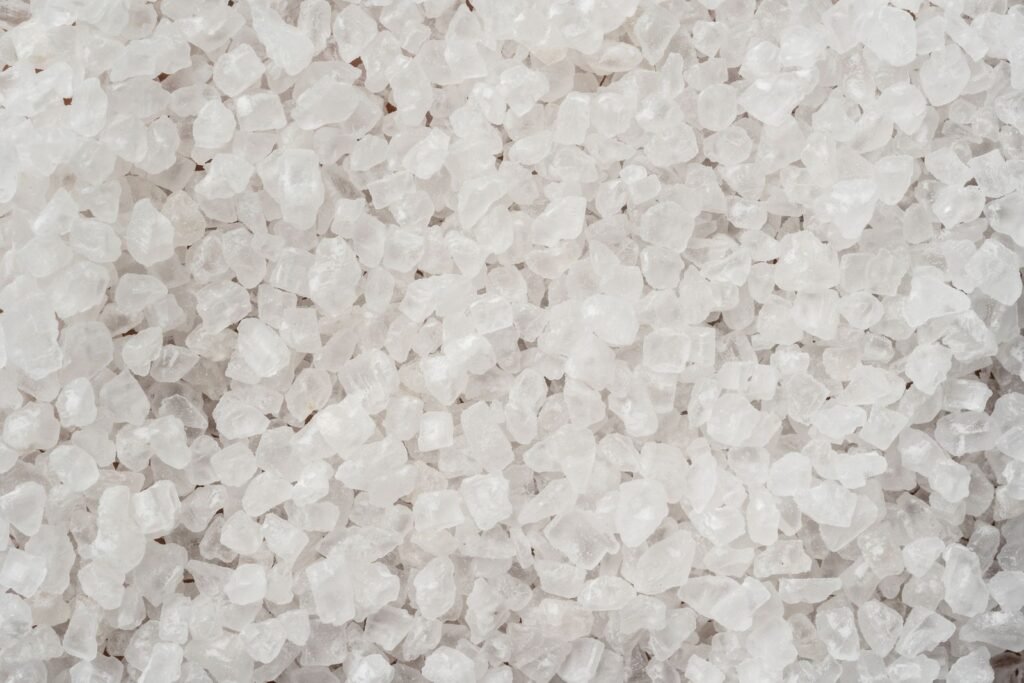
At 15 gpg, four people use about 4,500 grains a day, or about 135,000 grains a month. A typical softener at an efficient setting removes roughly 3,500–4,000 grains per pound of salt. That works out to about 34–39 lb of salt a month, close to one 40 lb bag. That is typical water softener salt usage per month for four people. At 25 gpg, plan on closer to 1.5–2 bags a month, whichever unit you choose.
Each regeneration also uses water. Penn State Extension puts it at roughly 50 gallons per cycle, so a weekly regeneration adds about 200 gallons a month. That's small next to the 9,000 or so gallons a family of four uses, but it matters on a septic system or a weak well.
| Cost (15 gpg, family of 4) | Per month | Per year |
|---|---|---|
| Sodium chloride salt (~1 bag) | $6–$10 | $70–$120 |
| Potassium chloride instead | $25–$40 | $300–$480 |
| Regeneration water (~200 gal) | under $2 on city water | ~$15–$20 |
| Electricity (control valve) | under $1 | ~$5–$10 |
Metered valves are the biggest saving here. A softener that regenerates on a timer, whether or not anyone used water that week, can easily use a third more salt than a metered one.
Salt-based, salt-free, or magnetic?
Families get pitched all three, and the salt-free water conditioner vs softener question comes up in nearly every quote, so here's a quick answer. Only a salt-based ion exchange softener actually removes calcium and magnesium. All five picks below are salt-based.
- Salt-based (ion exchange): removes hardness, so you get no spots, less soap and no scale in the water heater. Needs salt and a drain.
- Salt-free conditioners (TAC/NAC): change how calcium forms scale inside pipes and heaters, but the hardness stays in the water. Expect to keep seeing spots on glass and soap scum. We look at the claims in does a salt-free system actually soften water.
- Magnetic and electronic descalers: independent evidence is thin. We wouldn't spend a family's budget on one.
Certification helps here. NSF/ANSI 44 is the standard for residential softeners, covering hardness reduction and salt efficiency. Listings that claim it can be checked against NSF's certified product database.
Why these five made the cut
We haven't installed these in our own homes. We built the list from published specs, certifications, warranty terms and owner-reported problems, verified current availability through Amazon's product data in October 2026, and filtered for the problems a four-person household runs into: peak flow, iron on wells, drinking water and leaks. Two earlier picks (GE's GXSHC40N and the WaterBoss 900) dropped off because they're no longer reliably in stock. Every pick is a whole house water softener for 4 people, and each one covers a different kind of family, so look for the description that fits yours.
The best water softener for family of 4 homes, compared
| Pick | Capacity | Valve / type | Best for | Watch out for |
|---|---|---|---|---|
| DuraWater Fleck 48k | 48,000 | Fleck 5600SXT metered, 1", two-tank | 10–22 gpg, most homes | Fiddly programming, no chlorine removal |
| GE Smart 35,000 | 35,000 | GE cabinet, 1" connections, Wi-Fi | Leak worries, travel | Proprietary parts, needs Wi-Fi |
| DuraWater Fleck 64k | 64,000 | Fleck 5600SXT metered, 10% crosslink | Wells over 25 gpg | Too big for soft city water |
| Aquasure 48k + RO | 48,000 + 75 GPD RO | Aquatrol metered, two-tank | Softening plus drinking water | Proprietary valve, more cartridges |
| Kenmore 350 | 32,000 | Kenmore cabinet, 3/4" | Under 12 gpg, tight spaces | Undersized above ~14 gpg |
Most families: DuraWater Fleck 5600SXT 48k
If your hardness falls in the 10–22 gpg rows above, the DuraWater 48k is the safe choice. It pairs the Fleck 5600SXT metered valve with a 10×54 mineral tank holding 1.5 cubic feet of resin and a separate 14×36 brine tank with a safety float. The valve only regenerates after your family has actually used up the capacity. Pentair rates the 5600SXT at about 20 gpm of continuous flow, so morning shower overlap isn't a problem at the valve.
Why Fleck for a family? Because it'll be in the house for 15+ years. Seal kits, pistons, meters and boards are cheap and easy to find, and a tech who has never seen your house has almost certainly worked on this valve.
Downsides: Programming is code-driven and not very friendly. It does nothing about chlorine, so city families who care about taste should add carbon. You'll also need to buy drain tubing and, on a well, a sediment pre-filter.
Busy or traveling families: GE Smart 35,000-grain
The GE Smart softener is a cabinet unit with built-in Wi-Fi, which matters more for families than it sounds. It sends low, medium or high continuous-flow alerts to your phone, so a running toilet or a slow leak gets caught. With GE's optional shutoff valve (sold separately), you can close off water to the whole house from wherever you are. The SmartHQ app also sends low-salt reminders and has a vacation mode. It has 1-inch plumbing connections with adapters for 3/4-inch and 1-1/4-inch lines, and a bypass blending valve so you can set how soft you want the water.
GE rates the 35,000-grain size for households of up to 6 people. For four people, that's a regeneration every five or six days at 15 gpg, and more often as you approach 20 gpg. GE also sells a 45,000-grain version, which is the better size for a family on harder water, but it was shipping with a lead time when we checked.
The trade-off: The valve and boards are GE-specific, so long-term repairs go through GE parts rather than the universal Fleck supply. The smart features need a decent Wi-Fi signal where the softener sits. And at 35,000 grains it has less reserve than the 48k picks, so it's best for families under about 18 gpg.
Hard-well families: DuraWater Fleck 5600SXT 64k with 10% resin
At 25+ gpg, a 48k regenerates too often, and every regeneration on a well puts extra hours on the pump and sends more water to your septic. The DuraWater 64k holds 2 cubic feet of resin in a 12×48 tank, so you're back to roughly one regeneration a week. It uses 10% crosslink resin, which holds up better than standard 8% resin, especially if any chlorine reaches it.
It's still a softener, not an iron filter. If your well has more than a few ppm of iron, a sulfur smell, or iron bacteria, treat that first, or the resin will foul whatever its size.
Not for: City families under 15 gpg. You'd be paying for resin you won't use, and the valve would end up regenerating on its timer instead of the meter.
Families who also want better drinking water: Aquasure 48k + RO bundle
The Aquasure bundle puts two systems in one order: a 48,000-grain softener on Aquasure's metered Aquatrol valve, and a 75 GPD under-sink reverse osmosis system for drinking and cooking water. Aquasure markets it for homes with three to four bathrooms and up to four people, which is exactly this household.
Buying them together means the pieces match and you only arrange one install. A 75 GPD RO easily covers what four people drink and cook with. It also takes care of the sodium question for anyone on a low-sodium diet.
Weigh this first: The Aquatrol valve is Aquasure's own design, not a Fleck, and the warranty is up to 5 years, shorter than many Fleck builds. The RO adds membrane and cartridge changes to your maintenance routine.
Short on space, moderate hardness: Kenmore 350
The Kenmore 350 is a compact 32,000-grain cabinet that Kenmore sizes for households of one to four people. Its IntelliSoft control learns your family's water use and regenerates only when needed, and it monitors the salt level so you get a warning before it runs out. A built-in sediment shield protects the valve. It also handles some clear-water iron.
It fits families in the 5–12 gpg rows best, especially when the softener has to fit in a laundry closet. Above about 14 gpg, four people would push it into regenerating every four or five days, which is the 32k problem described above.
The trade-off: The 3/4-inch valve is fine for two bathrooms but not for three showers at once. Kenmore covers it with a 1-year full warranty and 3 years on the electronics.
Install it yourself or hire a plumber?
All five can be DIY installs if you're comfortable cutting into a copper or PEX main line. DuraWater quotes 1–2 hours for someone with basic plumbing skills. Allow most of a Saturday the first time. A plumber typically charges $200–$500 for a straightforward install, more if a drain or outlet has to be added.
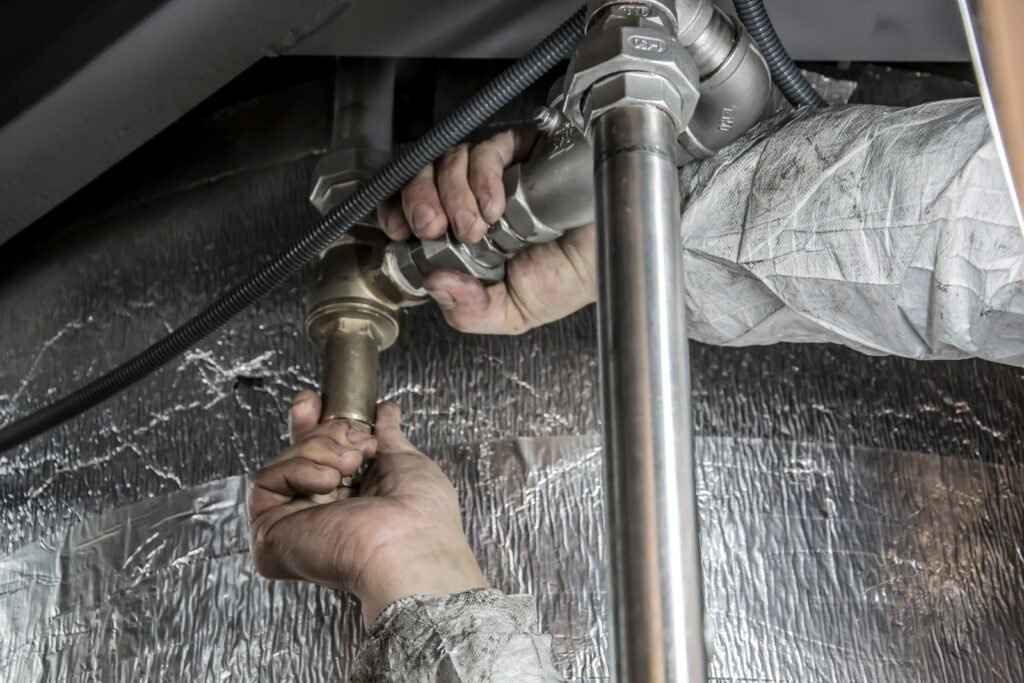
Whoever installs it, check these before the first regeneration:
- Bypass valve: every pick includes one. Make sure it's reachable, because you'll use it for outdoor taps and maintenance.
- Drain and air gap: the brine line needs an air gap at the drain to meet code and to keep wastewater from siphoning back.
- Location: put it before the water heater and after the pressure tank on a well. Hose bibs usually stay on hard water.
- Leak plan: a softener in a finished basement or next to the kids' rooms is a water-damage risk. See how your policy treats it in homeowners insurance and softener leaks.
Drinking water is a separate decision
A softener swaps calcium and magnesium for sodium. Penn State Extension puts the added sodium at about 7.5 mg per quart for every gpg removed, so 15 gpg water picks up roughly 110 mg per quart. For most healthy kids and adults, that's small next to food. It doesn't filter lead, PFAS, nitrates or most of what parents actually worry about.

If you want better water for the kids, plan an RO at the kitchen sink. We cover that pairing in using reverse osmosis with a water softener. For infants, see softened water for baby formula. Many parents use unsoftened or RO water for formula, but ask your pediatrician what they recommend.
Three setup mistakes that make a 48k feel too small
When a family of four complains that a new softener "can't keep up," the size is rarely the problem. These usually are:

- Hardness set from the city's average instead of your tap. Utilities report a range, and some neighborhoods get water from a harder well field. Program the number you measured, plus iron if you have it.
- Regeneration at 2 a.m. when someone showers at 4:30. Pick a time when nobody runs water. The softener is offline for one to two hours while it regenerates.
- Reserve set too low. On a metered valve, the reserve should cover about a day of your family's use, roughly 300 gallons. Set it lower and you'll get hard water on the last afternoon before the softener regenerates. Weekend laundry makes it obvious.
How long a family softener lasts
The tank and brine tank last decades. The resin is what wears out. On chlorinated city water, standard 8% crosslink resin typically lasts 10–15 years, and 10% resin lasts longer. On iron-heavy well water without pre-treatment, resin can foul in five years. The control valve usually needs a seal and spacer kit somewhere around year 8–12. That's another argument for a Fleck valve, where a kit costs less than a pizza night.
Maintenance for a family of four is about 15 minutes a month: add salt, look for salt bridging, and clean the brine tank once a year. Our water softener maintenance schedule lays it out month by month.
FAQ
What size water softener do I need for a family of 4?
Multiply your hardness in gpg by 300 gallons a day, then by 7 for a week of use. Choose a softener whose efficient capacity, about two-thirds of the box rating, covers that weekly number. For most families of four on 10–22 gpg water, that means 40,000–48,000 grains.
How much salt does a water softener use per month for a family of 4?
At 15 gpg, about 34–39 lb a month, or roughly one 40 lb bag. At 25 gpg, expect 1.5–2 bags. Metered valves and efficient salt settings keep it at the low end of that range.
Is a 48,000-grain softener too big for 4 people?
Not on hard water. At 10–22 gpg, a 48k regenerates about once a week, which is ideal. It's only oversized on soft-to-moderate water under about 8 gpg, where a 32k does the same job for less.
How often should a water softener regenerate for a family of 4?
Every 6–8 days is the sweet spot. More often wastes salt and wears the resin. Much less often, longer than about two weeks, can let the resin bed compact and grow bacteria, which is why most valves force a regeneration after 14 days anyway.
Is softened water safe for kids to drink?
For most healthy children, yes. The added sodium at typical hardness is small next to what's in food. For a 4-person household with a baby or someone on a low-sodium diet, an RO faucet or an unsoftened cold line makes sense.
Do salt-free water softeners work for a family?
They reduce scale inside pipes and water heaters but don't remove hardness, so spots, soap scum and dry skin mostly stay. If those are the reasons you're shopping, a salt-based softener is the fix.
Buy the 48k unless your water says otherwise
The best water softener for family of 4 homes is, most of the time, a metered 48,000-grain softener with a Fleck valve. It regenerates about once a week on typical hard water, handles morning peaks, and is easy to repair for 15 years. Let your water move you off that default. Go to the 64k for a hard well, the GE Smart if a leak would be a disaster, the Aquasure bundle if you want drinking water handled too, and the Kenmore 350 only if your water is moderate and space is tight. Test first, find your row, then buy.
Related guides