


Quick Answer: Gray water from faucet taps is usually one of five things: harmless air bubbles, carbon dust from a new filter, sediment stirred up by city work or plumbing repairs, manganese in well water, or a dirty aerator. Fill a clear glass first. If it clears from the bottom up, it's air. If specks settle, run the cold tap for 5 to 10 minutes. If gray-black water keeps coming back on a well, test for manganese.
Gray water from faucet taps looks worse than brown, but the list of causes is short. A glass of water and a few questions about when and where it happens usually find the cause.
In this guide
- Start with a clear glass of cold water
- Did you just change a carbon filter?
- Gray water from faucet taps after city work or repairs
- When only the hot tap runs gray
- On a well, gray-black water usually means manganese
- One faucet or the whole house?
- FAQ
- Most gray water from faucet taps clears with a cold flush
Start with a clear glass of cold water
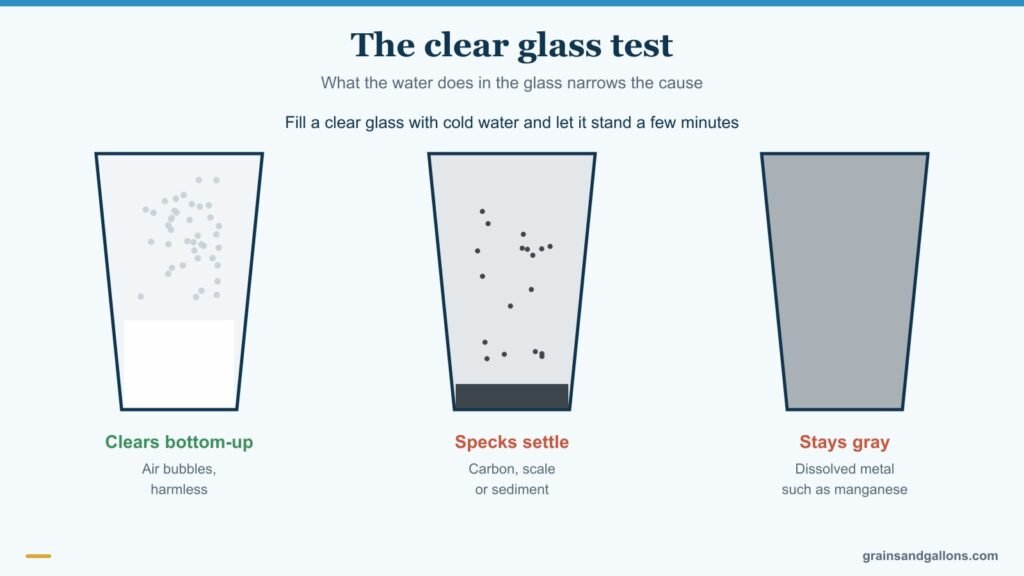
Fill a clear glass and let it stand for a few minutes.
- It clears from the bottom up. That's dissolved air coming out of solution, and it's harmless. It's more common in winter because cold water holds more air.
- Specks settle to the bottom. Black specks suggest carbon or pipe sediment. Gray or white flakes are often hard-water scale knocked loose after plumbing work.
- It stays tinted. Something is suspended or dissolved in the water, so keep going.
Did you just change a carbon filter?
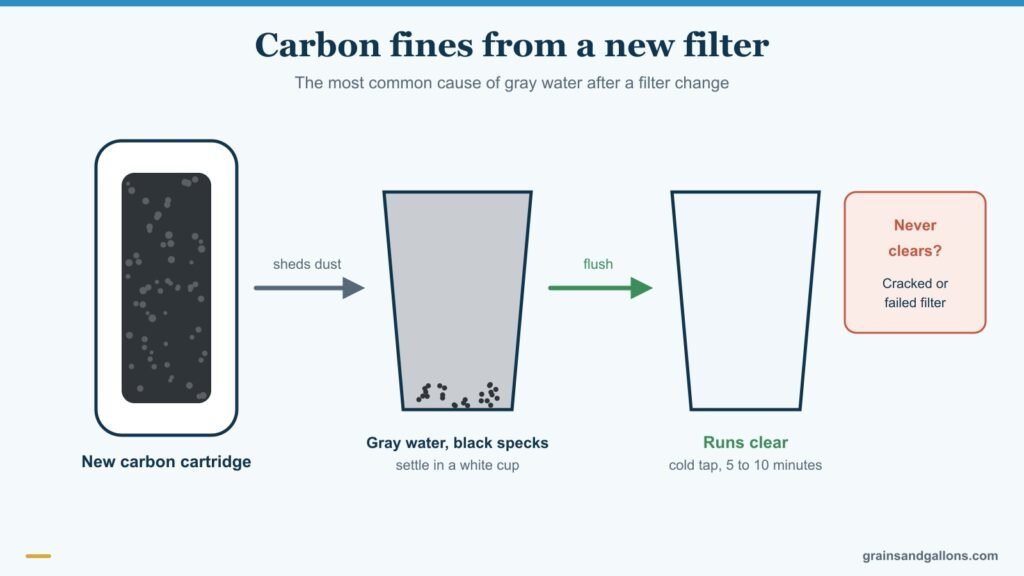
This causes a large share of gray-water complaints. Activated carbon is made from coal or coconut shell, and new cartridges and tanks shed fine black dust until they're flushed. Water looks gray and a white cup shows black specks. Run the cold tap for 5 to 10 minutes. A whole-house carbon tank can take longer to settle. If it never clears, the cartridge may be cracked or a tank distributor broken; our guide to carbon fines in water covers those failures.
Gray water from faucet taps after city work or repairs

Hydrant flushing, main breaks and construction change the flow in the mains and stir up settled iron and manganese. Beaufort-Jasper Water's discolored water fact sheet says this discoloration can range from light beer to, in extreme cases, black coffee. Plumbing work at home does the same to scale in old pipes.
The fix is a cold flush:
- Run the cold tap nearest where the water line enters the house. A tub spout without an aerator works well.
- Expect it to clear within 5 to 10 minutes. If it doesn't, call your utility.
- Don't run hot water, so sediment isn't drawn into the water heater.
- Skip laundry until it's clear, especially whites.
When only the hot tap runs gray
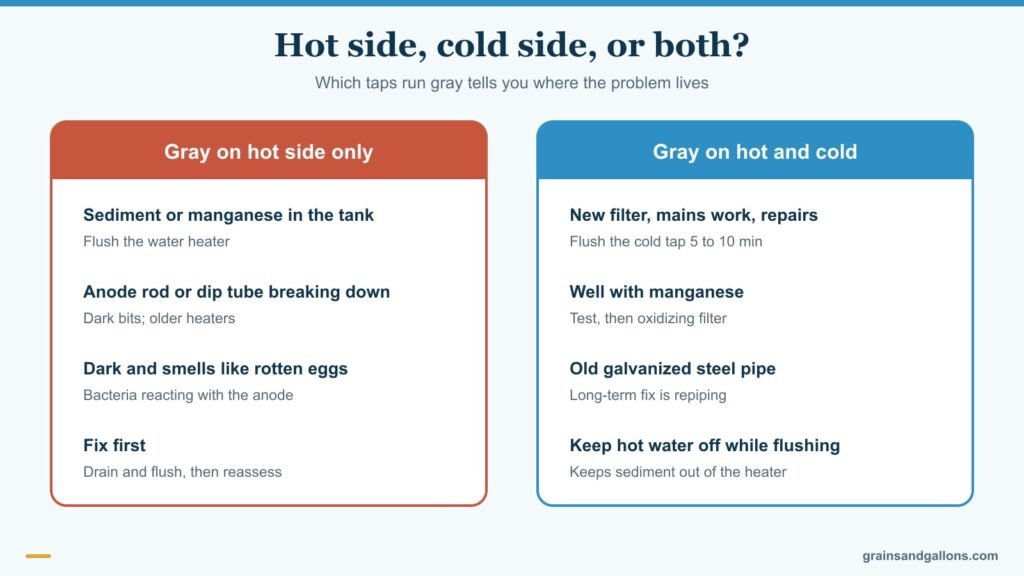
If cold is clear and only hot is dark, the water heater is the source. Sediment and manganese settle in the tank, and older heaters can shed bits of a breaking-down anode rod or dip tube. Flush the tank first. Dark hot water that also smells like rotten eggs usually means bacteria reacting with the anode, covered in rotten egg smell only in hot water.
On a well, gray-black water usually means manganese
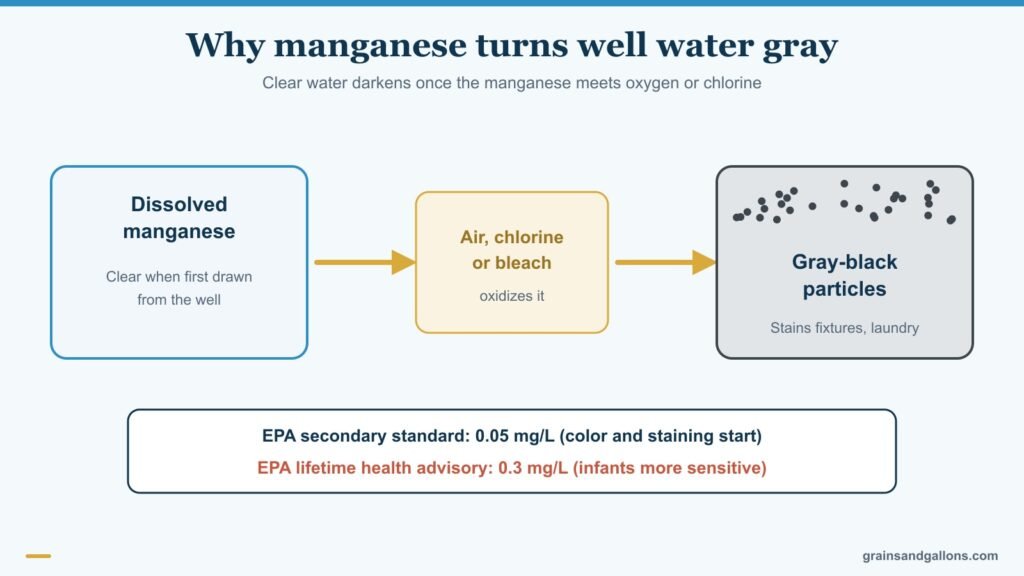
Manganese is dissolved and invisible until it meets air or chlorine, then forms fine dark particles. The EPA's secondary standard is 0.05 mg/L, about where black-to-brown color and staining begin. Signs include water that darkens after sitting, black stains in toilets and laundry, and gray water first thing in the morning. See black stains from manganese in well water.
The EPA also has a lifetime health advisory of 0.3 mg/L, and infants are more sensitive, so test water for manganese before using it for formula. High results call for an oxidizing filter; NDSU Extension's iron and manganese removal guide explains the options, and our manganese filter picks compare them.
Two other well causes: gritty black sand that settles fast, which a spin-down sediment filter catches, and gray slime from sulfur bacteria, which calls for shock chlorination.
On city water, gray that keeps returning usually points to old galvanized steel pipe corroding inside, or manganese in the source water. Ask your utility.
One faucet or the whole house?
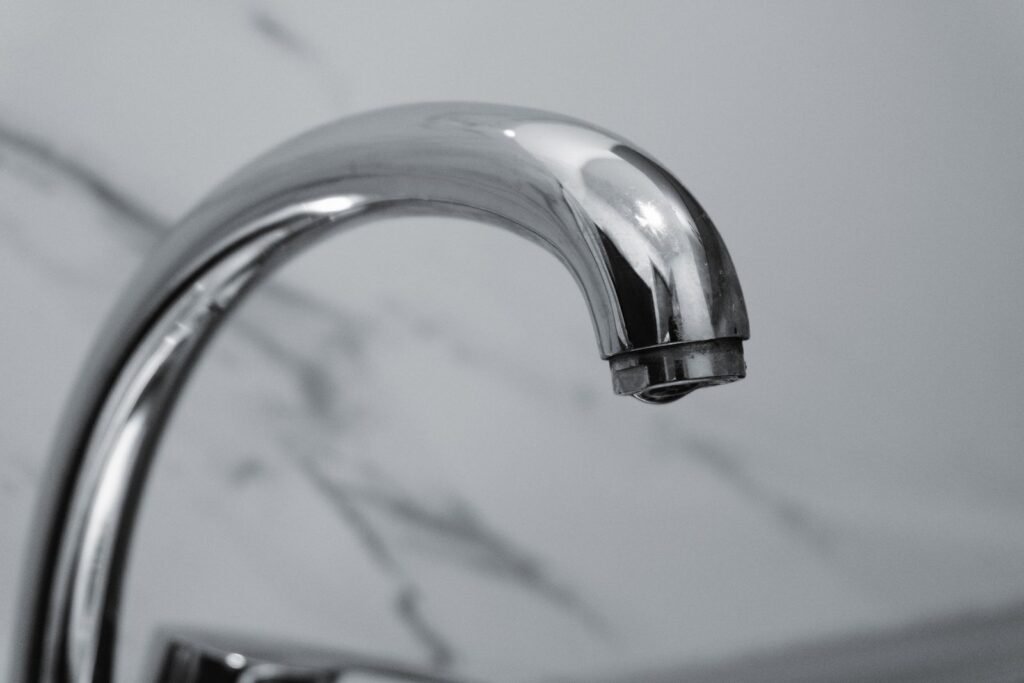
If only one tap runs gray, unscrew the aerator. It traps sediment, scale and carbon dust and can release a dark burst when disturbed; our guide to scale on faucet aerators shows how to clean it. A failing cartridge can also shed black rubber bits. If every tap is affected, the cause is in the supply, a filter or the water heater.
FAQ
Is gray water from the tap safe to drink?
Don't drink visibly discolored water. Carbon fines and mains sediment are mostly cosmetic, but manganese has health guidance, especially for infants. Use bottled water until it clears or you've tested.
Why is my water gray only in the morning?
Water sitting in pipes overnight lets sediment settle and manganese oxidize. If it clears after a minute of running, flush daily and consider testing.
How long does it take gray water to clear?
Mains sediment and carbon fines usually clear from the cold tap in 5 to 10 minutes. A new whole-house carbon tank can take longer. If it never clears, call your utility or test.
Can a water softener cause gray water?
Not usually. If gray water started right after softener work, flush the cold tap and check the bypass. A softener removes only small amounts of manganese, and higher levels foul the resin.
Most gray water from faucet taps clears with a cold flush
Gray water from faucet taps is rarely an emergency. Do the glass test, think about what changed, and flush the cold tap first. If it keeps coming back on a well, test for manganese and match the filter to the result.