

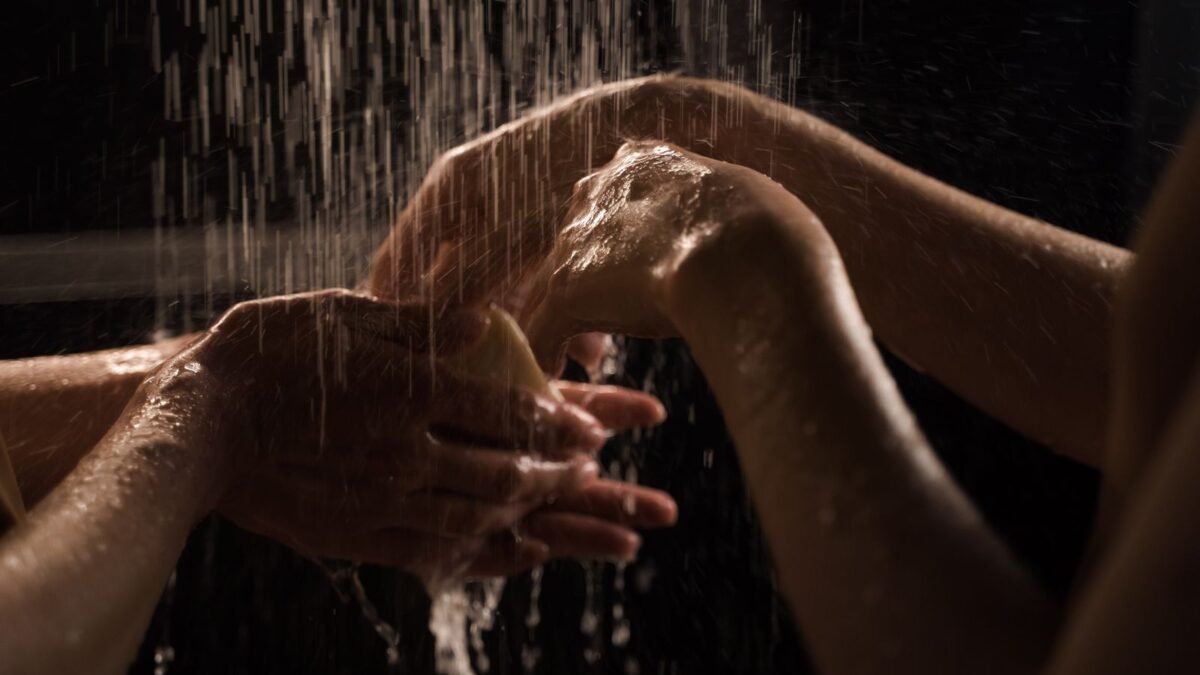
Quick Answer: Soft water feels slimy because there's no calcium or magnesium left to react with your soap. In hard water those minerals turn part of the soap into scum that drags on your skin, and that drag is the "squeaky clean" feel. In soft water the soap stays dissolved and rinses off gradually, and your skin's own oils stay put. It isn't residue or anything harmful. Use about half the soap and the feeling mostly goes away.
The first shower after a softener goes in surprises nearly everyone. You rinse, and rinse, and your skin still feels like the soap is on it. If soft water feels slimy to you, the softener is almost always working exactly as designed. One idea explains it, and a few small habits make it feel normal.
In this guide
The "squeaky clean" feeling was never clean

Traditional soap is a fatty acid salt. Drop it into water with calcium and magnesium, and those minerals swap in and form calcium and magnesium soaps that don't dissolve. That's soap scum: the gray tub ring and the film on the shower door. We cover the chemistry in more detail in why lather suffers in hard water.
The same reaction happens on your skin. Some soap turns into scum before it cleans anything, and a thin layer of that mineral soap plus skin stripped of some oil grips your fingers and squeaks. It feels clean because it feels different from slippery.
Take the hardness out and three things change:
- All the soap stays in solution and keeps working, so you're effectively using more than you meant to.
- Dissolved soap rinses off gradually, not in one sudden "scum and done" moment. That's the lingering slick feeling.
- Your skin's natural oils aren't stripped as aggressively. Those oils feel smooth, and nothing roughens them up.
Why soft water feels slimy for the first week or two
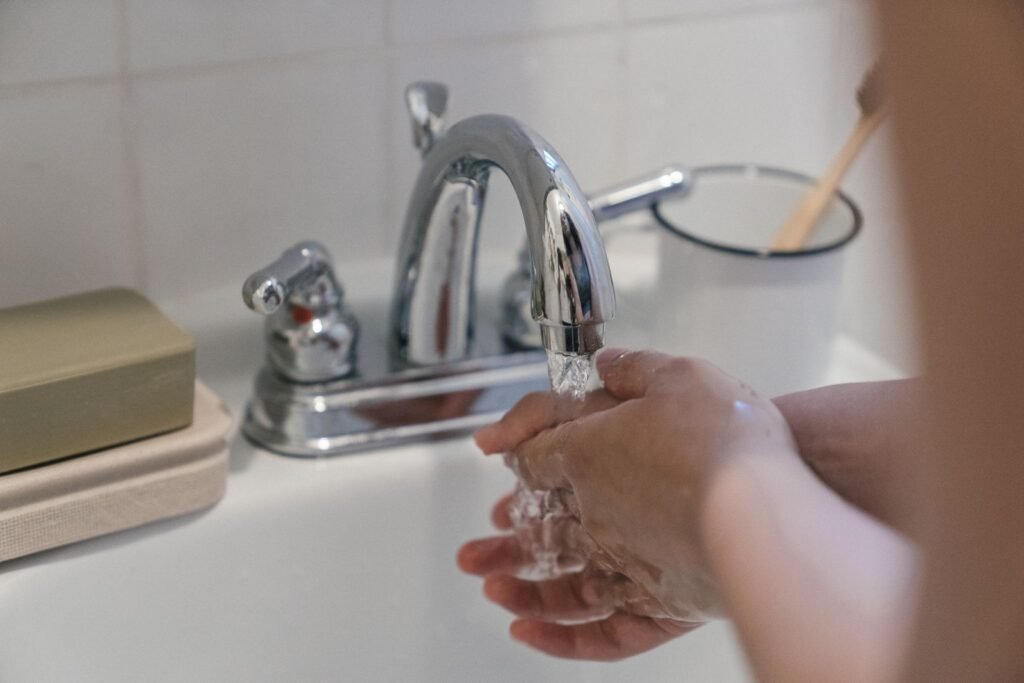
Most of the slimy feeling is habit. Years of hard water train you to use enough soap to overpower the minerals and to rinse until you feel friction. With soft water, the same squirt of soap is far more than you need, and the friction never comes, so you keep rinsing.
Sodium also plays a small part. A softener swaps calcium and magnesium for sodium (or potassium, if you use potassium chloride), and soap stays dissolved around sodium instead of dropping out as scum. The amount of sodium is small; it's the missing hardness that matters.
Most households stop noticing within a week or two once they cut back on soap. If you rinse long enough, the soap is gone; it just doesn't announce it with a squeak.
Slippery that's normal, and slippery that isn't

Normal: the feeling started right after installation and stays the same every day, the water tastes like it always did, and soap lathers instantly from a small amount.
Worth checking:
- The water tastes salty, or got slicker right after regeneration. Brine may not be rinsing out of the resin, a valve or rinse-setting problem. See why softened water tastes salty.
- You're on a well with an acid neutralizer or soda ash feed. High-pH water can feel slippery with no softener involved. The EPA's secondary standards list a "slippery feel" among the effects of pH above 8.5. A softener alone doesn't meaningfully shift pH, as we explain in does a water softener change pH, but a neutralizer that's overdosing can.
- The feeling comes and goes. Squeaky some days and slick on others usually means hardness is slipping through part of the time. That's a softener performance problem, not a skin one.
The quickest way to settle it is to test raw and softened water side by side. Softened water should read at or near zero hardness; a simple water hardness test kit does it in a couple of minutes.
How to make soft water feel normal again
None of these involve tearing out the softener.
- Use far less soap and shampoo. Start at about half your usual amount and adjust. It's the biggest fix and it saves money. The same goes for laundry and dishes; see how much detergent to use with soft water.
- Try a body wash instead of bar soap. Many body washes use synthetic detergents rather than true soap, and some people find they rinse off with less lingering slickness. Try one bottle before you change everything.
- Rinse a little longer, not hotter. Very hot water strips more oil and dries skin. Warm water and an extra 20 seconds of rinsing does more.
- Leave a little hardness in. Some control valves have a blend or mixing adjustment that lets a small amount of hard water through, and some homes soften only certain lines. Check your valve's manual first. A grain or two of hardness takes the edge off the slippery feel, at the cost of a bit more spotting on glass and fixtures.
- Pat dry instead of scrubbing with the towel. People used to hard water tend to rub themselves "clean."
Fine hair often feels limp at first; our guide on washing hair and skin with soft water covers product amounts and conditioners. And if you simply prefer harder water in the shower, that's fine. Our comparison of a whole-house softener vs a shower filter explains what each changes: a shower filter mostly targets chlorine, so it won't feel slippery, but it won't soften your water either.
What soft water does and doesn't do for your skin
You're not coated in anything, and many people with dry skin find soft water gentler once they cut back on soap. Penn State Extension's guide to water softening notes that some people find soft water makes skin smoother and hair silkier, but treats cleaning, soap use and scale as the real reasons to soften.
Be wary of bigger promises. In the Softened Water Eczema Trial, a randomized study of 336 children with moderate to severe eczema in hard-water areas, installing an ion-exchange softener did not improve eczema severity beyond usual care over 12 weeks, although some parents reported feeling better. If you have eczema or another skin condition and notice changes after a softener goes in, talk to your doctor. More in hard water and eczema.
FAQ
Is the slimy feeling soap I can't rinse off?
Mostly no. Soft water rinses soap away; it just doesn't leave the squeaky scum film that tells you it's gone. Using less soap removes most of the lingering slickness.
Is slippery soft water bad for my skin?
No. Without scum, skin keeps more of its natural oils. People with skin conditions should still check with a doctor if anything changes.
Does potassium chloride make soft water feel less slippery?
Some people report a slightly different feel, but either salt removes the hardness, and that's what causes the slippery sensation. Cutting back on soap makes a bigger difference.
How long does it take to get used to soft water?
Most people adjust within one to two weeks, faster if they cut soap and shampoo by about half from day one.
Can I make my softener leave some hardness in?
Often, yes. Many valves have a blend adjustment, or a plumber can add a mixing valve. Check your manual before changing anything.
Soft water feels slimy because it's working: use less soap
Soft water feels slimy because nothing in it turns soap into scum and nothing strips your skin's oils. Cut soap by about half, rinse with warm water, and give it a week or two. If the water tastes salty, the feel changes day to day, or you have a neutralizer, test hardness and pH before blaming your skin.