

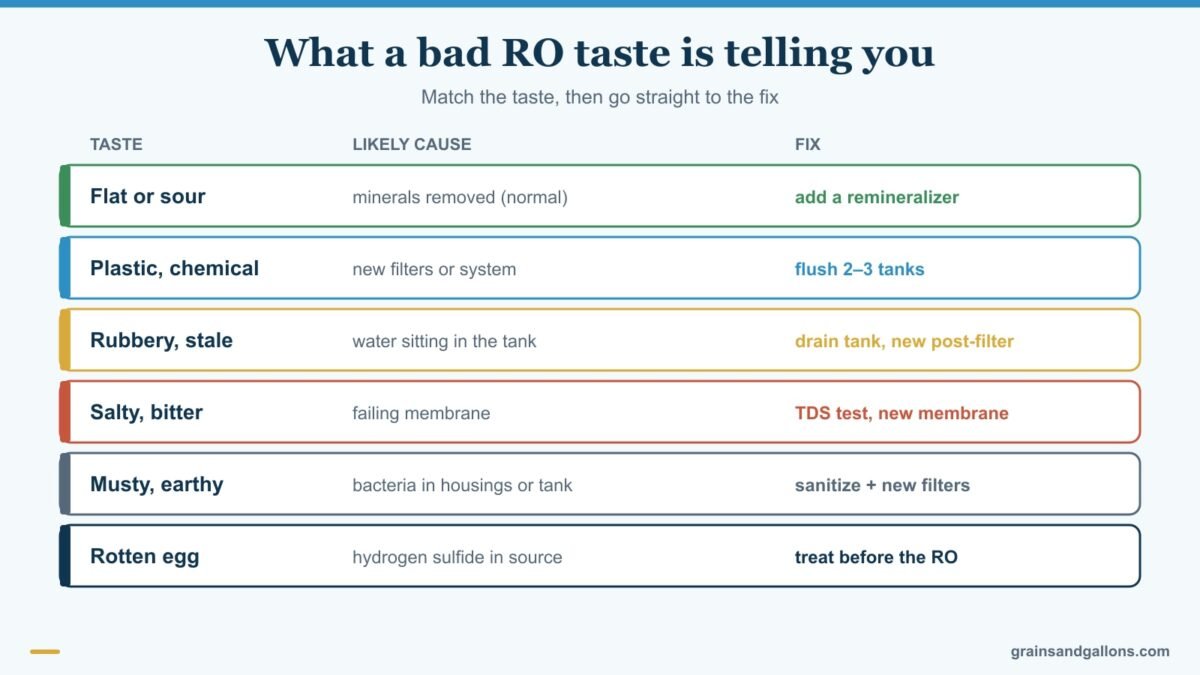
Quick Answer: When reverse osmosis water tastes bad, the type of taste tells you the cause. Flat or slightly sour is normal for RO and is fixed with a remineralization filter. Plastic or chemical usually means a new system or new filters that need flushing. Rubbery or stale points to water sitting in the tank or a spent post-filter. Salty or bitter means a failing membrane, musty means it's time to sanitize, and rotten egg usually comes from the source water.
Disclosure: As an Amazon Associate, Grains & Gallons earns from qualifying purchases.
You put in an RO system to get the cleanest water in the house, and now nobody wants to drink it. When reverse osmosis water tastes bad, "bad" can mean a lot of things: oddly flat, a plastic edge, a rubbery note, or worse than the tap it replaced. Each one points somewhere specific, so the fix is usually quick once you name the taste.
In this guide
- Name the taste before you change anything
- Flat, thin or slightly sour: RO doing its job
- Plastic or chemical taste after a new install or filter change
- Rubbery or stale water from the storage tank
- Salty, bitter or "like tap water again"
- Musty or earthy: bacteria in the housings or tank
- Rotten egg or metallic: when the source is to blame
- Keep RO water tasting fresh
- FAQ
- Most bad RO taste is a maintenance fix
Name the taste before you change anything

Pour a glass from the RO faucet and one from the regular cold tap, let both reach room temperature, and taste them side by side. Then ask two questions:
- What does it taste like? Flat, plastic, rubber, salt, must, rotten egg or metal.
- When did it start? Right after installation or a filter change, gradually over months, or suddenly on a system that was fine?
If the tap water has the same off taste, the problem may be in your source water rather than the RO. Our guide to a water taste that changed suddenly covers that side. If only the RO water tastes off, match it to a section below.
Flat, thin or slightly sour: RO doing its job
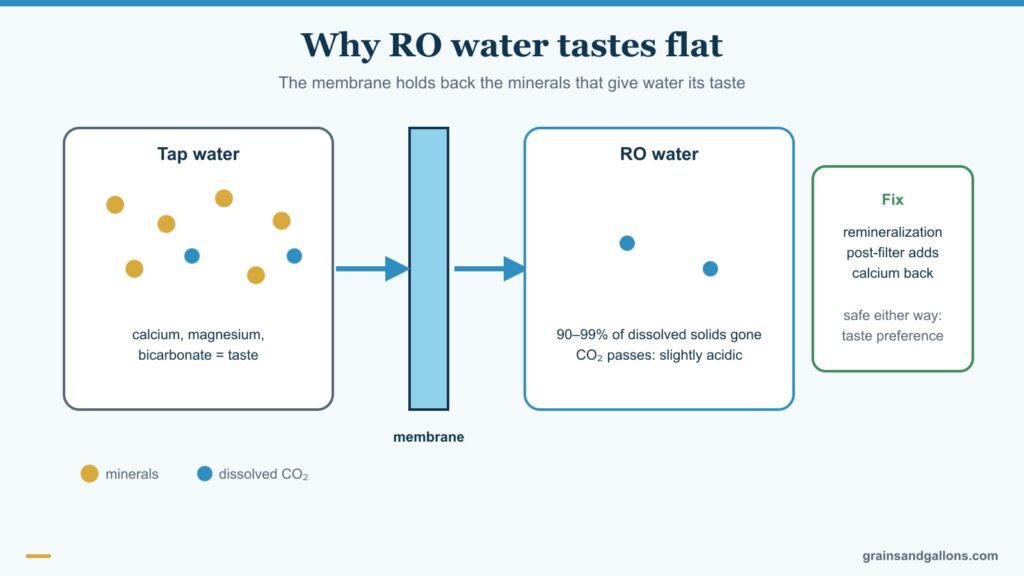
The membrane removes most dissolved minerals, including calcium, magnesium and bicarbonate. Those minerals are a big part of what makes water taste like water. The APEC RO system manual says its units remove 90 to 99 percent of total dissolved solids under good pressure and normal water quality, so the result is close to mineral-free.
Dissolved carbon dioxide passes through the membrane while the bicarbonate that buffered it doesn't, so RO water usually comes out somewhat acidic. That's why some people notice a faint sour or "thin" taste. It isn't a fault and it isn't harmful, but plenty of people don't like it.
Fix: Add minerals back. A remineralization (alkaline or pH+) post-filter goes after the tank, before the faucet, and adds a small amount of calcium and sometimes magnesium. Inline kits such as the APEC pH+ calcium kit plug into the existing 1/4-inch tubing in a few minutes. Our guide to the best remineralization filters for RO water compares cartridge types, and many countertop RO systems include a mineral stage. If your home also has a softener, the feed water has already lost its hardness, which makes RO water taste even flatter; see reverse osmosis and a water softener together.
Plastic or chemical taste after a new install or filter change
Fresh carbon, new tubing and new housings often give off a plastic or chemical taste at first, and new carbon blocks can shed fine carbon dust. This is the most common reason RO water tastes bad after a filter change, and it's almost always temporary.
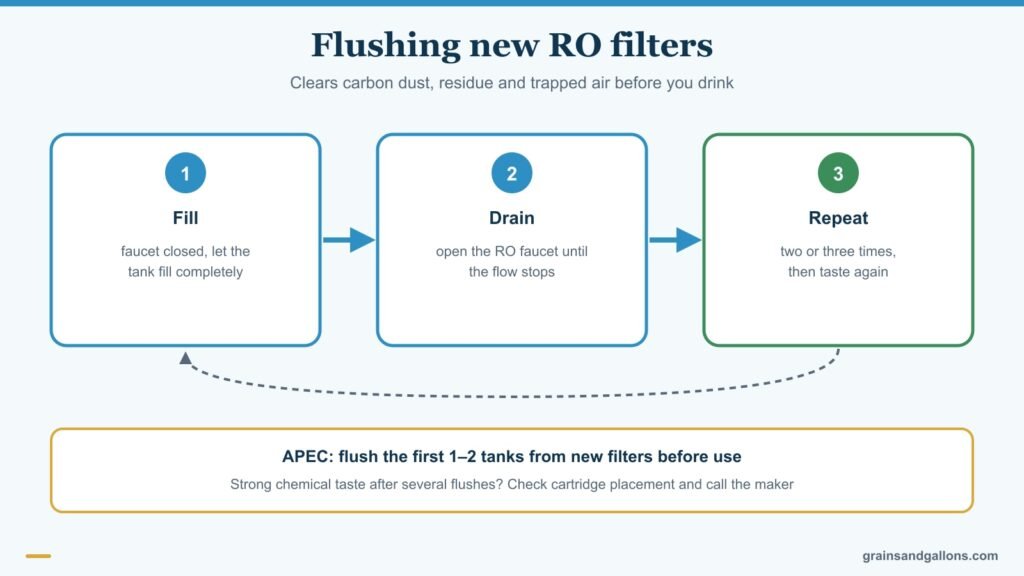
Fix: Flush it properly. APEC says the first one to two tanks of water from new filters should be completely flushed out before use. In practice:
- Let the tank fill completely (a few hours).
- Open the RO faucet and drain the tank until the flow stops.
- Close the faucet and let it refill. Repeat two or three times.
Air trapped in new filters can also add a slight sour or fizzy taste until it purges. Most break-in tastes fade within the first few days of normal use. If a strong chemical taste persists after several full tank flushes, check that the right cartridges went in the right housings and contact the manufacturer.
Older system, sudden plastic taste: The post carbon filter (the inline filter right before the faucet) may be spent. Its job is polishing taste after water sits in the tank. Replace it; how to change RO filters and the membrane covers which stage is which.
Rubbery or stale water from the storage tank
Water that sits in the storage tank for days, in contact with the rubber bladder, can pick up a rubbery or stale taste. It's most noticeable when you don't use much RO water, or after a vacation.
Fix: Drain the tank fully and let it refill. Use the RO water regularly, even for cooking and coffee, so it doesn't sit for days. A fresh post carbon filter also helps, since it polishes water on its way out of the tank. If a rubber taste persists with a new post-filter and regular use, the tank itself may be the source and replacing it is the remedy. Some people switch to a tankless RO design for exactly this reason.
Salty, bitter or "like tap water again"
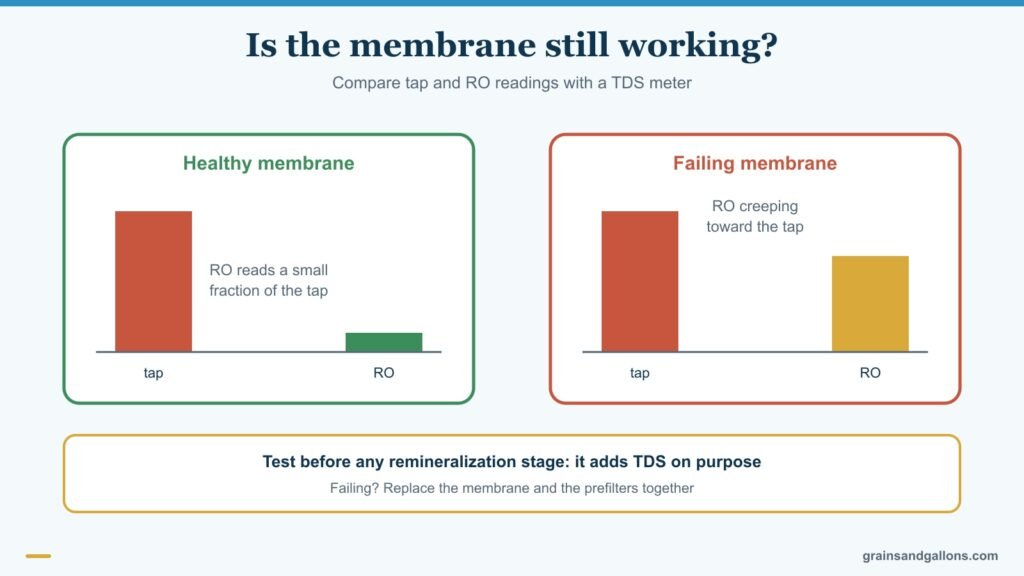
When RO water starts tasting like the tap, the membrane isn't rejecting dissolved solids anymore. Common causes are age, chlorine damage when the carbon prefilter was overdue, hard-water scaling, or a torn O-ring letting water bypass the membrane. University of Nebraska Extension's reverse osmosis guide notes that thin-film membranes deteriorate in chlorinated water, which is why the carbon prefilter matters so much.
How to confirm: Measure TDS at the tap and at the RO faucet with a meter like the HM Digital TDS-3. A healthy membrane removes most of the TDS. If the RO reading has crept toward the tap reading, the membrane is failing. If you have a remineralization filter, test before that stage, because it adds TDS on purpose. How to use a TDS meter explains the rejection math.
Fix: Replace the membrane, and the prefilters with it so the new membrane is protected. If the RO is fed softened water, a faint salty edge can also come from sodium in the feed. RO removes most of it, but not all.
Musty or earthy: bacteria in the housings or tank
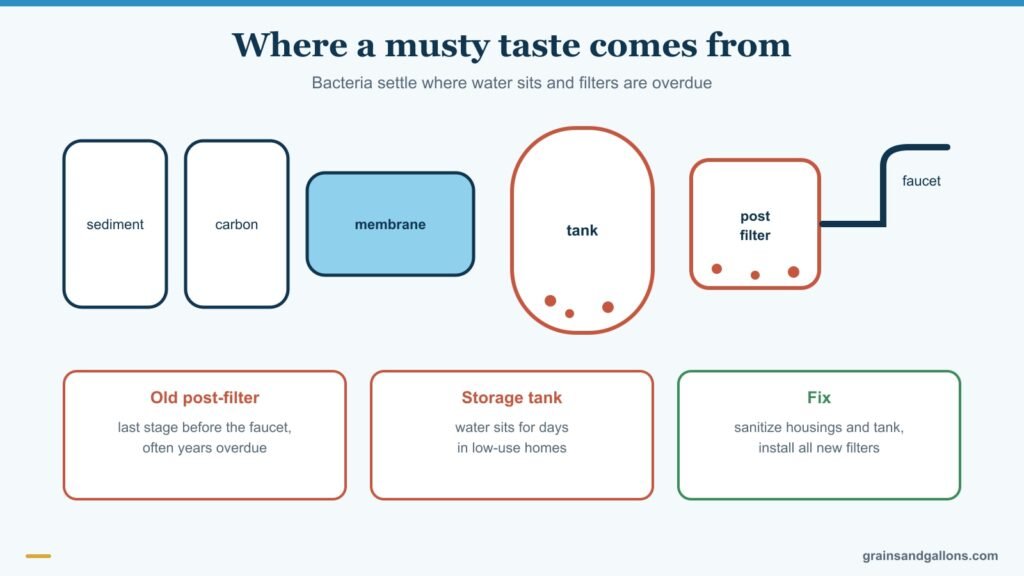
A musty, earthy or swampy taste usually means bacteria growing in the system, often in an old post-filter, the tank or a housing that hasn't been opened in years. It's more common in systems that sit unused, or where filters have gone well past their change date. The Nebraska guide notes that microorganisms can foul RO membranes and recommends disinfecting systems regularly with the manufacturer's products.
Fix: Sanitize the system and replace all the filters. Remove the cartridges, sanitize the empty housings and tank per your manual, flush, then install new cartridges. How to sanitize an RO system gives the full process.
If the musty taste is also in your unfiltered tap water, it's coming from the source. Some cities have seasonal earthy tastes from algae, and RO should reduce it.
Rotten egg or metallic: when the source is to blame
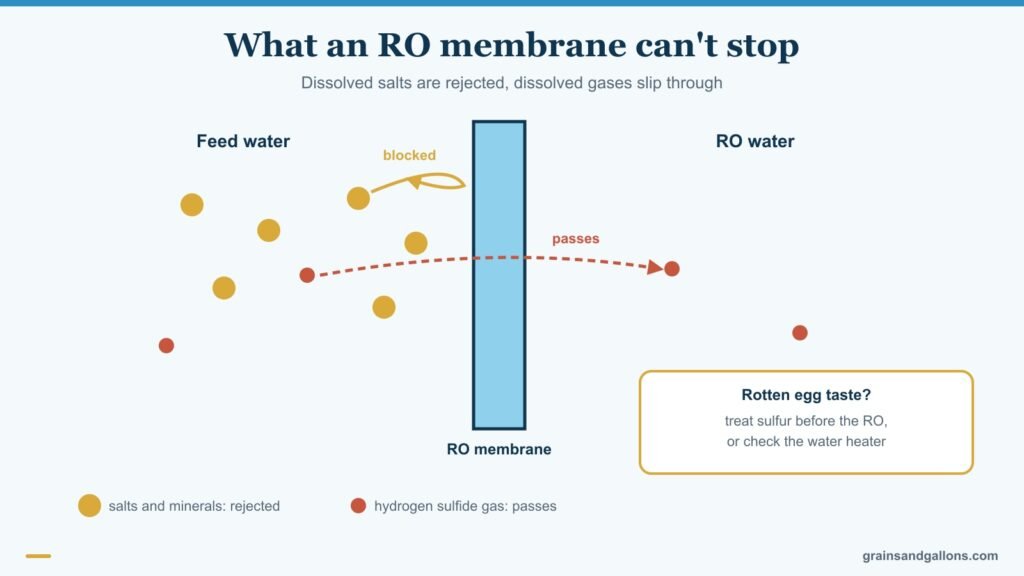
Rotten egg. That's hydrogen sulfide, and it's one taste RO can't fix on its own. The Nebraska guide lists dissolved gases such as hydrogen sulfide among the contaminants that pass through an RO membrane. The carbon stages may soften it, but heavy sulfur needs treatment upstream. Penn State Extension's page on hydrogen sulfide in water wells explains that it usually comes from sulfur-reducing bacteria in groundwater, and that people can detect it well below 0.5 mg/L. If the smell is only in hot water, the water heater's anode rod is the likely source; see rotten egg smell only in hot water.
Metallic. Brass fittings and some faucets can give RO water a metallic taste at first, since very pure water can pull trace metals from fittings. Check that your RO faucet is a lead-free model made for RO use. A metallic taste that develops suddenly on an established system is worth investigating, including a water test.
When to stop drinking it
If the water smells like sewage, chemicals or fuel, or the taste change came with a main break, boil notice or well flooding, don't drink it until you know the cause. Contact your utility (city water) or get a lab test (well water). An RO system isn't a fix for a contamination event it wasn't designed and certified for.
Keep RO water tasting fresh

Most taste problems come back when maintenance slips. A simple routine prevents nearly all of them:
- Change prefilters on schedule. Usually every 6 to 12 months, sooner with sediment-heavy water. An overdue carbon prefilter lets chlorine reach the membrane.
- Change the post carbon filter yearly. It's the last thing your water touches before the faucet.
- Sanitize when you change filters. Opening the housings is the easiest time to do it.
- Check TDS every few months. A slow climb warns you before the taste changes.
- Use the water. Daily draws keep the tank turning over so nothing sits long enough to go stale.
FAQ
What if reverse osmosis water tastes bad after a filter change?
New carbon and new plastic parts release residue and fine carbon dust, and trapped air can add a slightly sour taste. Fill and drain the tank two or three times; APEC recommends flushing the first one to two tanks from new filters before drinking.
Is it normal for RO water to taste flat?
Yes. RO removes most of the minerals that give water its taste, and the water ends up slightly acidic. It's safe, and a remineralization post-filter adds back calcium and magnesium if you prefer more flavor.
Why does my RO water taste like plastic?
On a new system or after a filter change, it's usually residue that flushes out. On an older system, a spent post carbon filter or water sitting too long in the tank is the usual cause.
Can RO water taste salty?
It shouldn't. A salty or bitter taste usually means the membrane is no longer rejecting dissolved solids. Compare tap and RO readings with a TDS meter; if they're close, replace the membrane and prefilters.
Does reverse osmosis remove rotten egg smell?
Not reliably. Hydrogen sulfide is a dissolved gas, and gases pass through RO membranes. The carbon stages may reduce a faint odor, but strong sulfur needs treatment before the RO system.
Most bad RO taste is a maintenance fix
If your reverse osmosis water tastes bad, start by naming the taste and checking when it began. Flat water is normal and only needs minerals added back. Plastic and chemical tastes from new parts flush out within a few tanks. Rubbery, stale and musty tastes point to the tank, the post-filter or bacteria, and salty means the membrane is done. Rotten egg and metallic tastes usually start upstream. Keep filters on schedule, sanitize at filter changes, and check TDS now and then, and the water should stay worth drinking.