

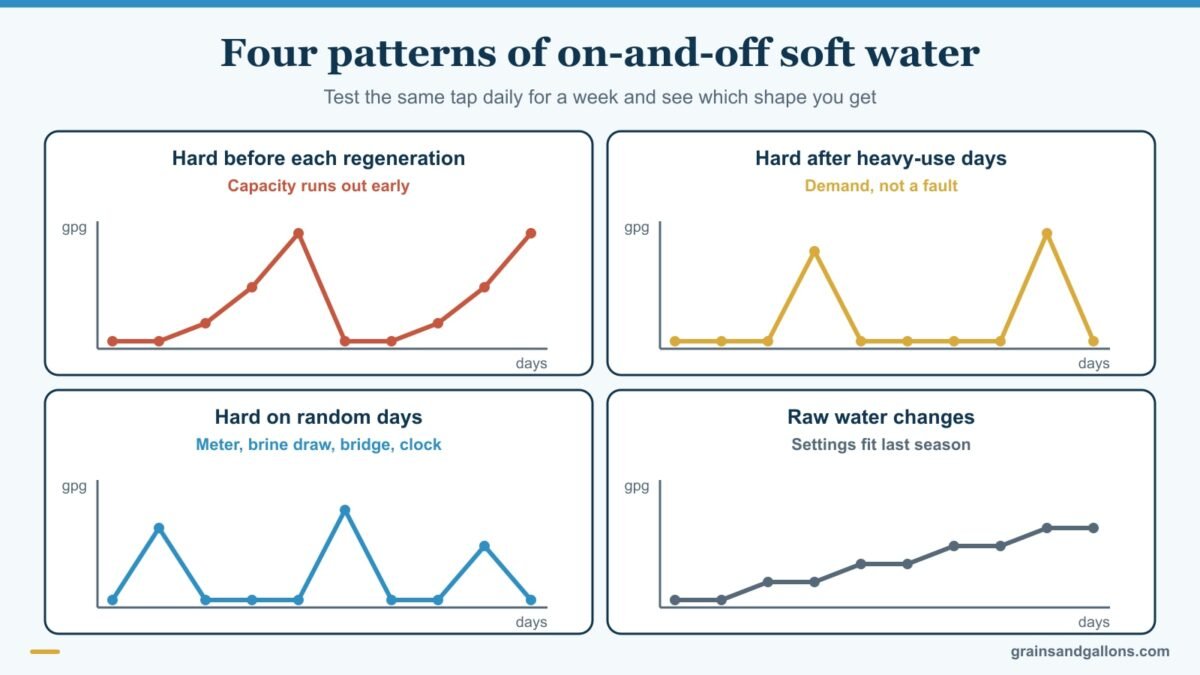
Quick Answer: A water softener working intermittently is almost always running out of capacity before it regenerates, skipping or botching some regenerations, or being outpaced by heavy use. Test the same softened tap every morning for a week with WaterWorks Total Hardness Test Strips and note when it regenerated. Hardness just before each regeneration means raise the hardness setting or regenerate sooner. Hardness on random days points to the flow meter, brine draw, a salt bridge or the clock.
Disclosure: As an Amazon Associate, Grains & Gallons earns from qualifying purchases.
Tuesday the shower felt silky. Saturday the faucet had spots again. Monday it was fine. A water softener working intermittently is maddening, partly because by the time you go to check it, it might be working again.
Here's the thing: "intermittent" isn't random. There's a pattern hiding in there, and once you see it, the cause usually narrows to one or two things. So this guide isn't a list of every problem a softener can have. It's a way to find your pattern.
In this guide
Log a week of hardness readings first
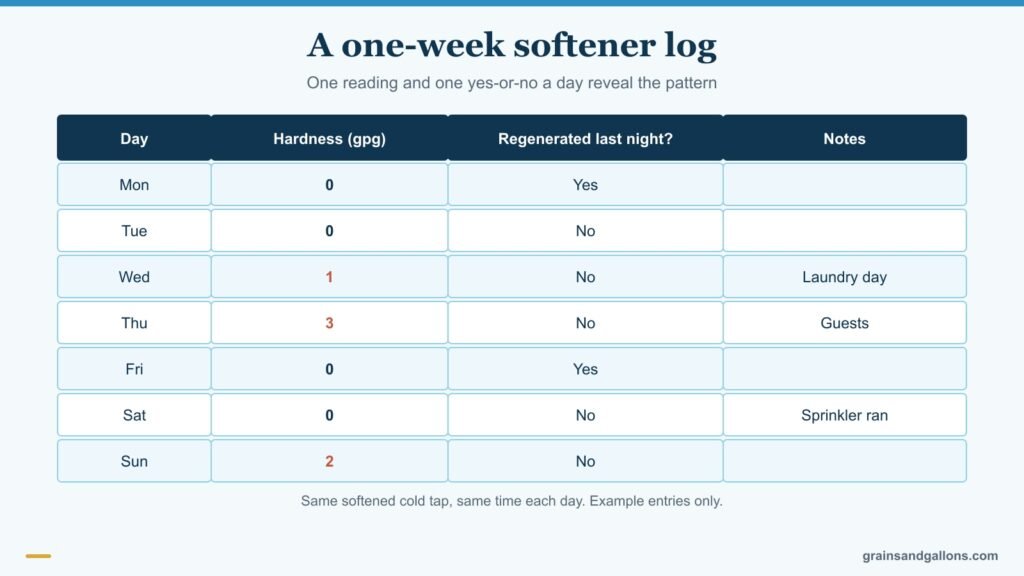
You need two pieces of information each day:
- A hardness reading from the same softened cold tap at roughly the same time. A bathroom sink works; skip the kitchen if it might bypass the softener.
- Whether the softener regenerated the night before. Many digital valves show days since last regeneration or a regeneration count. If yours doesn't, check the brine tank water level or listen for it around the scheduled time.
Jot down anything unusual: laundry day, guests, the lawn sprinkler, a power flicker. A strip test takes a minute. Our guide to the best water hardness test kits covers options if you want something more precise than strips.
Before you start, rule out the two quick ones: make sure the bypass valve is fully in the service position (a partly turned bypass lets some hard water through all the time), and confirm the softener has power and the right time of day. After a week, most homes land in one of the four patterns below.
Hard just before regeneration, soft right after
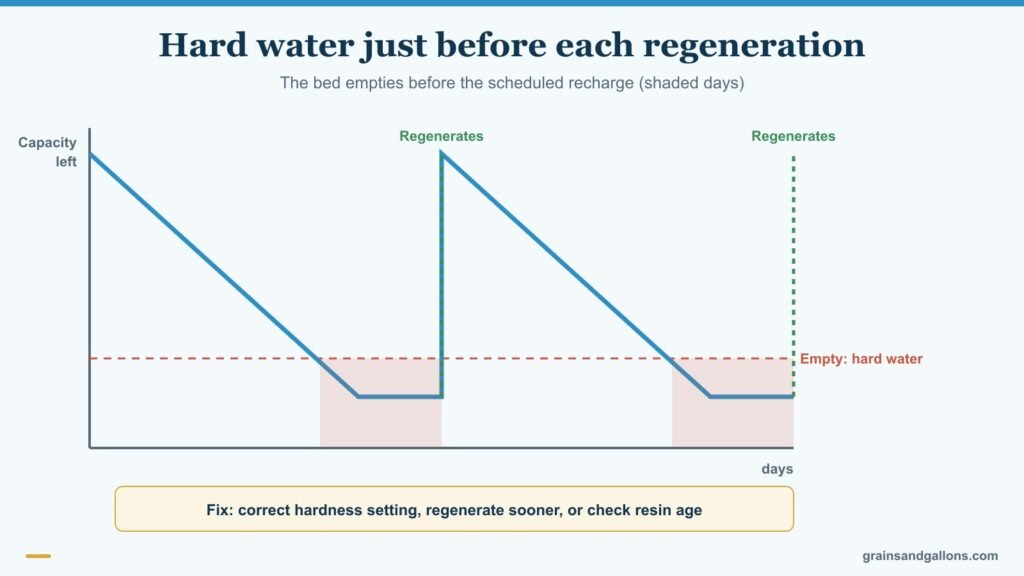
This is the most common pattern. The resin bed runs out of capacity a day or two before the next regeneration. The water stays soft for a few days after each recharge, then hardness creeps back.
Likely reasons:
- The hardness setting is too low for your actual water. Retest your raw water; city supplies and wells both change. If you have iron, many manuals have you add to the hardness number to compensate.
- The softener runs on a fixed calendar (say, every 7 days) and your use varies. A heavy laundry week empties it early.
- The reserve is too small on a metered unit, so the last day's use runs past capacity before the night's regeneration. See how water softener reserve capacity works.
- The resin has lost capacity from age, chlorine or iron fouling, so the same settings no longer last as long.
- You switched salt. Potassium chloride recharges less resin at the same setting. If the pattern started with a new bag, see softener stopped working after a salt change.
We cover this pattern in more depth in hardness that returns before regeneration. On a timer-based softener, this is exactly what a metered valve prevents, because it counts gallons and regenerates when capacity is actually used up. Our picks for the best metered on-demand water softeners are worth a look if your unit is old and calendar-only.
Hard after heavy-use days, whatever the schedule
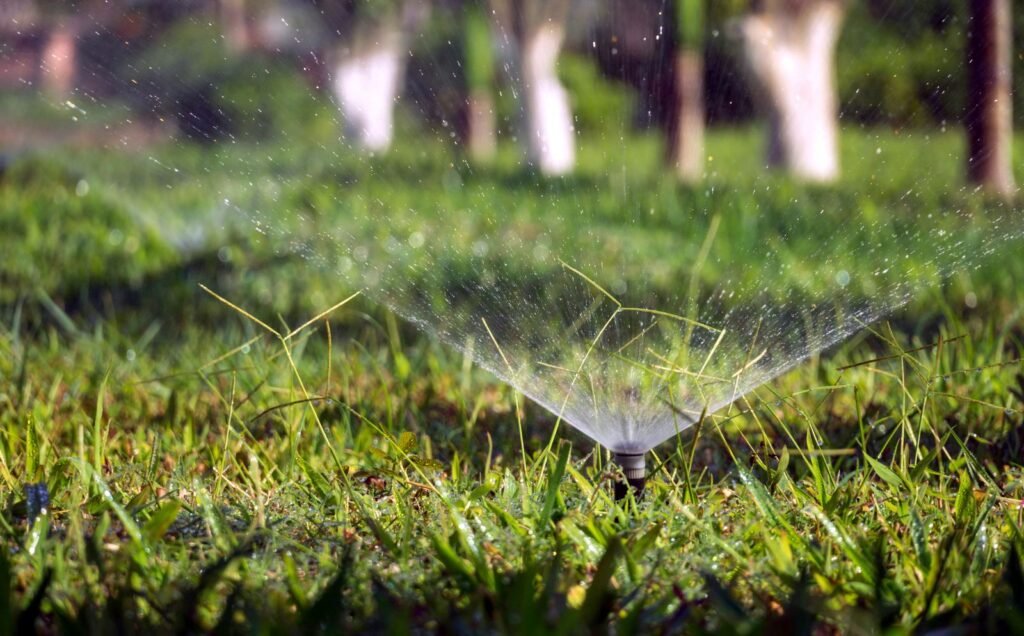
The hard days line up with your notes: guests, big laundry days, filling a hot tub, or watering from an outdoor line that runs through the softener. That's demand, not a broken softener.
Two fixes: reduce the load, or let the softener regenerate more often. Putting irrigation and hose bibs on unsoftened water is the usual first step; see should outdoor faucets bypass a water softener. On a metered valve, check that hardness and capacity are entered correctly so it can react to heavy days. On a timer valve, add a regeneration day or switch to metered control.
Random hard days point to something mechanical
When hard days have no link to regeneration or usage, something works most of the time and fails some of the time:
- The flow meter is sticking. If the meter misses some of your water, a metered softener thinks it has more capacity left than it does. Watch the display while water runs; if gallons don't count down, see our guide to a flow meter that isn't counting.
- Brine draw is unreliable. A partly clogged injector or a brine line with a tiny air leak may pull a full dose one night and a weak one the next. Check whether the brine tank level drops the same amount after each regeneration, and clean the injector if it doesn't.
- A salt bridge comes and goes. Some nights water reaches salt, some nights it doesn't, especially as a salt bridge partly collapses. Probe the salt with a broom handle.
- The clock is drifting. The Pentair 5600SXT manual, for example, warns that power interruptions longer than 8 hours may cause the controller to lose its time setting, and says the adapter shouldn't be on a switched outlet. Older timer units can lose time after much shorter outages, so a regeneration lands mid-afternoon or gets skipped.
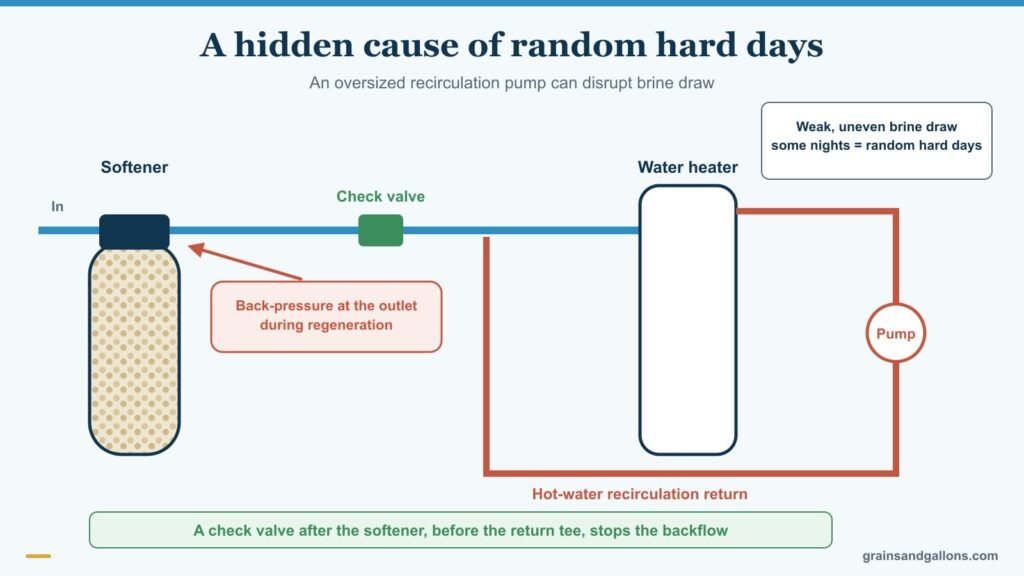
A hidden one: the recirculation pump. A Water Conditioning & Purification case study describes a softener that failed intermittently even after the valve, resin and brine tank checked out. The cause was a newly installed, oversized hot-water recirculation pump that "forced water into the outlet of the water softener during regeneration." Regeneration relies on steady flow past the injector to create suction, and as the author puts it, if that flow "is interrupted, there will be inadequate or intermittent vacuum." The fix was a check valve downstream of the softener, before the recirculation return. If your random hard days started after a plumbing change, look there.
Seasonal swings and other look-alikes

Raw water changes with the season. If a longer log shows the incoming water itself changing, the softener may be fine but set for last season's water. Some cities switch between groundwater and surface water, or blend sources differently in summer. Wells change too, with drought, heavy pumping or nearby construction. Test raw water a few times a year and set the softener for the hardest reading, not the average.
Hard only in the morning, or only on the hot side. That may not be the softener at all. Water drawn during an overnight regeneration passes through untreated, and that hard water can sit in the pipes or water heater until morning. That's its own pattern, covered in hard water first thing in the morning.
Match your log to the cause
| Your log shows | Look at first |
|---|---|
| Soft after regeneration, hard by day 5–6 | Hardness setting, regeneration frequency, salt type, resin age |
| Hard after heavy-use days | Usage, outdoor lines on softened water, metered settings |
| Hard on random days | Flow meter, injector, brine line, salt bridge, clock, recirculation pump |
| Raw hardness itself changing | Retest raw water and set for the high end |
| Hard all the time, just more on some days | Bypass partly open, valve leaking hard water past the resin |
If you've worked through your pattern and still can't pin it down, a technician can test hardness at the valve outlet during a manual regeneration and watch the brine draw directly.
FAQ
Why is my water softener working intermittently?
Most often the resin runs out before the next regeneration, because the hardness setting is too low, use has gone up, or a calendar timer can't keep up. Random hard days instead point to a sticking flow meter, weak brine draw, a salt bridge, a drifting clock or, less often, a recirculation pump disrupting regeneration.
Can a water softener work some days and not others?
Yes. A softener's capacity is finite, so if it empties a day before regeneration, you get hard water until it recharges. Mechanical faults like a partly clogged injector can also deliver a full regeneration one night and a weak one the next.
How do I know if my softener is regenerating?
Many digital valves show days since the last regeneration or a regeneration count. You can also mark the brine tank water level before bed and check it in the morning; after a regeneration it should have dropped and then refilled, and the salt level falls over time.
How often should I test softened water?
Daily for a week is enough to find a pattern. After that, testing once a month and after any setting change, salt change or plumbing work catches problems early. Test raw water a few times a year too, since supplies change.
Can a power outage make my softener skip regenerations?
It can. Some valves lose the time of day after a long outage; the Pentair 5600SXT manual puts it at interruptions longer than 8 hours. The softener then regenerates at the wrong hour or skips a night. Check the clock after any outage.
Intermittent soft water always leaves a pattern
A water softener working intermittently is telling you something specific. Hardness right before each regeneration means capacity: fix the setting, the schedule or the resin. Hardness after busy days means demand. Hardness at random means a part that sometimes fails: the meter, the injector, the salt or the clock, and occasionally a recirculation pump pushing back during regeneration. One week of readings is usually all it takes to tell which.