

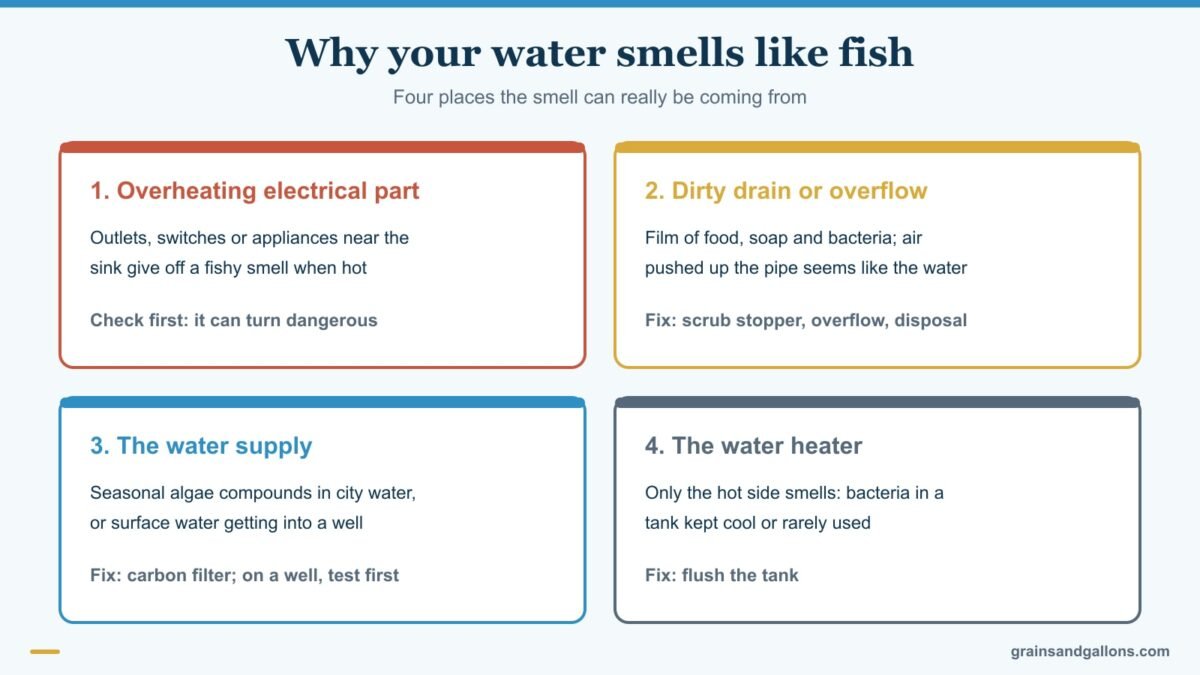
Quick Answer: If your water smells like fish, fill a glass at the sink, carry it to another room and smell it there. If the glass smells fine, the odor is in the room, not the water, and a fishy smell in a room is a classic sign of an overheating outlet, switch or appliance: check for warm or discolored outlets and call an electrician. If the glass itself smells fishy, it's usually algae compounds in your utility's source water, a dirty drain, or on a well, surface water getting in. A carbon filter fixes the first, cleaning fixes the second, and a lab test comes first for the third.
A fishy smell at the kitchen sink makes everyone think the water smells like fish. Often it doesn't. Electrical parts made with certain plastics and resins give off a smell most people describe as fish or urine when they overheat. A failing outlet behind the sink, a dishwasher, a garbage disposal motor or an under-sink water heater can all do it. It's the one cause here that can turn dangerous, so start there.
In this guide
- Do the glass test before blaming the water
- A fishy smell in the air can mean an overheating outlet
- Clean a fishy-smelling drain and overflow
- When city water smells like fish: algae and disinfectant
- Fishy well water: check the cap, then test
- Carbon filters for a fishy taste from the supply
- Only the hot water smells fishy
- FAQ
- Find the source first, then filter
Do the glass test before blaming the water

Two quick checks separate "the room smells" from "the water smells":
- The glass test. Fill a clean glass with cold water, walk at least two rooms away, swirl it and smell it. Then do the same with hot water.
- The drain test. Run no water and put your nose near the drain opening and the sink's overflow hole.
| Result | Where the smell is | Next step |
|---|---|---|
| Glass fine away from the sink, but the area smells fishy | The air, often electrical | Check outlets and appliances |
| Glass fine, drain smells fishy or sour | The drain | Clean the drain |
| Cold glass smells fishy everywhere in the house | The water supply | Utility or well section |
| Only the hot glass smells | Water heater | Hot water section |
A fishy smell in the air can mean an overheating outlet

Walk the area and feel the faceplates of outlets and light switches with the back of your hand. Look for brown or melted marks, a buzzing sound, and plugs that are warm or loose. Unplug the disposal, dishwasher, instant-hot dispenser and anything else under the sink and see if the smell fades.
If you find a warm or discolored outlet, switch off its breaker and leave it off. Call a licensed electrician. Don't keep using it to "see if it happens again." A fishy smell with no warm parts you can find still deserves an electrician's visit if it keeps coming back.
Clean a fishy-smelling drain and overflow

Sink drains, overflow holes and disposals collect a film of food, soap and bacteria that can smell fishy, sour or rotten. Running water pushes air up out of the pipe, so it seems like the water. Pull the stopper and clean it, scrub the overflow with a bottle brush, and clean out the disposal. If a rarely used sink smells, the trap may have dried out and is letting sewer gas through; run water for a minute to refill it. For stronger sewer smells, see tap water smells like sewage.
An old filter cartridge can do the same thing. If you have a pitcher, fridge or under-sink filter that's past its change date, replace it and see if the smell goes with it.
When city water smells like fish: algae and disinfectant

Some algae that grow in lakes and reservoirs give off odor compounds that people describe as fishy, oily or like cucumber. They show up from late spring through fall, when the water warms or a lake "turns over." Utilities treat for taste and odor, but tiny amounts can still get through, and they're more noticeable in warm water. Earthy and musty versions of the same problem are covered in why water smells like dirt in summer.
Ask your neighbors and call the utility; if it's widespread, they'll know. Your Consumer Confidence Report says whether your water comes from a lake, a river or groundwater. If your city recently switched disinfectants, a free and total chlorine test tells you whether you now have chloramine.
Odor falls under the EPA's secondary drinking water standards, which deal with taste and smell rather than health. But if your utility issues an algae-related drinking water advisory, follow it, and don't assume a home filter makes the water safe.
Fishy well water: check the cap, then test

On a private well, a new fishy odor means something changed. Surface water could be getting in through a damaged cap or casing, especially after heavy rain or flooding. The cap should be tight, sealed and above the ground. The EPA's private well guidance says to test right away when you notice a change in odor, color or taste, and to check for a broken cap, cracked casing or settled seals. Test for coliform bacteria and nitrates, and use bottled water until results come back if there's been a flood.
You'll see claims online that a fishy smell means barium or cadmium. Those metals are real contaminants, but you can't diagnose them by smell. If you're worried about metals, a lab test will settle it.
Carbon filters for a fishy taste from the supply
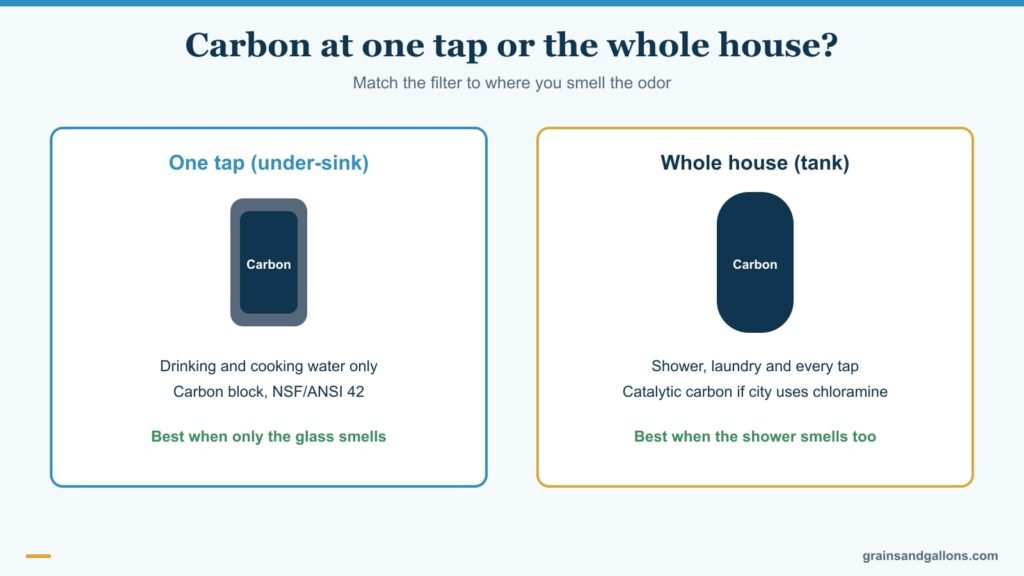
Activated carbon reduces most organic taste and odor compounds:
- One tap. A carbon filter at the kitchen sink handles drinking and cooking water. Our list of the best under-sink water filters includes carbon block systems. Look for NSF/ANSI 42 for taste and odor.
- The whole house. If the shower and laundry smell too, a whole-house carbon tank treats everything. Our picks for the best whole house catalytic carbon filters cover sizing for your flow rate. Catalytic carbon also handles chloramine better than standard carbon.
On a well, fix the source before adding a filter. Carbon can hide a smell while bacteria are still getting in.
Only the hot water smells fishy
When the cold glass is fine and the hot glass smells, the water heater is changing the water. Bacteria can grow in a tank set to a low temperature or rarely used. That usually smells like rotten eggs, but people describe odors differently. Flushing the tank helps. Some manufacturers allow a temporary temperature increase to control bacteria; check the manual and guard against scalding while you do it.
If the smell showed up overnight, think about what changed: a new filter, a plumbing repair, a utility flushing notice. Our guide to what to check when your water taste changes suddenly walks through that list.
FAQ
Is it safe to drink water that smells like fish?
A seasonal algae odor on city water is a taste issue, not usually a health one. A new fishy smell on a private well is different: stop drinking it until a coliform and nitrate test comes back clean, especially after flooding. Always follow a utility advisory if one is issued.
Why does my house smell like fish but the water doesn't?
That's the classic sign of an overheating electrical part. Outlets, switches, light fixtures and appliance wiring give off a fishy or urine-like smell when the plastic heats up. Turn off the breaker to any warm or discolored outlet and call an electrician.
Can a water filter make water smell like fish?
Yes. A cartridge left in past its change date can grow bacteria and give off odors. Replace it and flush the new one per the instructions. If the smell disappears, the old filter was the cause.
Does boiling get rid of a fishy smell in water?
Boiling won't reliably remove algae odor compounds and won't fix an electrical or drain problem. For a supply odor, an activated carbon filter works better. On a well, boiling doesn't address the reason surface water is getting in.
Find the source first, then filter
When your water smells like fish, the source is often not the water at all. Rule out a hot outlet or appliance first, then use the glass test and clean the drain. If the cold water really smells, call the utility on city water or test the well on a private supply, and add carbon filtration once you know the source.