

Quick Answer: Yes, one water softener for multiple units works when every unit is fed by a single shared water line, and it's usually cheaper and easier to maintain than one softener per unit. It must be sized for everyone's combined daily use and for peak flow when several units shower at once. For three or more units, or tenants who use water around the clock, a twin-tank alternating system is usually the better fit.
Putting one water softener for multiple units in the basement of a duplex or fourplex is usually simpler than one per apartment. But a softener sized for a single family will run out of capacity or choke on flow, and tenants will notice first.
In this guide
- When does one water softener for multiple units make sense?
- Capacity and flow: the two numbers that size it
- Single tank, twin alternating, or two smaller softeners?
- Signs each unit needs its own softener
- Salt, access, permits and lease terms
- Size one water softener for multiple units by peak flow, not just grains
- FAQ
When does one water softener for multiple units make sense?
A shared softener needs three things:
- One service line feeding all units. The softener goes after the meter (or after the pressure tank on a well) and before the line branches to each unit.
- A common space for it, such as a basement or utility room you can reach without entering anyone's home.
- One owner responsible for it. In a rental building that's you. In a condo, the association has to approve and maintain it.
Then you have one salt tank, one drain and one valve to look after instead of several.
Capacity and flow: the two numbers that size it
Capacity, in grains, is how much hardness the resin removes before it must regenerate; it depends on head count and hardness. Service flow, in gallons per minute, is how much water passes without a big pressure drop; it depends on how many fixtures run at once. Multiple units multiply both. The math in our guide to sizing a water softener still applies, just with a bigger head count.
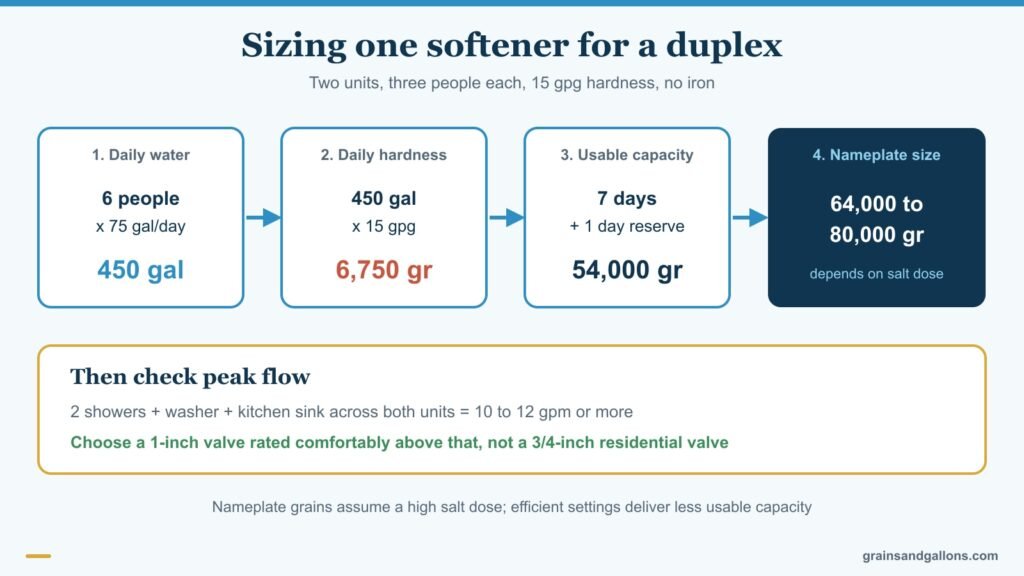
Worked example: a side-by-side duplex. Each unit has three people, the water is 15 grains per gallon (gpg) with no iron, and both units share one 1-inch line.
- Daily water. Penn State Extension's softener sizing example uses 75 gallons per person per day. Six people × 75 = 450 gallons.
- Daily hardness. 450 × 15 gpg = 6,750 grains per day.
- Usable capacity. Aim for a regeneration about once a week plus a day of reserve: 7 × 6,750 + 6,750 = 54,000 grains usable.
- Nameplate size. A "64,000-grain" rating assumes a high salt dose. At an efficient, lower dose, usable capacity drops, so this duplex needs a 64,000 to 80,000 grain system. Our picks for the best 80,000-grain water softeners cover that range.
Peak flow. Two showers, a washing machine and a kitchen sink across two units can pull 10 to 12 gallons per minute or more. That rules out most 3/4-inch residential valves; choose a 1-inch valve and tank rated comfortably above your peak.
Keep irrigation on a hard-water branch: EPA WaterSense puts outdoor use at about 30 percent of household water, and softening it wastes salt.
Single tank, twin alternating, or two smaller softeners?
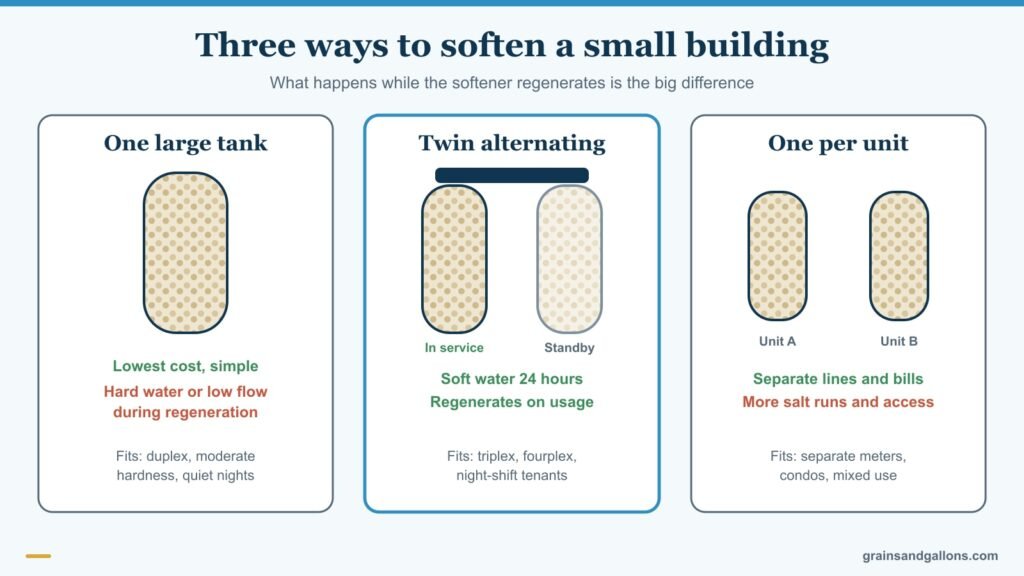
A single-tank softener goes offline for an hour or two at night to regenerate, sending hard water or reduced flow to the house. That's fine in one home at 2 a.m., not in a building with a night-shift tenant.
A twin-tank alternating system has two resin tanks under one valve. One tank is always in service while the other regenerates or waits on standby, so tenants get soft water 24 hours a day and regenerations follow actual usage. Two smaller tanks are also easier to carry into a basement than one giant one.
Two separate small softeners plumbed in parallel can share the load, but each needs its own brine tank, drain and settings, and if they regenerate at the same time you're back to hard water. A purpose-built twin alternating valve handles the switching for you. Our roundup of the best commercial water softeners for small businesses includes systems that suit a small apartment building.
| Building | Typical approach |
|---|---|
| Duplex, moderate hardness | One large metered single-tank softener, 1-inch valve |
| Duplex, very hard water or iron | Larger capacity, possibly twin-tank |
| Triplex or fourplex | Twin-tank alternating or light commercial single tank |
| 5+ units | Commercial system sized by a water treatment professional |
Treat the table as a starting point, not a substitute for a real sizing calculation.
Signs each unit needs its own softener
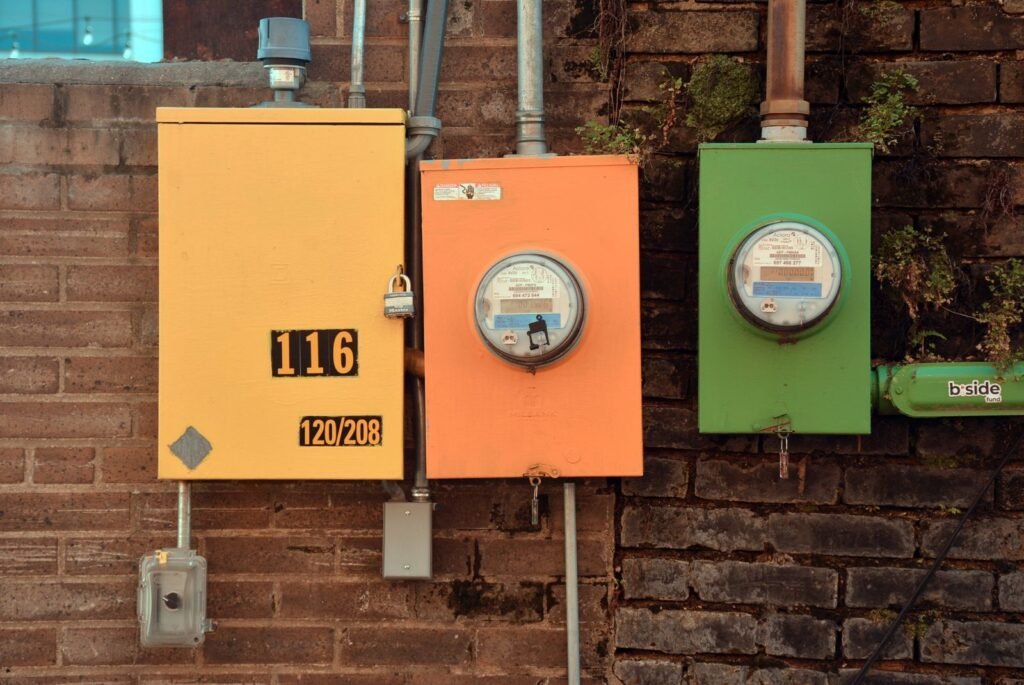
- Separate water lines. If each unit has its own meter and its own line, one softener can't serve them without re-plumbing.
- Separate ownership. A condo owner usually can't add equipment to a shared line without association approval. See softeners for condos and apartments for unit-level options.
- Mixed use. A restaurant downstairs and apartments above are easier to size and bill separately.
Salt, access, permits and lease terms
- Salt. In most rentals, the owner refills it. A salt level sensor or a monthly visit prevents an empty tank.
- Costs. Salt, electricity and regeneration water are building costs.
- Leases. Tell tenants in writing what the softener is, who maintains it and who to call if the water feels hard. Water softeners in rental properties covers lease language.
- Permits and drains. Multi-unit installs may need a licensed plumber; check whether you need a permit for a water softener. A larger system sends more water to the drain, which needs a proper air gap, and on septic it adds load to the drain field.
- Brine rules. Some water-short communities limit salt-based softeners that discharge to sewer, so ask before you buy.
Size one water softener for multiple units by peak flow, not just grains
One water softener for multiple units works when it has enough grain capacity to regenerate about weekly and a valve that keeps up with everyone's showers at once. Past four units, or with round-the-clock use, go twin alternating.
FAQ
Can a duplex share one water softener?
Yes, if both units are fed by one water line. Size it for both households combined and use a valve rated for the combined peak flow, typically a 1-inch valve.
What size water softener do I need for a fourplex?
Multiply occupants by about 75 gallons a day, then by hardness in gpg, for daily grains. A fourplex often outgrows residential sizes and needs twin alternating or light commercial equipment.
Is a twin-tank softener worth it for an apartment building?
Usually, from three units up. It keeps soft water flowing during regeneration, which suits tenants on different schedules.
Can I put two water softeners in parallel instead of one big one?
You can, but each needs its own brine tank, drain and programming, and their regenerations must be staggered. A twin alternating valve does this automatically.
Who pays for salt in a rental with a shared softener?
Usually the owner, as part of building maintenance. Put it in the lease so tenants know who to call.