

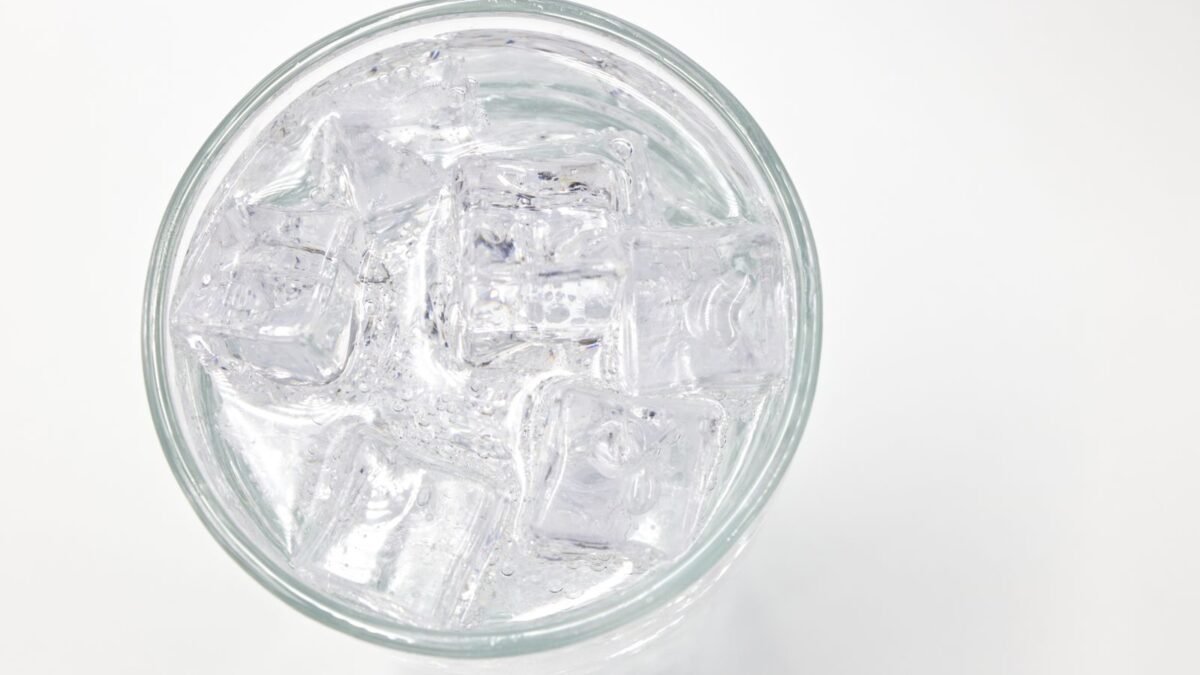
Quick Answer: Ice cubes cloudy with flakes are a hard water effect. Freezing pushes dissolved calcium and magnesium into the last water to freeze, the cloudy center, and some of it turns into calcium carbonate that won't redissolve when the cube melts. The flakes are harmless. Only ice made from low-mineral water, such as reverse osmosis or distilled, stops them.
You usually notice it in a glass of iced tea left on the counter: thin, papery white bits floating or settled at the bottom, even though the tap water looks clear. Ice cubes cloudy with flakes almost always point to hard water; the freezer just makes the minerals visible.
In this guide
How a freezer turns hard water into flakes
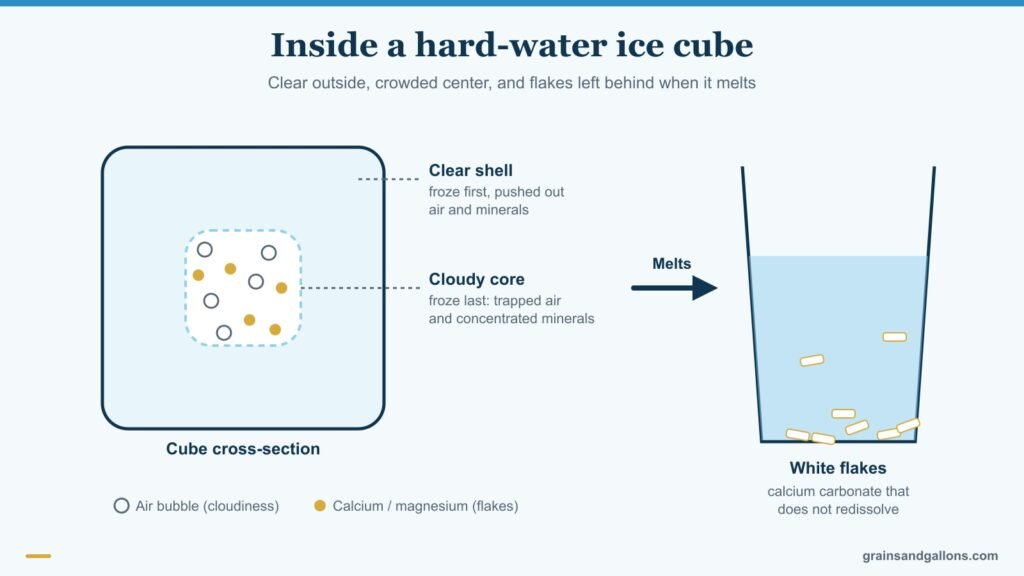
Ice freezes from the outside in. Growing ice crystals are made of water molecules and push most dissolved minerals and air into the shrinking pocket of liquid in the middle. By the time the core freezes, it's crowded with air bubbles and a concentrated dose of minerals.
In hard water, much of the calcium is dissolved as calcium bicarbonate. Concentrated in that last pocket, some converts to calcium carbonate, the chalky scale you see on showerheads and kettles. Whirlpool describes white particles in melting ice as "actually minerals in your water," usually calcium carbonate, and calls it normal in hard water areas (Whirlpool). When the cube melts, that carbonate stays solid.
Cloudy ice vs flaky ice: air or minerals?
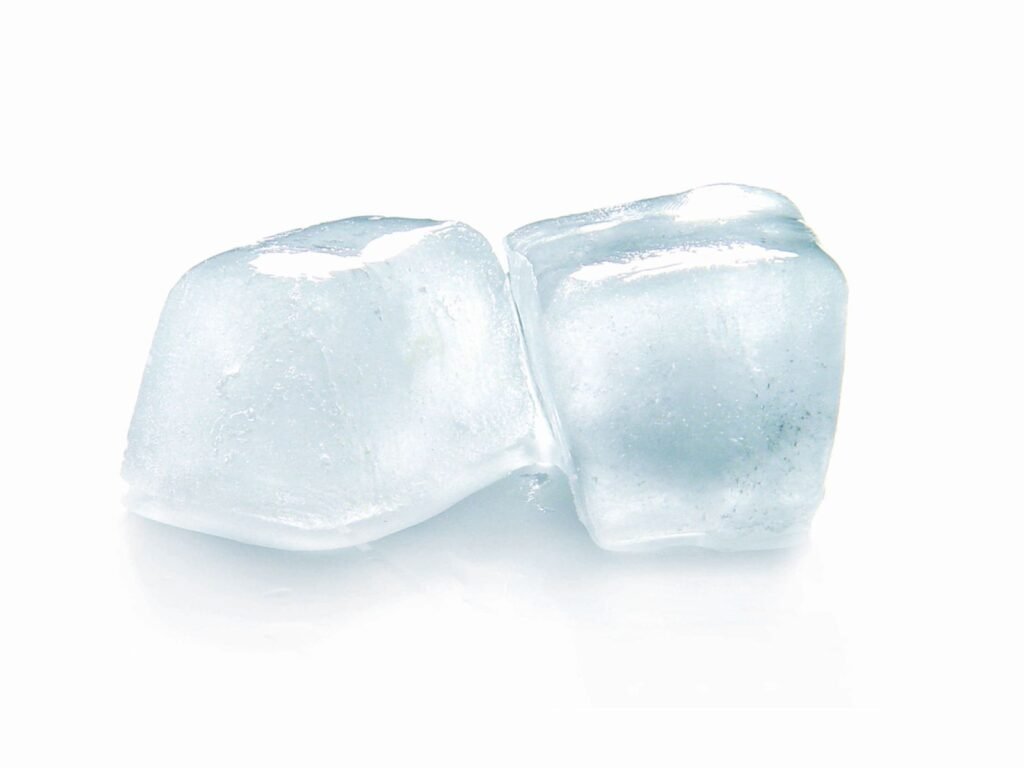
They often show up together, but they have different causes:
- Cloudiness is mostly trapped air. Even pure water freezes cloudy in a normal freezer because the air has nowhere to escape. Minerals add to it.
- Flakes are minerals. You need dissolved hardness for those.
That's why filtered water can still make cloudy ice, and why boiling water first gives clearer cubes but doesn't stop flakes. For truly clear ice, freeze slowly from one direction: an insulated container left open at the top freezes downward and pushes air to the bottom, which you cut away.
Ice cubes cloudy with flakes: normal or a warning sign?
White, chalky flakes that fizz or dissolve in a splash of vinegar are hardness minerals. Other colors mean something else:
| What you see | What it usually means |
|---|---|
| Thin white flakes, cloudy center | Hard water minerals (normal) |
| Black specks | Carbon fines from a new fridge filter, or mold in the dispenser |
| Blue or green tint | Copper corrosion in the water line; Sub-Zero advises calling a plumber |
| Pink, orange or slimy residue | Bacteria or mold in the bin; clean the ice maker |
| White bits that won't dissolve in vinegar | Possibly plastic from a failing water heater dip tube |
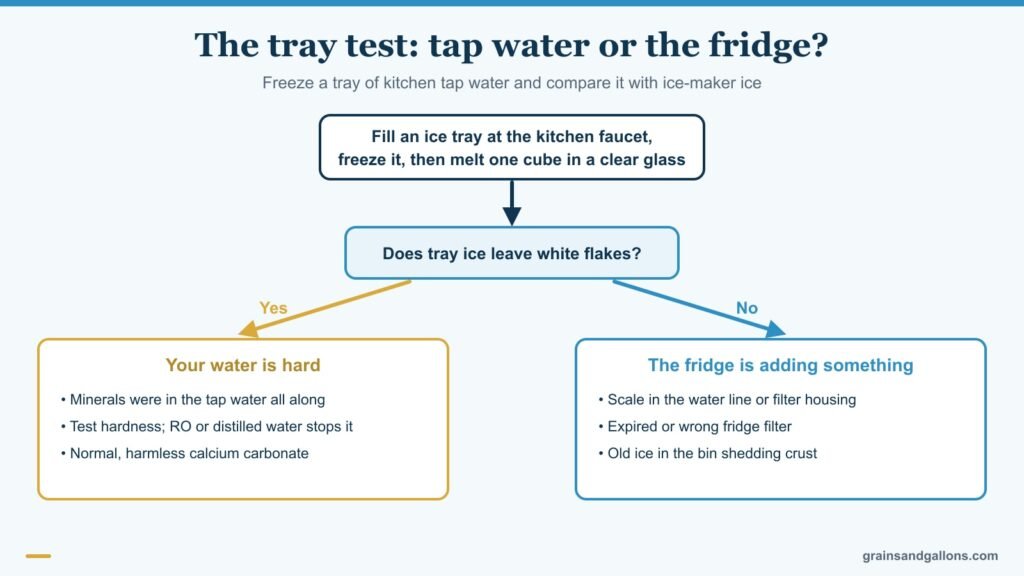
To find the source, Sub-Zero suggests freezing a tray of water from a different tap (Sub-Zero). If tray ice flakes too, it's your water. If only fridge ice does, look at scale in the supply line, an expired filter, or old ice in the bin. Our guide to white particles in tap water covers the less common causes.
Filters that stop the flakes, and the one that doesn't
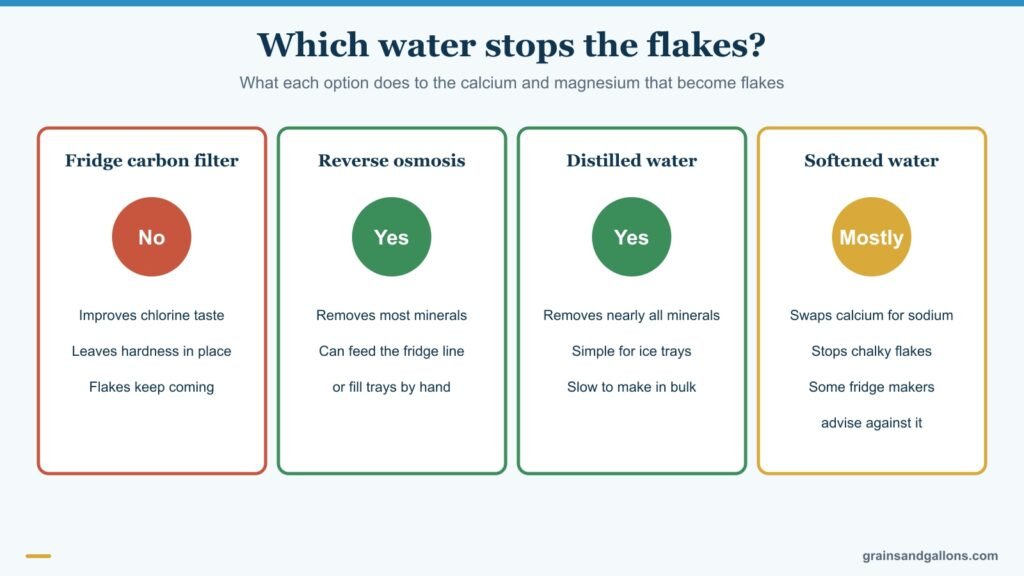
The filter inside your fridge is usually carbon. It's good for chlorine taste, but it isn't built to remove calcium and magnesium, so flakes keep coming. What works:
- Reverse osmosis. RO removes most dissolved minerals. An under-sink unit can feed the fridge line, or fill trays from one of the best countertop reverse osmosis systems.
- Distilled water. Nearly mineral-free and simple for trays, though slow to make; see our best countertop water distillers.
- Softened water. A softener swaps calcium for sodium, which stays dissolved, so chalky flakes stop. Note that Whirlpool advises against connecting its ice makers to a softened supply, so check your manual.
The Water Quality Association notes that dissolved calcium and magnesium salts are responsible for most scaling in pipes and water heaters (WQA), and the same buildup can clog a built-in ice maker's inlet valve. See hard water and refrigerator ice makers for slow ice and crusty dispensers. Not sure how hard your water is? Test your water hardness at home.
FAQ
Are white flakes in ice safe to drink?
Yes. Calcium and magnesium carbonate are the same minerals that were dissolved in the water before it froze. They look unappetizing but aren't a health hazard.
Will a refrigerator water filter stop flakes in ice?
Usually not. Most fridge filters are carbon, which improves taste and odor but leaves calcium and magnesium in the water.
Does boiling water stop flakes in ice?
Boiling drives out air for clearer ice and drops a little hardness as scale in the pot, but most minerals remain, so flakes usually continue.
Hard water makes the flakes, so change the water
Ice cubes cloudy with flakes aren't a fridge defect or a safety problem. They're your water's hardness made visible. Run the tray test to confirm the source, then make ice from RO or distilled water if the flakes bother you. Cloudiness alone is just air.