

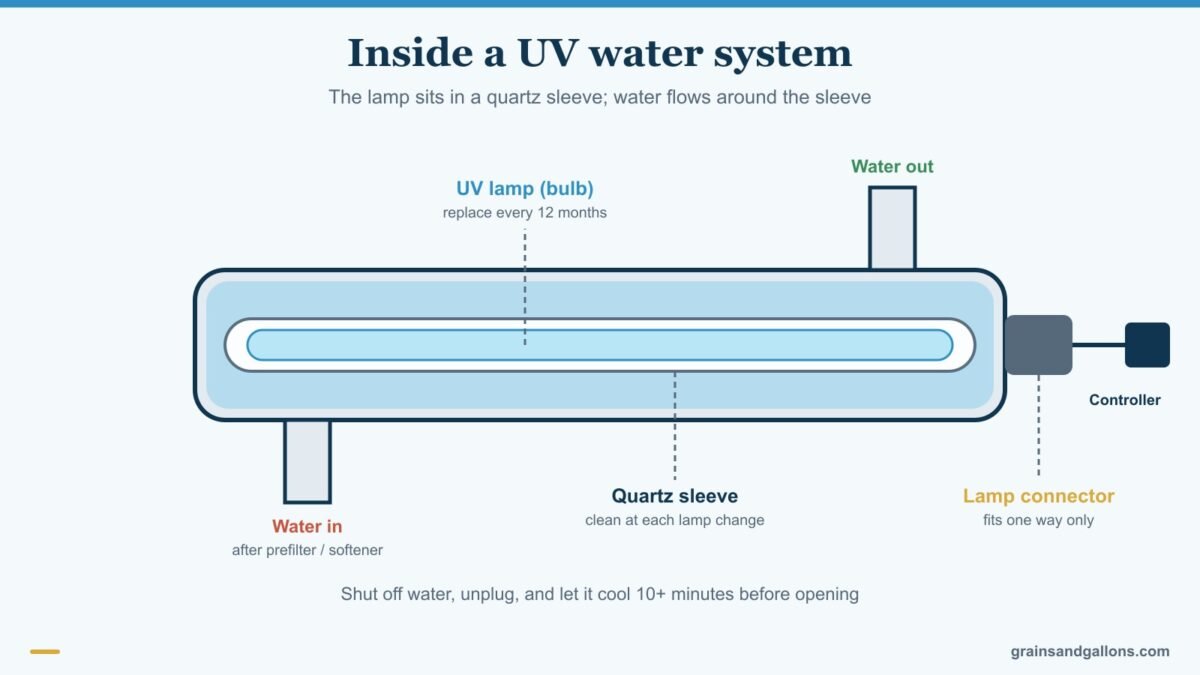
Quick Answer: How to replace UV bulbs in short: change the lamp every 12 months even if it still glows, because its germicidal output fades long before the light goes out. Shut off the water and relieve pressure, unplug the unit and wait at least 10 minutes, pull the lamp connector and slide out the old lamp. Clean or replace the quartz sleeve and O-rings, insert the new lamp with clean gloves, reconnect, turn the water on before the power, then reset the lamp timer. A Viqua VH410, for example, takes the Viqua S410RL-HO lamp.
Disclosure: As an Amazon Associate, Grains & Gallons earns from qualifying purchases.
Knowing how to replace UV bulbs matters because the alarm on your UV system doesn't mean the light has died. It means the lamp has reached the end of its rated life. It probably still glows a healthy blue. That's the trap: lamp changes go by the calendar, not by whether the light works.
The steps below follow Viqua's lamp and sleeve replacement instructions for its Tap, Home and Professional lines. Other brands work much the same, but connector styles, sleeve nuts and timer resets differ, so keep your own manual open as you work.
In this guide
Why a glowing UV bulb still needs replacing
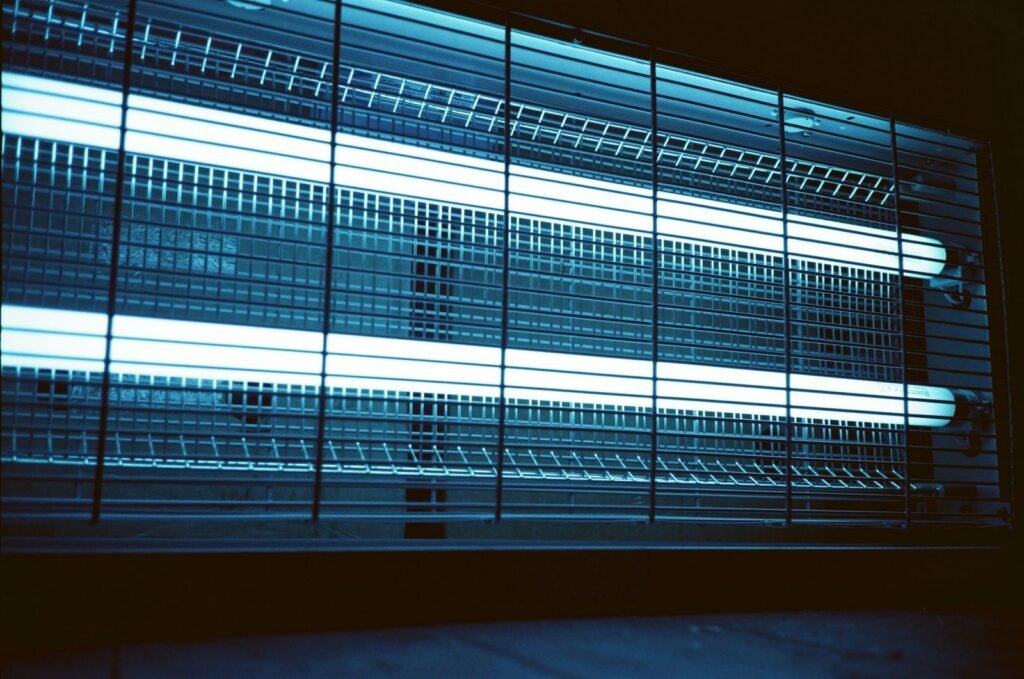
Disinfection happens at about 254 nanometers, a wavelength you can't see. The blue glow is a side effect. As a lamp ages, its glass solarizes: it gradually blocks more of that germicidal UV while the visible light looks the same. One dealer notes output can fall to around 60% of a new lamp's intensity by the end of its life.
That's why most residential lamps are rated for about 9,000 hours of continuous use, roughly 12 months, and why the controller counts down to a yearly alarm. Two habits help a lamp reach that rating:
- Leave the system powered on, even when no water is flowing. Each on/off cycle wears the lamp; one dealer estimates a single cycle can cost up to six hours of lamp life.
- Don't silence the alarm and carry on. The dose drops and the ballast works harder driving an aging lamp.
Keep a spare lamp on the shelf, or set a reminder about a month before the alarm is due.
Parts, gloves and safety before you start
Match the lamp to the model exactly. UV lamps are specific to chamber length, wattage and connector. Your controller label or manual lists the part number. Viqua states that non-Viqua lamps void its UV system certifications and may affect the warranty, which matters for a device whose only job is disinfection.
Have these ready: the new lamp, new O-rings for the sleeve (replace them at every lamp change), a replacement quartz sleeve if yours is due, a fresh sediment prefilter cartridge, clean cotton or nitrile gloves, UV-rated safety glasses, a towel and bucket, and CLR or white vinegar.
Handle the lamp as hazardous. UV lamps contain mercury. Viqua's sheet warns:
- Never look at a lit lamp, and never power a lamp outside its chamber.
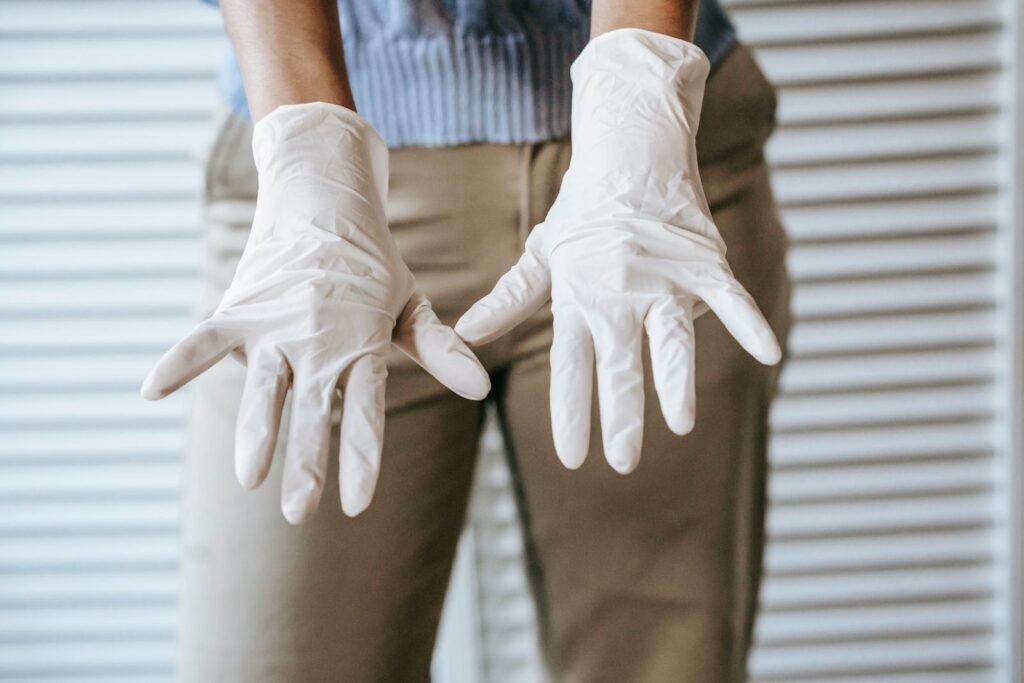
- Wear rubber or latex gloves for the used lamp and a dirty sleeve, and clean cotton gloves for the new lamp and clean sleeve. Skin oils leave marks that block UV and create hot spots.
- If a lamp breaks, don't vacuum the pieces, which spreads mercury. Follow the EPA's steps for cleaning up a broken mercury lamp: air out the room, scoop up pieces with stiff paper and sticky tape, and seal them in a glass jar or sealable bag.
- Take old lamps to a lamp recycler or household hazardous waste site rather than the trash.
Clear the space. The lamp slides out the end of the chamber, so you need roughly the lamp's length in open space beside it.
How to replace UV bulbs, step by step
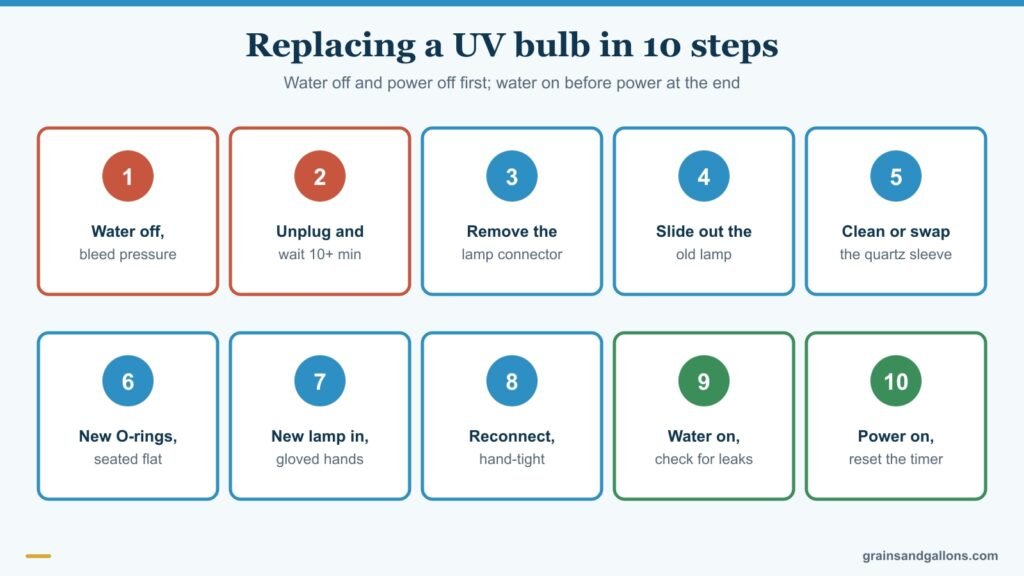
- Shut off the water to the UV chamber, then open a tap downstream to relieve pressure. If the unit is at the point of entry, that means the whole house.
- Unplug the controller and wait at least 10 minutes. The lamp and chamber get hot, and still water in the chamber can scald. Make sure any solenoid or other wired device is de-energized too.
- Remove the lamp connector. Depending on the model, it twists, unclips or pulls straight off the end of the chamber. Your manual has a drawing.
- Slide the old lamp out of the quartz sleeve, keeping it straight. Lamps and sleeves are fragile; don't bend, tap or force them. Keep a bucket under the chamber in case water spills.
- Clean or replace the sleeve (next section) while the lamp is out.
- Fit new O-rings, seated flat and not twisted. A reused or rolled O-ring is the usual cause of a leak after service.
- Insert the new lamp into the sleeve with clean gloves on, and attach it to the connector. Viqua's connectors fit only one way, so don't force it.
- Refit the connector and any retaining nut, hand-tight only.
- Turn the water on before the power. Open the inlet slowly with the downstream tap still open to push out air, close the tap, and check the sleeve nuts and connector for drips. Swap the sediment prefilter now too.
- Plug in the controller and reset the lamp timer to 365 days. The button sequence differs by model and controller version, so use your owner's manual or the manufacturer's support line; we don't list sequences we couldn't confirm for every model.
Clean the quartz sleeve or swap it?
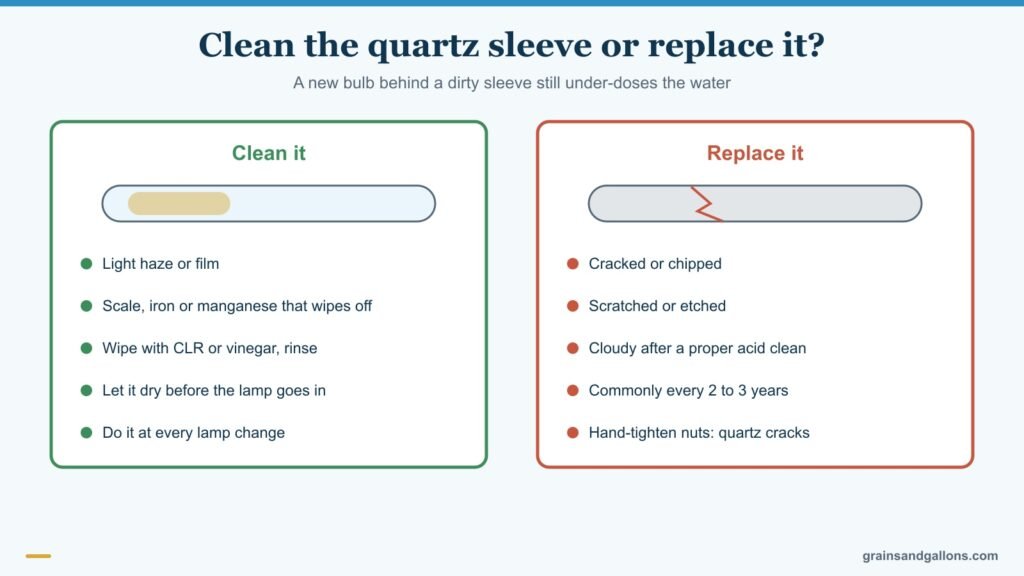
The sleeve is the glass tube between the lamp and your water. Hardness scale, iron or manganese staining, or organic slime on it blocks UV before it reaches the water, so a new lamp behind a dirty sleeve doesn't do much good. Clean it at every lamp change. Replace it when it's cracked, scratched, etched or still cloudy after cleaning; dealers commonly suggest every two to three years.
To service the sleeve (lamp already out, water off, lines drained):
- Remove the top retaining nut and its O-ring.
- Remove the bottom retaining nut and spring, and loosen the O-ring to let water drain. Hold the sleeve so it doesn't slide through and hit the floor.
- Ease the sleeve out of the chamber.
- Wipe it with a cloth soaked in CLR, vinegar or another mild acid, then rinse with clean water. Let the inside dry before the lamp goes back in.
- Reinstall it with new O-rings seated flat, plus the spring and nuts. Hand-tighten only; overtightening can crack the quartz.
If the sleeve gets heavily coated within months, the water reaching the UV isn't clean enough. Our Viqua UV system review explains the hardness and iron limits for the VH410 and why a softener or iron filter usually needs to sit upstream.
Disinfect the plumbing and confirm it works
Viqua's instructions call for running the disinfection procedure in the owner's manual after sleeve service. Any time the system has been opened, bacteria can get into the pipes downstream, and UV only treats water passing through the chamber; it can't clean pipes that are already contaminated. The usual method is a chlorine flush of the plumbing after the UV. If you have a softener, read our note on shock chlorination and your water softener first, because chlorine affects the resin.
A new lamp is only half the proof. A couple of weeks after the change, test a tap after the UV for total coliform and E. coli; see how to test well water for bacteria for collecting a clean sample. The EPA's private well guidance puts the responsibility for testing on the owner, so keep up the yearly raw-water tests from our well testing schedule.
After any power outage, treat the water as untreated until you've confirmed the lamp is lit again.
When the alarm or a leak won't quit
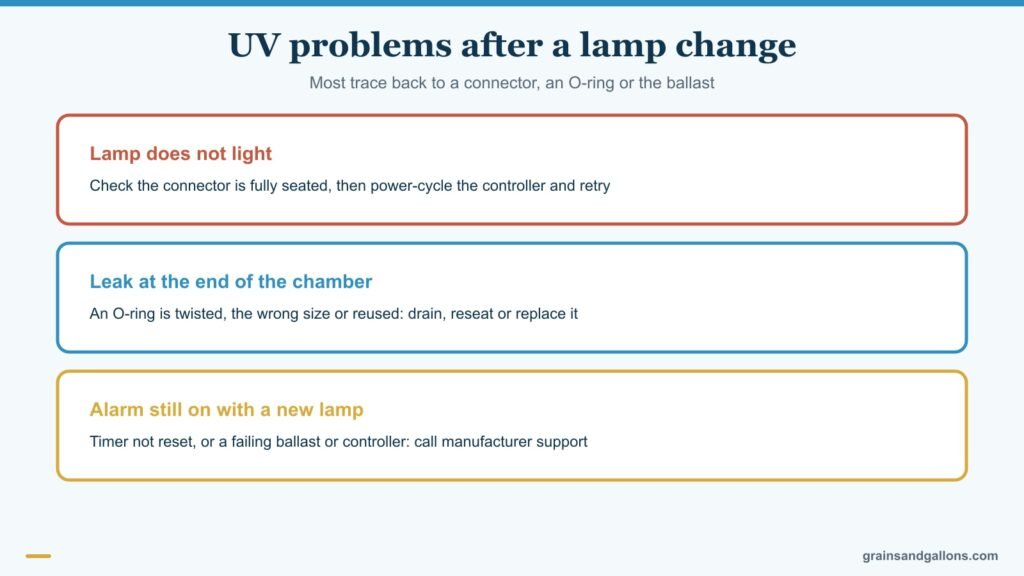
- Lamp won't light. Check that the connector is fully seated and the outlet has power, then power-cycle the controller and try again.
- Leak at the chamber end. Almost always an O-ring that's twisted, the wrong size or reused. Shut off the water, drain, and reseat or replace it.
- Alarm still sounding with a new lamp. The timer may not have been reset. If it was, a failing ballast or controller is the likely cause, not the lamp.
If lamps keep failing early or the unit has needed repeated repairs, it may be time for a new system. Our guide to the best UV water purifiers for well water compares models with UV intensity sensors that tell you when the dose actually drops.
FAQ
How often should a UV bulb be replaced?
Every 12 months for most residential lamps, which are rated for about 9,000 hours of continuous use. Replace it on schedule even if it still glows, since germicidal output fades before the visible light does.
Can I clean a UV bulb instead of replacing it?
Cleaning won't restore an old lamp's output. What you clean is the quartz sleeve around it, with CLR or vinegar, at every lamp change. The lamp itself should only be handled with clean gloves.
Should I turn off my UV system when I'm not using water?
No. Leave it powered on. Frequent on/off cycles shorten lamp life, and an unpowered lamp isn't treating any water that does flow.
How do you dispose of an old UV lamp?
UV lamps contain mercury, so take them to a lamp recycling drop-off or a household hazardous waste site. If one breaks, ventilate the room and clean it up without a vacuum.
Why is my UV alarm still beeping after a new bulb?
Most often the lamp timer wasn't reset. If it was, check that the connector is seated; a persistent alarm with a new lamp usually points to a failing ballast or controller.
Swap the bulb yearly, clean the sleeve, then test the water
Learning how to replace UV bulbs comes down to a simple rhythm: change the lamp every 12 months whether or not it glows, clean the sleeve and fit new O-rings every time, turn the water on before the power, and reset the timer. Then disinfect the plumbing and confirm the result with a bacteria test, because a UV system only protects you when the dose actually reaches the water.