

Quick Answer: Hard water stains on bathtub surfaces are mineral deposits, so dissolve them with a mild acid rather than scrubbing them off. On any tub, press white-vinegar-soaked paper towels on the stain, then wipe with a soft sponge. If that isn't enough, step up by material: on enamel or cast iron, a scale remover like Lime-A-Way spray or a mild cleanser like Bar Keepers Friend Soft Cleanser, rinsed off promptly; on acrylic, stay with vinegar and non-scratch pads. Spot-test first, every time.
Disclosure: As an Amazon Associate, Grains & Gallons earns from qualifying purchases.
The cleaner that rescues one tub can ruin another. A powder that takes hard water stains on bathtub enamel off in two minutes will haze an acrylic tub for good. So before you grab the strongest bottle under the sink, spend thirty seconds working out what you're cleaning, and what the stain actually is.
In this guide
- What's on the tub: scale, iron or copper
- Identify your tub material in thirty seconds
- Removing hard water stains on bathtub acrylic and fiberglass
- Enamel and cast iron: tougher, but don't let cleaner sit
- Stained or etched? Know when cleaning stops working
- Stop scale from building between cleanings
- FAQ
- Match the cleaner to the tub, and the stains come off clean
What's on the tub: scale, iron or copper
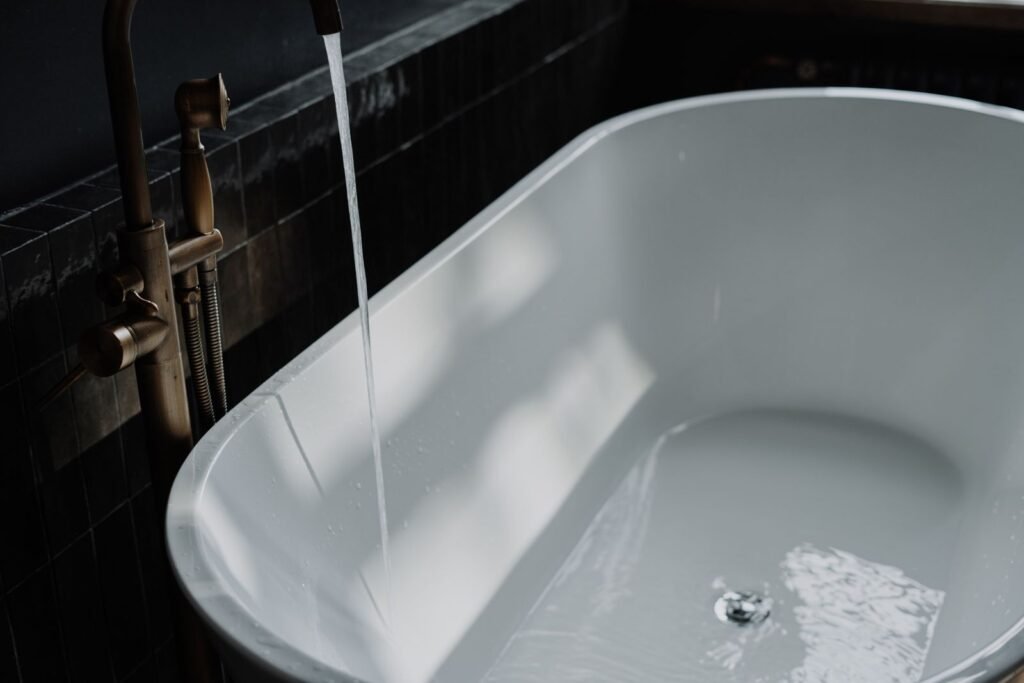
Hard water carries dissolved calcium and magnesium. When drops dry on the tub, the water leaves and the minerals stay, building the crust the Water Quality Association calls scale deposits. The color tells you what you're dealing with:
- White or gray film, rough or chalky, at the waterline, around the drain or under the spout: calcium and magnesium scale. Acid dissolves it.
- Orange, rust or brown streaks under the faucet: iron. Scale removers often won't clear it; see orange stains from well water and our picks for the best rust stain removers.
- Blue-green under the faucet: copper, often from corroding pipes. Clean it like scale, but have the water checked.
- Dull, rough patches that never change: probably etching or wear, not a stain (covered below).
Identify your tub material in thirty seconds
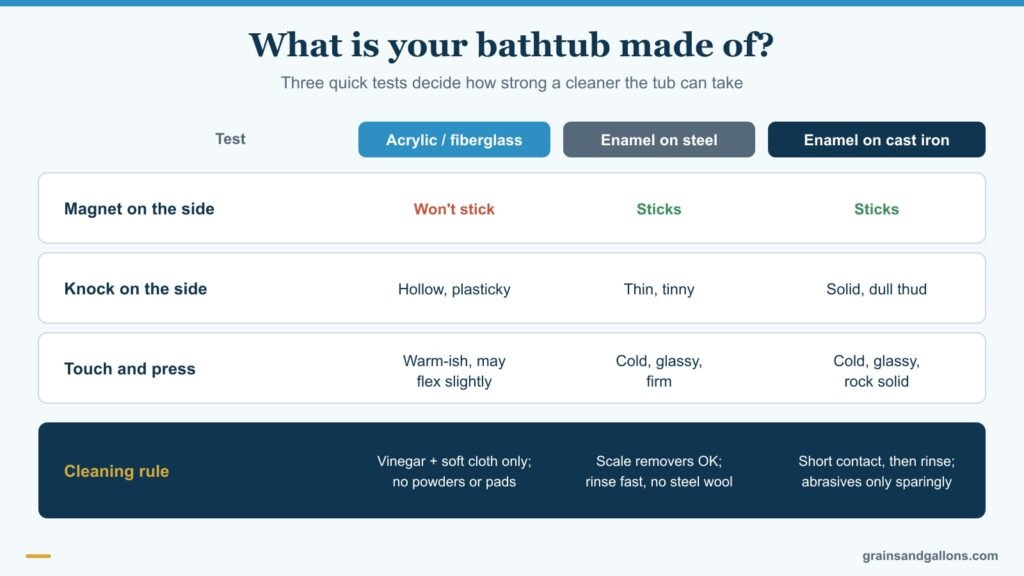
Hold a fridge magnet to the side of the tub, knock on it, and press the wall. A magnet won't stick to acrylic or fiberglass, which also sounds hollow and may flex. It sticks to enamel on steel (thin, tinny knock) and enamel on cast iron (a solid, dull thud).
"Porcelain" tubs in the US are almost always porcelain enamel, a glass coating fused onto steel or cast iron, so they're treated together here. Fiberglass follows the acrylic rules; our guide to hard water on fiberglass shower walls goes deeper.
Removing hard water stains on bathtub acrylic and fiberglass
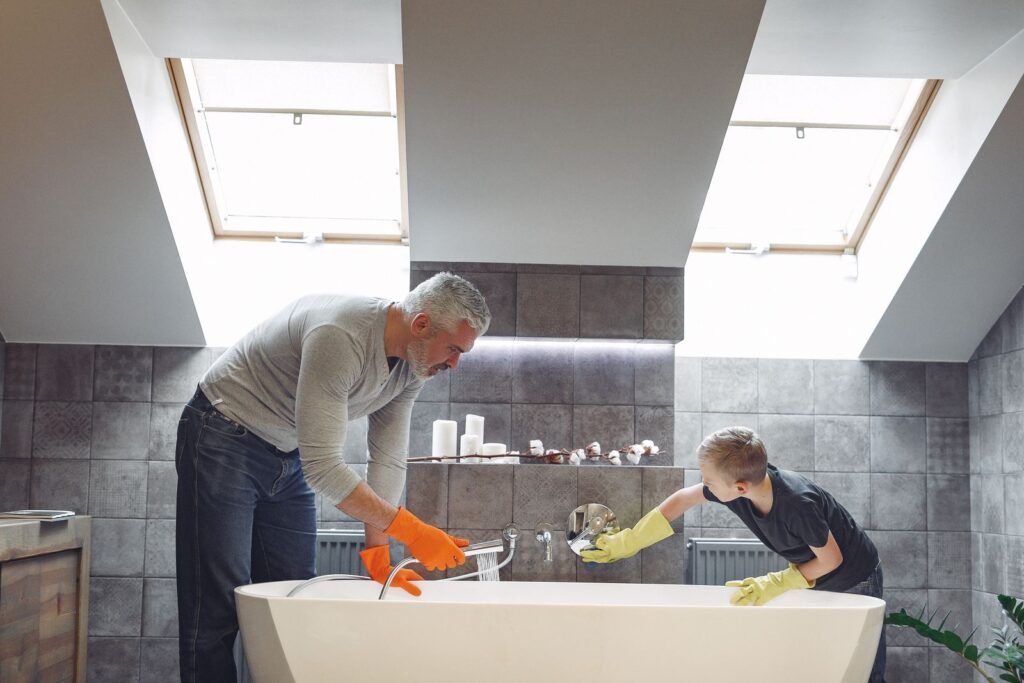
Acrylic is soft. Abrasive powders, scouring pads, pressure on a melamine sponge and strong solvents can scratch or dull it, and minerals then lodge in the scratches.
- Rinse and dry the area. Scale is easier to see dry.
- Lay vinegar-soaked paper towels on the stain for 20–30 minutes. Wet towels cling to the sides; mist them if they start drying.
- Wipe with a soft sponge or microfiber, non-scratch side only.
- Repeat for thick deposits. Several short soaks beat one hard scrub.
- Rinse well and dry.
For a paste, baking soda with a little dish soap is mild enough for most acrylic; test a hidden spot. Don't use toilet-bowl acids or concentrated scale removers unless the label says they're safe for acrylic.
Enamel and cast iron: tougher, but don't let cleaner sit
Enamel is glass, so it handles most cleaners and mild abrasives. The catch is contact time and age. Kohler's cast iron bath care sheet says to test cleaners on a hidden area, not to let cleaner soak, to rinse right after, and to skip steel wool, wire brushes and abrasive pads. Older enamel that has lost its shine is more porous and dulls more easily.
- Start with vinegar, but keep the contact short and rinse.
- Step up to a scale remover for stubborn deposits. Spray, wait only the label time, wipe and rinse. Our CLR vs Lime-A-Way comparison shows which surfaces each label rules out.
- For rough rings, a mild liquid cleanser on a soft sponge, in gentle circles.
- Rinse chrome too. Acid left on the drain and spout dulls them.
If the faucet is crusted as well, our limescale removers for faucets cover clinging gels, and white spots on faucets covers chrome and brushed finishes.
Safety for every tub: wear gloves and run the fan. Never mix acid cleaners, including vinegar, with bleach products; rinse fully between products. Check each label's list of surfaces to avoid, since stone, colored grout or certain metals may sit near the tub.
Stained or etched? Know when cleaning stops working
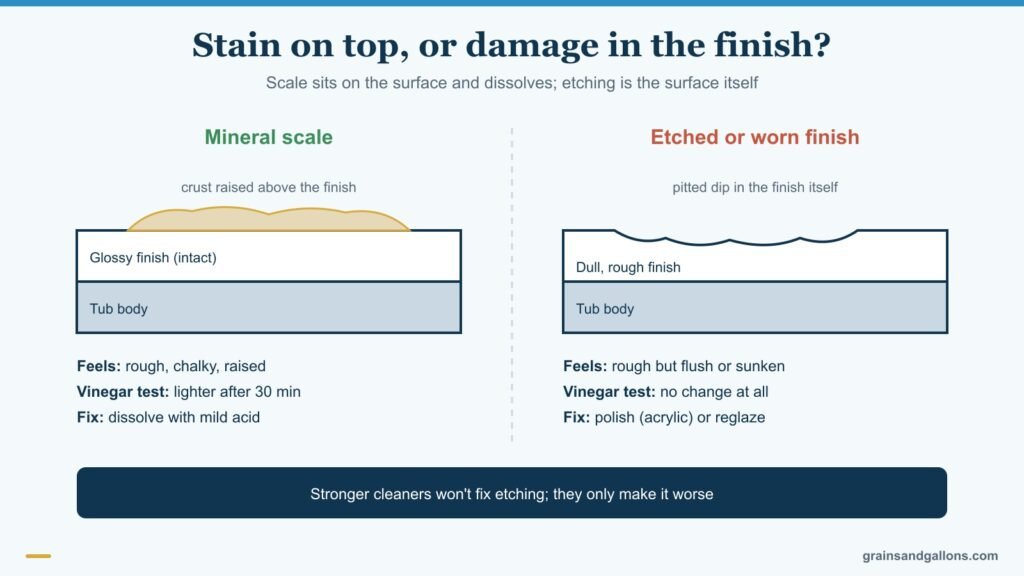
If a vinegar soak changes nothing and the spot feels flush or sunken rather than raised, the finish is etched (enamel) or scratched and oxidized (acrylic). Stronger cleaners only make that worse.
- Acrylic can often be polished with a plastic polish and a soft cloth. Deep scratches need a refinishing kit or a pro.
- Etched enamel can't be restored by cleaning; professional reglazing is the usual fix.
Stop scale from building between cleanings
- Squeegee or towel-dry after use. Scale comes from water evaporating on the surface.
- Spray and wipe with diluted vinegar weekly (acrylic) or use a mild bathroom cleaner (enamel) before buildup hardens.
- Fix a dripping spout. A slow drip leaves a stain under itself all day.
- Treat the water if everything scales. When the tub, glass, faucets and dishwasher all show white crust, check what hardness level is too hard. The Minnesota Department of Health's water softening fact sheet explains how a softener removes the calcium and magnesium behind it.
FAQ
Does vinegar damage a bathtub?
Diluted white vinegar is safe on acrylic and fiberglass with a soft cloth. On enamel and cast iron, keep contact short and rinse, because manufacturers like Kohler warn against letting any cleaner soak.
Can I use a Magic Eraser on hard water stains?
Gently, on enamel. On acrylic, melamine foam is a fine abrasive that can dull the gloss with pressure, so try vinegar first and test a hidden spot.
Is CLR safe on an acrylic tub?
Check the label. Concentrated scale removers are often limited to certain surfaces, and some exclude plastics or colored finishes. If acrylic isn't listed as safe, stick with vinegar.
Why does my tub stain right after I clean it?
Very hard water redeposits minerals every time the tub dries. Drying the tub after use helps; a water softener stops the cause.
How do I get a hard water ring off the bottom of the tub?
Drain and dry the tub, cover the ring with vinegar-soaked paper towels, then wipe with a soft sponge. On enamel you can follow with a mild liquid cleanser, rinsed promptly.
Match the cleaner to the tub, and the stains come off clean
Hard water stains on bathtub finishes come off with patience, not force: identify the material, dissolve the scale with the mildest acid that works, rinse, and dry the tub after use so it doesn't come back.