

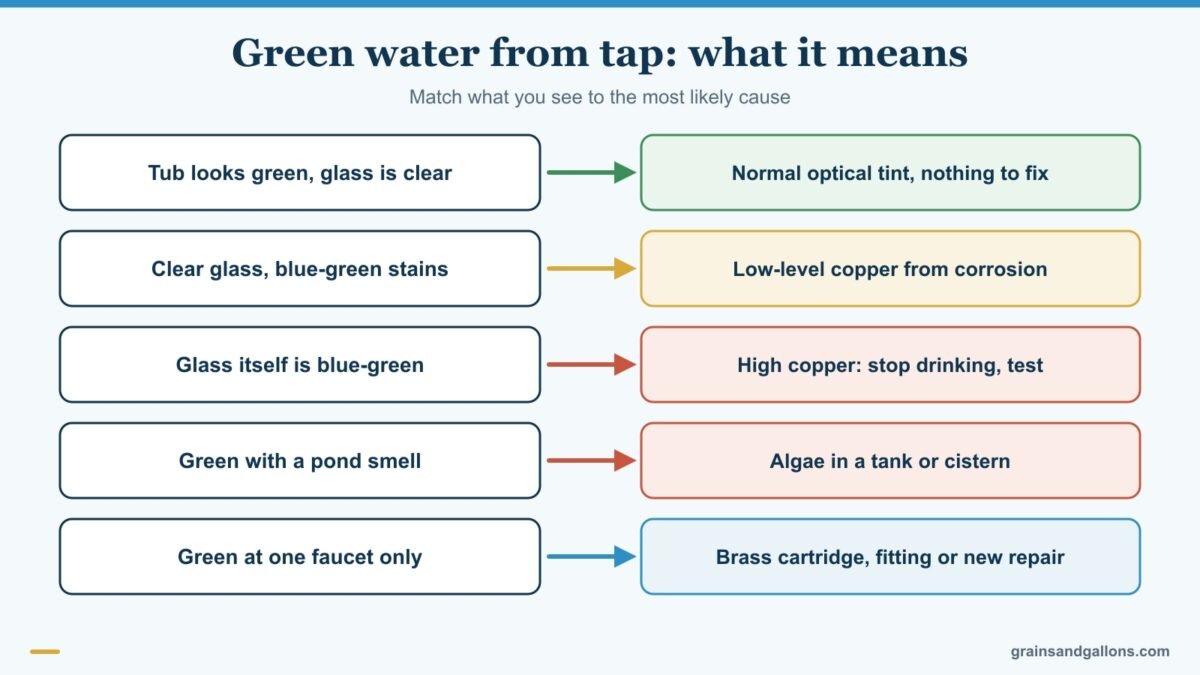
Quick Answer: Green water from tap fixtures is usually one of three things. If a tall glass looks clear but the tub looks green, it's a harmless optical effect. If the glass itself is green or blue-green, copper is dissolving from your pipes because the water is corrosive: stop drinking it, run the cold tap for a few minutes, and test copper, lead and pH. Green water with a pond smell points to algae in a storage tank.
A full bathtub that looks faintly green is one of the most common "is my water poisoned?" moments, and usually the answer is no. Green water from tap glasses, or blue-green stains forming under the faucet, is different. That points at copper, and copper only gets into water when something is dissolving your pipes.
In this guide
Tub looks green but the glass is clear? That's optics
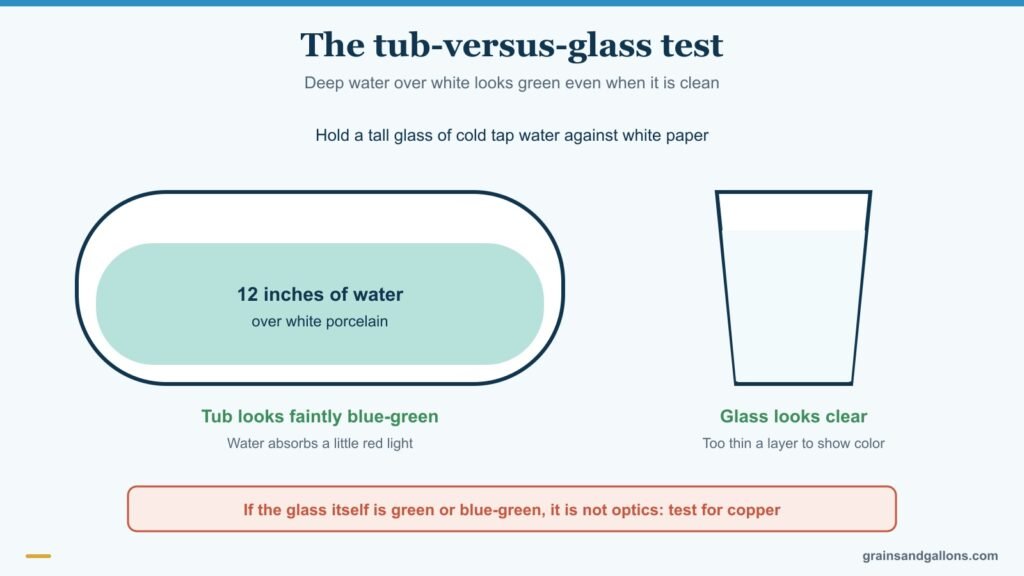
Pure water isn't perfectly colorless. It absorbs a little red light, so a deep layer shows a faint blue-green tint. You won't see it in a glass, but you will in a foot of water over white porcelain, especially under warm bathroom lighting. Pools look blue for the same reason.
Pour a tall glass of cold water and hold it against white paper. If it's clear, nothing is wrong. If the glass is tinted, or you see blue-green stains under faucets, keep reading.
Copper is behind most green water from tap fixtures
Washington's Department of Health puts it simply in its color, taste and odor guide: green or blue water is "usually caused by corrosion of copper plumbing," and dripping water leaves bluish-green stains on porcelain.
Copper pipe stays stable because a thin oxide layer protects its inside. Corrosive water strips that layer and copper goes into solution. A little shows only as stains. A lot tints the water and gives it a bitter, metallic taste.
The EPA's secondary standard for copper is 1.0 mg/L, where taste and staining appear. For health, the Lead and Copper Rule sets an action level of 1.3 mg/L. Too much copper can cause nausea, cramps and vomiting, and people with certain liver conditions are more sensitive. The same water can also pull lead from old solder and brass, which is the bigger reason to take green water seriously.
What makes copper pipes leach
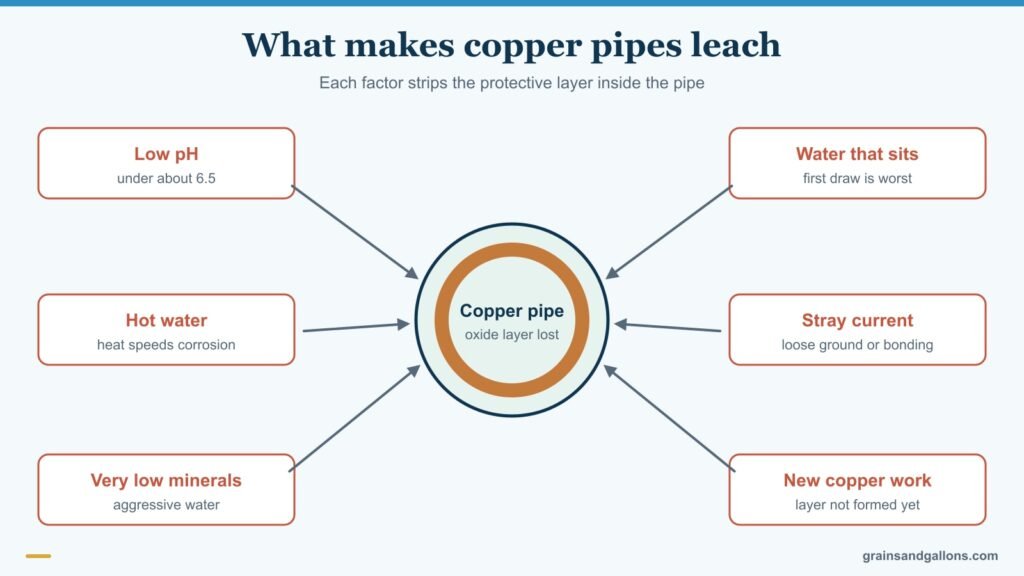
- Low pH well water. Many private wells test below 7, and below about 6.5 is corrosive to copper. This is the most common rural cause.
- Water that sits. Copper builds up overnight, so the first morning draw carries the most.
- Hot water. Heat speeds corrosion, so stains often show first on the hot side and in tubs.
- Stray current. A loose ground or a bonding jumper removed during a softener or filter install can speed corrosion. See bonding and grounding around a water softener.
- Very low-mineral water. It's more aggressive. Softening alone isn't the problem, but low-pH water that's also softened can still corrode.
- New copper work. Fresh pipe hasn't built its protective layer, so a repair can tint water for a while.
Five checks, cheapest first
- Flush and compare. In the morning, fill a clear glass with the first cold water, then run the tap two to three minutes and fill another. A greener first glass means copper is collecting overnight. Drink only flushed cold water until you've tested, and never cook or mix formula with hot tap water.
- Look for the trail. Blue-green rings around drains and streaks under the tub spout point to copper. Our guide to blue-green stains in sinks covers cleanup.
- Test pH. A reading of 6.5 or lower makes corrosion very likely. How to test water pH at home explains how to get a reliable number.
- Test copper and lead. On a well, a lab test covering copper, lead, pH, alkalinity and hardness tells you which fix you need. Use a first-draw sample. Our well water test kit picks include mail-in labs.
- On city water, call the utility. They track copper and lead complaints, and your Consumer Confidence Report lists their sampling results. If neighbors' water is clear, the problem is likely inside your house.
Match the fix to the source of corrosion
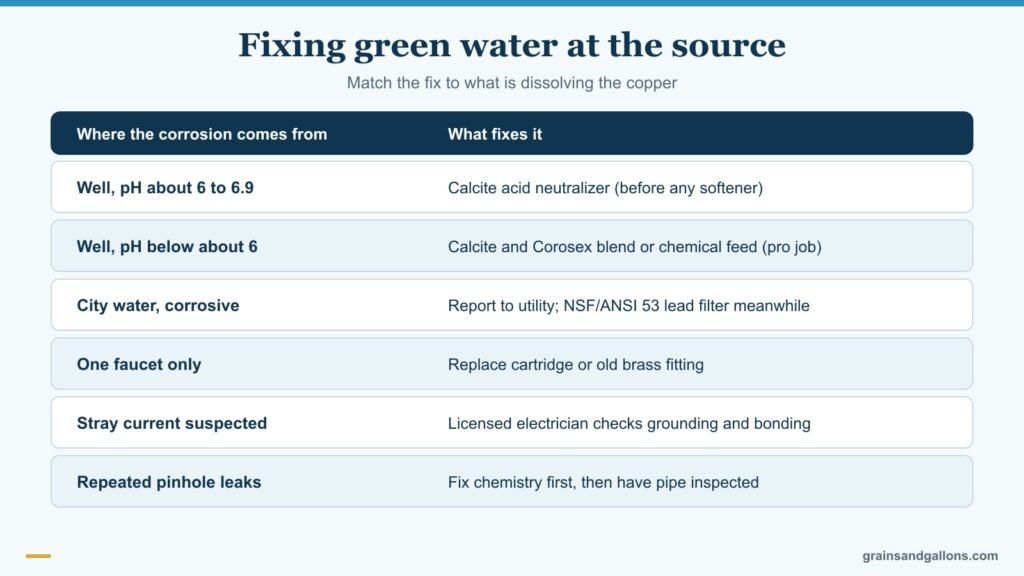
Low pH on a well. For roughly pH 6 to 6.9, a calcite neutralizer is the standard fix; see our acid neutralizer filter picks. Calcite adds hardness, so it goes before any softener. Below about pH 6, a calcite and Corosex blend or a chemical feed pump is usually needed, which is a job for a pro.
Corrosive city water. Report it. Meanwhile, use a point-of-use filter certified to NSF/ANSI 53 for lead, since many carbon filters don't remove lead or copper.
One faucet, stray current or pinhole leaks. Replace a corroded cartridge or brass fitting. Have a licensed electrician check grounding rather than moving clamps yourself. If you've had several pinhole leaks, fix the chemistry first, then ask a plumber whether sections of pipe need replacing.
A pond smell means algae, not pipes
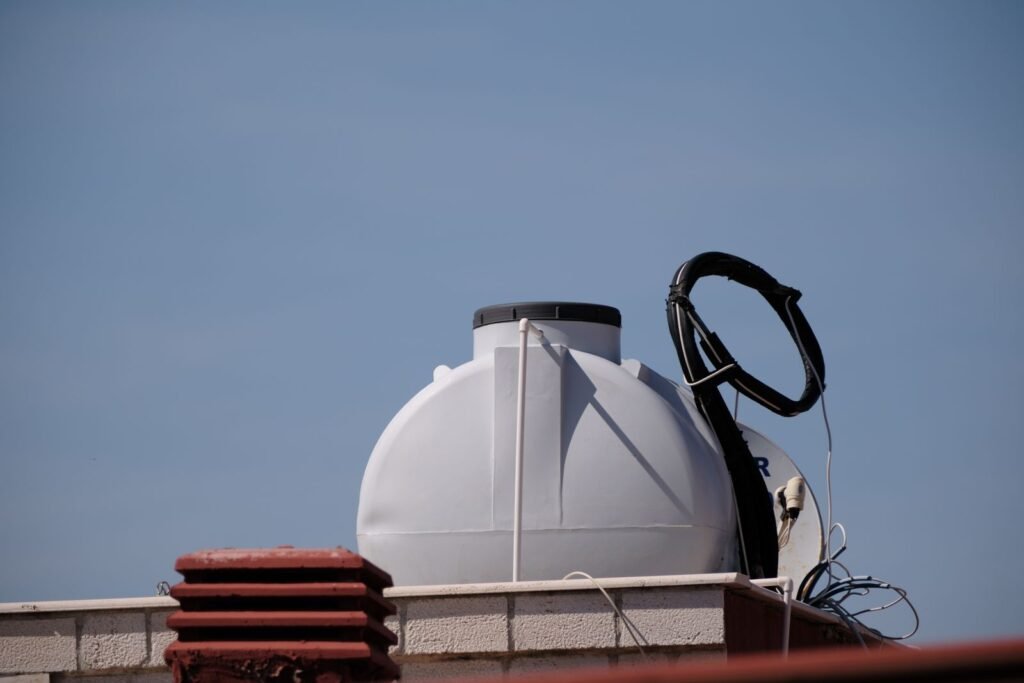
Rain barrels, cisterns and rooftop tanks grow algae when light gets in; a sealed, pressurized home system in good shape doesn't. Drain and clean the tank, block the light, and disinfect before drinking the water. Your health department can supply a cistern disinfection procedure.
Rarely, color comes from a cross-connection, such as a boiler or irrigation line backflowing dye or additives. If the color appeared suddenly and smells chemical, shut the main valve and call a plumber.
FAQ
Is green tap water safe to drink?
Not until you know why it's green. If the glass is tinted, copper is likely above normal levels, and lead may be present too. Use bottled or flushed cold water until you've tested.
Why is my bath water green but my drinking water clear?
Deep water over a white tub absorbs red light and looks blue-green. If a glass of the same water is clear, it's normal.
Can new copper pipes make water green?
Yes. New pipe hasn't formed its protective layer, so water may tint for a while after a repair. If it doesn't fade, test pH.
Does a water softener cause green water?
Not on its own. But removing a bonding jumper during installation can speed corrosion, and low-pH water stays corrosive after softening.
Will boiling remove copper from water?
No. Boiling concentrates metals as water evaporates. Fix the corrosion or use a certified filter.
Green water from tap glasses is a corrosion warning
Green water from tap glasses means your water is dissolving copper, and possibly lead. Do the glass test first. If the glass is tinted, flush, test pH, copper and lead, and fix the chemistry or call your utility before you drink it again.