

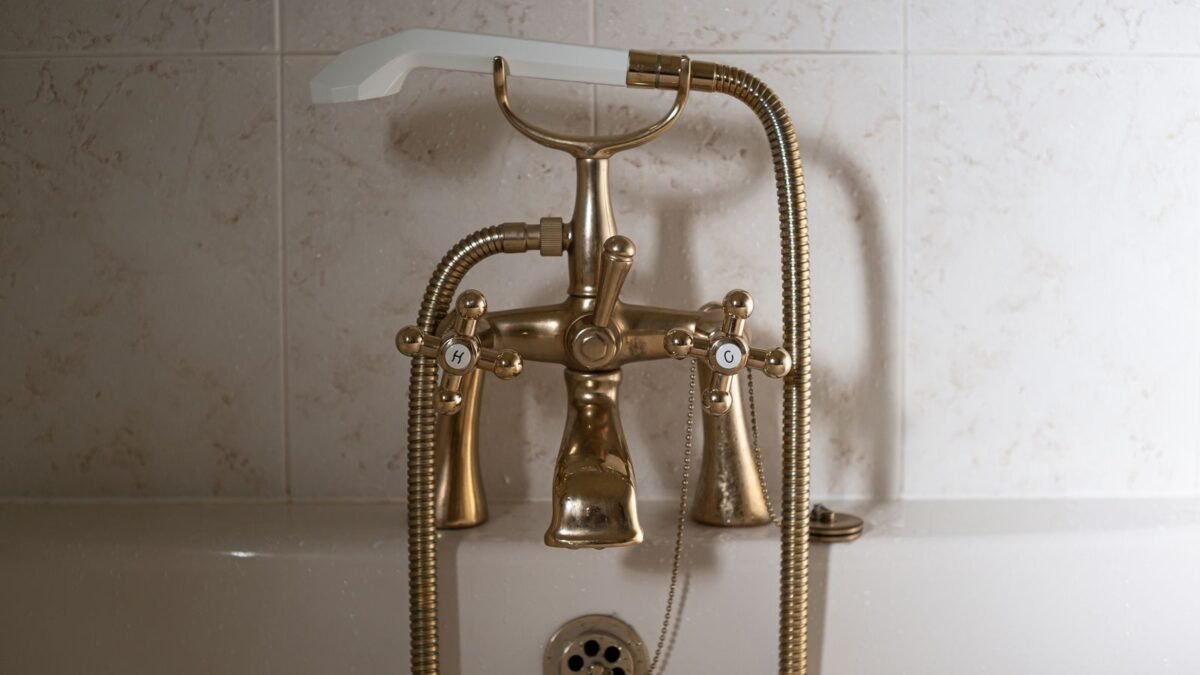
Quick Answer: Blue green stains in sink basins, tubs and under faucets are almost always copper, dissolved out of your pipes and fixtures by corrosive water, which usually means low pH. Test your water's pH first: a reading below about 6.5 is the classic cause, and on a well an acid neutralizer is the standard fix. On city water, call your utility. Then clean the stain with a mild acid cleaner.
The streak starts right under the tub spout, or where the faucet drips into the sink, and spreads into a turquoise blush around the drain. Bleach doesn't touch it. Blue green stains in a sink are a fingerprint: the EPA lists blue-green staining as the telltale sign of copper in its secondary drinking water standards. The real question is why copper is leaving your plumbing. The cheap checks come first.
In this guide
- What causes blue green stains in sink and tub fixtures
- Rule out the look-alikes first
- Test pH and copper to find out why
- Other things that speed up copper loss
- The stain is a warning about pinhole leaks
- Fix the water, not just the sink
- How to remove copper stains from a sink or tub
- Green hair and tinted water
- FAQ
- Raise the pH and the stains stop for good
What causes blue green stains in sink and tub fixtures
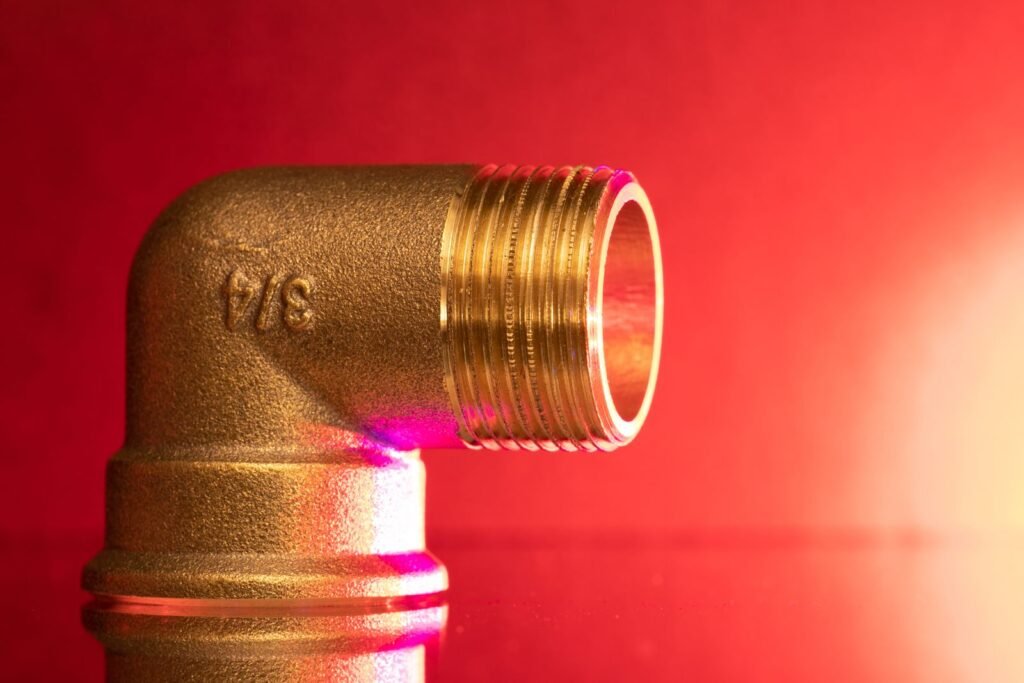
The stain forms when water carrying dissolved copper sits on a surface and evaporates, leaving the copper behind. That's why it concentrates under drips, around drains and along the path water runs down a tub. Porous or worn finishes stain faster than new glaze.
The copper comes from copper pipe, brass valves and the brass inside faucets. A house plumbed in PEX or CPVC still has brass at the water heater connections, the main shutoff and inside every faucet, though that's rarely enough to stain heavily on its own. What turns a little copper into visible stains is water that's aggressive toward metal: low pH most often, sometimes helped along by heat, fast flow or stray electrical current.
Rule out the look-alikes first
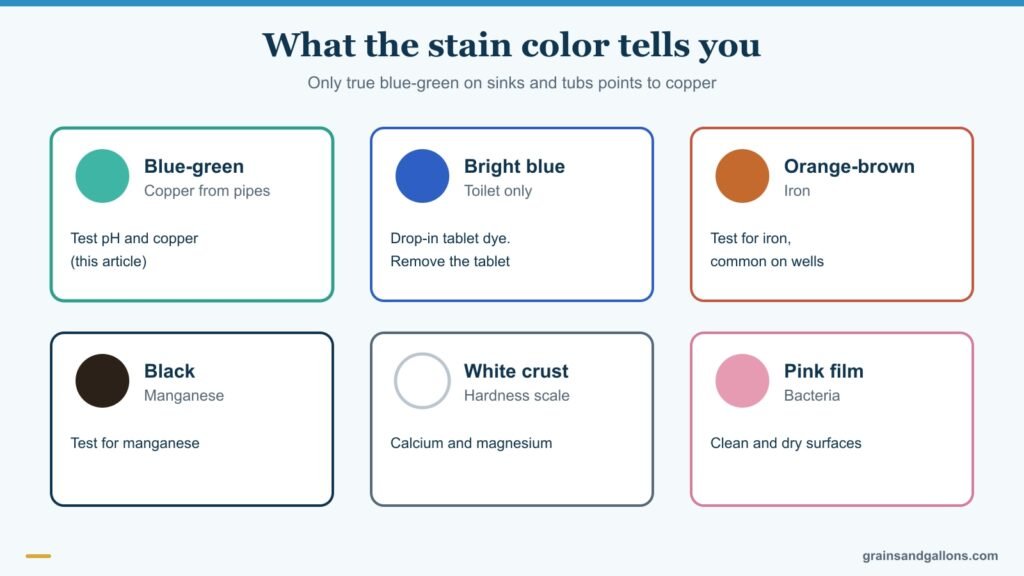
If the only blue is in the toilet, look in the tank. Drop-in bowl-cleaning tablets leave a blue dye stain that has nothing to do with your pipes. Take the tablet out and see if the stain stops coming back.
Other colors point elsewhere. Orange or rust-brown is iron (see orange stains from well water), black is usually manganese, white crust is hardness scale, and a pink film is bacteria. A tinted glass of water rather than a stained fixture is a bigger warning; our guide to a greenish tint in tap water covers that. If sinks and tubs carry a true blue-green, keep going.
Test pH and copper to find out why
Start with pH
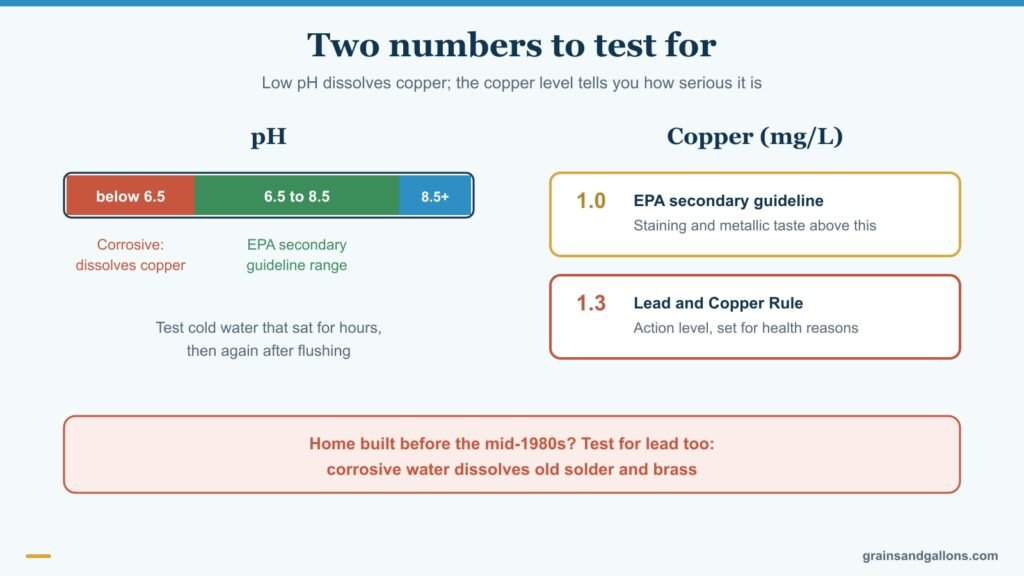
This is the test that usually gives you the answer. Water below about pH 6.5 is acidic enough to slowly dissolve copper. The EPA's secondary guideline for pH is 6.5 to 8.5, and it links low pH to corrosion and a metallic taste. Well water in many regions runs acidic. City water usually doesn't, because utilities adjust it for corrosion control.
Test strips or a dropper kit work for a first look. Our guide on testing water pH at home covers how to sample so you don't get a misleading reading. Test cold water from a tap that hasn't run for hours, then again after flushing; a big drop in copper after flushing tells you the water picks it up while sitting in the pipes.
Then measure the copper
| Copper level | What it means |
|---|---|
| Above 1.0 mg/L | Above the EPA's non-enforceable secondary guideline. Expect staining and a metallic taste |
| Above 1.3 mg/L | The action level under the EPA's Lead and Copper Rule, set for health reasons |
Copper can upset the stomach at higher levels. If your test comes back high, or you have an infant drinking formula made with tap water, talk to your doctor and use another water source for drinking until it's sorted. Run the cold tap for a minute or two before drinking or cooking if water has been sitting, and never cook with hot tap water.
Corrosive water that dissolves copper can also dissolve lead from older solder and brass. If your home was built before the mid-1980s, test for lead too. A well water test kit that covers pH, copper and lead is a sensible first step on a private well. Use a state-certified lab if anyone vulnerable is drinking the water.
Other things that speed up copper loss

If pH comes back normal, look at these:
- Drips and standing water. A faucet that drips onto the same spot all day builds a stain fastest. Fix the drip and the stain grows far more slowly, whatever the chemistry.
- Hot water and velocity. Stains worst on the hot side, or pinhole leaks in hot lines, can come from erosion as well as chemistry. A recirculation pump that runs fast and constantly, undersized pipe, or sharp fittings right after the pump can wear copper from the inside. A plumber can check pump size and settings.
- Electrical grounding. Stray current on the pipes, from a faulty ground or a missing bonding jumper, can speed corrosion. That's a job for an electrician. If you have a softener or a section of plastic pipe in the line, see our guide on softener bonding and grounding.
The stain is a warning about pinhole leaks

Every blue-green streak is copper that used to be pipe wall. Over years, the same corrosion that stains fixtures thins copper lines until they develop pinhole leaks, often in hot lines or near fittings. Watch for green crust on the outside of joints, damp spots under sinks, or a water bill that creeps up. If you already have one pinhole leak and stains on the fixtures, fixing the water chemistry protects the rest of the plumbing, not just the tub.
Fix the water, not just the sink

On a well with low pH, the usual order is an acid neutralizer first, then a softener if you need one. Calcite neutralizers raise pH by dissolving calcium carbonate into the water, which adds a bit of hardness, so a softener after it takes care of that. Our roundup of acid neutralizer filters for low pH well water covers sizes and backwashing versus upflow designs.
About the softener: a softener doesn't make water acidic. It swaps calcium and magnesium for sodium or potassium and leaves pH essentially where it was (more in does a water softener change pH). Hard water can lay down a thin mineral layer inside pipes, though, and softened water doesn't, so in water that's already aggressive, removing that buffer can make existing corrosion more noticeable. Our article on reading pH and hardness together explains how they interact.
On city water, don't try to treat pH yourself before calling the utility. Ask for their recent pH and corrosion-control data, whether neighbors have reported problems, and whether they offer copper and lead testing.
How to remove copper stains from a sink or tub

Copper stains dissolve in mild acids. Start gentle:
- Mild acid first. Apply white vinegar or lemon juice on a cloth, or as a paste with baking soda or salt, leave it 10 to 15 minutes, then scrub with a non-scratch pad.
- Step up to a calcium/lime/rust remover if that doesn't lift it. We compare two common ones in CLR vs Lime-A-Way. Follow the label, test a hidden spot, wear gloves and ventilate.
- Skip acids on natural stone such as marble or travertine. They etch.
- Rinse thoroughly, and never mix an acid cleaner with bleach.
The stains will keep coming back until the water chemistry is fixed. Cleaning is maintenance, not a cure.
Green hair and tinted water
The same copper can tint light-colored hair green, especially after swimming, and at high levels it gives tap water a faint blue-green tint. Colored water points to heavier corrosion than stains alone, so test soon rather than later.
FAQ
Are blue green stains in a sink dangerous?
The stain itself isn't, but it shows copper is in your water. At high levels copper can cause stomach upset, and the same corrosive water can pick up lead. Test for copper and lead, especially if infants drink the water.
Can hard water cause blue green stains?
No. Hardness leaves white scale. Blue-green stains come from copper, usually dissolved by low-pH water. Softening the water won't stop them.
Will a water softener stop copper stains?
No. A softener doesn't raise pH. On a well with acidic water, install an acid neutralizer to raise the pH; add a softener afterward only if you also have hardness to remove.
Why are blue stains only in my toilet?
Check the tank for a blue drop-in cleaning tablet. Its dye stains the bowl and has nothing to do with copper. If sinks and tubs are clean, the tablet is the likely cause.
How long until stains stop after fixing the pH?
New staining slows once the water stops dissolving copper, but pipes can keep shedding some copper for a while. Clean the fixtures after the fix and watch whether stains return over the following weeks.
Raise the pH and the stains stop for good
Blue green stains in sink and tub fixtures are copper your water is pulling from the plumbing. Rule out the toilet tablet, test pH and copper, and check drips, hot-water flow and grounding. On a well, an acid neutralizer is the lasting fix; on city water, start with the utility. Clean the stains once the cause is handled, and they stay gone.