

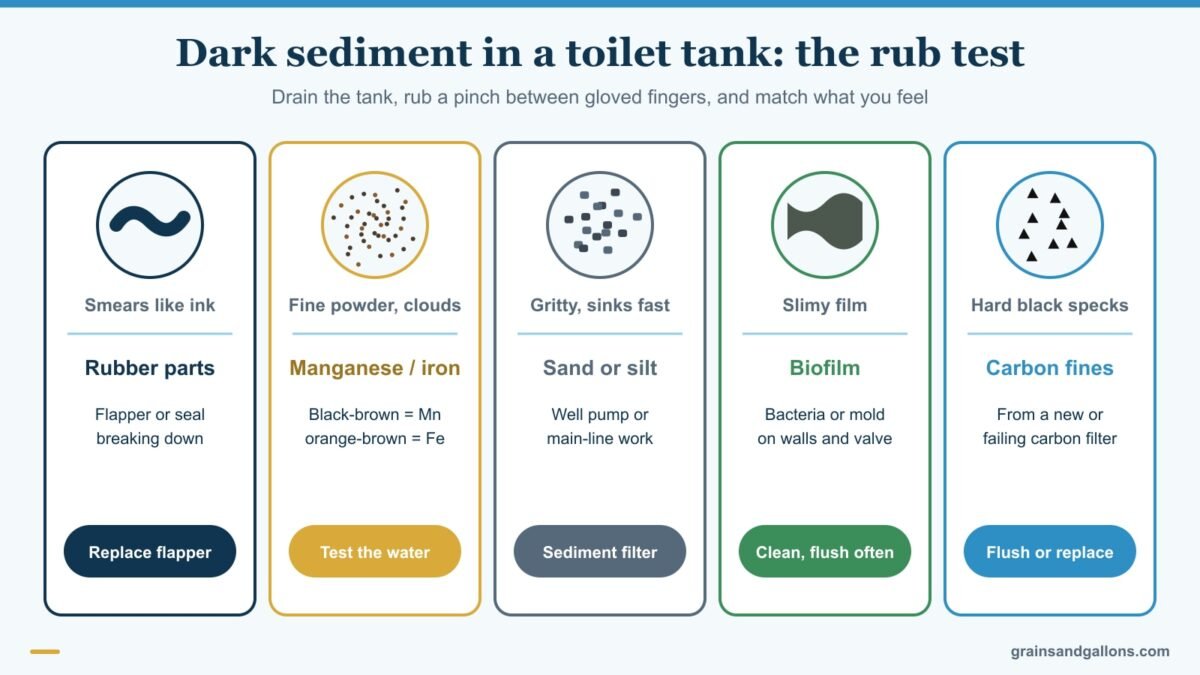
Quick Answer: Dark sediment in toilet tank water is usually one of five things. Black material that smears like ink is a rubber flapper or seal breaking down. Fine black-brown powder is manganese or iron from your water. Gritty grains are sand or silt, slimy film is biofilm, and hard black specks are carbon from a filter. Drain the tank and rub a pinch between gloved fingers to tell which.
Tank water sits still between flushes, so whatever your water carries settles out there. That makes dark sediment in a toilet tank a free sample of what's coming through your pipes, or of a part inside the tank falling apart.
In this guide
Drain the tank and run the rub test
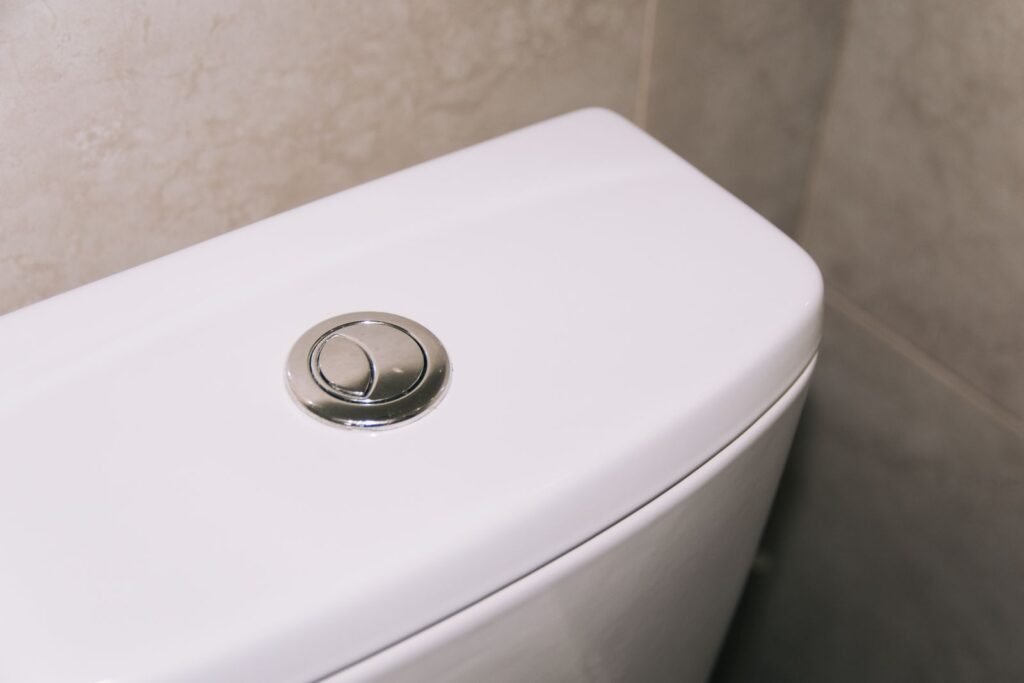
- Turn the supply valve behind the toilet clockwise until it stops.
- Flush and hold the handle down to drain the tank.
- Put on gloves and scoop up a little sediment with a paper towel.
- Look at it in good light, then rub it between your fingers.
Citizens Energy Group, a water utility, recommends the same paper towel smear test: if a particle smudges, it's rubber.
Five causes of dark sediment in toilet tank water
Smears like ink: a crumbling flapper or seal
Squeeze the flapper. If it feels soft, gummy or swollen, or leaves black on your glove, it's breaking down. Many cities disinfect with chloramine, which is known to wear out rubber faster (how chloramine affects a water softener covers the same effect on softener seals). Chlorine drop-in tablets speed it up too. Replace the flapper with a chloramine-resistant or silicone one. A failing flapper leaks anyway.
Fine powder that clouds the water: manganese or iron
Black to dark brown points to manganese, especially on well water. Rusty or orange-brown is iron; wells often have both. Expect matching stains in the bowl (black or gray ring in the toilet bowl covers removal). The EPA's secondary standard for manganese is just 0.05 mg/L, so small amounts still stain. There is also a health advisory, and infants are more sensitive, so test a well before using it for formula. See how to test water for manganese, then compare the best manganese filters if the result comes back high.
Gritty grains that sink fast: sand or silt
On a well this usually means the pump is drawing sediment or the screen is damaged. A spin-down sediment filter on the main line catches it; call a well contractor if the amount keeps growing. On city water, grit usually follows work on the main.
Slimy film: biofilm
Slime on the walls and fill valve is bacteria or mold, common in rarely used toilets and water with iron, manganese or sulfur. Black slime in the toilet tank covers cleanup.
Hard black specks: carbon fines
After a new or failing carbon filter, hard specks that don't smear are carbon. Flush the filter or replace the cartridge.
Is the sediment from the toilet or from your water?
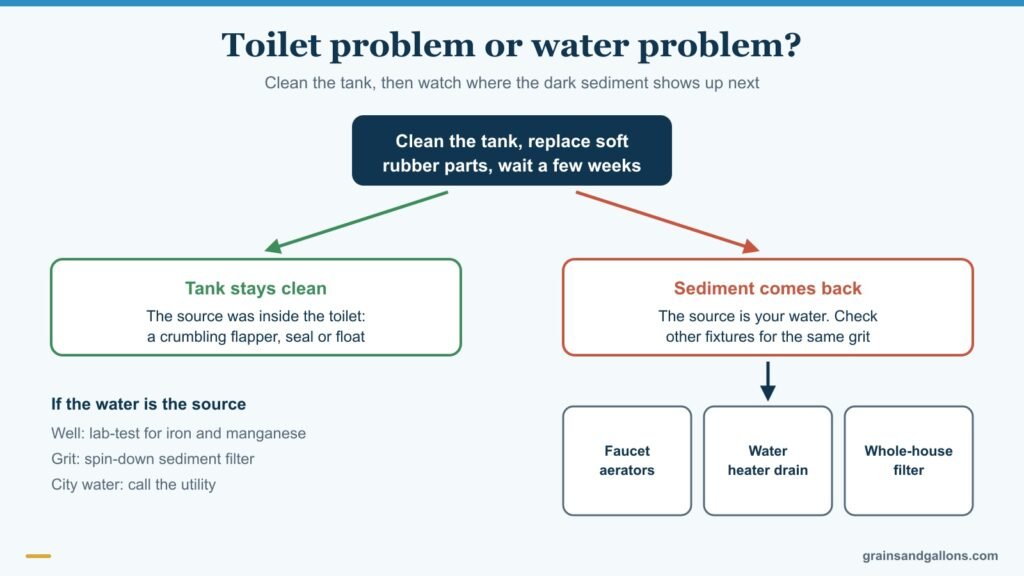
Clean the tank and replace soft rubber parts. If the sediment returns within a few weeks, the source is your water. Check faucet aerators, the water heater drain and any whole-house filter. Penn State Extension's guide to iron and manganese in private water systems explains how to test and treat a well. On city water, call the utility.
Scrub the tank without damaging the parts
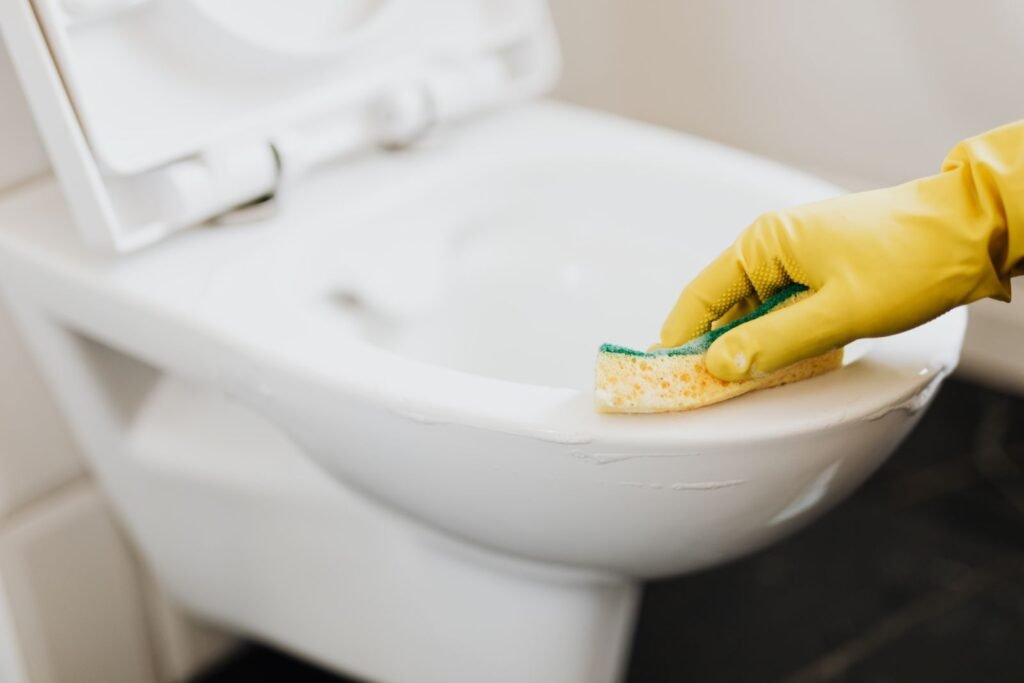
- With the water off, sponge out loose sediment or use a wet/dry vacuum.
- Scrub stains with a brush and a porcelain-safe rust and mineral remover, or soak overnight in white vinegar.
- Skip bleach tablets in the tank; they attack rubber and plastic.
- Never mix bleach with acid cleaners or rust removers.
- Refill and flush a few times.
FAQ
Is black sediment in a toilet tank dangerous?
Rubber and carbon particles aren't a health concern. Manganese can be at high levels, especially for infants, so test well water.
Why is there black stuff in my toilet tank but not my sink?
Tank water sits still, so particles settle and build up. Sink water keeps flowing.
Can a water softener remove manganese?
Low levels of dissolved manganese, yes. Black specks mean it has already oxidized, so plan on a dedicated filter. See can a water softener remove manganese.
How often should I clean my toilet tank?
Every few months, and right after you see sediment, so you can tell whether it comes back.
Sediment that returns points to your water, not your toilet
Most dark sediment in toilet tank water is a rubber part or your water. Run the rub test and replace soft parts. If it returns after cleaning, test the water and treat it where it enters the house.