

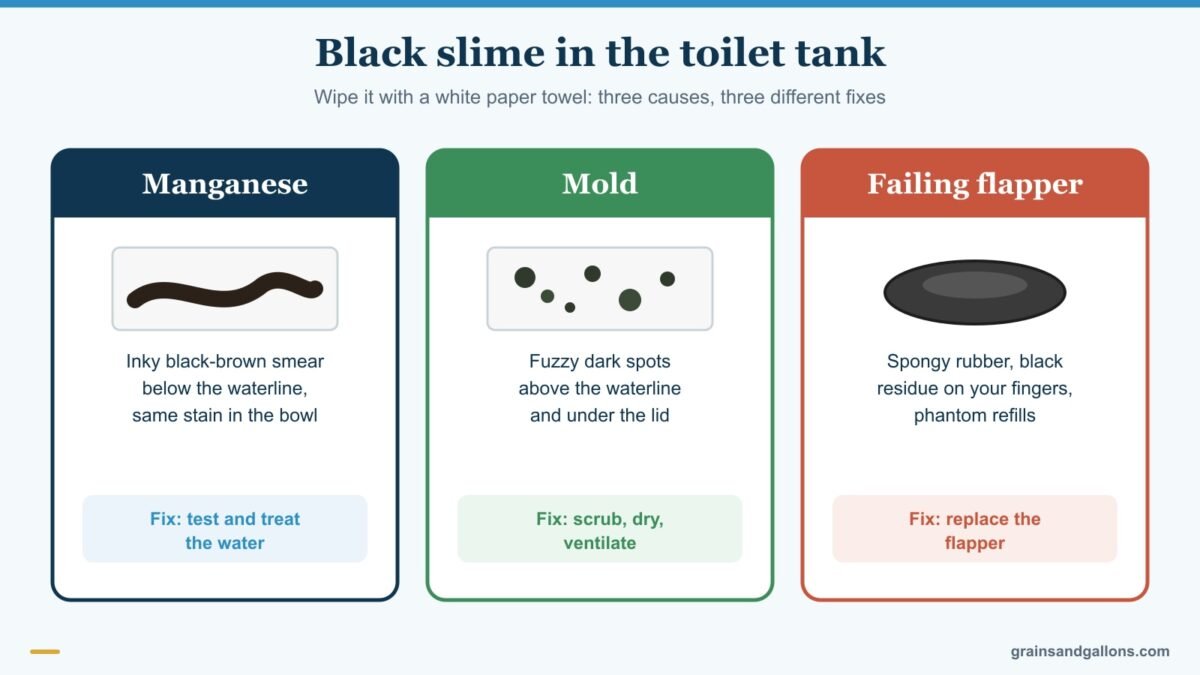
Quick Answer: Black slime in toilet tank water or on the tank walls is usually one of three things. An inky black-brown smear that coats the tank below the waterline, and shows up in the bowl too, is manganese, often with bacteria feeding on it. Fuzzy dark patches above the waterline or under the lid are mold. Black residue that rubs off on your fingers from the flapper is the rubber breaking down. Clean the tank, then fix the cause: test for manganese, ventilate, or replace the flapper.
You took the lid off to fix a running toilet and found a slick black coating on the walls and gunk around the flapper. Black slime in a toilet tank is gross, but it's also useful. The tank is a still pool of your house's cold water that sits for hours, so whatever is in the supply tends to show up there first.
In this guide
- Wipe it with a paper towel first
- Where in the tank it grows tells you a lot
- Manganese: the slime that keeps coming back
- Mold and biofilm above the waterline
- When the flapper is the source
- How to clean black slime out of a toilet tank
- Keep the tank from slicking up again
- Is black slime in toilet tank water harmful?
- FAQ
- The tank is telling you what's in your water
Wipe it with a paper towel first
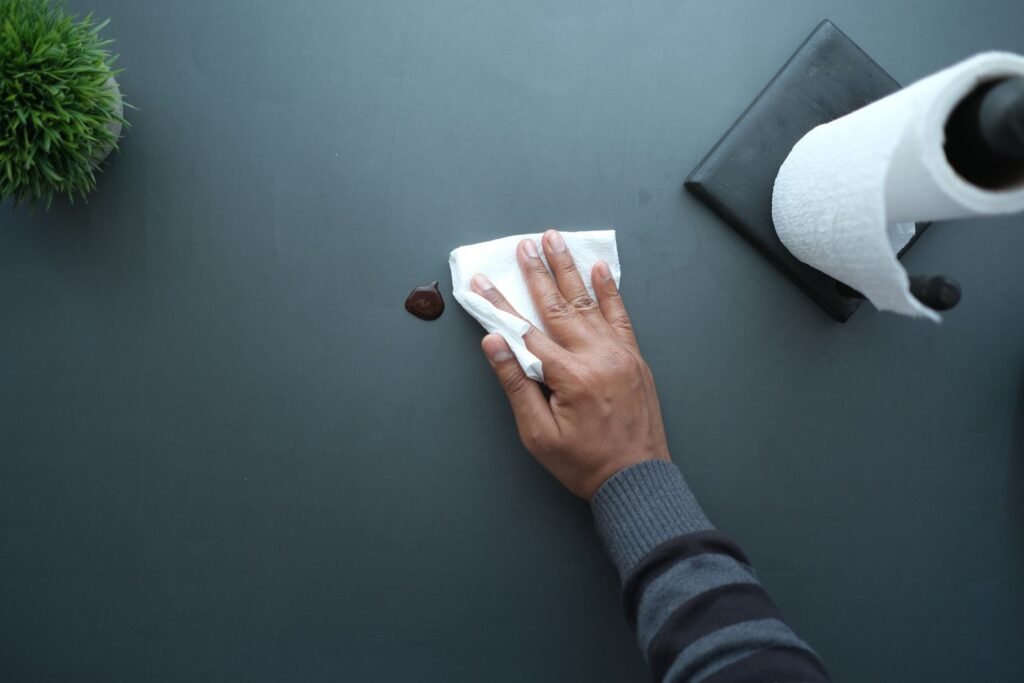
Turn off the supply valve behind the toilet and flush to drain most of the tank. Then wipe a few spots with a white paper towel and look closely.
| What you notice | Probably | Next step |
|---|---|---|
| Slippery black or dark brown coating below the waterline. Smears like ink. Same stain in the bowl | Manganese, often with manganese-oxidizing bacteria | Test the water |
| Fuzzy or spotty black or green patches, mostly above the waterline or under the lid | Mold or mildew from humidity | Clean, dry, ventilate |
| Black residue on and around the flapper that comes off on your fingers | Rubber breaking down | Replace the flapper |
| Black or dark grit settled on the tank floor, not slimy | Sediment from the supply | See dark sediment in the toilet tank |
| Orange-brown slime, not black | Iron and iron bacteria | Test for iron |
Manganese slime and a dying flapper often turn up together.
Where in the tank it grows tells you a lot

Mold needs air, so it grows on damp surfaces above the water: the upper walls, under the lid, around the bolts. Manganese and its bacteria live in the water, so their coating sits below the waterline and on submerged parts like the fill valve. Rubber residue clusters on the flapper; loose grit settles on the floor.
A second test is time. Biological slime wipes off and comes back within days to weeks. A hard, gritty dark band that doesn't regrow after you remove it is more likely a mineral stain.
Manganese: the slime that keeps coming back

Manganese is a naturally occurring metal, common in well water and present in some city supplies. It's invisible when dissolved, but as it meets oxygen, or as certain bacteria oxidize it, it turns into black-brown particles and slime. A toilet tank gives it still water, air at the surface and plenty of time.
The EPA's secondary guideline for manganese is just 0.05 mg/L, and it lists black to brown color, black staining and a bitter metallic taste as the effects. Staining can start even below that.
Signs it's manganese: it comes back within weeks after a scrub; you see the same black streaks in the bowl, on laundry or on fixtures (see black stains from manganese in well water); or you're on a well.
What to do: test. Our guide on testing water for manganese covers home kits and lab tests, and a well water test kit is a good start on a private well, since iron and manganese often show up together. If anyone in the house is an infant or pregnant, or the level comes back high, use a certified lab and talk with your doctor.
A softener sized and set for it can handle low manganese levels. Higher levels, or manganese with bacteria, usually need an oxidizing filter ahead of the softener; our roundup of manganese filters compares the common media.
Mold and biofilm above the waterline
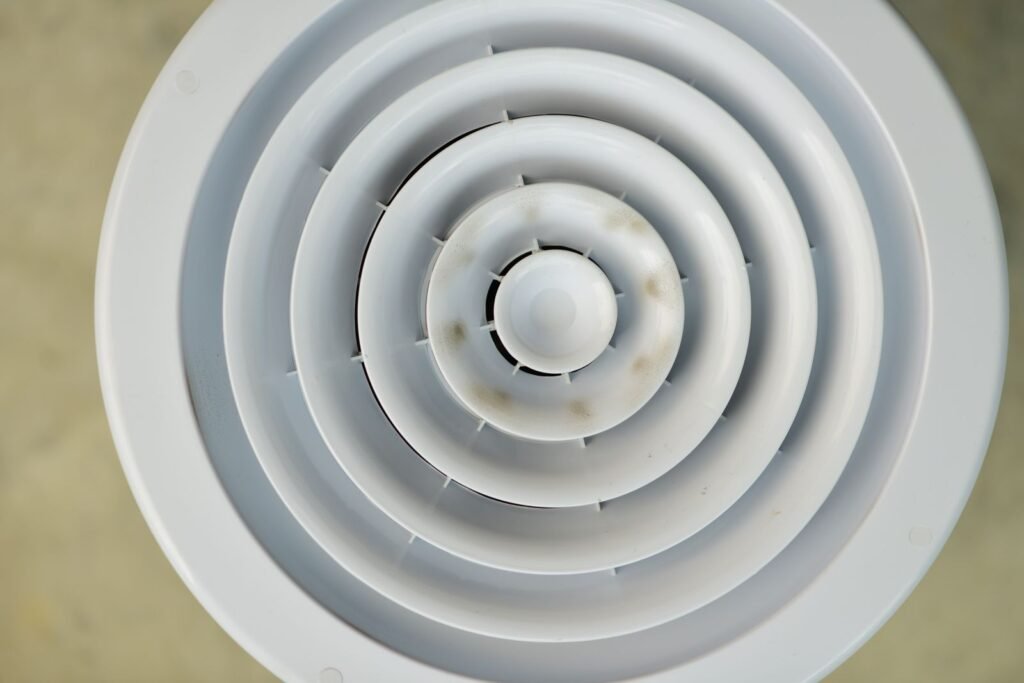
Fuzzy dark spots on the tank walls above the water, on the underside of the lid, or around the bolts come from airborne spores landing on a damp surface. Greenville Utilities in North Carolina describes black slime in toilet tanks, faucets and shower heads as a mix of bacteria and fungi found naturally in air and water, thriving wherever surfaces stay damp. It's more common in bathrooms without a working exhaust fan, and in toilets that sit unused, like a guest bath or a basement half bath.
What to do: shut off the supply and flush to empty the tank. Scrub with a stiff brush and detergent; the EPA's advice for hard surfaces is to scrub mold off with detergent and water and dry completely. If you want to disinfect, wipe on a diluted bleach solution, leave it briefly and rinse it away. Don't fill the tank with bleach and leave it sitting. Wear gloves and ventilate.
When the flapper is the source
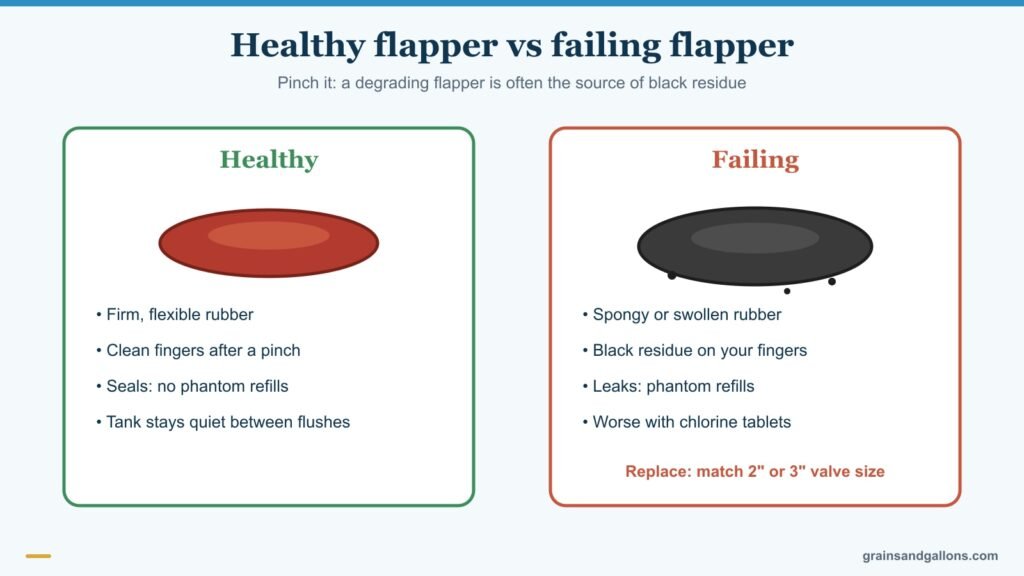
Chlorine and chloramine, both used by water utilities, can soften and degrade some rubber, as can in-tank cleaning tablets. A failing flapper turns spongy, leaves black residue on your fingers, and usually leaks, so you hear phantom refills.
What to do: replace it with a flapper that matches your toilet's flush valve size (usually 2" or 3"). If your utility uses chloramine, look for one labeled chloramine-resistant. Skip the in-tank bleach or chlorine tablets; many toilet manufacturers warn they can damage tank parts.
How to clean black slime out of a toilet tank
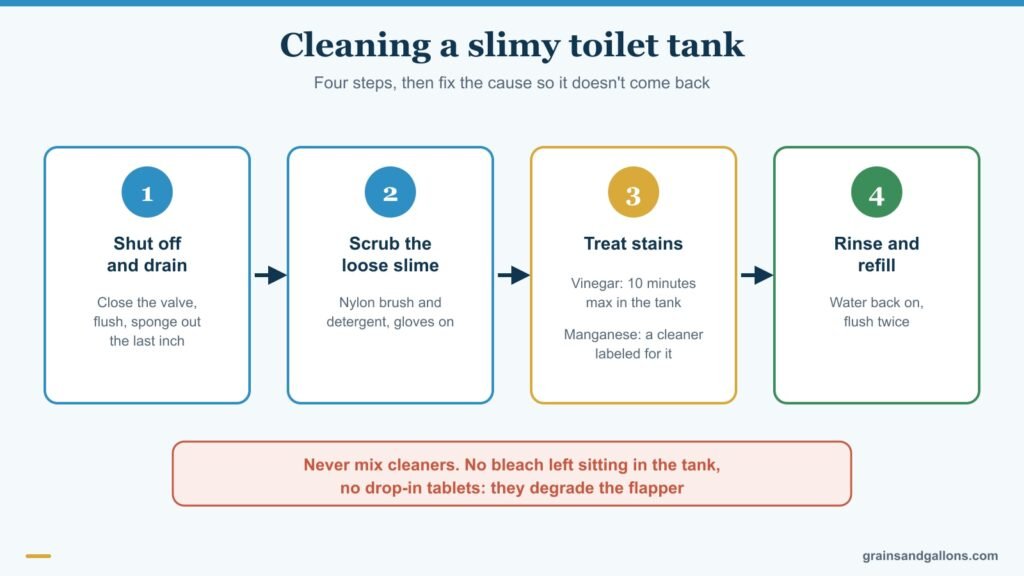
- Shut off and drain. Close the supply valve and hold the flush lever down to empty the tank. Sponge out the last inch of water.
- Scrub off the loose slime. Use a stiff nylon brush and a bathroom detergent on the walls, fill valve, overflow tube and flapper seat. Wear gloves.
- Treat what's left. For mineral staining, a short vinegar soak helps, but don't leave vinegar sitting in the tank more than about 10 minutes, since the acid can attack metal parts. For manganese stains, use a cleaner whose label lists iron or manganese stains and follow its toilet directions.
- Rinse and refill. Turn the water back on and flush a couple of times to clear residue.
Never mix cleaners, and rinse well between products. A dark, non-slimy ring at the bowl's waterline may be stained mineral scale; our article on black or gray rings in the toilet bowl sorts out which kind you have. Black streaks running down from under the rim usually mean the rim jets are clogged with the same deposits.
Keep the tank from slicking up again

Cleaning alone buys a few weeks. To make it last:
- Manganese: treat the water, not the toilet. A filter or a softener set for manganese is the only lasting fix.
- Mold: run the bathroom fan longer after showers, keep the lid on, and flush rarely used toilets every few days so the water doesn't stagnate.
- Flapper: use chloramine-resistant rubber if your utility uses chloramine, and stop using drop-in tablets.
- Check twice a year. A thin film caught early takes two minutes to wipe off.
Is black slime in toilet tank water harmful?
You won't drink tank water, and manganese at staining levels is mainly an aesthetic problem. Mold in a tank is a low risk for most healthy people but can bother anyone with allergies or asthma. The bigger point: if you see manganese slime in the tank, the same water is going to the kitchen tap. Test it rather than guessing, especially on a well.
FAQ
What is the black stuff in my toilet tank?
Usually manganese deposits with bacteria, mold, or a deteriorating rubber flapper. Wipe it with a white paper towel: an inky smear below the waterline points to manganese, fuzzy patches above the water to mold, and black on your fingers from the flapper to failing rubber.
Is black mold in a toilet tank dangerous?
For most healthy people it's a low risk, but it can aggravate allergies and asthma. Clean it out, dry the tank and improve ventilation so it doesn't return.
Can I put bleach in my toilet tank?
You can wipe a diluted bleach solution on and rinse it off, but don't leave bleach sitting in the tank or use bleach tablets. Long contact can degrade the flapper and other rubber parts.
Why does the black slime keep coming back?
Fast regrowth usually means manganese in the water feeding bacteria, or a damp, unventilated bathroom feeding mold. Cleaning alone won't stop it; test your water and fix the source.
Does a water softener remove manganese?
A softener can remove low levels of dissolved manganese if it's sized and set for it. Higher levels, or manganese with bacteria, need an oxidizing filter ahead of the softener.
The tank is telling you what's in your water
Black slime in toilet tank water is a symptom, not the problem. Wipe it, note where it grows, and you'll know whether you're dealing with manganese, mold or a dying flapper. Clean it once, then fix the cause: test and treat the water for manganese, ventilate for mold, or swap the flapper. Do that and the slime stays gone.