

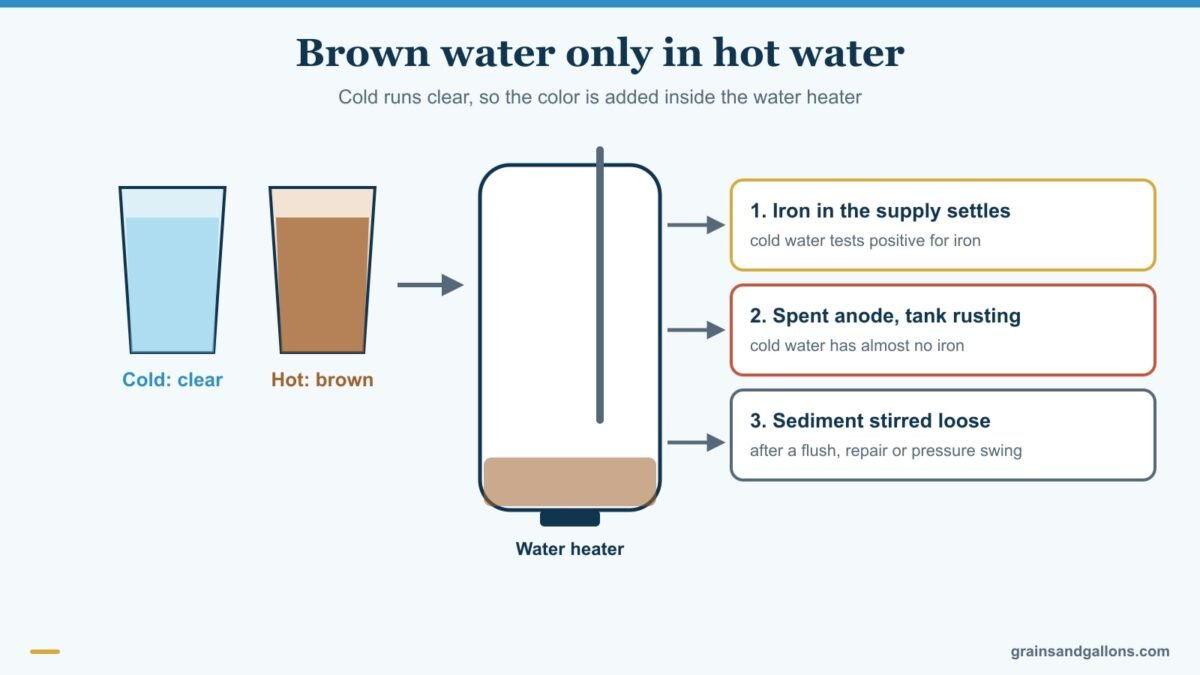
Quick Answer: Brown water only in hot water means the color is being added inside your water heater. Turn the heater off, let it cool, then drain a few gallons from the drain valve into a bucket. Gritty brown sediment that clears up means iron has settled in the tank: flush it. Water that stays rusty, or a wet spot under the tank, means the tank itself is rusting and probably needs replacing. A quick iron test kit on the cold water tells you which.
Disclosure: As an Amazon Associate, Grains & Gallons earns from qualifying purchases.
The cold tap gives you clear water. Switch to hot and it looks like weak tea. Brown water only in hot water is actually good news for diagnosis, because it rules out most of your plumbing and the city main. The color is being added between where water enters the house and where it leaves the hot side, and the water heater is by far the most likely place.
There are really only three ways that happens, and each needs a different response.
In this guide
The three ways a water heater turns water brown

Iron or manganese is already in your water, and the tank collects it. Cold water can carry dissolved iron you can't see. Heat and time in the tank turn it into rust-colored particles, which settle to the bottom and get stirred up when you run a lot of hot water. This is especially common on wells. Manganese does the same thing but comes out darker, more brown-black; see black stains from manganese.
The tank's anode rod is used up, so the tank is rusting. Every glass-lined tank heater has a sacrificial anode rod, usually magnesium or aluminum, that corrodes so the steel tank doesn't. Once the rod is gone, the steel starts rusting through small flaws in the glass lining. This usually shows up in tanks eight years old or more, or sooner if your water is soft or aggressive.
Sediment and scale at the bottom of the tank are loose. Years of mineral buildup mixed with rust flakes sit at the bottom. The dip tube sends incoming cold water to the bottom of the tank, so a flush, a repair or a big pressure change stirs it up.
If your hot water also smells like rotten eggs, bacteria are reacting with the anode. That's covered in rotten egg smell only in hot water.
Work out which one you have
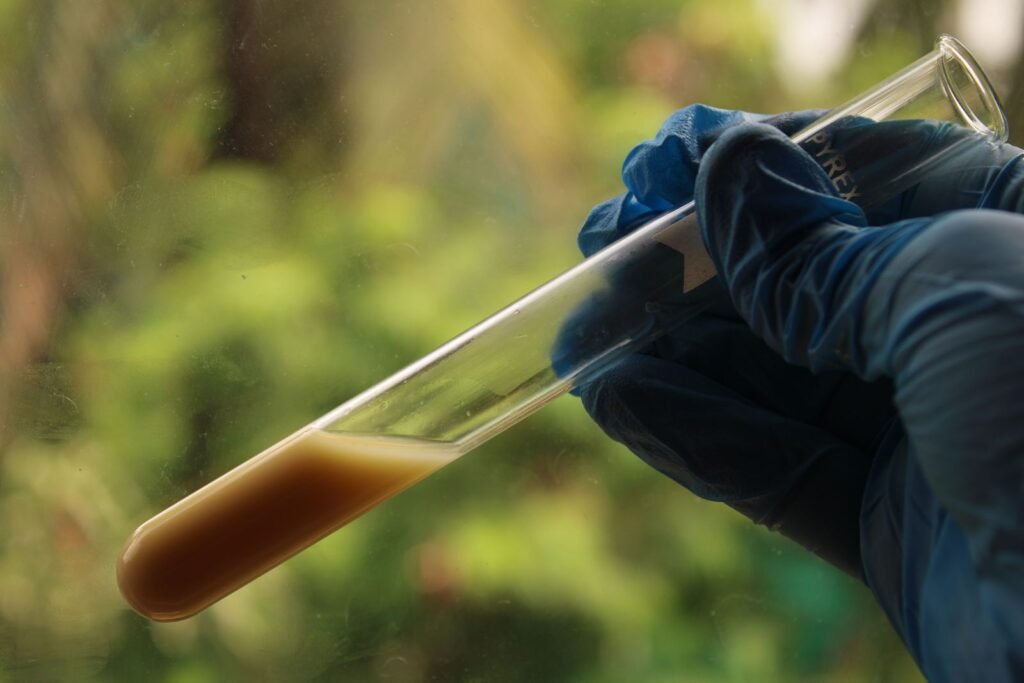
Do these in order. You'll usually know by the third step.
Step 1: Confirm it's only the hot side
Run the cold water at a tub faucet (no aerator, high flow) for a minute. If it's clear, fill a white bucket from the hot side. If both sides are brown, this isn't a water heater problem. Look at well sediment, city main work, or brown water after a softener regenerates instead.
Step 2: Test the cold water for iron
This step tells the causes apart. If your cold water has measurable iron, the heater is mostly collecting what comes in. If the cold water has almost none, the iron is coming from the tank itself.
A strip test like the WaterWorks total iron test gives a quick answer; for more exact readings, see the best iron test kits for water. The EPA's secondary (aesthetic) guideline for iron is 0.3 mg/L, and staining often starts around there. On a well, how to test well water for iron walks through sampling the cold side before any treatment equipment.
Step 3: Drain a little from the tank
Turn the heater off first. On an electric unit, switch off the breaker; dry-firing the elements burns them out. On gas, set the control to "pilot" or "vacation." Let it cool for a few hours, because the water inside can scald. Attach a hose to the drain valve, or open it into a bucket, and run out two or three gallons.
| What comes out | What it means |
|---|---|
| Brown, gritty slurry that clears within a few gallons | Settled iron and sediment. Flushing will help a lot. |
| Water stays rust-colored the whole time | The tank is likely corroding from the inside |
| White or tan chips and flakes | Mostly scale (calcium), maybe with some rust |
| Black particles | Manganese, or a breaking-down dip tube or anode |
Step 4: Check the age and look for seepage
The manufacture date is on the rating plate, often coded into the serial number. Look at the floor under the tank and the base of the jacket. Rust streaks, a damp ring, or water in the drain pan along with brown water usually means the tank is near the end.
What to do about each cause

Iron in the cold water. Flush the heater fully, then deal with the iron before it reaches the tank. New York's housing agency includes an annual storage-tank flush in its water heater maintenance checklist: shut off the heater and cold supply, open the drain, and keep going until the water runs clear. For the iron itself, Penn State Extension notes that a softener can handle dissolved iron under 5 mg/L when it's set up for it; higher levels need a dedicated iron filter ahead of the softener.
Spent anode, tank still dry. If the tank is younger and not leaking, a plumber can pull the anode and replace it. It's often seized tight and needs a big breaker bar and clearance above the tank, so it isn't always DIY. A new anode won't undo rust that has started, but it can slow it.
Tank rusting and seeping. Plan on replacing it. A leaking tank won't seal itself, and a sudden failure can flood a basement. Until then, check the floor often and know where your shutoff is.
Heavy scale. Flush, and look at your hardness. With hard water and no softener, the bottom of the tank fills with scale every year.
Brown water only in hot water after city main work

Sometimes brown hot water starts the day the utility flushes hydrants or repairs a main. Rusty water from the street reached your pipes, and any hot water you ran pulled it into the heater, where it settled. Now the cold side has cleared but the hot side keeps tinting.
The order matters. When the street water turns brown, run only cold water, from a tub or an outside spigot, until it clears, and hold off on the dishwasher, laundry and showers. If the heater already took in brown water, drain a few gallons from it once the cold runs clear, or do a full flush. It should stop there; if it doesn't, go back to the steps above.
Cleaning up what the brown water left behind
Rusty hot water leaves orange-brown marks in tubs, on shower floors and in laundry. Don't use bleach on rust stains; it can set them. A rust remover made with oxalic acid or a similar reducing agent works much better. Our guide to the best rust stain removers for sinks, tubs and toilets explains which are safe on which surfaces. For laundry, rewash with a fabric rust remover before anything goes in the dryer, because dryer heat sets stains.
Signs the heater needs a plumber, not a flush
- Water is leaking from the tank itself, not just a fitting
- You smell gas, or the burner area is sooty
- The drain valve won't close after flushing (cap it with a hose cap and call)
- The anode is seized and you'd have to put force on the tank fittings
FAQ
Is brown water only in hot water safe?
Iron is mainly an aesthetic problem; the EPA's 0.3 mg/L guideline is a non-health standard. Still, don't drink or cook with hot tap water, and if the cause is a rusting tank, plan the replacement before it leaks.
Why is my hot water brown but cold water clear?
The color is being added inside the water heater: iron from your supply settling in the tank, a spent anode letting the steel tank rust, or sediment stirred loose from the bottom.
Will flushing the water heater fix brown hot water?
If the cause is settled iron or sediment, yes, usually within a few gallons to a full flush. If the water stays rusty the whole time you drain, the tank itself is corroding and flushing won't fix it.
How often should I flush my water heater?
Once a year is a common recommendation, and more often if your water carries iron or is hard. Check your heater's manual for its specific schedule.
Flush the heater, test the cold side, then decide
Brown water only in hot water nearly always comes from the water heater. Drain a few gallons and test the cold water for iron. Sediment that clears means flush and treat the iron upstream; water that stays rusty, or a damp floor, means the tank is on its way out.