

Quick Answer: The hard water damage washing machine owners notice first is usually a slow fill from clogged inlet screens. After that comes scale on the heating element (if the washer has one), gritty film in the tub and drain path, and detergent residue that traps odor. Hard water rarely kills a washer outright. Clean the inlet screens, run a monthly cleaning cycle with something like Affresh Washing Machine Cleaner, and use enough detergent. Softening the water removes the cause.
Disclosure: As an Amazon Associate, Grains & Gallons earns from qualifying purchases.
Washer damage is quiet. Calcium and magnesium build up in places you never look, until the washer fills slowly, smells sour or throws an error code. Penn State Extension notes that hard water leaves detergent curds in the washing machine and reduces how well detergents work.
In this guide
- Early signs of hard water damage washing machine owners overlook
- Inlet valve screens clog before anything else
- The heating element, if your washer has one
- Drum, sump and drain path film
- Dispenser drawer and door gasket residue
- Does hard water actually shorten a washer's life?
- A monthly routine that keeps scale in check
- FAQ
- Clear screens and soft water stop most of it
Early signs of hard water damage washing machine owners overlook
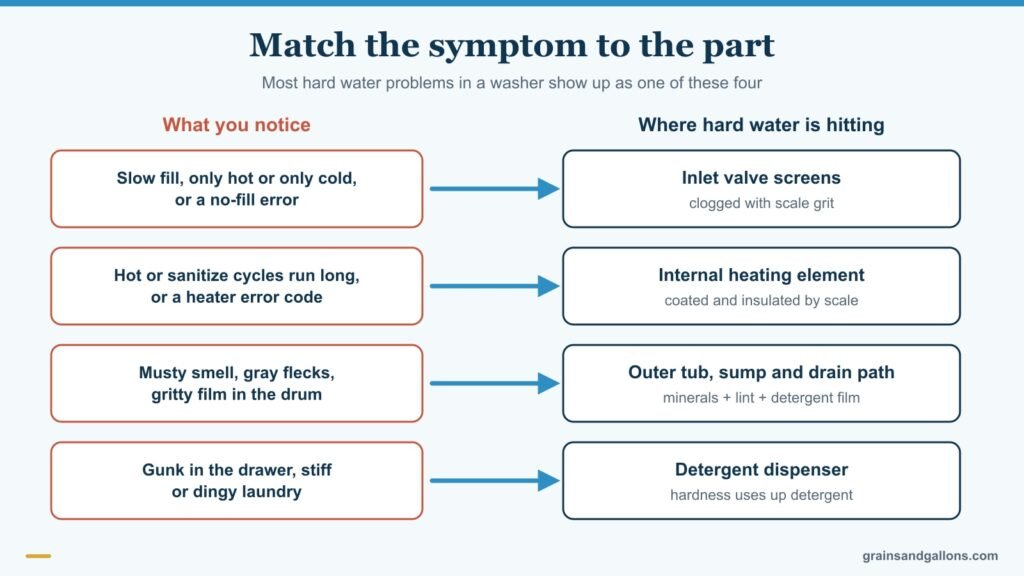
Most problems show up as one of these:
- Slow fill, or a load that fills with only hot or only cold water.
- Long hot or sanitize cycles, or a heater error code.
- Musty smell, gray flecks on clothes or a gritty film inside the drum.
- Stiff, dingy laundry even though you use more detergent. The Water Quality Association lists stiff, dingy laundry and high soap use among the classic hard water symptoms.
Penn State calls water above 7 grains per gallon hard and above 10.5 gpg very hard. The higher your number, the faster these show up.
Inlet valve screens clog before anything else
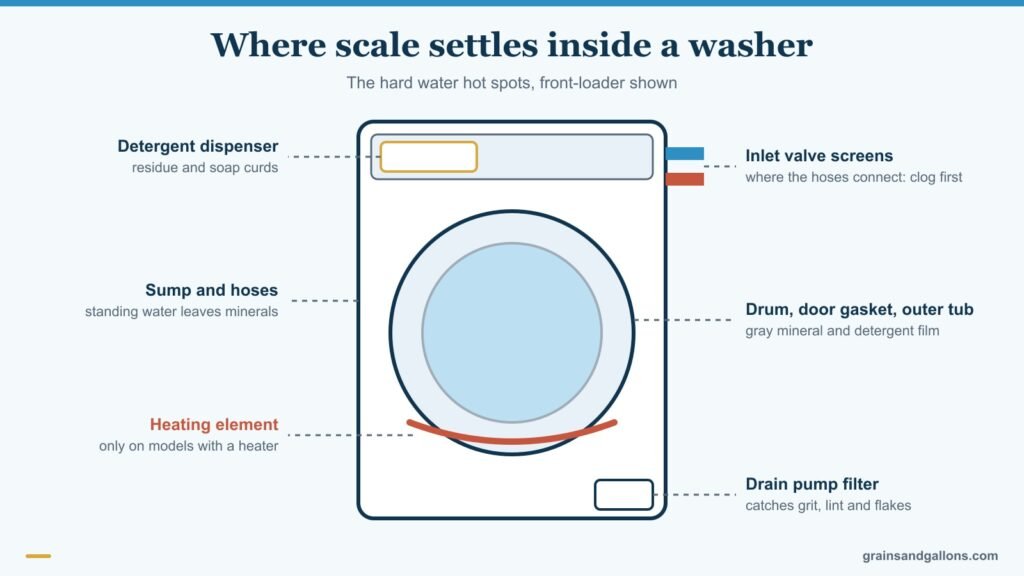
Where the hot and cold hoses connect to the back of the washer, small mesh screens catch grit before it reaches the inlet valve. In hard water areas, scale flakes from household pipes and the water heater end up there.
What to do: turn off both supply valves, unplug the washer, disconnect the hoses (keep a bucket and towel ready), and gently pull out and rinse the screens. Soaking them in vinegar loosens scale. Some models put the screens inside the hose ends instead, so check your manual.
The heating element, if your washer has one
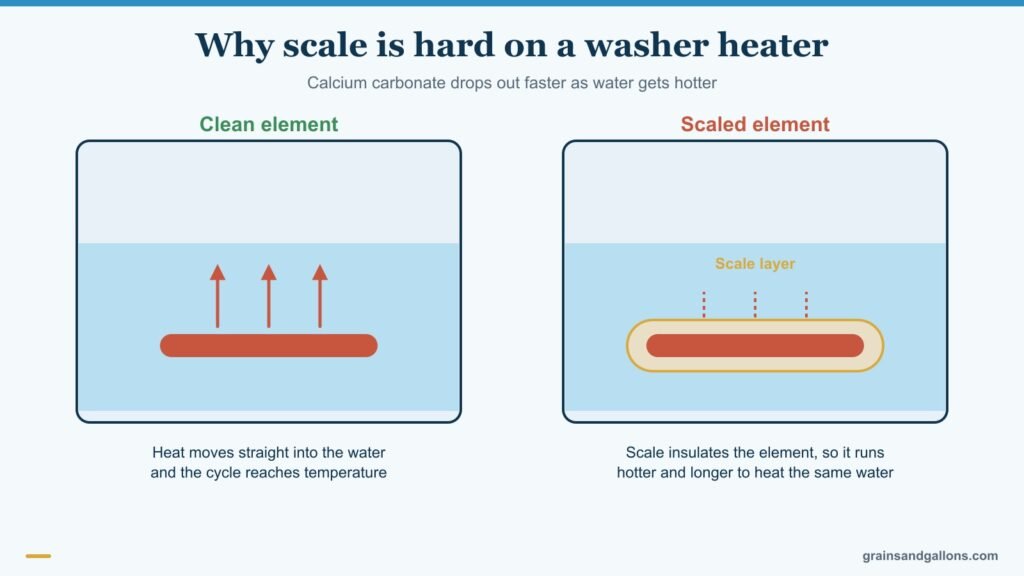
Many front-loaders and some top-loaders have an internal heater for hot or sanitizing cycles; machines that only use your house's hot water don't. If yours has one, it's the part hard water treats worst.
Calcium carbonate drops out of water faster as it gets hotter, so it deposits on the heater surface. Scale insulates the element, which makes it run hotter and longer to heat the same water. Over time, that extra heat stress can shorten its life. Regular descaling cycles help. Your model's manual or spec sheet will say whether it has a heater.
Drum, sump and drain path film
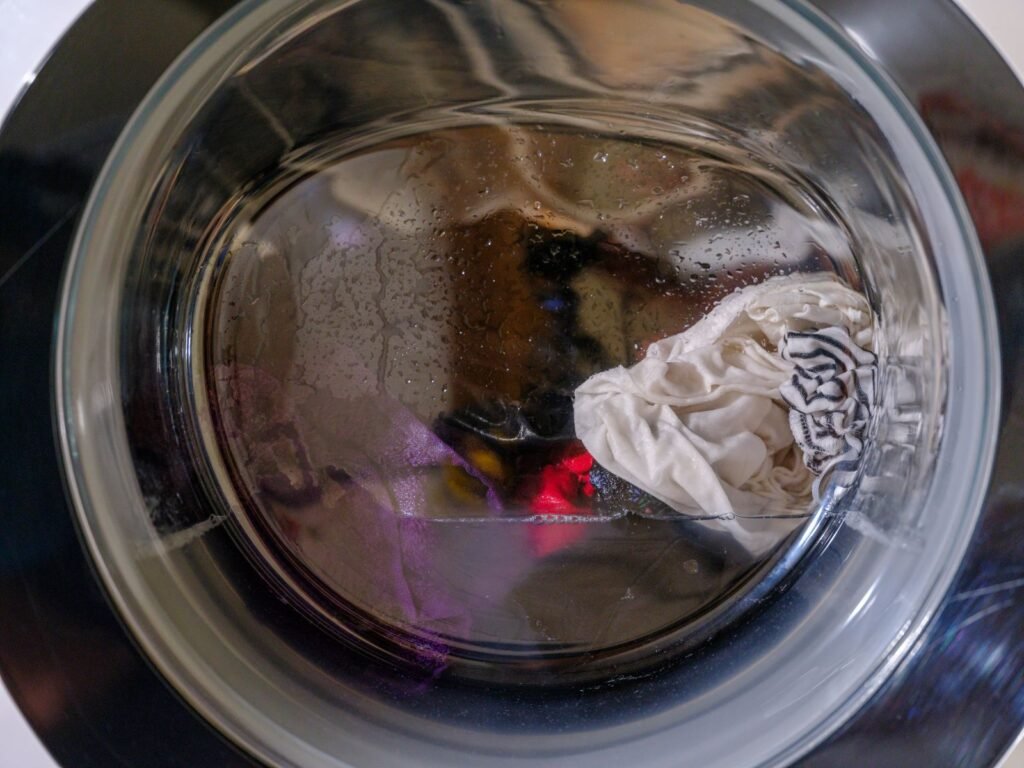
Water always sits in the outer tub, sump, pump and hoses, and minerals stay behind as it evaporates. Mixed with detergent residue and lint, that scale becomes a gray, gritty film that can harbor mildew. It also collects in the drain pump filter on models that have one.
Run a cleaning cycle monthly. Washer tablets and citric-acid cleaners dissolve mineral deposits; our best washing machine cleaners compares options for scale and odor. For a full walk-through, see descaling a front-load washer.
Dispenser drawer and door gasket residue
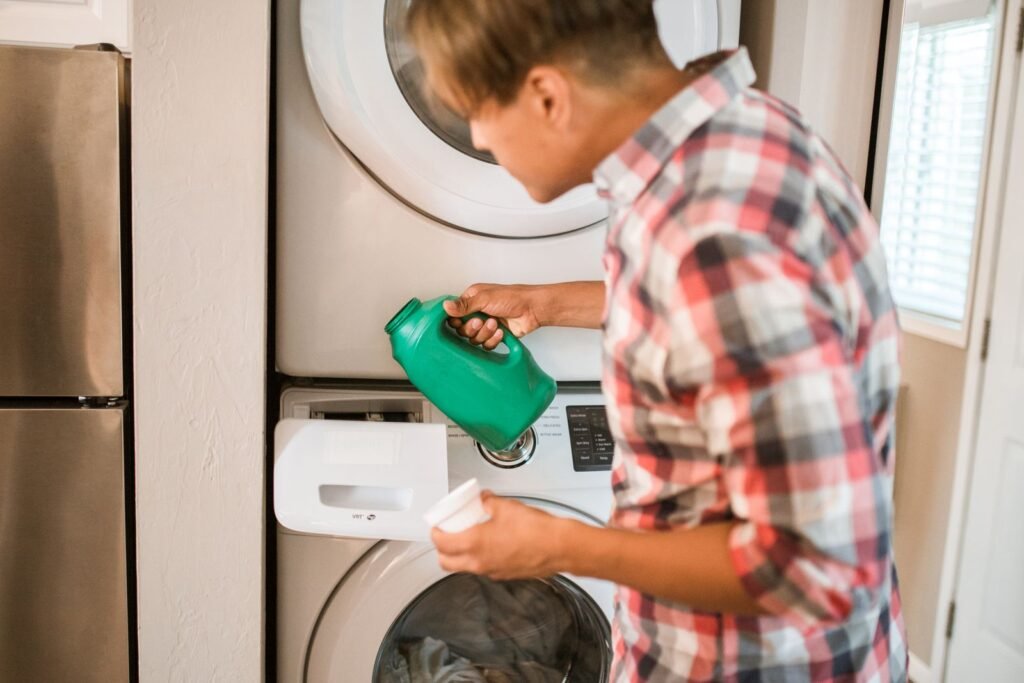
Hardness minerals react with detergent and use part of it up before it reaches your clothes. Some of what's left forms sticky residue in the dispenser drawer, the gasket folds and the bottom of the tub. The result is laundry that comes out dingy and stiff, which we cover in gray, dingy laundry from hard water. Pull out and rinse the drawer regularly, wipe the gasket, and dose detergent for your hardness level.
Does hard water actually shorten a washer's life?
Some softener sellers claim hard water cuts washer life by 30 to 50 percent, but those figures usually come without a published source. What's well established is the mechanism: scale on heaters and screens, residue in the tub, and detergent that works less well. In practice:
- Motors, control boards and bearings fail for other reasons. Hardness isn't a big factor.
- Door seal leaks are more often caused by residue, mildew, debris or tears than scale.
- A washer in hard water can still reach a normal service life if it's cleaned and the screens stay clear.
Softening removes the cause, though you'll still need an occasional clean cycle for lint and mildew. Dosing changes are in softened water and washing machines. If you also see scale on faucets and in the dishwasher, a whole-house unit protects everything; our best water softeners for a family of 4 is a good starting point.
A monthly routine that keeps scale in check
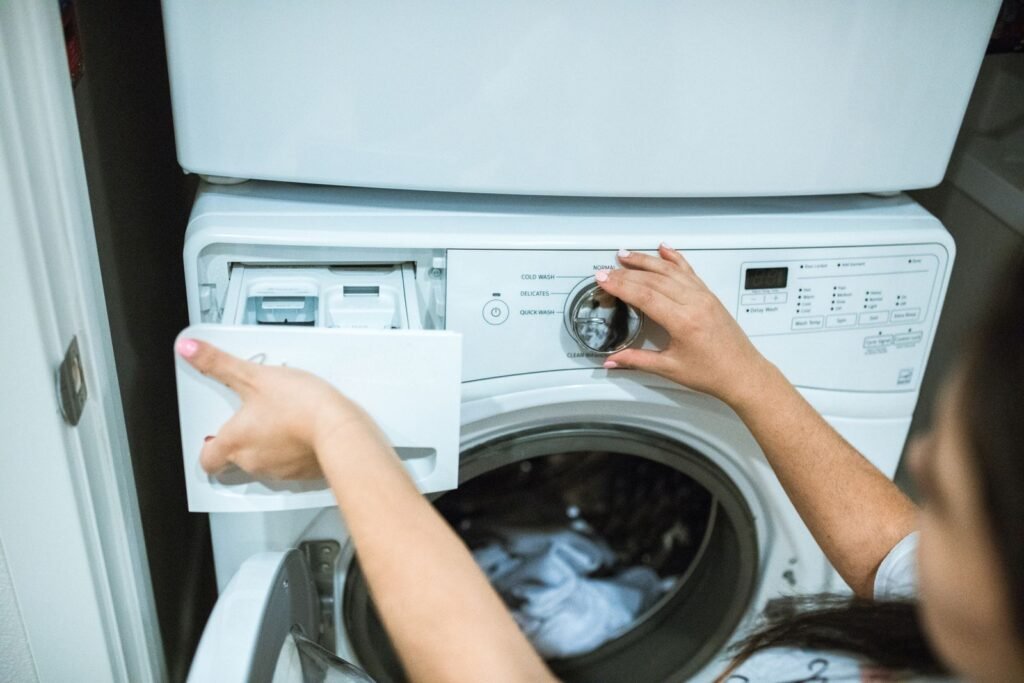
- Monthly: run the clean cycle with a cleaner tablet or descaler, and wipe the door gasket.
- Every few months: pull and rinse the dispenser drawer.
- Once or twice a year: clean the inlet screens and the drain pump filter.
- After each load: leave a front-loader door and drawer cracked open so the drum dries.
FAQ
Can hard water ruin a washing machine?
Rarely on its own. It wears parts down: screens clog, heaters scale up and residue builds in the tub. Monthly cleaning and clear screens keep most washers going.
How do I know if my washer has hard water buildup?
Look for slow filling, longer hot cycles, gray flecks on clothes, a musty smell or white chalky film in the drum or dispenser. Pulling an inlet screen and finding gritty white flakes confirms it.
Is vinegar safe for descaling a washing machine?
Vinegar dissolves scale and is fine for soaking inlet screens. For the drum, many manufacturers recommend their own cleaner or a citric-acid tablet, so check your manual before running vinegar through a cycle.
Do front-loaders or top-loaders handle hard water better?
Neither is immune. Front-loaders are more likely to have an internal heater and a gasket that holds residue, while any washer has inlet screens that clog.
Does a water softener stop washing machine scale?
Yes. A softener removes the calcium and magnesium that form scale, so screens and heaters stay cleaner and you can use less detergent.
Clear screens and soft water stop most of it
The hard water damage washing machine owners deal with is slow and preventable. Check the inlet screens once or twice a year, run a monthly clean cycle, dry the drum between loads, and test your hardness. If it's high, a softener removes the cause instead of treating symptoms.