

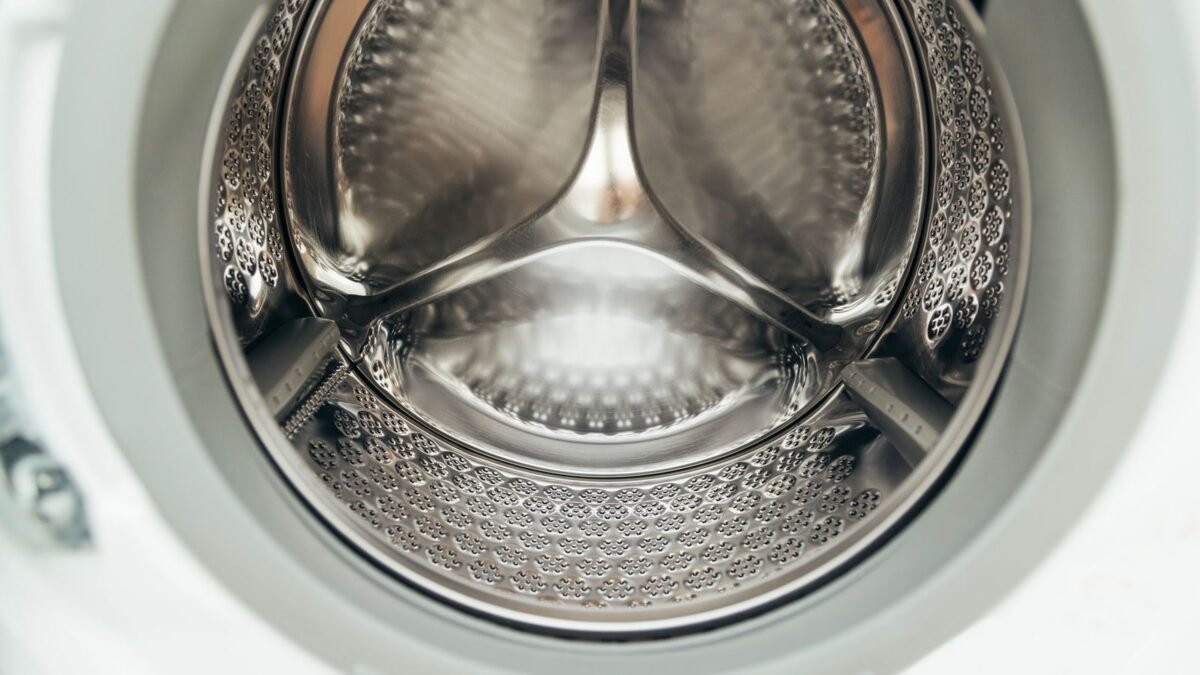
Quick Answer: Affresh Washer Cleaner tablets are the best all-around choice for front and top loaders, since they handle both residue and odor in one monthly tablet. If your real problem is hard water scale, choose a citric-acid cleaner like Lemi Shine Washing Machine Cleaner. If the washer just smells, OxiClean Washing Machine Cleaner is aimed squarely at odor.
Disclosure: As an Amazon Associate, Grains & Gallons earns from qualifying purchases.
You open the front-loader door and there's that smell: damp basement, maybe a little sour. Or the drum is fine, but your clothes come out stiff and there's a chalky line along the inside of the detergent drawer. Both send people searching for a washing machine cleaner. They're different problems, though, and the best cleaner for one is not always the best for the other.
In this guide
Smell vs. scale: what's really in your washer
Washers collect two kinds of buildup, and hard water feeds both.
Biofilm and residue. This is a slimy mix of undissolved detergent, fabric softener, body oils and lint. It hides in the door gasket, under the drum, and in the drawer. Bacteria and mold live in it, and that's what you smell. Hard water makes this worse, because minerals react with detergent and leave more residue behind.
Mineral scale. This is calcium carbonate that builds up on the heating element (if your washer has one), in the drum perforations and in the valves. It doesn't smell, but it makes heating less efficient, can trigger error codes and holds onto residue like a sponge.
| What you notice | Likely cause | Cleaner type that fits |
|---|---|---|
| Musty or sour smell, black spots on gasket | Biofilm, mold | Oxygen/odor cleaner (OxiClean, Tide, Affresh) |
| White crust in drawer or on drum, stiff laundry | Mineral scale + residue | Citric-acid descaler (Lemi Shine, Glisten) |
| Both | Both, usually | Descaler first, odor cleaner a week later |
| Heater or fill error codes | Scale on parts | Descaler, then check the manual |
That last row is the one people miss. If your washer is throwing heater or fill errors, see our guide to how hard water damages washing machines before you assume a part has failed.
How we narrowed it to five
We looked for cleaners sold under their own name on Amazon (not unbranded tablets), with clear instructions for both HE front loaders and top loaders. Then we sorted them by what each label says it does, either odor and residue or limescale, so you can match the cleaner to your problem. Owner reviews helped us flag recurring complaints, like tablets that don't fully dissolve in some top loaders. We haven't run them in our own machines.
Five cleaners, matched to the problem
Affresh Washer Cleaner: our default recommendation
Affresh comes from Whirlpool and is probably the cleaner most appliance repair people mention by name. This listing is a 6-count box of tablets. The routine is one tablet a month on the clean-washer or hottest cycle with the drum empty. It's designed for both front and top loaders, including HE models.
Why it's our top pick: it covers the most common problem, residue that turns into odor, and it's easy enough that people actually stick with the monthly routine. In hard water it helps, but if you can see real white crust, a citric-acid cleaner will do more.
The catch: in some top loaders with a short cycle, a tablet may not fully dissolve. Drop it in once the drum has started filling with hot water.
Lemi Shine Washing Machine Cleaner: the one for hard water scale
Lemi Shine uses citric acid, which dissolves calcium carbonate scale and helps keep it from settling back onto parts. It's EPA Safer Choice certified, plant-based and biodegradable, and Lemi Shine says to use it monthly. This listing is an 8-pack that also comes with machine wipes for the gasket and drawer. You'll need those wipes, because most of the odor lives in places the wash water doesn't reach well.
If your problem is limescale, chalky drawers, crust around the drum, or towels that come out stiff no matter what detergent you use, this is the cleaner we'd start with. For a step-by-step, see our guide to descaling a front-load washer.
The catch: citric acid isn't a disinfectant. If you have black mold spots on the gasket, follow up with an odor cleaner or scrub the gasket separately.
Glisten Washer Magic: liquid strength for a washer nobody's cleaned
Glisten is a 12 oz liquid cleaner and deodorizer. A full bottle poured into an empty drum gives you a heavier first treatment than a single tablet. Its sister product for dishwashers has a strong following for limescale, and Washer Magic is aimed at the same mineral-plus-odor combination.
Use it for a used washer you just bought, a rental, or a machine that's been sitting. After that, switch to monthly tablets.
The catch: one bottle equals one cleaning, so it's not the cheapest way to keep a washer clean month after month.
OxiClean Washing Machine Cleaner with Odor Blasters: smell first
This 4-count pack is OxiClean's machine cleaner with "Odor Blasters" in the name, which tells you its focus. Oxygen-based cleaners do a good job breaking down organic gunk, which is usually what's causing a musty front loader.
If your washer smells but you don't see scale, this is probably all you need. Pair it with leaving the door and drawer open between loads, which matters more than any cleaner for front-loader odor.
The catch: it's not a descaler. In very hard water, scale will keep building unless you also use something acidic now and then.
Tide Washing Machine Cleaner: if you're a heavy detergent user
Tide's cleaner comes in a 24-count tablet pack, which Tide says is a year of washer care at its recommended rate of one to two tablets twice a month. You drop a pre-measured tablet into the empty washer and run the recommended cycle. It's here because one of the biggest sources of washer gunk is too much detergent and liquid fabric softener, and Tide's tablet is designed to clear away that odor-causing residue.
If you've been increasing the dose to fight hard water, a residue cleaner every month or so makes sense. That's especially true if you use fabric softener, which coats the drum along with your clothes.
The catch: like OxiClean, it's mainly a residue and odor cleaner. Don't expect it to remove thick limescale.
Front loaders and top loaders need slightly different care
Front loaders smell more because the door seals airtight and the gasket holds water. Wipe the gasket fold after the last load of the day, leave the door cracked open, and pull the detergent drawer out to dry. Monthly cleaner plus those habits fixes most odor problems.
Top loaders (especially older agitator models) handle odor better, but scale builds where you can't see it, under the agitator and inside the outer tub. A citric-acid cleaner every couple of months is worth it in hard water.
If you've installed a water softener, the routine changes: there's less scale, but over-dosing detergent becomes easier, which creates more residue. Our article on softened water and washing machines explains how to cut detergent once your water is soft.
What not to pour into your washer
A few popular hacks do more harm than good.
- Bleach plus vinegar. Never in the same cycle. Combining them releases chlorine gas. If you use both, run them on separate cycles with a rinse in between.
- Straight vinegar every week. An occasional vinegar rinse is fine, but repeated heavy doses can be hard on rubber gaskets and hoses over time. Some manufacturers advise against it. A labeled washer cleaner, used as directed, is the safer routine.
- Dishwasher tablets. They're formulated for a different machine and can oversuds in a washer. Use products made for washers.
- More detergent to "clean" the washer. This adds to the residue problem you're trying to fix.
When a cleaner isn't the real fix
If the smell comes back within a week of a cleaning cycle, check these before buying another box:
- The drain pump filter. Most front loaders have a small access door near the bottom front. Lint, coins and hair trap water there, and it stinks. Put a towel down, drain it and clear it out.
- The drain hose. If it's pushed too far down the standpipe, dirty water can siphon back into the tub.
- The detergent drawer cavity. Pull the drawer out completely and look up into the housing. Mold often grows on the ceiling of that cavity, where no cleaner reaches.
- Too much detergent. In HE washers, excess suds cushion the clothes and leave residue behind. If you see suds during the final rinse, cut the dose.
And if your washer has a heater that's slow to warm up or throws errors, scale on the element may be the cause, not a bad part. Clean first, then call for service.
A 90-day routine for hard water homes
- Monthly: one odor/residue tablet (Affresh, Tide or OxiClean) on the hottest clean cycle, drum empty.
- Every third month: swap that month's tablet for a citric-acid descaler (Lemi Shine) or a bottle of Glisten.
- Weekly: wipe the gasket and leave the door open. Run a hot wash once a week if you mostly wash cold.
- Never: mix bleach with an acid cleaner in the same cycle. Run them at least one cycle apart.
If your clothes are still stiff after you've cleaned the machine, the issue is in the wash water, not the drum. Our guide to laundry that feels stiff after washing covers the detergent and dosing side of the problem.