

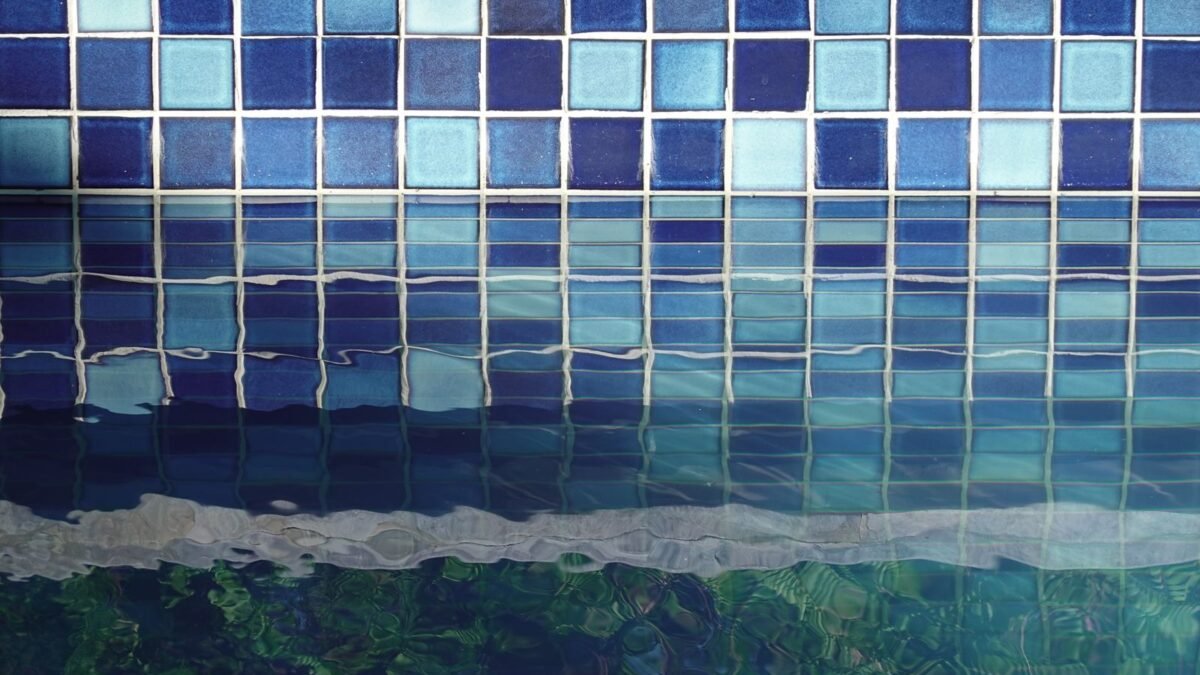
Quick Answer: To remove calcium buildup on pool tile, first drip a little scale remover, diluted muriatic acid or vinegar on the crust. If it fizzes, it's calcium carbonate: lower the water a few inches, use vinegar for light film or a scale remover gel and a nylon brush for heavier crust, and use a wet pumice stone only on glazed ceramic tile (never glass). If it barely reacts, it's calcium silicate, which usually needs professional bead blasting. Then bring pH, calcium hardness and alkalinity back into range so it doesn't come back.
Calcium buildup on pool tile is the white or gray band that appears along the waterline, usually after the first hot summer. Water evaporates, you top off with more hard water, the calcium concentrates, and the warm tile at the surface is exactly where it comes out of solution. The longer it sits, the harder it gets.
How you remove it depends almost entirely on which of two kinds of scale you have. Spend two minutes finding out before you buy anything.
In this guide
- Is it carbonate or silicate? Run the fizz test first
- What puts the white crust on your waterline
- Light film: start with vinegar and a soft brush
- Heavier carbonate: gels, diluted acid and the right tool for your tile
- Calcium silicate means a pro and media blasting
- Pool chemistry numbers that keep tile clean
- Hard fill water and the habits that stop it returning
- FAQ
- Test, scrub, then fix the water that made it
Is it carbonate or silicate? Run the fizz test first
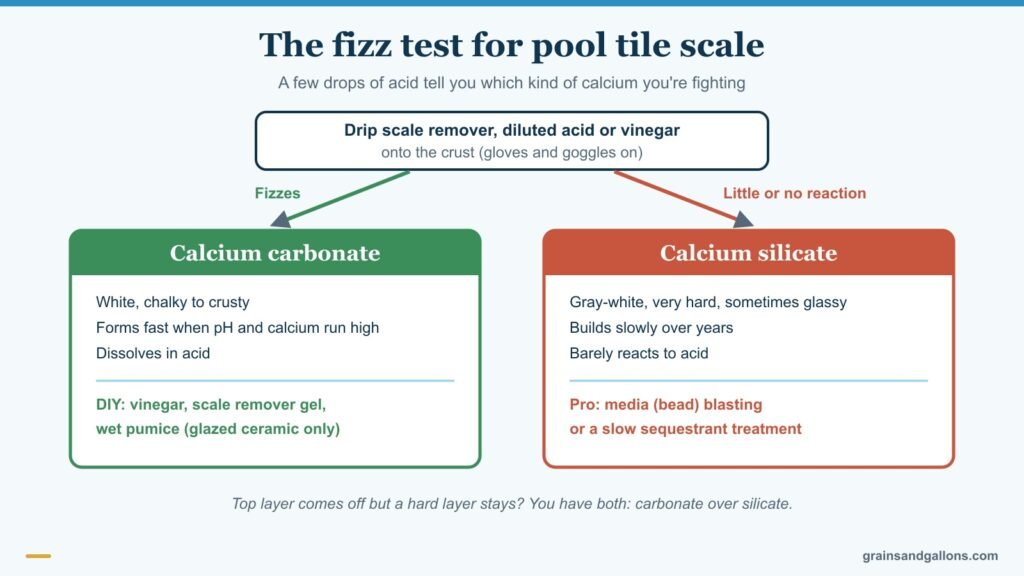
Calcium carbonate is the common one. It's white, chalky to crusty, and forms quickly when pH and calcium run high. It dissolves in acid.
Calcium silicate is the stubborn one. It's often gray-white, very hard, sometimes glassy, and builds slowly over years. It barely reacts to acid.
The test: drip a little pool-grade scale remover or diluted muriatic acid (or white vinegar, which reacts more slowly) onto a spot of scale. Wear gloves and eye protection. A few drops won't upset your pool chemistry.
- Bubbles and fizzing: carbonate. You can probably handle this yourself.
- Little or no reaction: silicate, or carbonate sealed under a silicate layer. Expect professional help.
Many pools have both, with softer carbonate on top of a harder silicate layer. You'll find out when the top comes off easily and something stubborn stays behind.
What puts the white crust on your waterline
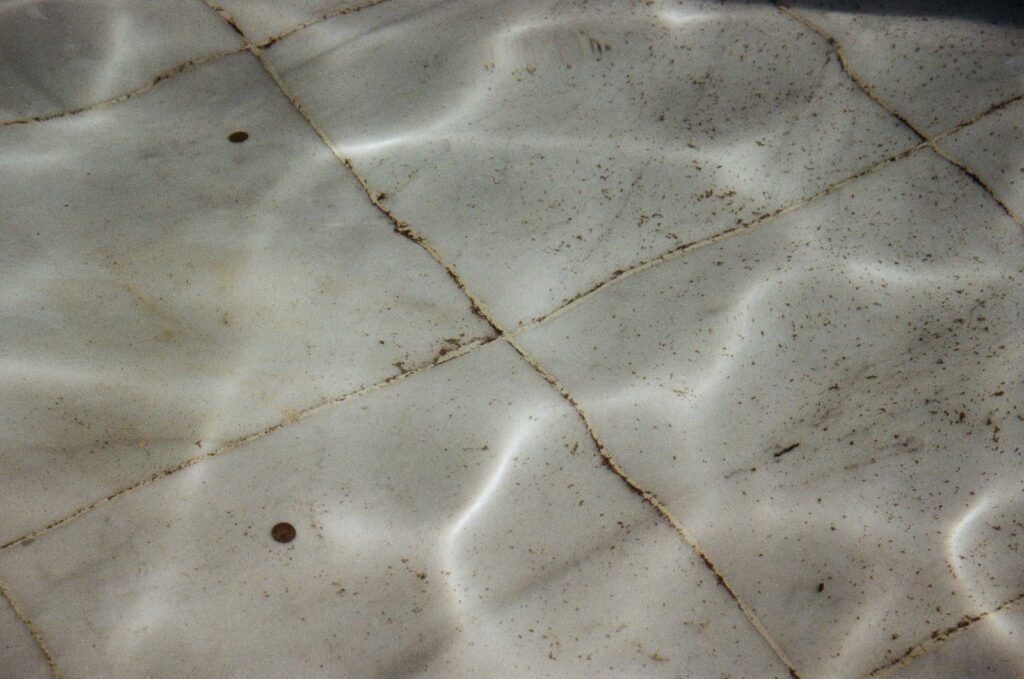
Scale forms when the water holds more calcium carbonate than it can keep dissolved. Four things push it over the edge:
- High pH. Above about 7.6, calcium carbonate becomes less soluble and drops out. This is the fastest route to crust.
- High calcium hardness and alkalinity. More dissolved calcium and more carbonate give the reaction more raw material.
- Evaporation. Water leaves, minerals stay. Every top-off with hard fill water adds more calcium to what's already there.
- Heat. Warm water holds less calcium carbonate than cold, which is why the band is worst on sun-baked tile, spillovers, spas and near heaters. Why hot water causes more scale explains the chemistry in plain terms.
Light film: start with vinegar and a soft brush
If the deposit is thin and powdery and fizzed readily, try the gentlest option first.
- Lower the water a few inches below the scale line so you're working on tile you can reach and keeping cleaner out of the pool. Don't drain a pool fully without advice from a pool pro; in some ground conditions an empty pool can lift.
- Spray a 50/50 mix of white vinegar and water on the deposit and let it sit about 10–15 minutes. On a sunny day, rewet it so it doesn't dry out.
- Scrub with a nylon brush or a plastic scraper, then rinse with a hose.
If two rounds of vinegar barely touch it, move up a step instead of scrubbing harder.
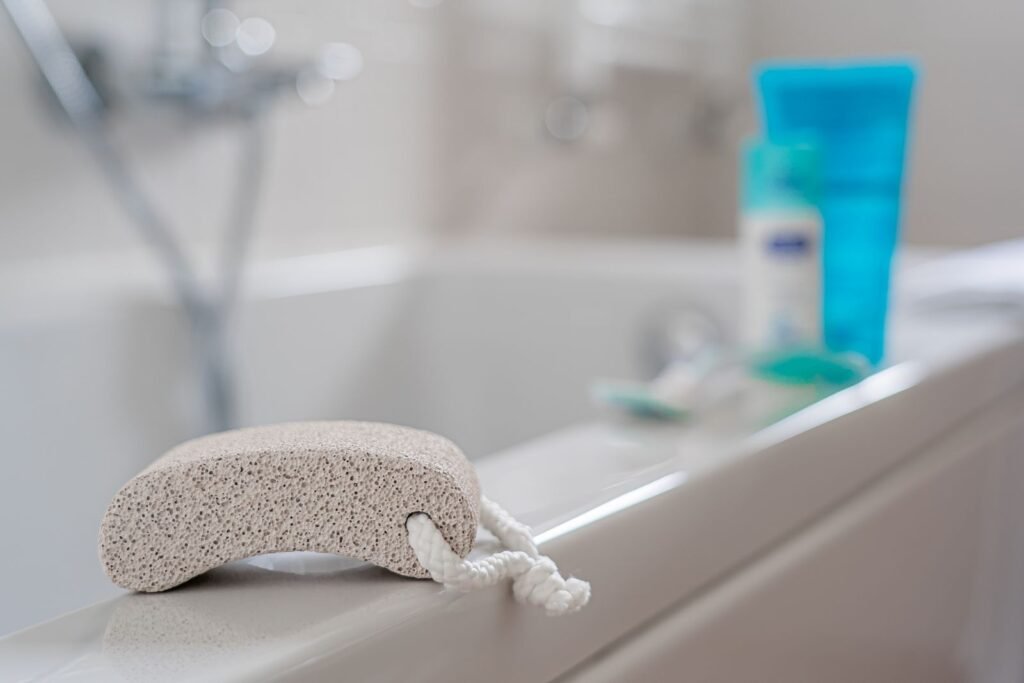
Pumice stones sit between vinegar and acid. Pumice works because it's softer than glazed tile but harder than carbonate scale. Keep both the stone and the tile wet, use light strokes, and test a hidden corner first. On glass tile it scratches, and those scratches are permanent.
Heavier carbonate: gels, diluted acid and the right tool for your tile

Thick, crusty carbonate needs something stronger. Tile scale remover gels are the easiest route: they cling to vertical tile instead of running off. Apply, follow the label's dwell time, scrub with a nylon brush and rinse. Heavy crust may take two or three rounds.
Muriatic acid (hydrochloric acid) works faster but is the most hazardous option. Dilute it exactly as the product label directs, apply it with a brush to small sections, and rinse well.
| Tile type | Safe options | Avoid |
|---|---|---|
| Glazed ceramic or porcelain | Vinegar, tile scale remover gel, nylon brush, wet pumice with light pressure | Wire brushes, dry pumice |
| Glass tile | Vinegar, scale remover made for glass tile, soft nylon brush, plastic scraper | Pumice, any abrasive, metal blades |
| Natural stone (travertine, limestone, slate) | Stone-safe cleaners, a soft brush, professional cleaning | Vinegar and acids (they etch the stone), pumice |
Acid safety: muriatic acid gives off fumes that irritate and can burn the eyes, skin and airways; the PubChem hydrochloric acid record lists its hazards in detail. Wear chemical-resistant gloves and goggles, work in open air, always add acid to water (never water to acid), keep it off metal fixtures, and keep kids and pets away. If that sounds like more than you want to handle, stick to ready-made gels.
When you're done, bring the water back up and retest. The acid will have nudged pH and alkalinity down.
Calcium silicate means a pro and media blasting
Silicate scale generally needs bead blasting, where a pool service blasts the tile with a soft abrasive media designed to remove scale without destroying the tile. It's fast and worth comparing quotes for. Some pros also offer sequestrant-based treatments that slowly soften light silicate over weeks.
Call a pro too when the tile is glass or natural stone and the scale is thick, when DIY rounds keep leaving a hard gray layer behind, or when grout is crumbling under the crust. Ask what media they'll use on your specific tile, especially glass.
Pool chemistry numbers that keep tile clean
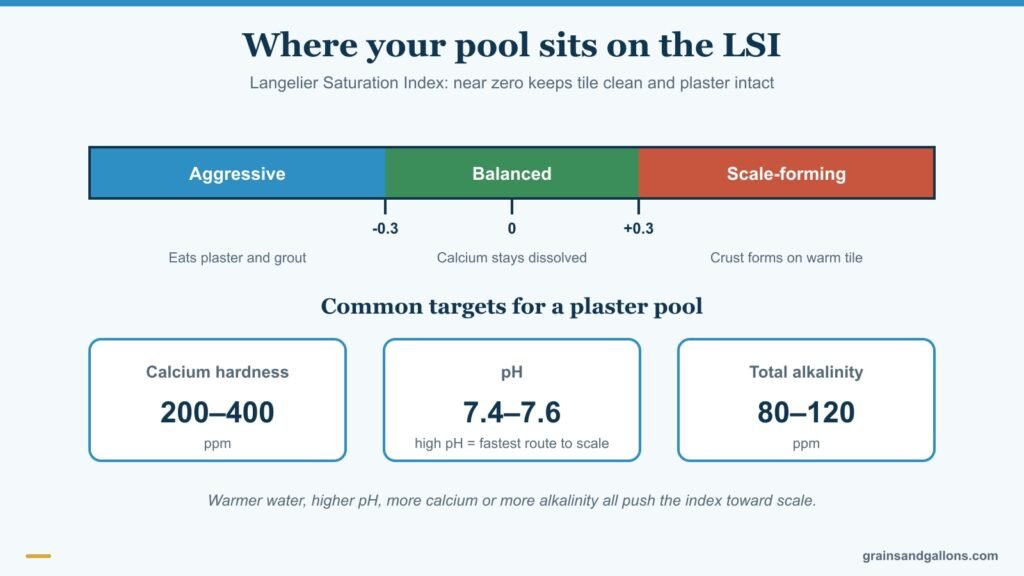
Balanced water fixes the cause. Whether water deposits scale depends on calcium hardness, pH, total alkalinity, temperature and dissolved solids together. Pool pros combine them into the Langelier Saturation Index (LSI); Orenda's LSI explainer walks through how each factor moves it. A reading near zero (roughly −0.3 to +0.3) means balanced. Positive means scale-forming. Negative means the water is aggressive and starts eating plaster and grout.
The ideal ranges Maryland's health department sets for public pools in its water balance parameters are a good home target:
- Calcium hardness: 200–400 ppm (spas: 150–250 ppm)
- pH: 7.4–7.6
- Total alkalinity: 80–120 ppm
Your surface, sanitizer and climate can shift those numbers, so check with your pool builder. Saltwater pools tend to scale more at the cell and wherever pH drifts up.
Hard fill water and the habits that stop it returning
- Test your fill water. If your tap water runs at 15 grains per gallon (about 257 ppm), every top-off adds calcium. A water hardness test kit gives you the number in minutes, and our gpg vs ppm guide converts it if your report uses a different unit.
- Keep pH from creeping up. Test weekly in summer and correct early.
- Use a scale sequestrant in hard-water areas. It helps keep calcium in solution.
- Brush the waterline weekly. Fresh deposits wipe off. Year-old ones don't.
- Cover the pool when it's not in use to cut evaporation and the top-offs that come with it.
- Partially drain and refill when calcium hardness climbs far above target. Dilution is often the only way down.
Should you fill with softened water instead? It's tempting, but very soft water can be aggressive to plaster and grout, and pools need some calcium. Read softened water in pools and hot tubs before trying it. For hard-water spots on tile around the pool deck or in the bathroom, see our tile and grout cleaners for hard water.
FAQ
What dissolves calcium buildup on pool tile?
Acids dissolve calcium carbonate: white vinegar for light film, and tile scale remover gels or diluted muriatic acid for heavier crust. Calcium silicate barely reacts to acid and usually needs bead blasting by a pool service.
Can I use vinegar to clean pool tiles?
Yes, on glazed ceramic, porcelain and glass tile. A 50/50 vinegar and water spray left for 10–15 minutes softens fresh carbonate so you can brush it off. Don't use it on natural stone like travertine or limestone, because its acid etches the surface.
Will a pumice stone scratch pool tile?
Used wet with light pressure, pumice is safe on glazed ceramic and porcelain because it's softer than the glaze. It will scratch glass tile and can damage natural stone, so keep it off both.
Can you pressure wash calcium off pool tile?
A pressure washer can rinse off loosened or fresh deposits, but it rarely cuts through hardened scale on its own, and a narrow, high-pressure stream aimed at grout can blast it out. Soften the scale first with vinegar or a gel, then rinse.
Why does calcium keep coming back on my pool tile?
Usually because pH runs high, calcium hardness is above about 400 ppm, or hard fill water keeps adding minerals as the pool evaporates. Test pH, alkalinity and calcium hardness, bring them into range, use a sequestrant and brush the waterline weekly.
Test, scrub, then fix the water that made it
Calcium buildup on pool tile comes off once you know what you're dealing with: fizz means carbonate you can remove with vinegar, gel or careful pumice work, and no fizz means silicate that's worth a pro. Whichever you have, the job isn't finished until pH, calcium hardness and alkalinity are back in range, or the white band will be back by next summer.
More on hard water and scale: best hot tub scale removers for spa shells and jets that scale faster than the pool, and why hot water causes more scale.