

Quick Answer: If your water smells like gasoline, diesel, heating oil or solvent, treat it as contamination until a lab says otherwise. Stop drinking and cooking with it today, and keep showers short with a fan running or a window open. Then rule out an indoor source (a dry drain, fresh paint, new plastic pipe) and get the water tested for volatile organic compounds (VOCs) at a state-certified lab. Call your local health department or state environmental agency: they handle fuel leaks and can often help with testing.
Most water odors are a nuisance. This one isn't. When your water smells like gasoline or chemicals, the compounds involved, such as benzene, are ones you don't want to drink or breathe. Wisconsin's drinking water program puts it bluntly in its gasoline odor fact sheet: if you can smell gasoline, it's probably present above health standards, so stop drinking the water until it's tested. "It's faint" doesn't mean "it's fine."
In this guide
- What to do today when your water smells like gasoline
- Rule out an indoor source before you panic
- How fuel gets into a well
- Fuel smell without fuel: iron bacteria
- Order a VOC test, not a basic kit
- If the lab confirms fuel or solvents
- A clean result still deserves a retest
- FAQ
- Bottled water first, then a certified VOC test
What to do today when your water smells like gasoline
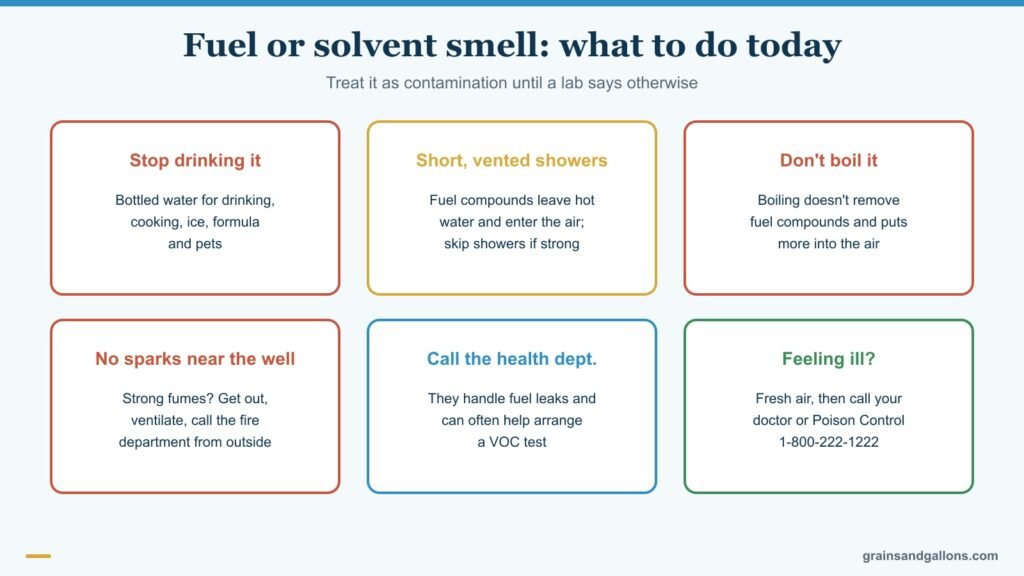
- Switch to bottled water for drinking, cooking, coffee, ice, baby formula and pets.
- Shower briefly and ventilate. Fuel compounds evaporate out of hot water, so you can breathe them in the shower. If the smell is strong, skip showers in the house until you know more.
- Don't boil the water. Boiling doesn't remove fuel compounds and puts more of them in the air.
- Avoid sparks if fumes are strong in the basement or well house. Get out, ventilate, and call the fire department from outside. Don't switch electrical equipment on or off in that space.
- If anyone feels ill (headache, dizziness, nausea), get them into fresh air and call your doctor or Poison Control at 1-800-222-1222.
Rule out an indoor source before you panic
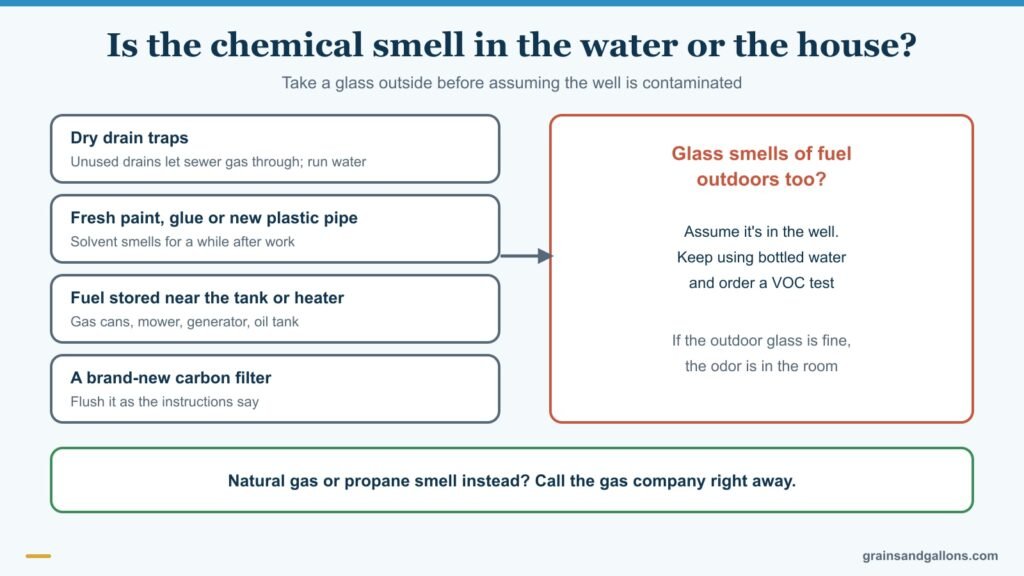
Some "chemical" smells come from inside the house:
- Smell it outside. Fill a clean glass, take it outdoors, and sniff. If it smells fine there, the odor was in the room.
- Dry drain traps. A sink, floor drain or shower that hasn't been used lets sewer gas through, and it can smell chemical. Run water in every drain for a minute.
- Recent work. Fresh paint, varnish, glue, solvent cement on new plastic pipe, or new plastic water line can give off a solvent smell for a while.
- Fuel stored nearby. Gas cans, a mower, a generator or an oil tank near the pressure tank or water heater can make the area smell. That's still a hazard, but it's not your water.
- A new carbon filter. Fresh carbon can smell odd for the first few gallons. Flush it per the instructions.
A natural gas or propane smell is a different emergency: call the gas company. If the cold water still smells like fuel in a glass outdoors, assume it's in the well.
How fuel gets into a well
Fuel compounds can travel a long way through soil and groundwater. Common sources:
- A leaking underground storage tank at a current or old gas station
- A home heating oil tank that leaked or was overfilled
- Spills at farms, auto shops, or along roads and railways
- Filling a generator or mower next to the wellhead
- A damaged well cap or casing that lets surface runoff in
UGA Extension's guide to well water odors also lists discharge from nearby factories or landfills and agricultural runoff, and says petroleum or solvent odors should always be taken seriously. Seasonal changes in the water table can bring an old spill into a well that tested clean for years; why well water chemistry changes explains how.
Fuel smell without fuel: iron bacteria
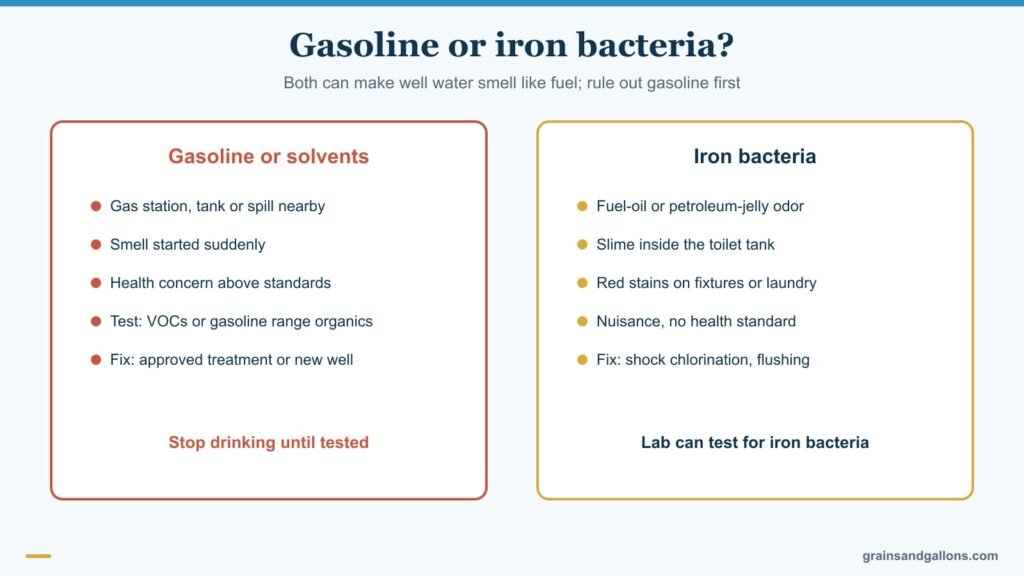
Not every petroleum-like odor is fuel. Wisconsin's fact sheet notes that iron bacteria can make well water smell like fuel oil or petroleum jelly. Clues are slime on the inside of the toilet tank and red stains on fixtures or laundry. Iron bacteria are a nuisance with no health standard, and they're treated with shock chlorination and flushing. See our guide to iron bacteria in well water.
Rule out gasoline first, though. Don't shock-chlorinate a well that might have fuel in it, and keep using bottled water until the lab results are back.
Order a VOC test, not a basic kit
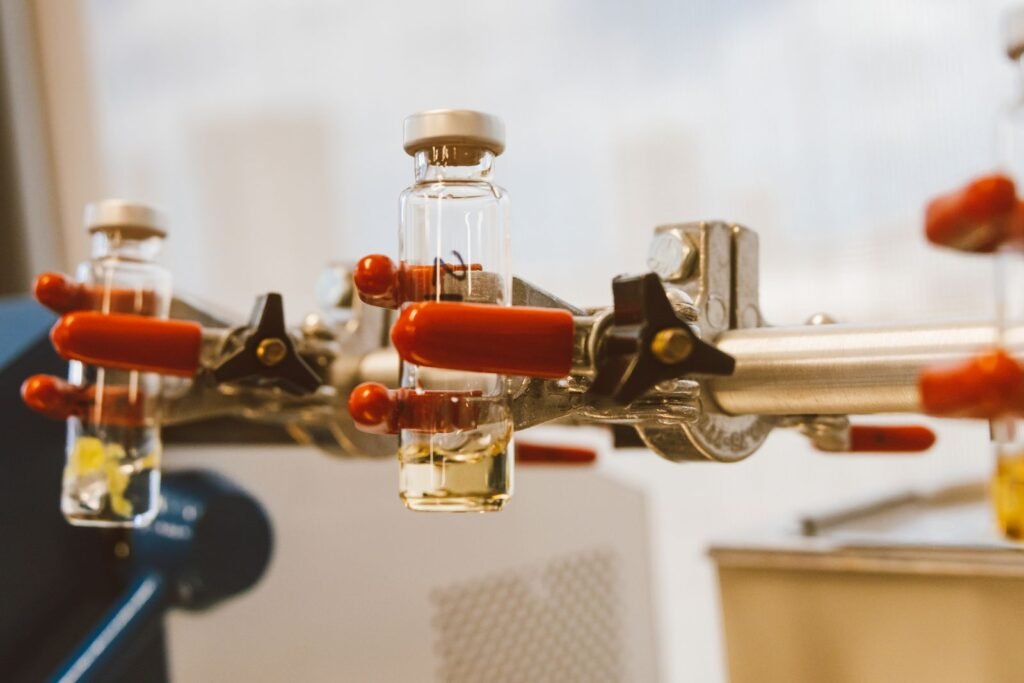
A general well test for bacteria, nitrates, hardness and metals won't find fuel. You need a VOC test from a certified lab. Labs commonly use EPA Method 524.2 or a similar VOC panel, which covers benzene, toluene, ethylbenzene and xylenes (BTEX) plus many solvents. Ask for gasoline range organics too, and ask whether they test for MTBE, a gasoline additive that moves easily in groundwater.
- Call your county or state health department first. In many states they'll come out for a suspected fuel leak, and testing may be free or reduced in cost.
- Use a state-certified lab. VOC samples need special vials, filled with no air bubbles and kept cold, so follow the lab's instructions exactly.
- Mail-in kits. Some include a VOC panel; our roundup of the best well water test kits notes which go beyond basic strips. Strips can't detect fuel.
The EPA's private well pages link to state well programs and certified labs. When results come back, how to read a well water lab report explains detection limits, MCLs and units.
If the lab confirms fuel or solvents
Report it. A confirmed fuel contaminant should go to your state environmental agency. If a nearby leaking tank is the source, the owner may be responsible for cleanup and for providing treatment or a new water supply, and some states have funds for well replacement when standards are exceeded. Keep copies of everything.
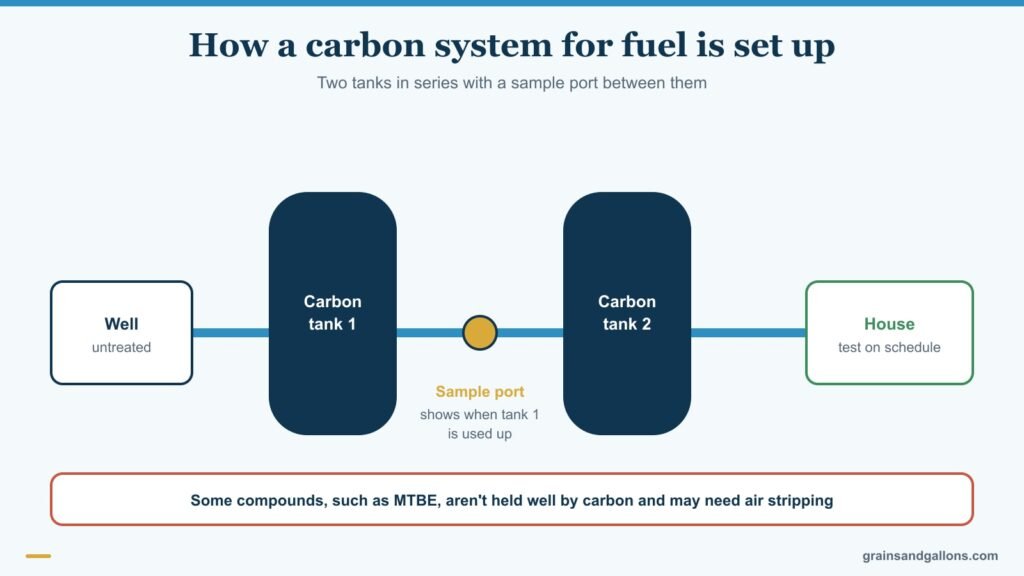
Treatment depends on the compound and the level. Activated carbon is the standard treatment for many VOCs, including BTEX. Fuel systems are usually larger than a taste-and-odor filter and often use two tanks in series with a sample port between them, so a breakthrough is caught before it reaches the house. MTBE isn't held well by carbon and may need air stripping. A tank like those in our list of the best whole house catalytic carbon filters can be part of the fix, but only after testing tells you what you're treating. In some cases a deeper casing or a new well is the answer. Have a water treatment professional or the state agency sign off on the design.
Keep testing. Test the treated water on the schedule the lab or agency recommends. How often to test well water gives a baseline for everything else.
A clean result still deserves a retest
If the test comes back clean but you still smell something, don't drop it. VOC levels can change with the water table, so retest in a few months or after heavy rain. Recheck the indoor sources, and keep fuel and chemicals away from the wellhead. Your state well program can give you the required setback distances.
FAQ
Is it safe to shower if my water smells like gasoline?
Keep showers short with the fan on, or skip them if the smell is strong. Fuel compounds evaporate from hot water, so you breathe them in the bathroom as well as absorb them. Use another water source until a VOC test comes back.
Will a carbon filter make gasoline-tainted water safe?
Not on its own and not without testing. Carbon removes many VOCs, but systems for fuel are sized to the contaminant and level, usually with two tanks and a sample port. Some compounds, such as MTBE, need other treatment.
Who pays to fix a well contaminated by a fuel leak?
If a nearby tank owner is responsible, they may have to pay for cleanup and replacement water. Many states also run funds for this. Report the contamination to your state environmental agency and keep all test results and receipts.
Can iron bacteria make water smell like gasoline?
Yes. Iron bacteria can give well water a fuel-oil or petroleum-jelly smell, often with slime in the toilet tank and red stains. Rule out gasoline with a VOC test first, because the two need very different fixes.
Bottled water first, then a certified VOC test
When your water smells like gasoline or chemicals, switch to bottled water today, check the indoor sources, and call your health department. A VOC test from a certified lab tells you what's really there, and the result decides the fix: carbon in series, a new well, or simply ongoing testing.