


Quick Answer: Here's how to test water for lead at home: let the water sit in your pipes for at least six hours, then catch the very first cold water from the kitchen tap. Screen it with a lead strip kit, like the Watersafe Original kit, or send it to a state-certified lab for an exact number. Call your water utility first, because many test for free.
Disclosure: As an Amazon Associate, Grains & Gallons earns from qualifying purchases.
Lead in tap water comes and goes with how long the water sat, which tap you used, and whether a flake of corroded solder broke loose. A sample from a running faucet can come back clean in a house with a real problem, so how you collect the water matters more than which kit you buy. You can't see, taste or smell lead; the EPA's lead in drinking water page calls testing the only sure way to know.
In this guide
- Where lead gets into tap water
- First-draw, flushed or sequential: which sample sees what
- How to test water for lead at home in five steps
- Strip kit, digital meter or certified lab?
- Reading a lead result in ppb
- Is your service line lead? The scrape and magnet check
- Lead showed up: what to drink and what to fix
- FAQ
- Test the first draw, then confirm with a lab
Where lead gets into tap water
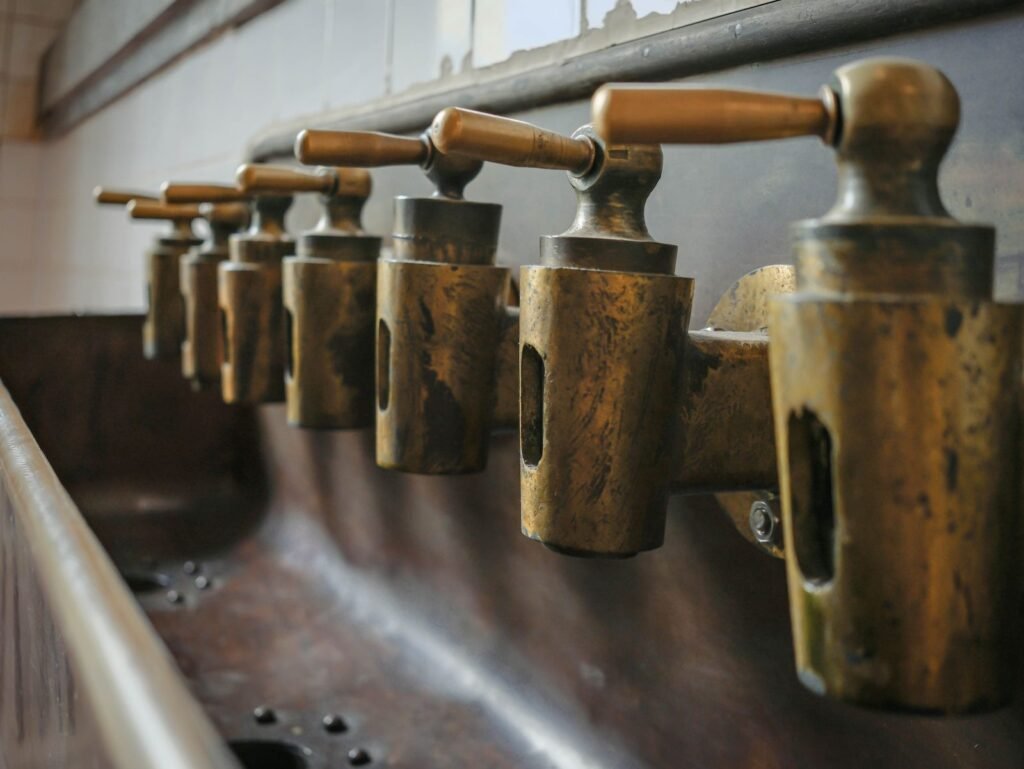
Treated water usually leaves the plant lead-free and picks lead up on the way to your glass:
- A lead service line from the street main, most common in older cities and homes built before 1986.
- Lead solder on copper pipe, banned for drinking water lines in 1986.
- Brass and chrome-plated brass faucets and fittings, the most common source in homes without a lead line.
Standing water and corrosive, low-mineral water pull out more lead. Your utility's Consumer Confidence Report shows its lead sampling and often whether your area has lead lines.
First-draw, flushed or sequential: which sample sees what
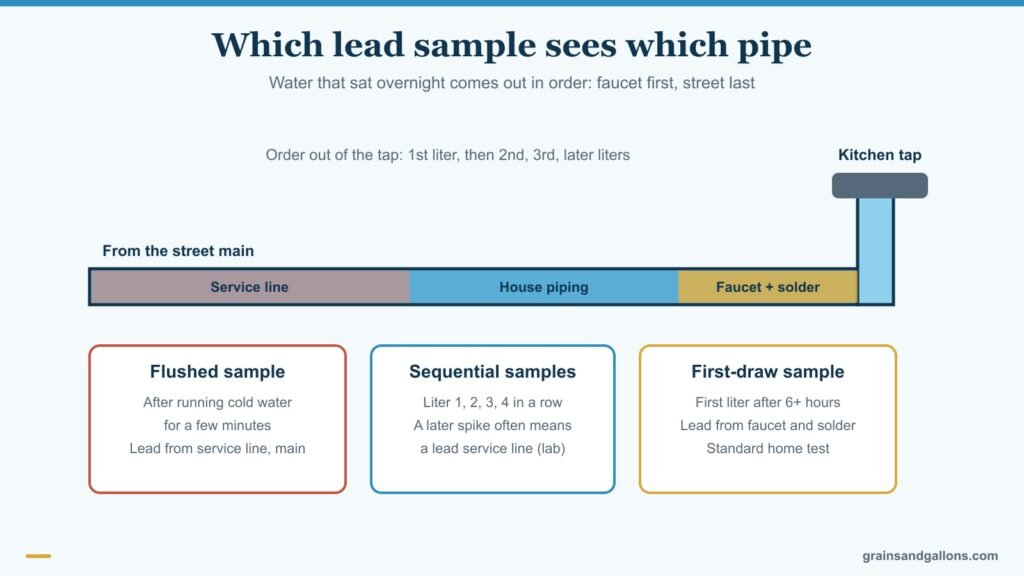
Water leaves the tap in the order it sat: faucet first, street last.
- First-draw (first liter after 6+ hours unused): lead from the faucet, supply lines and nearby solder. The standard home sample, and the worst case most people drink.
- Flushed (after running cold water a few minutes): lead from the service line and main. Still high means the problem is further out.
- Sequential (liter 1, 2, 3, 4 in a row): a lab technique. A jump in a later liter often points to a lead service line.
Taking both a first-draw and a flushed sample tells you far more than one.
How to test water for lead at home in five steps
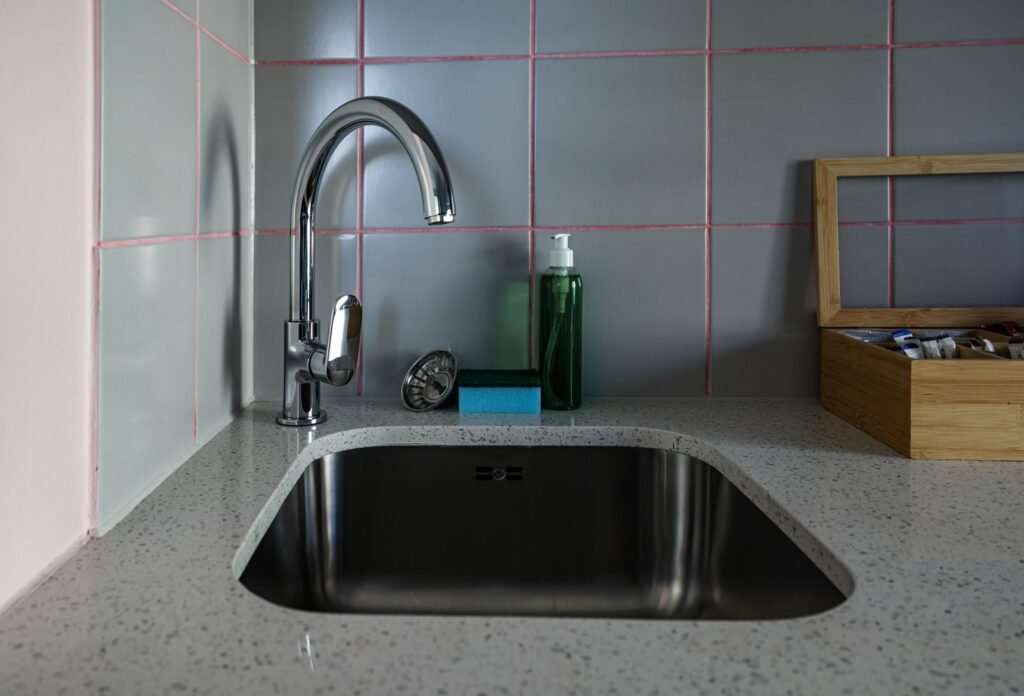
- Pick the tap you drink and cook from, usually the kitchen cold tap.
- Use no water in the house for at least six hours. Overnight is easiest.
- Leave the aerator on unless the lab says otherwise.
- Catch the very first cold water in the bottle or kit cup, filled to the line.
- Cap and label it "first draw, kitchen cold" with the date and time.
Never sample hot water. Hot water pulls more lead from plumbing, which is also why you shouldn't cook or mix formula with it.
Strip kit, digital meter or certified lab?
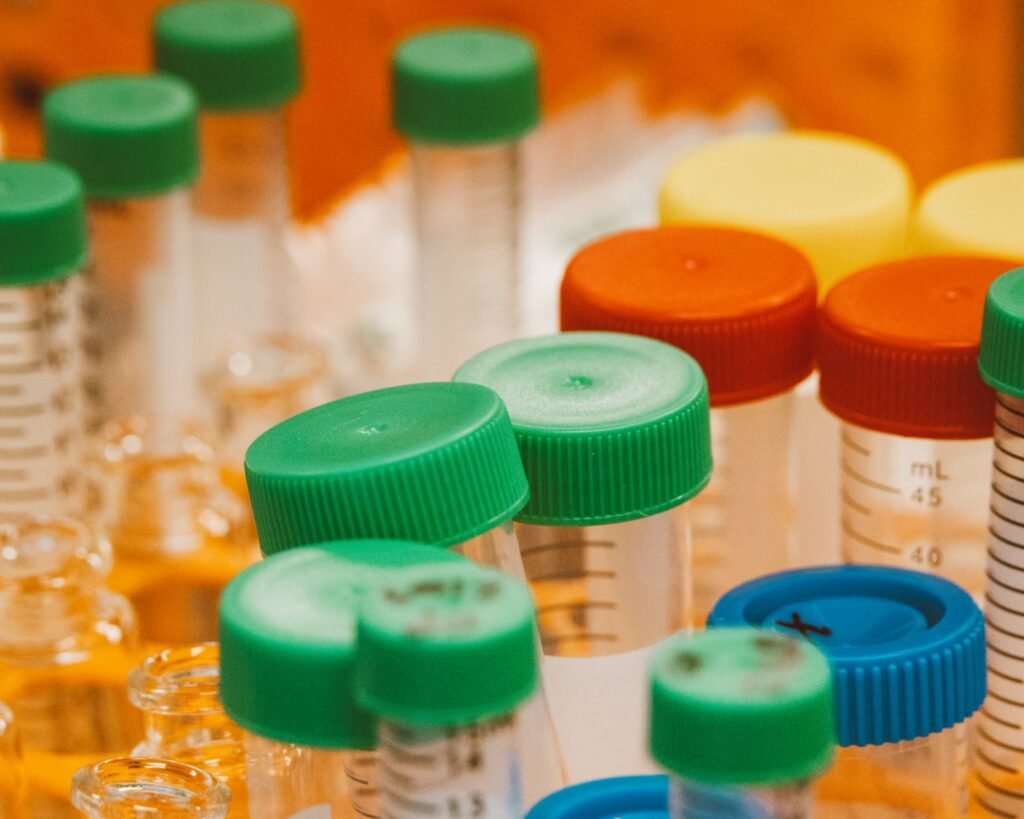
Strip kits change color above a threshold; Watersafe says its lead test detects down to 5 ppb. A positive means get a lab test. A negative is reassuring but not proof, since strips can miss lead flakes.
Digital meters don't detect lead. A few ppb barely moves a TDS reading, as our TDS meter guide explains.
A certified lab reports an actual number in µg/L (same as ppb). The EPA puts costs at about $20 to $100. Our guide to well water test kits covers mail-in lab kits, which work on city water too. Use a lab if a child under six or a pregnant person lives there, the house predates 1986, or a strip was positive.
Reading a lead result in ppb
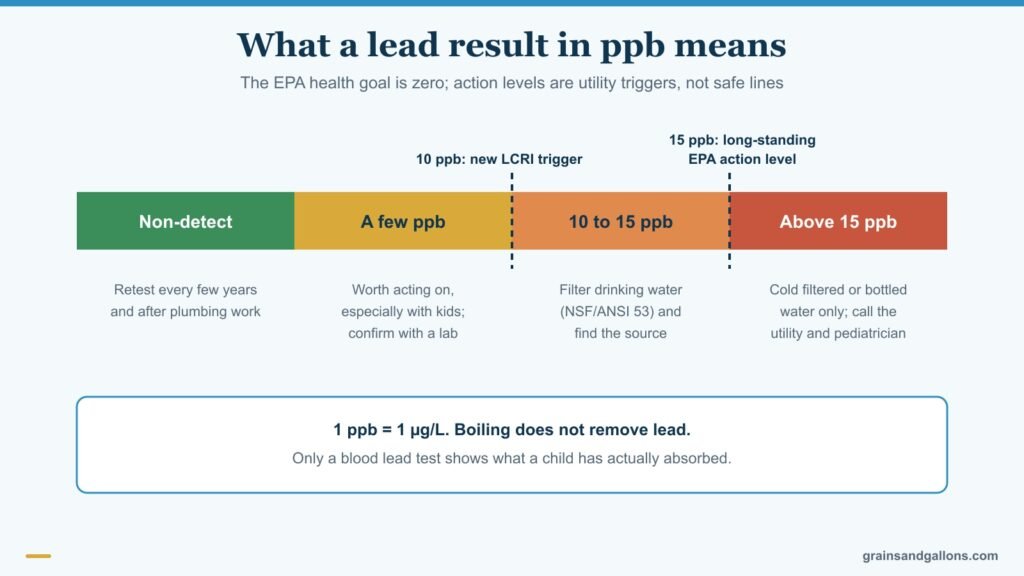
The EPA's health goal for lead is zero. Two other numbers are utility triggers, not safe lines:
- 15 ppb is the long-standing action level.
- The Lead and Copper Rule Improvements lower it to 10 ppb and require utilities to replace lead pipes within 10 years.
At home, anything above a few ppb in a first draw is worth acting on, especially with kids, and a pediatrician's blood lead test shows what a child has absorbed. For "ND" and "<RL" columns, see reading a lab report.
Is your service line lead? The scrape and magnet check
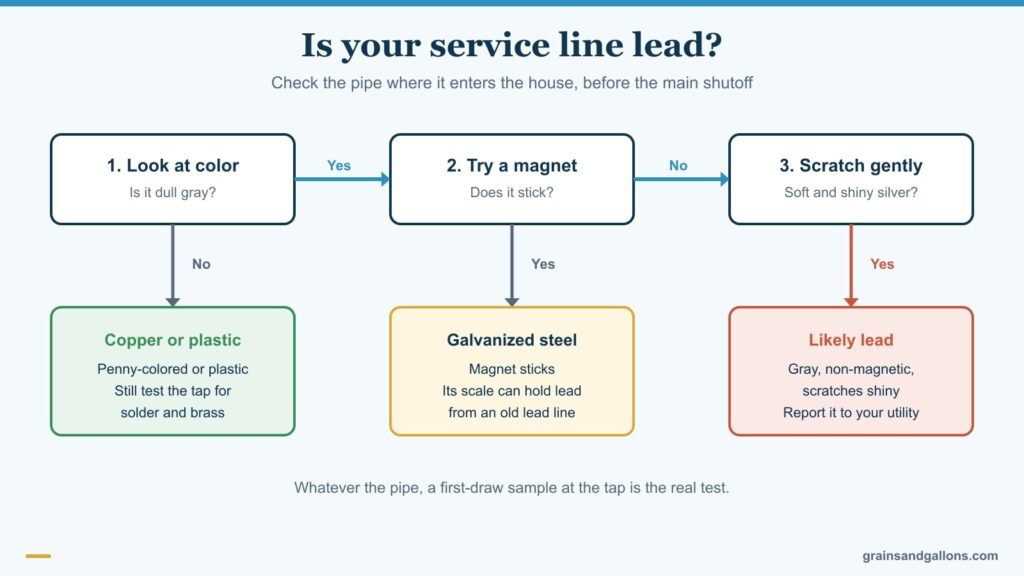
Find the pipe where water enters the house, before the main shutoff.
- Color: copper is penny-colored; lead and galvanized are dull gray.
- Magnet: it sticks to galvanized steel, not lead.
- Scratch with a key: lead is soft and turns shiny silver.
Gray, non-magnetic and shiny when scratched means lead. Report it, since many utilities run replacement programs, and read our note on lead service line work and your softener before the crew comes.
Lead showed up: what to drink and what to fix
- Now: drink and cook with cold filtered or bottled water. Boiling does not remove lead.
- At the tap: use a filter certified to NSF/ANSI 53 for lead, confirmed on the NSF listing. Replace cartridges on time.
- Whole-house: worth it when the lead comes from the service line; see the best whole house filters for lead.
- Permanent fix: replace the lead line and old brass fixtures, then retest about a month later.
FAQ
Are home lead test kits accurate?
As a screen, yes. Strips flag lead above a threshold such as 5 ppb but give no exact number and can miss flakes. Confirm positives with a certified lab.
Can my water utility test for lead for free?
Many can, especially in areas with lead service lines. Call the number on your water bill before you buy a kit.
Does boiling water remove lead?
No. Boiling kills germs but leaves lead behind and slightly concentrates it as water evaporates.
Can a water softener cause lead in water?
A softener adds no lead, but very soft, low-mineral water can be more corrosive to old solder and brass. Homes with older plumbing should test at the tap after installing one.
Test the first draw, then confirm with a lab
That's the whole method for how to test water for lead at home: cold, first-draw water after six hours of standing. A strip kit is a fair first screen; a certified lab gives the number you act on. Retest every few years and after plumbing work, or follow our testing schedule guide.