

Quick Answer: Before lead service line work starts, put your water softener in bypass. Leave it there while the crew works and while you flush the house: cold taps only, aerators off, at least 30 minutes. Then ease the valve back to service and run a manual regeneration so the backwash sends any grit out the drain.
Lead service line work shakes loose lead particles and old scale, and a softener's resin bed sits right in their path. Utility guides, like Concord, Massachusetts' flushing steps, say to bypass the softener before flushing. Here's the order.
In this guide
Prepare the bypass before lead service line work
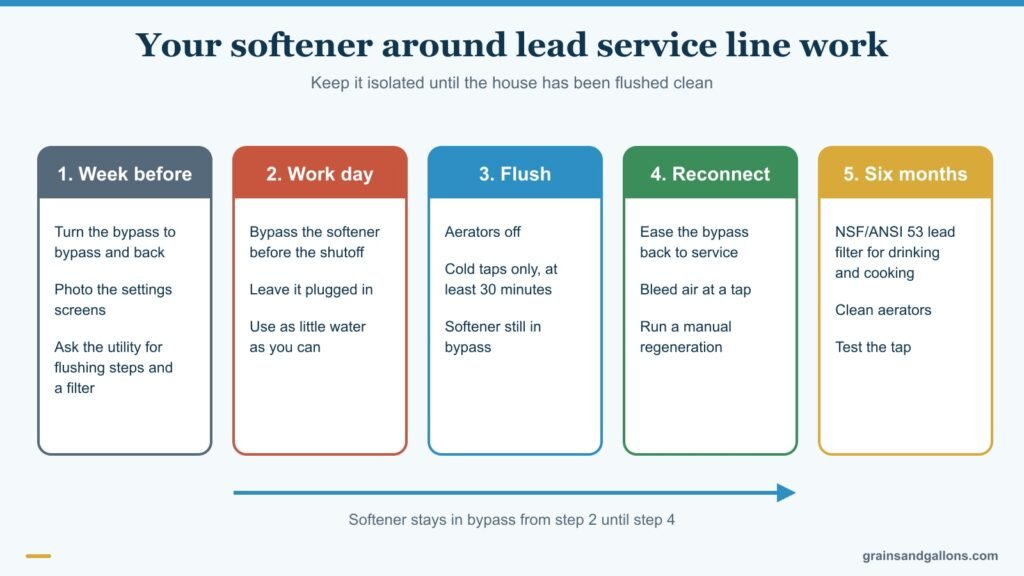
Test the bypass a week ahead. Turn the knob, plungers or handles on the back of the control valve to bypass and back. If it's seized or cracked, replace it before the crew arrives. Our bypass valve picks show which styles fit which valves.
Ask the utility how long the water will be off, whether it has written flushing steps, and whether it hands out a filter.
Photograph the settings screens in case the power gets cut. On the work day, switch to bypass before the shutoff and leave the unit plugged in.
Why loose lead particles don't belong in resin
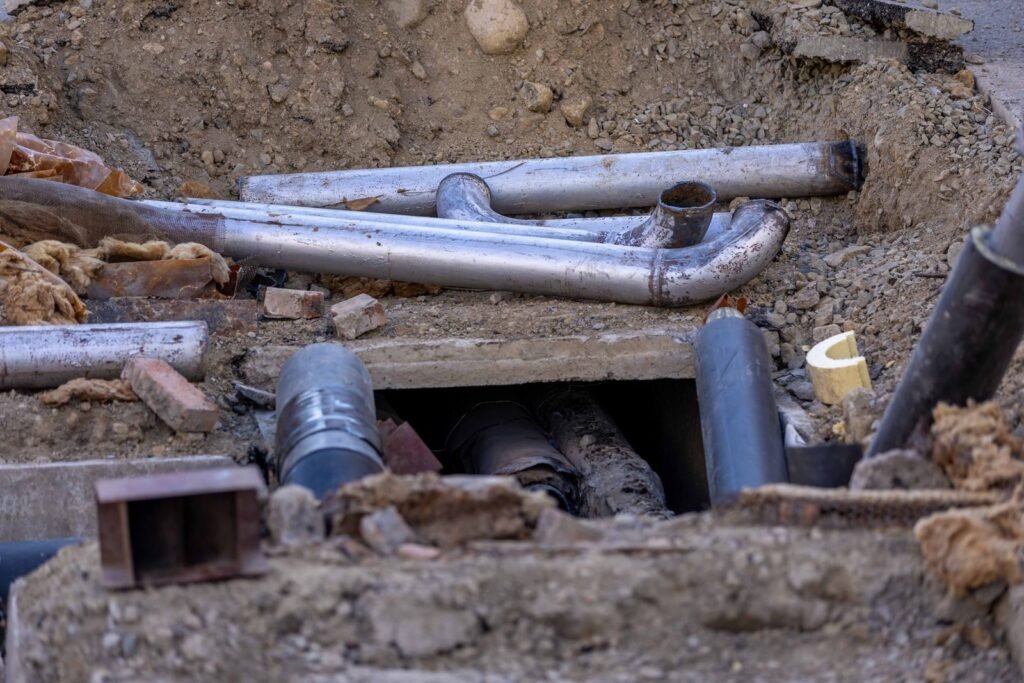
Cutting or pulling an old line breaks off bits of lead and lead-bearing scale. A resin bed acts like a coarse filter: it can trap that debris and slowly release it later. And a standard softener isn't certified to reduce lead.
Sediment can also clog the inlet screen, injector or distributor. If your unit quit after the job, see softener stopped working after plumbing work.
Flush the house with the softener still bypassed
Use your utility's steps if it has them. If not:
- Take the aerator off every faucet and set it beside its faucet.
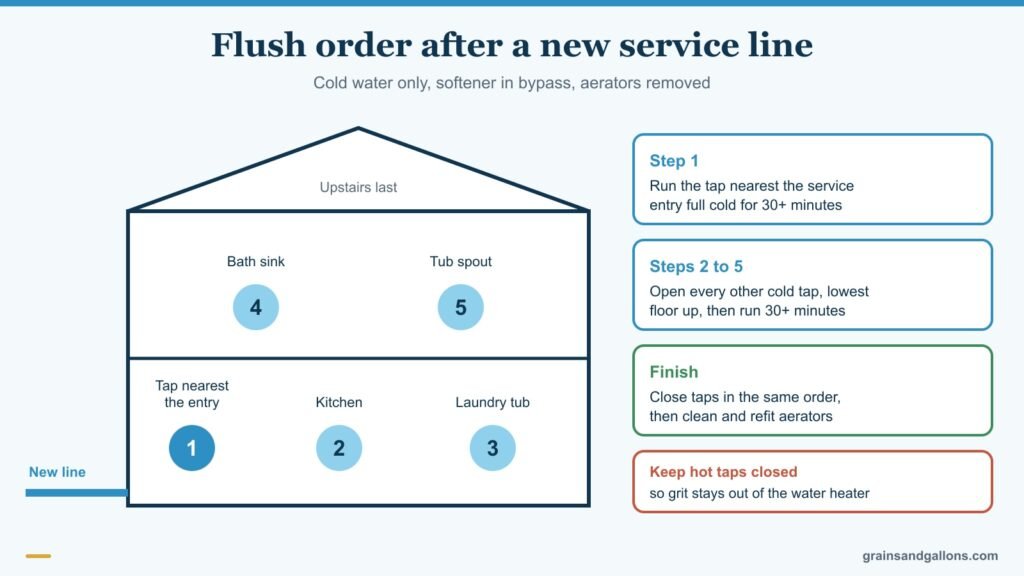
- Run the cold tap nearest the service entry (an outdoor spigot works) at full flow for at least 30 minutes.
- Open every other cold tap, lowest floor first, and run them all for at least 30 more minutes. Flush tubs through the spout.
- Close the taps in the same order. Soak the aerators in white vinegar, rinse and refit them.
Keep hot taps closed so grit stays out of the water heater. Concord also asks owners to repeat the flush every two weeks for three months.
Reconnecting: slow valve, then a manual regeneration
Once the cold water is clear, turn the bypass slowly back to service so the tank fills without a slam. Open a cold tap to bleed out the air. Then start a manual regeneration. Backwash lifts the resin and sends trapped particles to the drain.
Check the ground too. In older homes the metal service line is often part of the electrical ground, and a plastic replacement breaks that path. Have an electrician confirm it, and read softener bonding and grounding for where a jumper goes.
Filter drinking water for six months after
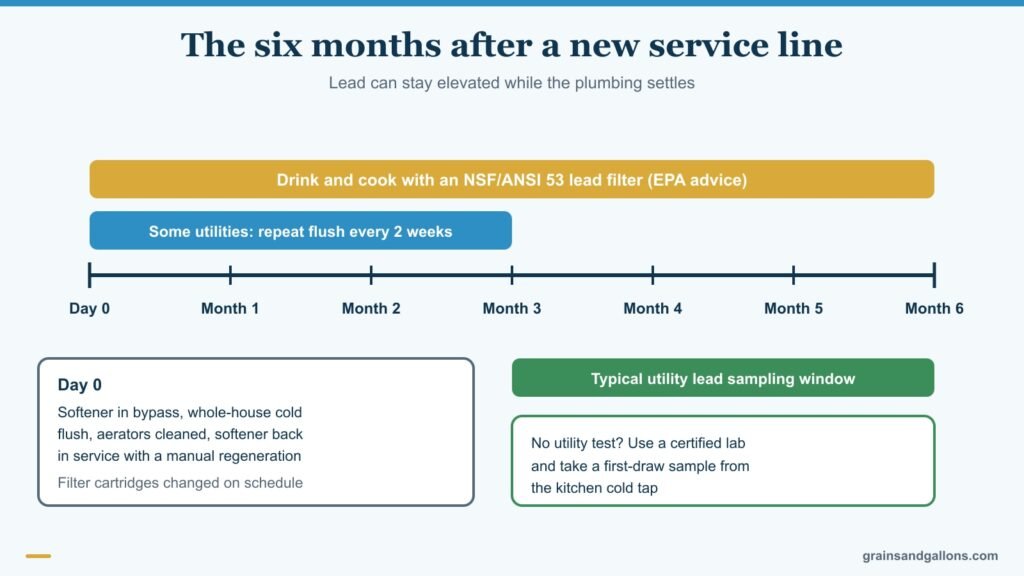
Lead levels can stay high for up to six months as the plumbing settles. The EPA's lead basics cover the health risks, and its certified filter tool finds pitchers and faucet filters certified to NSF/ANSI 53 for lead.
A whole-house lead filter doesn't replace a drinking-water filter. Many utilities test three to six months later; if yours doesn't, see how to test water for lead.
FAQ
Do I have to bypass my water softener during lead service line replacement?
Yes, it's the safe call. Utility flushing guides tell you to bypass or disconnect softeners and filters before flushing, so lead particles and grit don't settle in the resin bed.
Can a water softener remove lead?
Don't count on it. Softener resin can grab some dissolved metals, but home softeners aren't certified for lead. Use a filter certified to NSF/ANSI 53 for drinking and cooking water.
How long should I flush after a lead line is replaced?
A common method is 30 minutes at full cold flow from the tap nearest the service entry, then another 30 minutes or more with every cold tap open. Your utility's steps come first.
What if I forgot to bypass the softener?
Flush the house, then run one or two manual regenerations. If you see low pressure or grit, clean the inlet screen and injector.
Bypass first, regenerate last
For lead service line work, keep the softener out of the loop from the shutoff until the cold taps run clear. Then reconnect slowly, regenerate once to flush the resin, and filter drinking water for six months.