

Quick Answer: Most hard water stains on house siding come from sprinkler overspray. White or gray haze is mineral scale: scrub with diluted white vinegar and a soft brush, then rinse. Orange or brown streaks are iron, which needs an iron or rust stain remover tested on a hidden spot. White powder on brick outside the spray zone is probably efflorescence, so brush it off dry. Then re-aim the sprinkler heads causing the problem.
Look at the shape before the color. Hard water stains on house siding from irrigation have a giveaway pattern: a fan or arc, heaviest at the height where the spray hits, fading above it. If staining runs down from windowsills or gutters instead, the sprinkler may not be the culprit.
In this guide
Read the stain pattern and color first
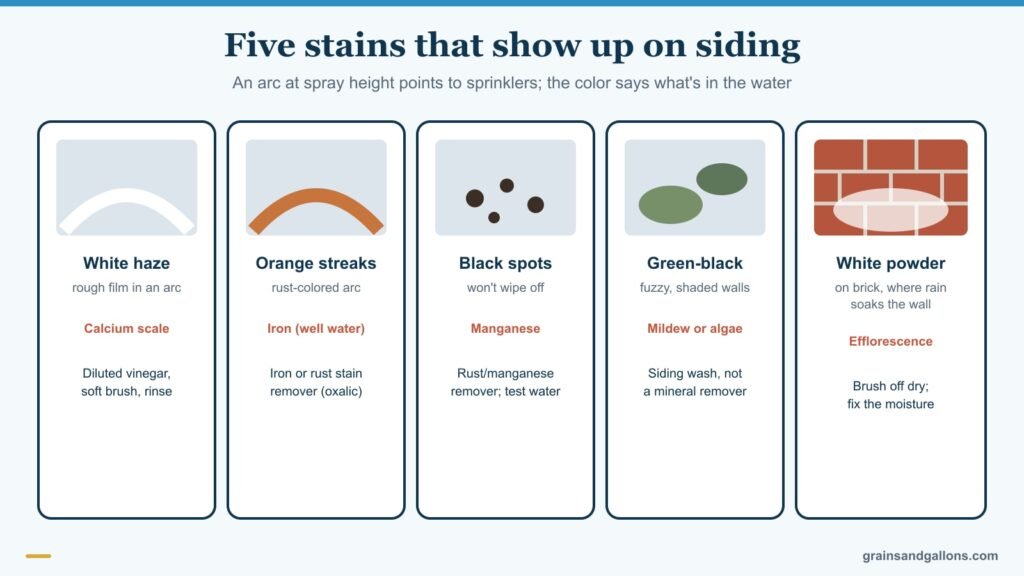
The color tells you what's in the water:
- White or chalky gray haze, rough when dry: calcium and magnesium scale left as water evaporates.
- Orange, rust or brown streaks: iron, usually from well water.
- Black or dark brown spots that don't wipe off: manganese, sometimes mixed with iron. Penn State Extension notes that iron causes reddish-brown staining and manganese black-brown staining on whatever the water touches.
- Green or black fuzzy patches on shaded walls: mildew or algae, a dampness problem rather than minerals.
- White powder on brick or concrete where rain soaks the wall: efflorescence.
On a well, orange or black stains reflect your water chemistry. Our iron test kit picks cover simple kits, and how to test well water for iron explains which levels stain.
Efflorescence looks like scale but comes from the wall
Efflorescence comes from inside the brick or mortar: water carries salts to the surface and evaporates. It appears where rain or a leak soaks the wall, not just in the sprinkler arc, and it's powdery rather than a hard film.
Brush it off dry with a stiff brush. Don't wet it first, or the salts redissolve and soak back in. If it returns, find the moisture source.
Removing hard water stains on house siding, surface by surface
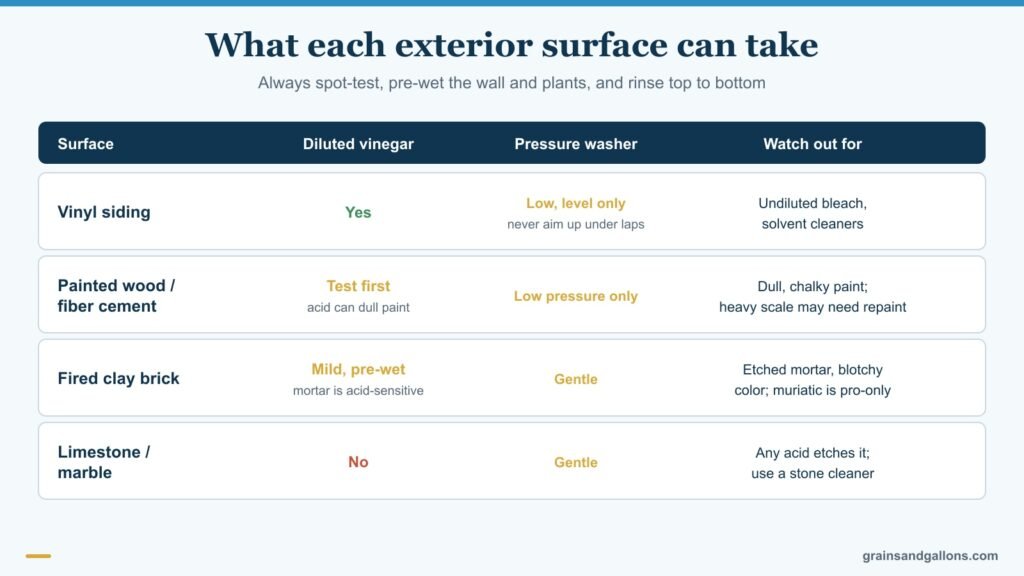
Before you start: test on a hidden spot, wet the wall and the plants below with plain water so they don't absorb cleaner, wear gloves and eye protection, and don't let cleaner dry on the surface. Rinse from the top down.
Vinyl siding
Vinyl tolerates mild acids.
- Rinse the area with a garden hose.
- Spray on a 50/50 mix of white vinegar and water and keep it wet for about 10 minutes.
- Scrub with a soft-bristle brush on a pole, with the grain of the siding.
- Rinse from the top down.
The Polymeric Exterior Products Association's vinyl siding cleaning guidance recommends a soft cloth or soft-bristle brush, warns against undiluted chlorine bleach and solvent cleaners, and says never to aim a pressure washer upward, since that forces water behind the panels. Keep the nozzle level, low pressure and a wide tip.
Painted wood or fiber cement
Paint can dull under acid. Start with plain water and a soft brush, then try diluted vinegar on a small spot and check the finish once dry. If it dulls, switch to a mild detergent wash. Heavy scale on paint may need a repaint more than a stronger cleaner.
Brick and stone
Masonry is where cleaning does more damage than staining.
- Limestone or marble: avoid acids entirely. Vinegar dissolves calcium carbonate, and so does the stone. Use water, a soft brush or a stone cleaner.
- Fired clay brick: more tolerant, but mortar is cement-based and acids attack it. Pre-wet thoroughly, use the mildest product that works, and rinse well.
- Colored or sealed masonry: check with the manufacturer; acids can lighten some colors unevenly.
Muriatic acid on masonry is a pro's tool. It can burn mortar, leave blotches and hurt you. If vinegar won't move the stain, call a masonry cleaning company.
Orange iron streaks need an iron remover, not vinegar
Vinegar barely touches iron. You need a rust or iron stain remover, usually oxalic acid based. Our best rust stain removers include products labeled for vinyl, concrete and masonry; check the label for your exact surface, since some aren't safe on certain stone, paint or metal trim.
Apply, wait the labeled time, scrub lightly and rinse thoroughly, including the plants and soil below. Black spots point to manganese; our manganese stain guide covers it, and the orange well water stain guide covers treating iron at the source.
Re-aim the sprinklers so the stains stop
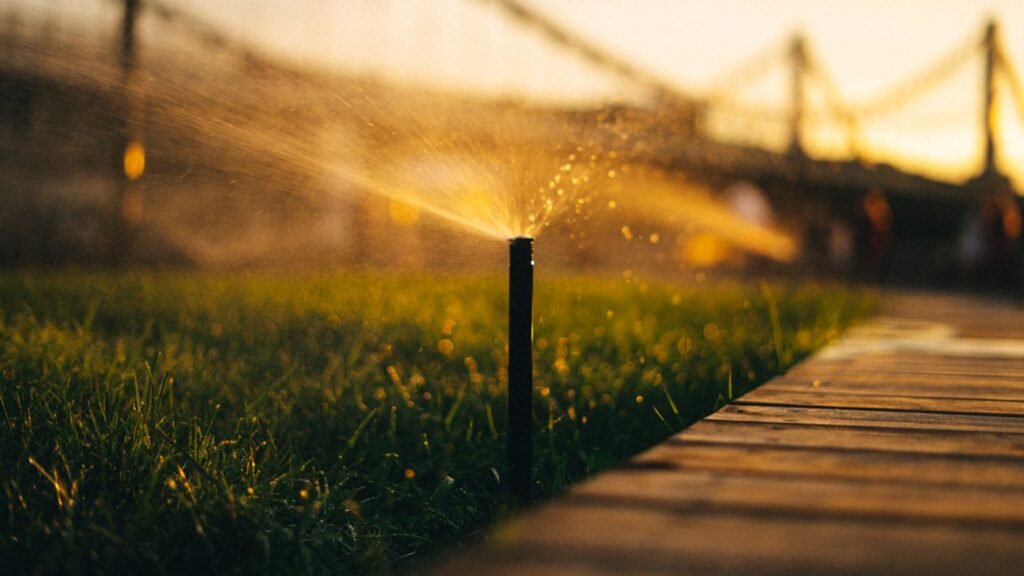
- Re-aim heads so the spray stops short of the house. The EPA's WaterSense sprinkler spruce-up checklist says to redirect heads that hit walls and hardscape and to fix tilted heads that spray the wrong way.
- Swap full-circle nozzles near walls for half- or quarter-circle ones.
- Use drip irrigation in beds against the foundation.
- Stop misting from high pressure. WaterSense suggests pressure-regulating spray bodies, since mist drifts onto walls even from well-aimed heads.
- Don't soften irrigation water. The sodium in softened water is bad for soil and plants; iron filtration for irrigation is a separate project.
The same overspray is probably hitting your windows; see sprinkler spots on windows, where the risk is etched glass.
FAQ
Will vinegar damage vinyl siding?
Diluted white vinegar is generally safe on vinyl. Test a hidden spot, keep it wet while it works, and rinse thoroughly so it doesn't dry on the surface or the plants.
How do I get orange sprinkler stains off brick?
Use an iron or rust stain remover labeled for masonry, pre-wet the brick, follow the dwell time and rinse well. Old stains on porous brick may need several applications.
Is it hard water or efflorescence on my brick?
Hard water scale follows the sprinkler's arc and forms a hard film. Efflorescence is powdery, appears where rain or leaks soak the wall, and brushes off dry.
Will a water softener stop sprinkler stains?
Softening irrigation water isn't recommended because of the sodium it adds to soil. Redirecting heads and filtering iron for irrigation are the practical fixes.
Clean gently, then fix the spray pattern
Hard water stains on house siding come off with the mildest cleaner that matches the stain: diluted vinegar for white scale, an iron remover for orange streaks, a dry brush for efflorescence. The lasting fix is keeping irrigation water off the wall.