

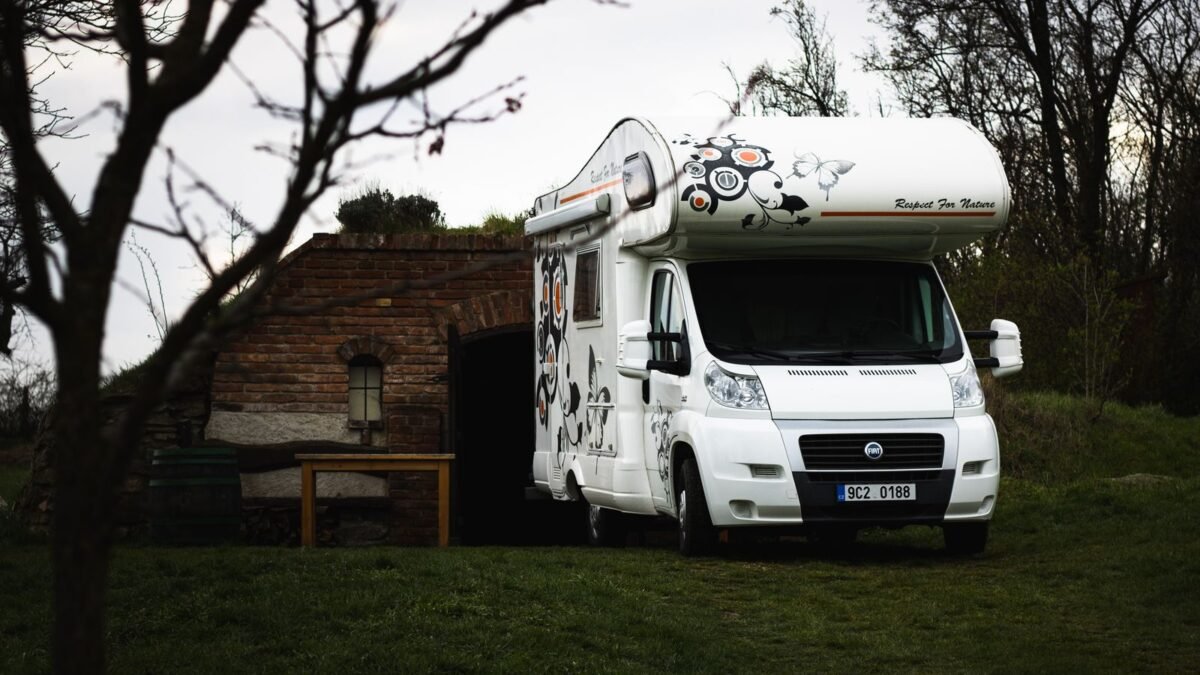
Quick Answer: For full-timers, the Clearsource Premier is the filter to own. It's a two-stage canister system with filtration down to 0.2 micron, and since it sits at the hookup, it treats every faucet in the rig. Weekenders can get by with a seasonal Camco TastePURE inline filter. If you spend winters in hard-water country like Arizona or Nevada, add the On The Go 16,000-grain portable softener. It regenerates with table salt and needs no power.
Disclosure: As an Amazon Associate, Grains & Gallons earns from qualifying purchases.
In a house, "whole house" means a big filter at the main line. In an RV, the main line is a garden hose. That's the good news: anything you put between the campground spigot and your city-water inlet already treats the whole rig. Kitchen, shower, toilet, water heater, all of it. So the question isn't whether you can filter the whole RV. It's how much filter you want to carry and set up at every site.
The other thing that makes RV water different: you don't know what you're getting. One week it's a chlorinated municipal hookup. The next it's a well-fed spigot in a desert park with sediment and hardness off the charts. The right setup depends on how often you're hooking up and where.
In this guide
Pick your setup by how you travel
| How you travel | Setup | Products |
|---|---|---|
| Weekends, campgrounds with city water | One disposable inline filter, replaced each season | Camco TastePURE |
| Long seasons, mixed water sources | Canister filter with replaceable cartridges | Culligan RVF-10 |
| Full-time, anywhere | Multi-stage canister system | Clearsource Premier |
| Snowbirding in hard-water areas | Filter plus portable softener | Clearsource or Culligan RVF-10 + On The Go |
| Small rig, short hard-water trips | Filter plus compact softener | TastePURE + Mobile-Soft-Water |
Before you buy a softener, test the hardness at a few of the parks you actually use. A hardness strip costs very little and tells you in seconds whether you need one. Our guide to testing water hardness at home works the same way at a campsite.
Hookup order: pressure regulator at the spigot, then the filter, then the softener (if you have one), then the drinking-water hose to the rig. Putting the filter first keeps grit and chlorine away from the softener resin, and campground sediment is real.
The filters
Clearsource Premier: the full-timer's system
Clearsource's Premier is a two-stage canister system. Camping World describes it as filtering down to 0.2 micron, and the Amazon listing says it protects against contaminants and bacteria. Two stages means the first cartridge takes the sediment hit and the second, finer one does the fine work. That staging is what makes a fine filter usable on dirty campground water. A single fine cartridge would clog within a few hookups.
Who should buy it: full-timers and long-season travelers who hook up to a different source every week or two.
Downsides: it's bulky, so you need a storage plan in a bay. We couldn't confirm a published flow rate or third-party certification on the retailer pages we read, so treat "bacteria" as the maker's claim. If a park has a boil notice, filter or no filter, follow it.
Culligan RVF-10: a real canister without the bulk
The RVF-10 steps up from a disposable inline filter to a reusable housing with a replaceable cartridge. The included D-15 cartridge is granular activated carbon, and Culligan says it reduces chlorine taste and odor. The kit includes the slim housing (about 4.75 x 4.75 x 11.75 inches) and a 1-foot hose connector, and it goes on with no tools. Culligan rates a cartridge at roughly 250 gallons, typically 3 months, depending on water quality and use.
Who it fits: someone out for a few months at a time who wants finer filtration than an inline filter without carrying a two-canister system.
Downside: no specific certifications listed on the Amazon page we checked, and 250 gallons goes faster than a season if you're hooked up full-time. It's a taste-and-odor filter, which is what most people need. Just don't treat it as disinfection.
Camco TastePURE (40043): the weekender's filter
It's disposable, cheap to replace, and lives in the hose bin. A retailer listing describes a 100-micron fiber barrier around GAC and KDF media. That's coarse by filter standards, so it mainly catches grit and improves taste and odor, mostly chlorine. This version has a flexible "hose protector" on the end, which reduces the strain where the filter hangs off the spigot. Camco rates it at about one camping season. The Amazon listing says it's made in the USA.
Who it fits: weekend and vacation campers at established parks with treated water.
Who should skip it: anyone hooking up to well-fed spigots with real sediment, or full-timers. At 100 microns, fine silt goes right through, and a season goes fast when you're out every week.
The softeners
A filter doesn't touch hardness. If your water heater element is crusting up and your shower head clogs every month, you need a softener. Scale in a small RV water heater tank builds up fast. Our guide on scale in an RV water heater shows what it looks like and how to flush it.
On The Go OTG4-DBLSOFT: 16,000 grains, no power
It's a resin tank with garden-hose fittings and no electronics. Hard water goes in one end and soft water comes out the other. When it's spent, you regenerate it with two boxes of ordinary table salt, which the maker says takes under 30 minutes. It weighs about 32 pounds and stands roughly 22 inches tall by 9.5 inches across, so plan bay space.
How long it lasts between regenerations: multiply your hardness by daily use. Say a full-time couple uses about 50 gallons a day hooked up (your number may differ). At 15 gpg, that's 750 grains a day, so 16,000 grains lasts about three weeks. In a 25 gpg desert park it's closer to 13 days. The seller's own formula gives about 1,450 gallons between regenerations at 11 gpg.
For regeneration steps, see how to manually regenerate a water softener. Our RV softener setup guide covers fittings and where it sits in the hookup chain.
Downside: it's heavy and awkward to move, and you have to remember to regenerate. Some people set a reminder for every other weekend.
Mobile-Soft-Water 6,400 grain: when bay space is tight
It's the same manual-regeneration idea in a smaller tank. The listing describes it as a 6,400-grain portable with manual regeneration. Past that, it publishes few specs. Using the same math, 50 gallons a day at 15 gpg gets you about 8 days between regenerations.
Who it fits: a van or small trailer, or someone who only spends a week or two at a time in hard-water areas.
Who should skip it: full-timers in the Southwest. You'd be regenerating every week.
A five-minute routine at every new site
A full-timer's water setup is only as good as the habits around it. At each new hookup:
- Run the spigot for a few seconds before connecting. It clears whatever has been sitting in the riser and keeps that slug out of your filter.
- Regulator first, always. Campground pressure varies a lot, and a spike can stress filter housings as well as RV plumbing.
- Dip a hardness strip in the first water out of the spigot. If it reads soft, put the softener in bypass or leave it in the bay. There's no reason to use up its capacity on water that doesn't need it.
- Check the canister if you can see through it. Brown sediment inside after one week tells you this park's water will eat cartridges, so budget a change sooner.
- Note the hardness in your phone along with the park name. After a season you'll know which stops need the softener, and you'll get much better at timing regenerations.
Questions RVers ask
Do I need a filter if the campground water is "city water"? You don't strictly need one, but chlorine taste and the occasional sediment slug are reasons enough for at least an inline filter. On well-fed or remote spigots, you'll want more than that.
Should I fill my fresh tank through the filter? Yes. Filling through the same filter chain means your stored water got the same treatment as your hookup water.
Can I use a softener without a filter? You can, but the resin will catch grit and chlorine it was never meant to handle. A cheap filter ahead of it protects a much more expensive softener.
Does softened water hurt the RV water heater? Protecting the water heater from scale is one of the main reasons RVers buy a softener. If your heater uses an anode rod, keep checking it either way. It's a wear item, with or without a softener.
Winter, storage and the mistake that cracks tanks
Resin tanks and filter housings both hold water, and water freezes. Before storage in a cold climate, drain both completely and keep the softener somewhere above freezing. Our article on winterizing a water softener covers draining resin without letting it dry out completely. Throw out disposable filters at the end of the season instead of storing them wet. A damp carbon filter sitting in a hose bin all winter is not something you want to drink through in spring.