

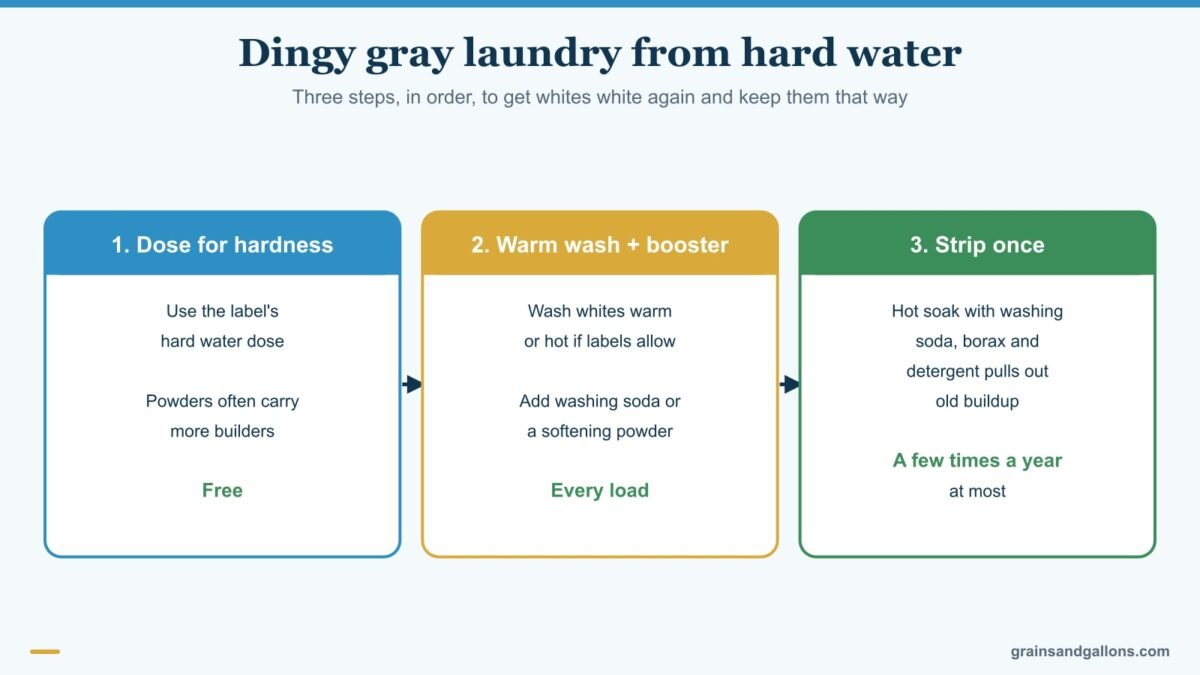
Quick Answer: Dingy gray laundry in hard water happens because calcium and magnesium use up part of your detergent, so soil settles back into the fabric. Use the higher "hard water" dose on the label, add a booster like Arm & Hammer Super Washing Soda, and wash whites warm or hot. For laundry that's already gray, do one stripping soak, then keep the new routine.
Disclosure: As an Amazon Associate, Grains & Gallons earns from qualifying purchases.
Dingy gray laundry from hard water creeps up slowly. You only notice when an old white T-shirt sits next to a new one, or towels feel stiff and smell off even when clean. Minerals are usually involved, but rarely the only cause.
In this guide
Why whites turn gray in hard water
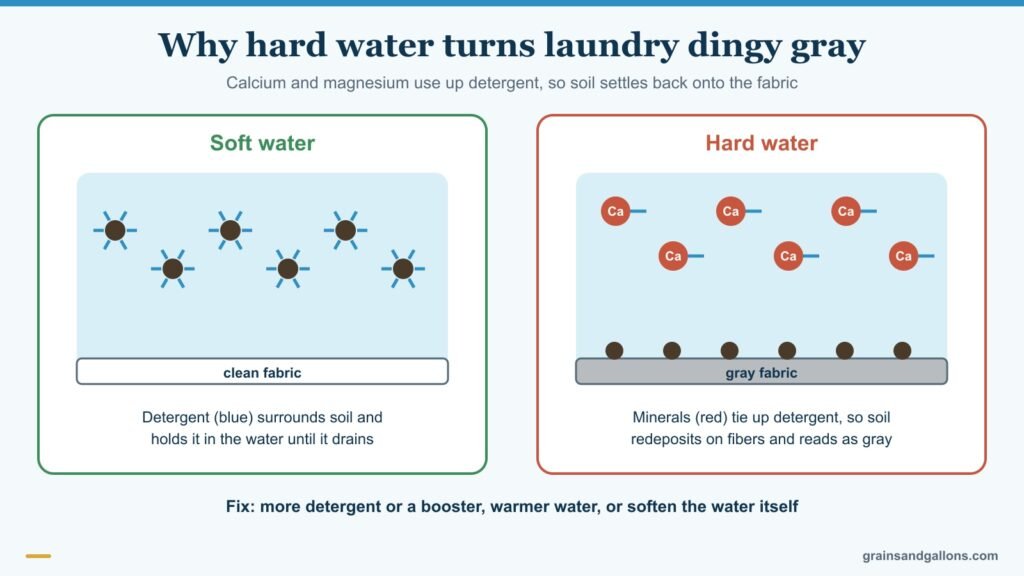
Calcium and magnesium react with detergent's cleaning agents and use some of them up. A dose that works in soft water leaves too little to hold dirt in the wash water, so it resettles on fabric. That's called redeposition, and it reads as gray. University of Idaho Extension's guide to hard water and laundry lists graying, yellowing, soil buildup and a stiff, harsh feel as the classic signs.
Not sure how hard your water is? A strip test takes a minute; see how to test water hardness at home.
Rule out the non-mineral causes first
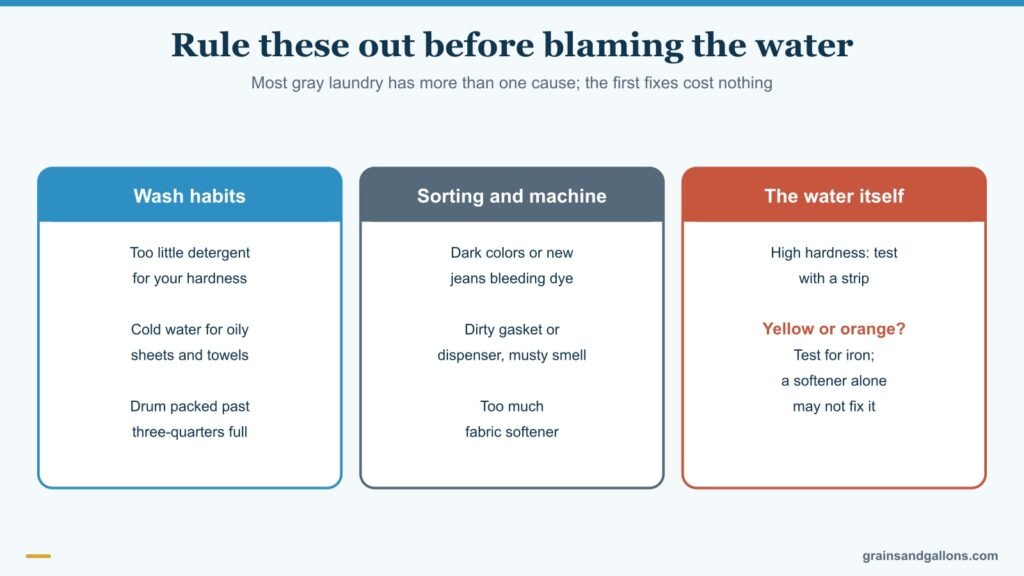
Work down this list; the first items cost nothing.
- Too little detergent. Use the higher dose on the label for hard water or heavy soil. Powders often carry more builders, the ingredients that handle minerals; see our best laundry detergents for hard water.
- Cold water for everything. Body oils and greasy soil come out far better warm or hot. Wash whites, sheets and towels warm or hot if labels allow.
- An overloaded drum. Packed loads rinse poorly. Fill about three-quarters and leave room at the top.
- Colors mixed in. New darks and jeans bleed dye. Wash whites alone.
- A dirty washer. A gasket or dispenser coated in residue redeposits grime, especially if the washer smells musty. See how hard water damages washing machines.
- Too much fabric softener. It can leave a waxy layer that traps residue. Many hard water households find towels absorb better without it.
- Iron, not hardness. If whites drift yellow or orange rather than gray, test for iron. A softener alone may not fix that.
Strip the built-up residue out of dingy gray laundry
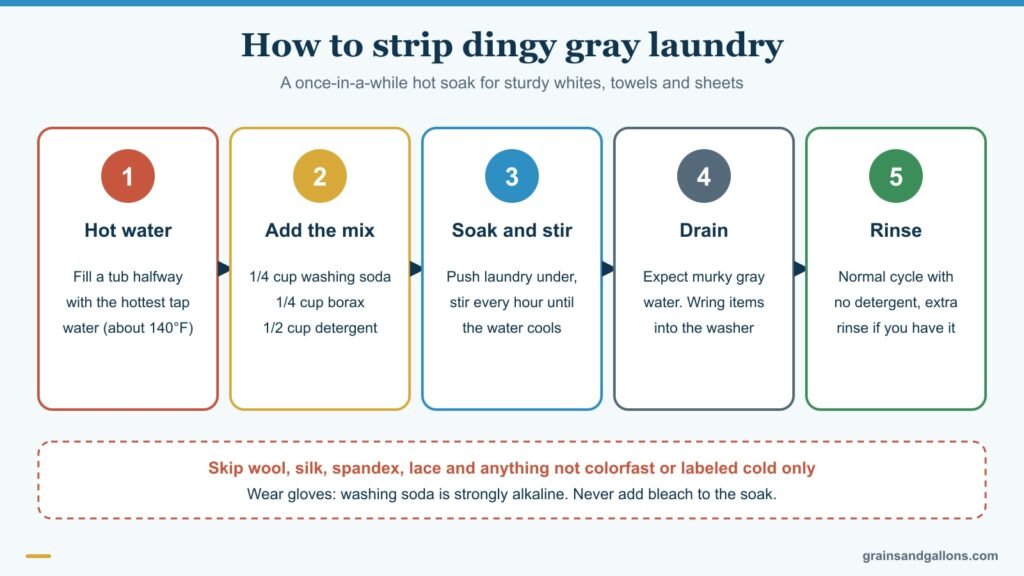
Stripping is a hot soak that pulls out built-up detergent, mineral and body oil residue. It's harsh, so save it for sturdy whites, towels and sheets, a few times a year at most. Skip wool, silk, spandex, lace and anything labeled cold only.
- Fill a tub halfway with the hottest tap water, ideally around 140°F.
- Stir in the mix. A widely shared recipe from the Everyday Cheapskate column uses 1/4 cup washing soda, 1/4 cup borax and 1/2 cup heavy-duty detergent per tub. Wear gloves, because washing soda is strongly alkaline, and never add bleach.
- Add the laundry, push it under and stir about once an hour until the water cools, usually three to four hours. Murky gray water is the residue coming out.
- Drain, wring, and run a normal cycle with no detergent, plus an extra rinse if you have one.
- Dry as usual and compare.
A wash routine that keeps whites bright in hard water
Stripping is a reset. The long-term fix is changing how you wash:
- Add a softening booster to every load. Washing soda or Calgon Water Softener Powder ties up hardness minerals so detergent can work. Follow the box dose; Arm & Hammer's hard water laundry guide adds the soda along with your usual detergent. Compare options in our best laundry water softener additives.
- Dose detergent for your hardness, not the soft-water line.
- Wash whites warm or hot when labels allow.
- Clean the washer monthly with a cleaning cycle.
If you're boosting every load and still fighting gray, and you also see spotty dishes and scaled fixtures, a whole-house softener pays off. Softened water lets detergent work as designed, and most people can use less of it.
Laundry stiff as well as gray? The fixes overlap; see laundry stiff after washing.
FAQ
Can hard water make white clothes gray?
Yes. Minerals use up detergent, so soil redeposits on the fabric and builds up wash after wash until whites look gray.
How do I get dingy whites white again?
Strip them once in a hot soak of washing soda, borax and detergent, then rinse without detergent. After that, add a booster to every load and wash whites warm or hot.
Does vinegar help gray laundry?
A half cup of white vinegar in the rinse can loosen mineral and soap residue. Never use it in the same load as chlorine bleach.
How often should you strip laundry?
Only a few times a year, or when fabrics look dull or feel stiff. The hot, alkaline soak is hard on fibers.
More detergent, hotter water, then softer water
Most dingy gray laundry from hard water clears up in that order: dose for your hardness, wash whites warm with a booster, and strip once to remove old buildup. If the gray keeps coming back anyway, the water itself is the problem, and softening it is the lasting fix.