

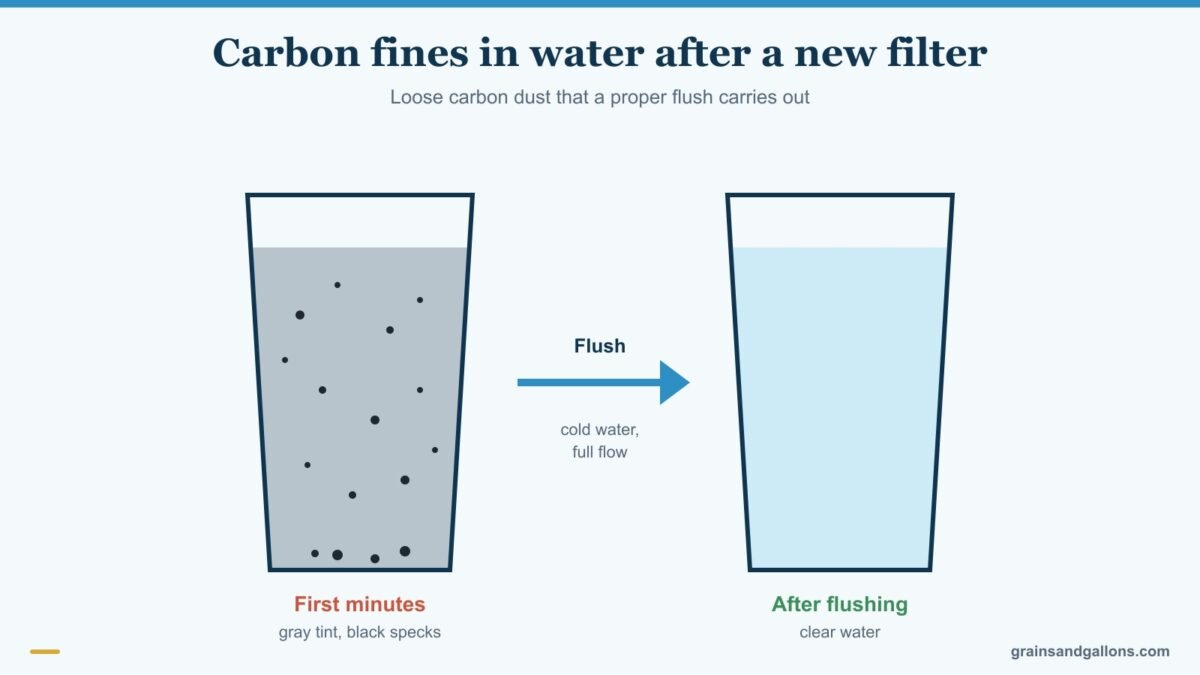
Quick Answer: Tiny black specks or gray-tinted water right after installing a new carbon filter are almost always carbon fines in water: loose dust from the activated carbon. Flush the filter per its instructions with cold water, typically several minutes at full flow until it runs clear. If black particles still show up days later, the cartridge or its seals may have failed, or the specks aren't carbon at all.
You put in a fresh carbon cartridge, filled a glass, and saw black flecks swirling at the bottom. Or the toilet bowl now has dark grit in it. Carbon fines in water look alarming, but in the first hours after a filter change they're expected. What matters is how long they last and whether the particles really are carbon.
In this guide
Why new carbon sheds
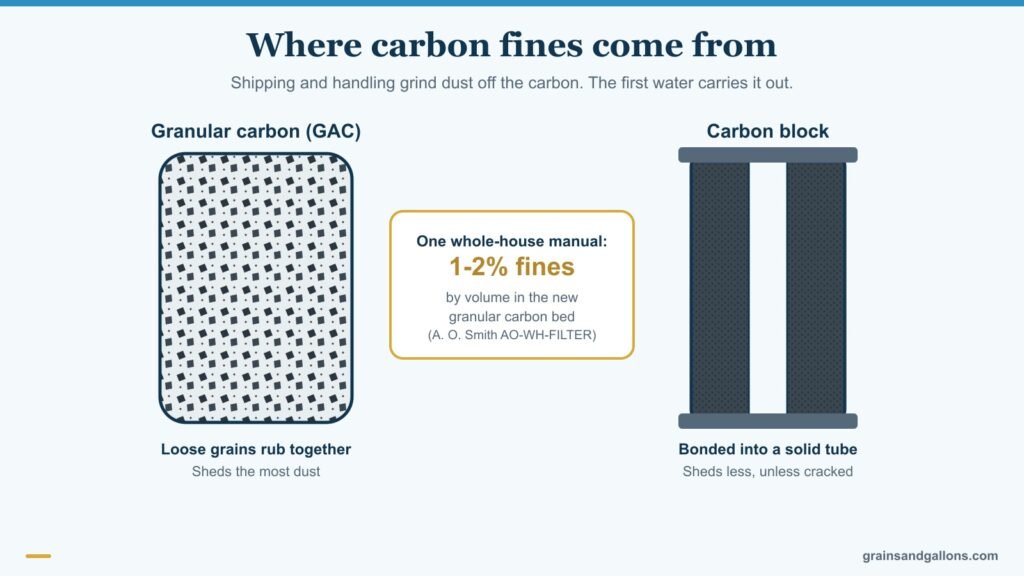
Activated carbon is made from materials like coconut shell or coal, crushed and "activated" with heat into a very porous material. Loose granular carbon (GAC) is a bed of these grains. Carbon block is the same material bonded into a solid tube. Either way, shipping and handling knock off fine dust, and the first water through carries it out.
How much? The A. O. Smith whole-house filter manual says the granular carbon in its bottom tank contains 1 to 2 percent fines by volume, and warns that the first few gallons will come out black and cloudy. That's why nearly every carbon filter's instructions include a flush step.
Are carbon fines harmful?
Not as particles. Activated carbon is the same kind of material used in food processing and medical applications, and the amount a flushed filter releases is tiny. Still, nobody wants to drink grit, so wait until the water runs clear. Cloudiness without specks is usually trapped air; a glass of it clears from the bottom up within a minute or two.
Specks that fade vs specks that stay
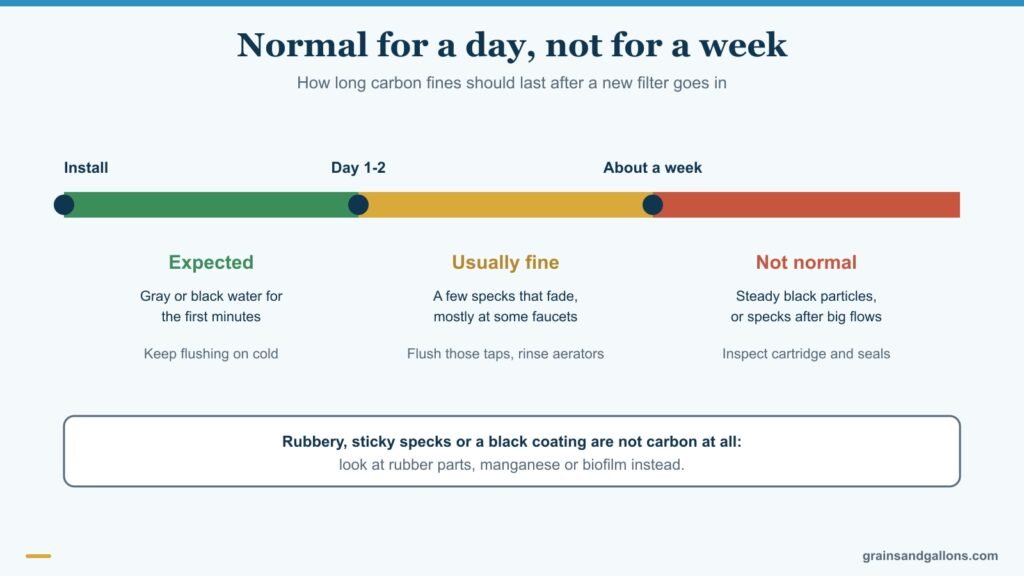
| What you see | Likely normal? | What to do |
|---|---|---|
| Gray or black-tinted water for the first few minutes after install | Yes | Keep flushing |
| A few black specks for a day or two, fading | Usually | Flush the faucets that show it; clean aerators |
| Steady black particles a week or more later | No | Inspect the cartridge and housing |
| Fines only after a pressure surge or a big flow, like filling a tub | Possibly a cartridge problem | Check for a cracked block |
| Specks that are rubbery, stretchy or sticky | Not carbon | Look for degrading rubber parts |
| Black coating or slime, not loose specks | Not carbon | Likely manganese or biofilm |
How to flush carbon fines in water out of a whole-house filter
- Keep the house faucets off and open the filter's inlet slowly. A slow fill pushes air out gently instead of blasting the carbon.
- Bleed air with the housing's pressure-relief button until water comes out.
- Run a cold faucet near the filter, such as a laundry sink or outdoor spigot, at full flow until the water is clear. Use cold only, and avoid flushing through the water heater or ice maker.
- Surge flush if it's slow to clear. A. O. Smith's procedure for its granular tank is a 15-minute flush, then cycling the water on for 30 seconds and off for 30 seconds for another 15 minutes or until the first surge comes out clear. The pulses dislodge fines that a steady flow leaves behind.
- Then run each faucet in the house for a minute or two. Fines that already made it into pipes need to come out too.
- Unscrew and rinse aerators on faucets that kept showing specks. Fines lodge in the screen and release later.
If you skipped the flush on install, do it now; it's the same process. Our walkthrough on changing a whole house filter covers the steps around it.
Pitcher, fridge and under-sink filters

Smaller filters need less flushing, but the same idea applies:
- Pitchers. Brita's FAQ tells owners to rinse a Standard filter under cold water for 15 seconds, then discard the first three pitchers of filtered water (it suggests using them on plants). It notes carbon dust in the first few fillings is normal for Elite filters, and recommends a 15-minute soak for a Standard filter more than a year old. A filter that floats when soaked has trapped air; soaking longer and tapping it helps.
- Refrigerator and inline filters. Dispense and discard water, and the first batch of ice, as the manual directs, usually a few gallons.
- Under-sink cartridges. Run the filtered faucet at full flow on cold until clear; follow the time on the cartridge sheet.
Specks that show up near the end of a pitcher filter's life are a different story. Brita says carbon particles after several weeks of use are normal with its older filters; if they bother you, change the cartridge.
If fines keep coming
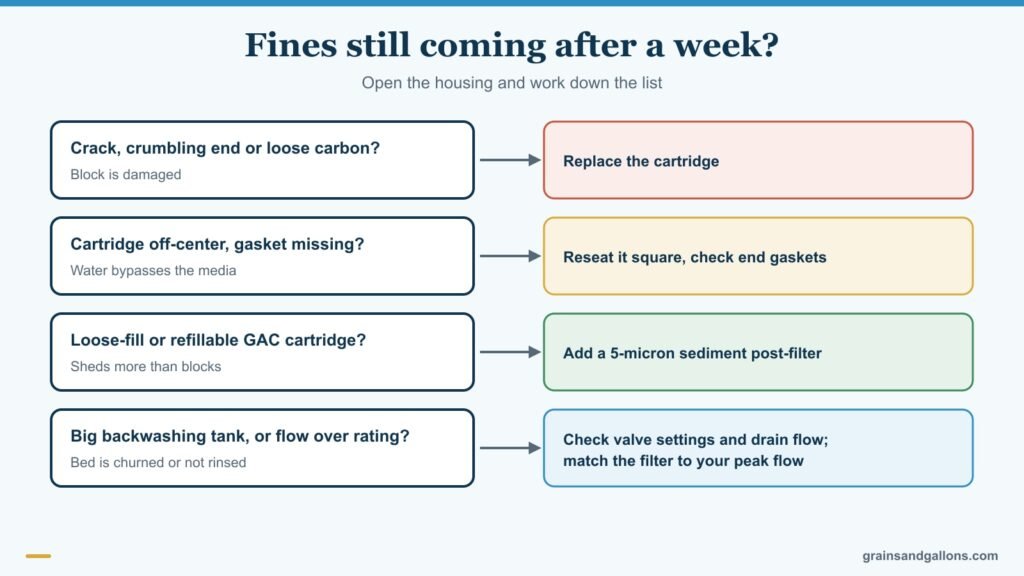
The carbon block is cracked. Blocks can crack from rough handling, freezing or pressure spikes. Unscrew the housing and look: a crack, a crumbling end, or carbon loose in the bottom of the sump means the cartridge is done.
The end caps aren't sealing. If the cartridge isn't centered on its seat, water flows around the media instead of through it and carries loose carbon with it. Check that it sits square and any end gaskets are present.
It's a loose-fill or refillable GAC cartridge. These shed more than blocks and benefit from a 5-micron sediment cartridge after them to catch what gets through.
A backwashing carbon tank was set up wrong. If a big carbon tank keeps shedding, the backwash may not be flushing fines out, or too much flow is churning the bed. Check the valve settings and drain line flow control against the manual, or call the installer.
Flow is beyond the rating. Running more water through a cartridge than it's rated for can pull fines loose. Our roundups of the best whole house catalytic carbon filters and the best under-sink filters for hard water list service flows so you can match a filter to your house.
Black specks that aren't carbon
A few quick tests:
- Rub one between your fingers. Carbon smears like pencil lead. Rubber stretches or feels sticky. Manganese and iron particles feel gritty and may leave a brown-black stain.
- Compare hot and cold. Black bits only from the hot tap can come from a dip tube or rubber parts in the water heater.
- Check the toilet tank. Black specks or slime there often come from a degrading flapper or fill valve, especially where utilities use chloramine, which is hard on some rubber. See black slime in the toilet tank.
- Check before the filter. If unfiltered water also carries black particles, the source is upstream. On a well, that's often manganese; see black stains from manganese in well water.
If the water looks gray rather than speckled, our page on gray water from the faucet covers other causes. Black rings in fixtures are often manganese too; see black rings in the toilet bowl.
FAQ
How long should carbon fines last after a filter change?
Usually minutes, sometimes a few stray specks for a day or two. If particles keep appearing after about a week of normal use, inspect the cartridge, seals and housing.
Is it safe to drink water with carbon fines?
The carbon itself isn't toxic, but flush until the water runs clear before drinking. The flush water is fine for plants.
Why does my Brita have black specks?
Loose carbon from a new filter that wasn't fully rinsed, or carbon released by an older filter late in its life. Rinse and discard the first fills of a new filter, and replace an old one on schedule.
Should I flush a new carbon filter with hot water?
No. Flush with cold water only, and keep the first water out of the water heater and ice maker.
Why are carbon fines still coming out of my new filter?
Most often a cracked carbon block, a cartridge that isn't seated square, a loose-fill cartridge without a sediment post-filter, or flow above the filter's rating.
Flush it now, inspect it if it lasts a week
Carbon fines in water are normal for the first minutes and occasionally a day or two, and a cold, full-flow flush (plus surge flushing for granular tanks) clears them. If black particles are still coming through a week later, stop flushing and open the housing: a cracked block, a bad seal or a filter running beyond its flow rating is the usual cause, and rubbery or slimy specks aren't carbon at all.