

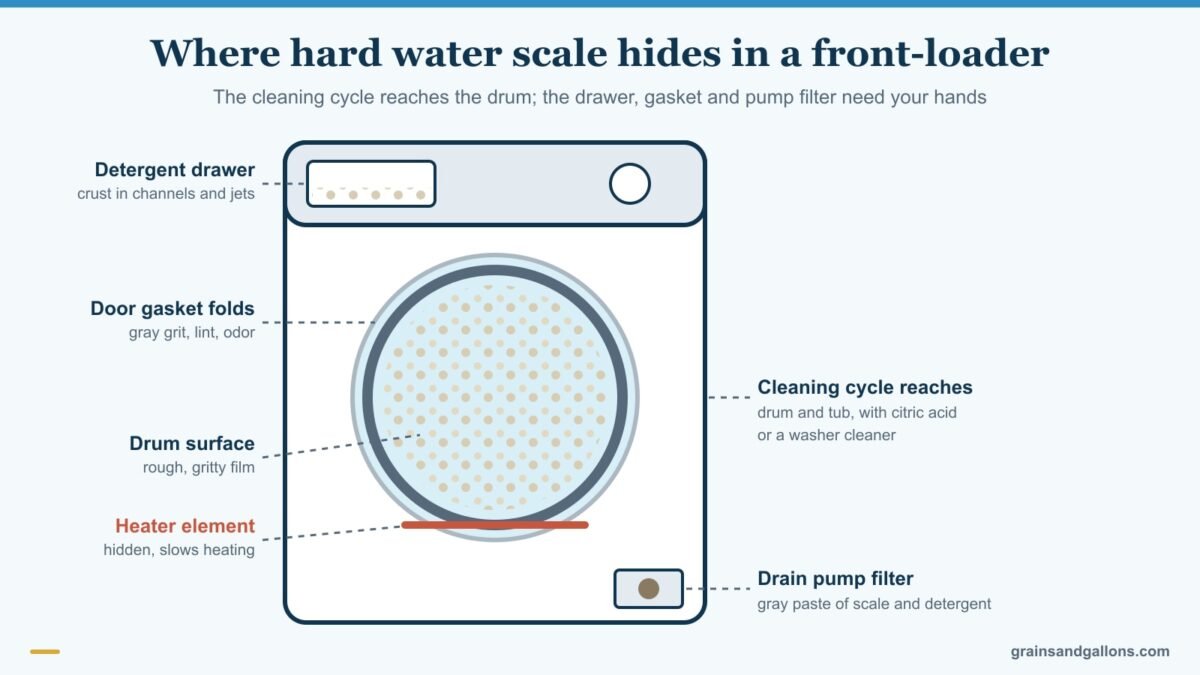
Quick Answer: To clean a washing machine with hard water scale, run the built-in cleaning cycle (Clean Washer, Self Clean or Tub Clean) empty with a washer cleaner like Affresh Washing Machine Cleaner. If there's visible crust, follow with an empty hot cycle using 1/4 to 1/2 cup of citric acid. Then clean the three spots the cycle misses: the door gasket folds, the detergent drawer and the drain pump filter. In hard water, repeat the cleaning cycle monthly.
Disclosure: As an Amazon Associate, Grains & Gallons earns from qualifying purchases.
A washing machine with hard water scale usually tells you in small ways first: a musty smell, a chalky rim in the detergent drawer, towels that feel stiff. Front-loaders are hardest hit. They use little water, heat it inside the drum, and leave a damp gasket sealed shut between loads. The calcium and magnesium that the Water Quality Association identifies as the source of most scaling build a gritty layer on the drum, collect in the drawer, and end up as a chalky paste in the drain pump filter. Detergent residue sticks to that crust, and the odor follows.
In this guide
- How bad is the buildup? Three levels
- Start with the washer's cleaning cycle
- Descale a washing machine with hard water scale using citric acid
- Gasket, drawer and pump filter: the spots the cycle misses
- When the laundry, not the machine, is the problem
- A monthly routine for a hard-water laundry room
- FAQ
- Monthly cleaning keeps the scale from winning
How bad is the buildup? Three levels
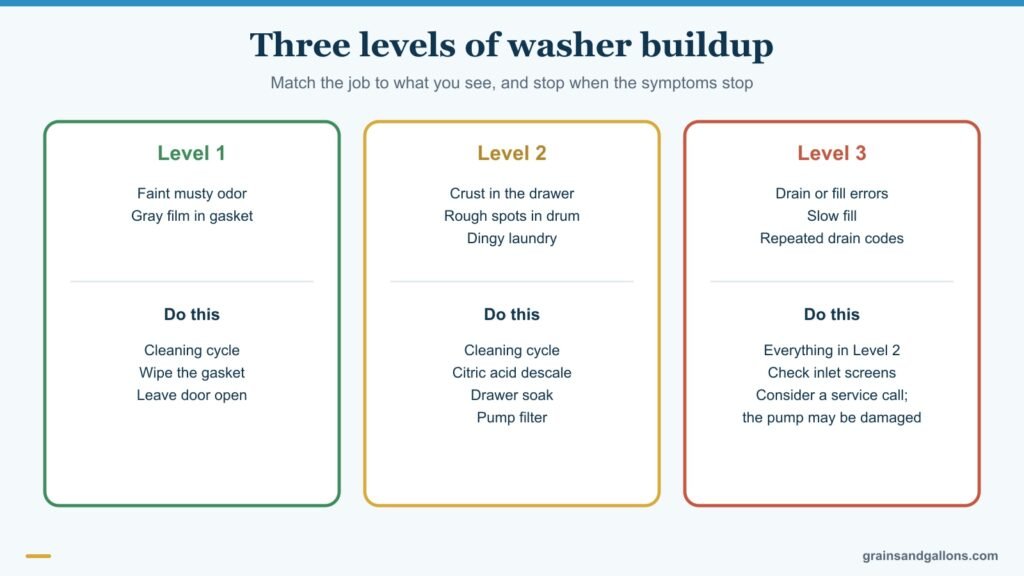
Level 1: Faint odor, a little gray film in the gasket. One cleaning cycle and a gasket wipe. Mostly unattended time.
Level 2: White or tan crust in the dispenser drawer, rough spots in the drum, laundry coming out dingy. Cleaning cycle plus a separate acid descale, and you'll pull the drawer and pump filter.
Level 3: Drain or water inlet error codes, slow fill. Do everything in Level 2, then check the inlet hose screens and consider a service call. Repeated drain errors can mean a damaged pump, not just a clog.
Most people reading this are at Level 2.
Start with the washer's cleaning cycle
Check your manual for the cycle name and what to use with it. Whirlpool, Maytag, LG and Samsung all have a dedicated cleaning cycle, and most say to run it empty. Samsung, for example, tells owners to run Self Clean or Pure Cycle monthly, with no detergent required. Washer-cleaner tablets go directly in the drum unless your manual says otherwise. If there's no dedicated cycle, use the hottest, longest setting with an extra rinse.
Washer cleaners vary in what they target. Some mainly handle odor and residue; others include ingredients that help with mineral film. Our comparison of the best washing machine cleaners for scale and odor sorts them by what they actually do.
Top-loaders get the same treatment, mostly
Top-load washers with a cleaning cycle follow the same steps. Without one, use the hottest, largest-load setting, let the drum fill, and add the cleaner or acid before it agitates. Top-loaders rarely have a user-serviceable pump filter, so the drawer, the underside of the lid and the rim under the tub edge are where scale and residue show up.
Descale a washing machine with hard water scale using citric acid
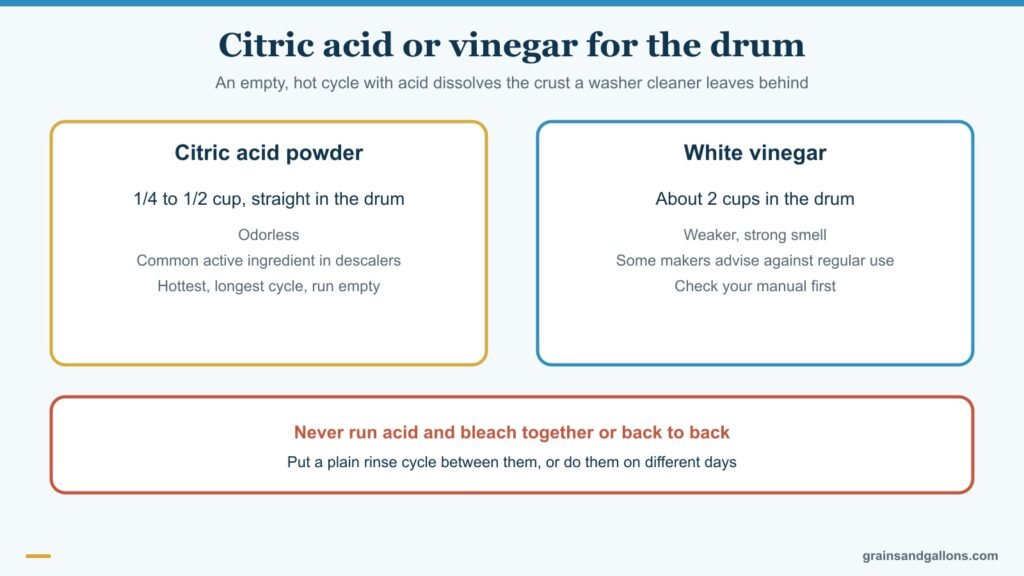
A washer cleaner alone may not dissolve thick limescale. Acids do.
- Citric acid powder. It's odorless, and it's the active ingredient in plenty of commercial descalers. Put about 1/4 to 1/2 cup of food-grade citric acid directly in the empty drum and run the hottest cycle.
- White vinegar. It's weaker and smells strong. If you use it, 2 cups in the drum on a hot cycle is plenty.
Two cautions. First, some manufacturers advise against regular vinegar use because repeated acid exposure can be hard on rubber seals and hoses. An occasional descale is different from adding acid to every load, but check your manual and follow it. Second, never run acid and bleach together or back to back without a rinse in between. Mixing them gives off chlorine gas. Samsung's own odor routine uses chlorine bleach in the detergent compartment, so if you do both, put them on different days.
When the acid cycle finishes, run one plain hot rinse to flush loosened flakes, then wipe the drum and door glass with a damp cloth.
Gasket, drawer and pump filter: the spots the cycle misses
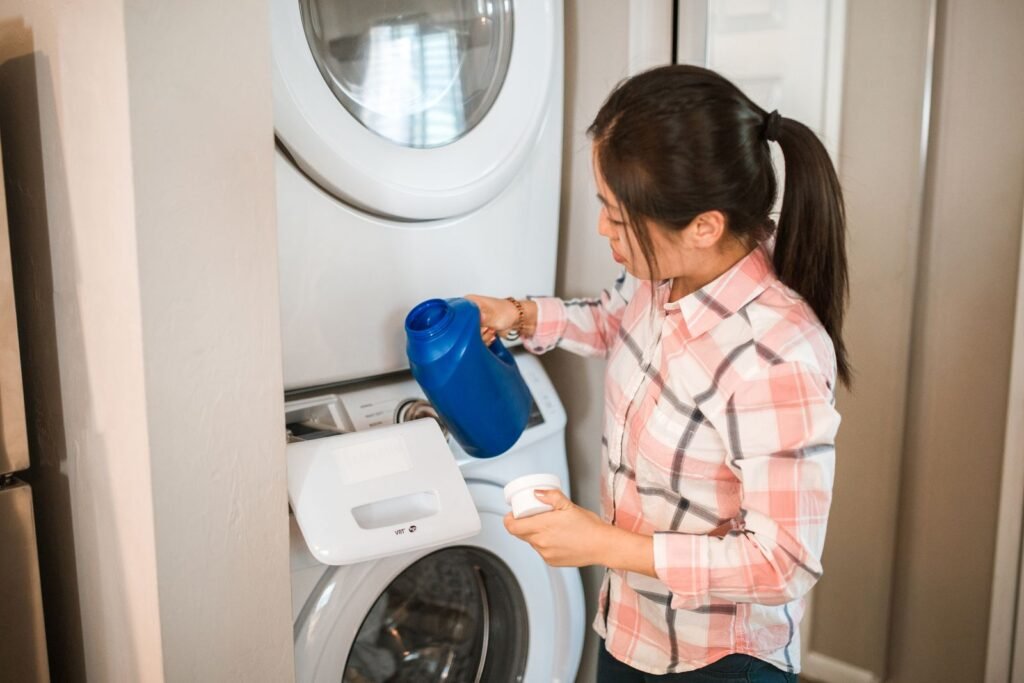
The door gasket. Pull back each fold and wipe with a cloth dampened in warm water and a little dish soap. In hard water you'll often find gray grit mixed with lint, hair and the odd sock. Dry it afterward; Samsung suggests a weekly wipe.
The detergent drawer. Most slide out completely once you press a release tab (often marked in the softener compartment). Soak it in hot water with a spoonful of citric acid for 20 minutes, then scrub the channels with an old toothbrush. Look up into the drawer cavity with a flashlight; the jets above it collect scale too.
The drain pump filter. Unplug the machine first. On most front-loaders the filter is behind a small door on the lower front corner. Put down towels and a shallow pan, and drain the little hose first if your machine has one. Unscrew the filter slowly, usually counterclockwise. Expect lint, coins, hair ties and, in hard water, a gray paste of scale and detergent. Rinse it, check that the impeller turns freely if you can reach it, and screw it back in firmly. A loose cap means a leak on the next load. Samsung says to clean it at least monthly, or roughly every 40 washes.
When the laundry, not the machine, is the problem
If you clean everything and clothes still come out stiff or gray, the machine may not be the issue. Hard water ties up detergent before it can clean, and the minerals settle into fabric. Gray, dingy laundry from hard water covers how to strip it out of clothes, and a detergent with stronger builders helps a lot; see our picks for laundry detergents for hard water.
Long-term scale also wears on the parts you can't see, like the heater, bearings and inlet valves. How hard water damages washing machines goes through each part. If you install a softener, plan on using noticeably less detergent; softened water and washing machines explains how much and why.
A monthly routine for a hard-water laundry room
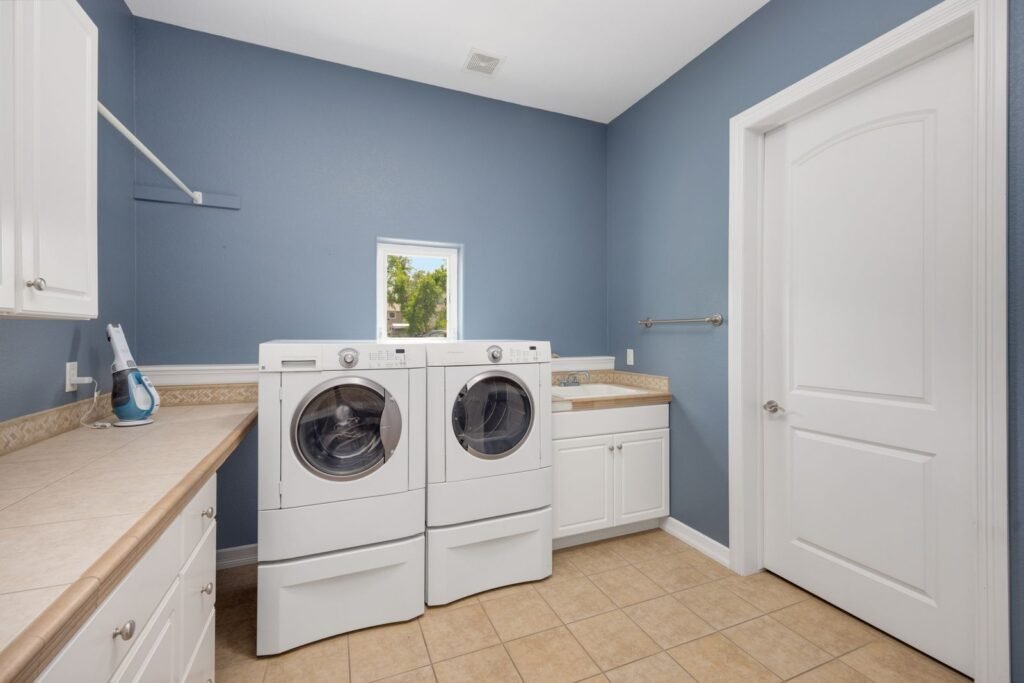
- After every load: leave the door and drawer ajar so the gasket and drawer dry out. It's the cheapest way to keep the musty smell away.
- Weekly: quick wipe of the gasket folds.
- Monthly: cleaning cycle with a washer cleaner, plus a drawer rinse and pump filter check.
- Every two to three months, or when you see crust: citric acid descale and drawer soak.
- More often if you have pets, kids or very hard water.
FAQ
How often should I descale a washing machine in hard water?
Run the cleaning cycle monthly and do a citric acid descale every two to three months, or sooner when you see crust in the drawer or on the drum. Very hard water may need the acid step more often.
Is citric acid safe for my washing machine?
Used occasionally in an empty hot cycle, citric acid is the same active ingredient found in many washer and appliance descalers. Check your manual first, and never combine it with bleach.
Can I use vinegar to clean a washing machine?
Vinegar works on light scale but is weaker than citric acid and smells strong. Some manufacturers advise against frequent vinegar use because of rubber seals and hoses, so keep it occasional and follow your manual.
Why does my front-loader smell even after a cleaning cycle?
The cycle doesn't reach the gasket folds, drawer cavity or pump filter, where residue and grit collect. Clean those by hand and leave the door open between loads.
Will a water softener stop washer scale?
Yes, softened water largely stops new mineral buildup in the drum, drawer and heater. You'll also need much less detergent, which cuts residue too.
Monthly cleaning keeps the scale from winning
A washing machine with hard water scale needs two kinds of cleaning: a monthly cleaning cycle for residue and odor, and an occasional citric acid descale for crust, plus hands-on work on the gasket, drawer and pump filter. Keep the door open between loads, and if the scale returns fast, treat the water instead of the machine.