

Quick Answer: If your well has manganese along with iron, which is the usual situation, the iSpring WCFM400K is our top pick. It's built to reduce dissolved iron and manganese for the whole house, and it regenerates with air instead of chemicals. If there's also a strong sulfur smell, look at the Premier air-injection unit below, which is sold for sulfur too. Prefer a classic media tank? The AFW Filox 10 on a Fleck 2510SXT is built for iron, sulfur and manganese. Hard water too, with only a little manganese? A combination unit like the Iron Pro 64K handles both in one tank.
Disclosure: As an Amazon Associate, Grains & Gallons earns from qualifying purchases.
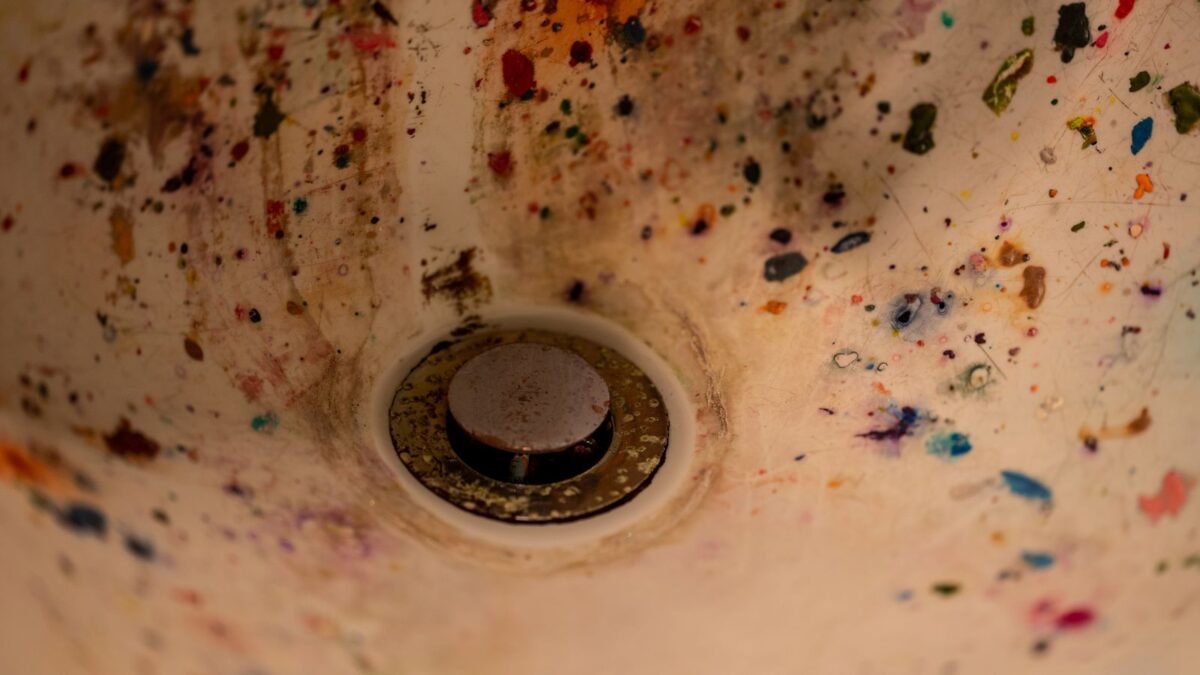
Manganese announces itself in black. Think of brown-black streaks in the toilet bowl, gray dingy whites in the laundry, black flecks in the aerator, and sometimes a bitter, metallic taste. What makes it frustrating is how little it takes. The EPA's secondary (aesthetic) standard for manganese is 0.05 mg/L, six times lower than the 0.3 mg/L it sets for iron. A well can have barely detectable manganese and still stain everything it touches. Our page on black stains from manganese in well water shows what that looks like.
So the first thing to buy isn't a filter. It's a lab test with a real manganese number, plus iron, pH, hardness and hydrogen sulfide on the same report. See how to test water for manganese. Hardware store strips often don't read low enough to be useful here.
In this guide
Is it manganese or iron?
Both stain, but in different colors. The EPA describes iron above its 0.3 mg/L secondary level as rust-colored water with reddish-orange stains. Manganese above 0.05 mg/L shows up as black or brown water, black stains, and a bitter, metallic taste. Plenty of wells have both, so you get orange in one place and black in another, or a muddy brown that's a mix. That mix is exactly why we lean toward systems rated for iron, manganese and sulfur together.
Let your lab report pick the system
This is how we matched products to situations. Every recommendation below follows from what's on the report.
- Manganese plus iron and/or a rotten-egg smell → an air-injection oxidizing system: the iSpring WCFM400K for iron and manganese, or the Premier unit if sulfur is part of the mix.
- Manganese and iron, no sulfur, and you want a proven media bed → the Filox 10 on a Fleck 2510SXT.
- Hard water with a small amount of manganese → a combination softener/iron filter like the Iron Pro 64K, and only after reading the caveats below.
- Low, borderline manganese, limited space, no drain → the Waterdrop WHF3T-FG cartridge system, as a first step.
One thing none of these listings spells out is pH, and pH can matter for oxidizing systems. Before you order, give the seller your actual pH, iron and manganese numbers and ask for a yes or no in writing.
Systems worth buying for manganese
iSpring WCFM400K: our pick for iron plus manganese
The WCFM400K is a whole-house air-injection system built to reduce dissolved iron and manganese, plus solids and turbidity. Regeneration uses only air, with no potassium permanganate, chlorine or other oxidizers to buy, and iSpring says the filter media is certified to NSF/ANSI 61. It has a digital control with automatic regeneration, and you set the auto-flush interval based on your incoming water and usage. Like any filter of this type, it won't reduce total dissolved solids.
Why it's first: few wells have only manganese. A system aimed at the iron that usually comes with it, with no chemicals to restock, is the lowest-hassle answer for most households.
What to watch: the flush cycle needs a drain and power. The listing doesn't publish ppm limits, flow rate or a sulfur claim, so send iSpring your lab report before you buy, and if hydrogen sulfide is high, look at the Premier unit instead.
AFW Filox 10 with Fleck 2510SXT
One cubic foot of Filox media under a digital Fleck 2510SXT backwashing valve. AFW markets it for iron, sulfur and manganese. This is the classic approach: an oxidizing media bed that catches the particles and backwashes them to drain.
A backwashing media tank only works if your well can deliver the backwash flow. Before you commit, compare your well pump's output with the backwash rate AFW specifies for this tank size. The Fleck 2510SXT is a common valve, so parts and service know-how are easy to find.
AFW also sells this in 0.5, 1.5 and 2.0 cu ft sizes. Go larger if your iron and manganese numbers are high, or if your household uses a lot of water.
Premier AIO Air Injection Oxidizing Filter
An air-injection oxidizing (AIO) system on a Fleck 2510SXT valve, sold for whole-house well water. As the name says, it uses injected air, not chemicals, to oxidize what's dissolved in the water so the media bed can trap it, and the bed then backwashes to drain.
Good fit: wells with iron and sulfur where you also have some manganese, and you'd rather not handle chemicals.
Not a fit: this listing title doesn't publish maximum iron or manganese levels. Get them from the seller before you buy, especially if your manganese is high relative to your iron.
Iron Pro 64K Combination Softener & Iron Filter
A water softener with a Fleck 2510SXT digital metered valve, sold as a combination softener and iron filter at 64,000 grains. The idea is to handle hardness and a modest amount of dissolved metals in the same resin tank.
Buy it if your report shows meaningful hardness and only a small amount of manganese, and you want one tank instead of two.
Be careful if your manganese or iron is substantial. The listing doesn't publish a maximum manganese level, and a softener isn't an oxidizing filter. Our guide can a water softener remove manganese? covers where that line sits. If you're over it, a dedicated oxidizing filter goes first and the softener second. See why the iron filter goes before the softener.
Waterdrop WHF3T-FG: the cartridge route
A three-stage, 20-inch cartridge system that Waterdrop markets for well water, listing reduction of iron, manganese, lead, chlorine and odor at a 5-micron rating with 1" connections.
Who it's for: homes with low, borderline manganese and no room or drain for a backwashing tank, or anyone who wants to see whether a modest fix is enough before spending on a media system.
The honest downside: a cartridge has a fixed capacity and can't backwash, so iron and manganese load it up. If your levels are high, you'll be changing cartridges often. That's your cue to step up to one of the tanks above.
Why we didn't make a cartridge the top pick
Cartridge systems are cheap to start and easy to install, and that's tempting. The problem is that a cartridge has a fixed amount of media and no way to clean itself. Manganese and iron collect in it until it's spent or clogged. With higher levels, you can end up buying cartridges so often that a backwashing tank would have paid for itself, and you'll be dealing with stained fixtures in between changes. Start with a cartridge only if your number is low, and watch how fast pressure drops. If it's falling within a few months, that tells you to step up.
What you're signing up for after install
Each type asks for different upkeep. Better to know now than after it's in the basement.
| System type | Ongoing supplies | Needs drain + power | Routine checks |
|---|---|---|---|
| Air injection (iSpring, Premier) | None (air only) | Yes | Flush settings, valve clock, drain line |
| Oxidizing media (Filox) | None listed for routine use | Yes | Backwash frequency, well pump output |
| Combination softener (Iron Pro) | Softener salt | Yes | Salt level, resin cleaner if iron fouls it |
| Cartridges (Waterdrop) | Replacement cartridges | No | Pressure gauges, staining coming back |
Two install realities apply to the tanks. First, put a bypass valve on every tank so you can keep water flowing during service. Second, check where the backwash water goes. A floor drain or laundry standpipe works. A sump pit that feeds a septic system is worth asking your septic pro about.
Retest after six months, and again after a dry summer
Well chemistry moves with seasons, drought and changes to the pump or well. Here's why well water chemistry changes. Retest at the tap after the filter six months in, and again any time the black streaks come back. That's how you find out whether the system is keeping up or the backwash needs adjusting.
Manganese questions, answered briefly
Is manganese a health problem or just a stain problem? The EPA's 0.05 mg/L figure is a secondary standard, meaning it's set for appearance and taste. We'd still treat any level that stains, because the staining alone wrecks fixtures and laundry over time.
Can I use a whole house sediment filter for manganese? Not for dissolved manganese. Sediment filters catch particles. Dissolved manganese passes straight through until something oxidizes it.
Do I need to treat manganese before a UV system? Yes, if you have one. Vermont's UV design guidelines put the limit for water feeding a UV unit at 0.05 mg/L manganese.