

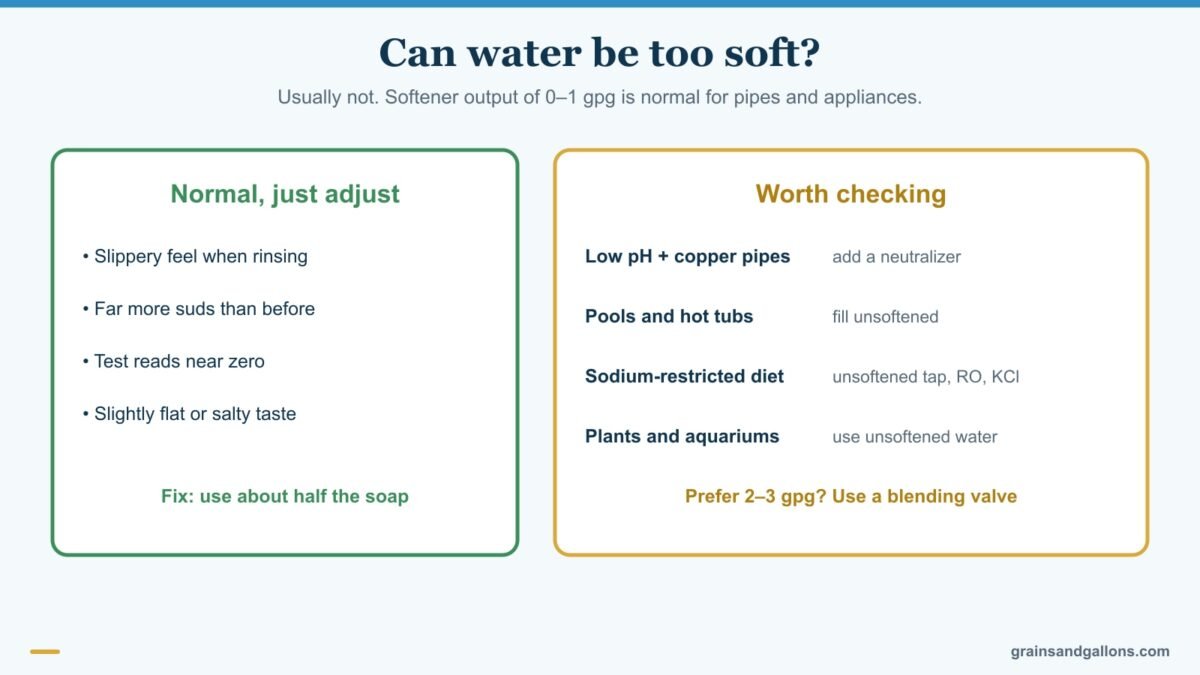
Quick Answer: Can water be too soft? For most homes, no. A softener is designed to deliver water at or near 0 grains per gallon, and that's fine for plumbing and appliances. What people usually mean by "too soft" is the slippery feel and excess suds, both fixed by using less soap. Very soft water does matter in a few cases: acidic (low-pH) water and copper pipes, pools and hot tubs that need some calcium, and people limiting sodium. If you simply prefer a little hardness, a blending valve can add some back.
Can water be too soft, or is your softener just doing its job? You rinse your hands for half a minute and they still feel soapy. The shower leaves your skin slick. Someone in the house says the softener is "set too high." It's a common reaction in the first few weeks, and it's mostly about getting used to how soft water behaves, not a sign that something's wrong.
In this guide
- What fully softened water normally feels like
- How soft is soft? Reading your hardness number
- Low pH and copper pipes: the case that deserves a look
- Pools, plants, aquariums and the water heater anode
- Sodium from softening, in real numbers
- How to get a little hardness back
- FAQ
- Use less soap before you turn the softener down
What fully softened water normally feels like
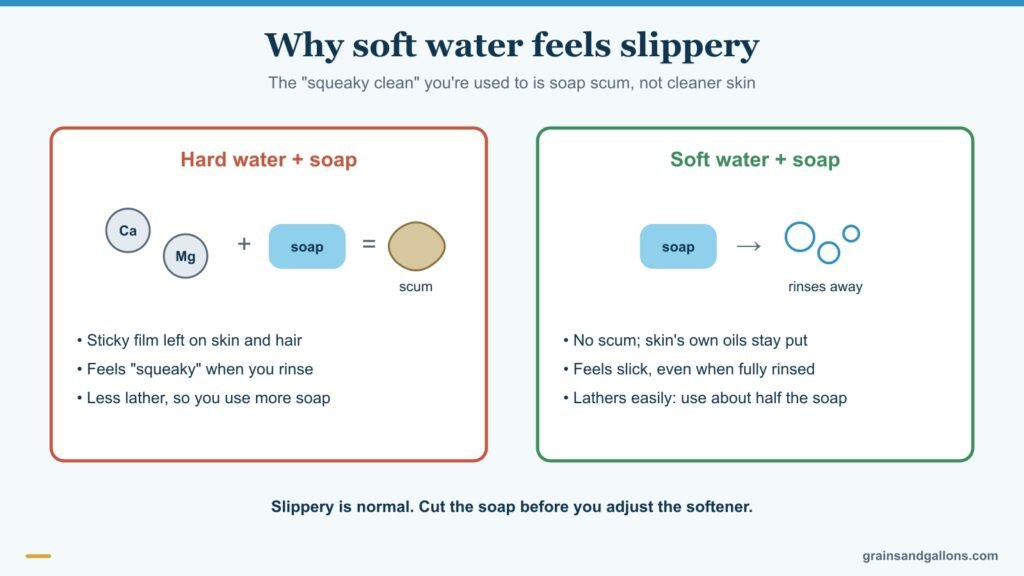
A slippery, "can't rinse it off" feel. Hard-water minerals react with soap to form a sticky scum you've been feeling as "squeaky clean." Without them, soap rinses more completely and your skin's natural oils stay put, which feels slick. It's not leftover soap; see why soft water feels slippery.
Far more suds than before. Soap, shampoo, dish and laundry detergent all lather much more easily. Keep using your old amounts and you get excess foam and residue. Many people get by on about half the soap they used before; how much detergent to use with soft water has starting points.
Slightly different taste. Some people notice a flatter or faintly salty taste. At typical hardness the sodium added is small, but some palates pick it up.
These are adjustment issues, not damage. If they're the only complaints, change your soap habits before you change the softener.
How soft is soft? Reading your hardness number
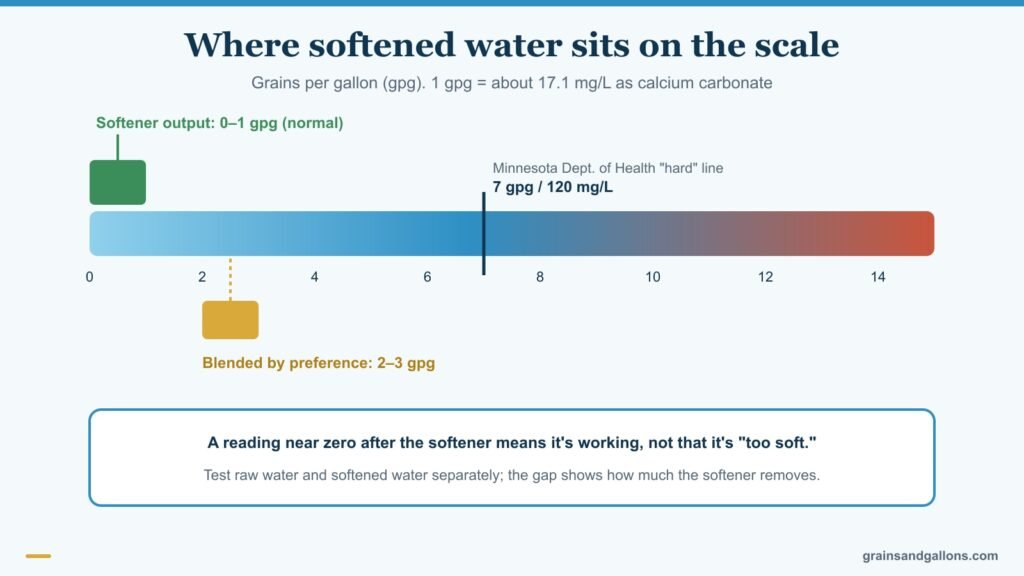
Most softeners, working properly, put out water at 0 to 1 gpg. If you test after the softener and get something close to zero, it's doing its job. For reference, the Minnesota Department of Health's home water softening fact sheet treats water above 7 gpg (120 mg/L) as hard, and notes there's no requirement to soften at all: it's a personal choice.
Test raw water and softened water separately. A water hardness test kit makes this a two-minute job, and the gap between the two readings tells you how much the softener is removing. Some vendor guides call water under about 30 mg/L (roughly 1.75 gpg) "too soft," but that's a comfort preference, not a safety line.
Low pH and copper pipes: the case that deserves a look
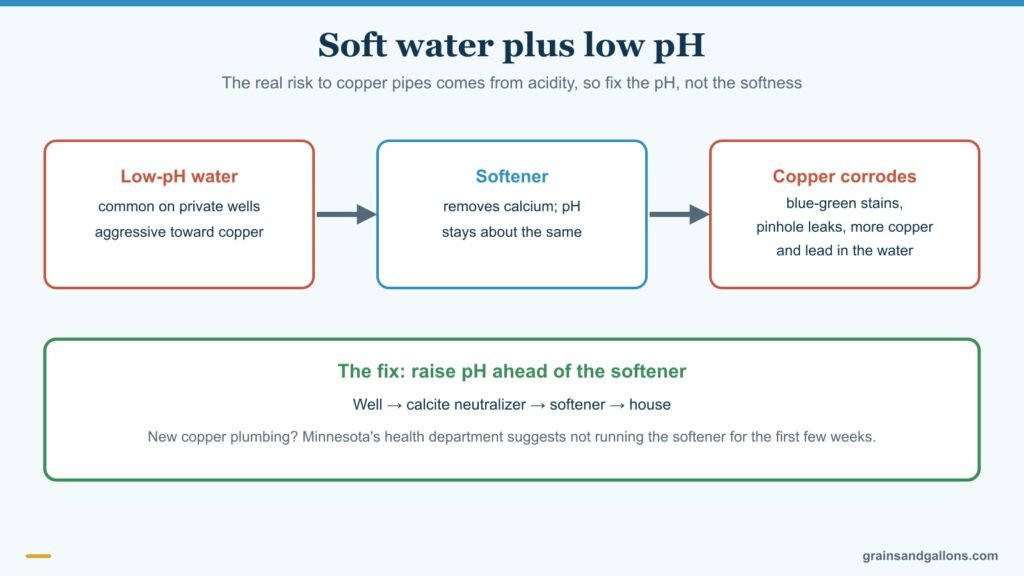
This is the one situation where "too soft" can cost you money. Water with a low pH is aggressive toward copper and other metals on its own. A softener doesn't really change pH, but removing calcium leaves less tendency for a thin protective mineral layer to form on pipe walls. The Minnesota health department lists pipe corrosion among the disadvantages of home softening and warns that corroded metal can raise lead and copper levels in drinking water. It also suggests not running a softener for the first few weeks after new copper plumbing goes in.
If your water has a low pH (common with many private wells), the fix is to raise the pH, usually with a calcite neutralizer ahead of the softener, not to leave the water hard. Warning signs are blue-green stains in sinks and pinhole leaks in copper. Our explainer on whether a water softener changes pH sorts out what the softener does and doesn't do.
Pools, plants, aquariums and the water heater anode
Pools and hot tubs. Pool and spa water is kept within a target calcium hardness range. Water with almost no calcium can be hard on plaster, grout and some equipment. Fill from an unsoftened spigot or follow your pool pro's calcium target; see softened water in pools and hot tubs.
Aquariums. Fish and plants often need specific mineral levels, so aquarium keepers usually adjust water separately.
Houseplants and gardens. Softened water's sodium isn't ideal for plants. Most homes keep outdoor spigots on hard water; use unsoftened water for houseplants where you can.
The water heater anode. Some water heater makers note softened water can shorten the life of the anode rod, the sacrificial rod that protects the tank. That's a reason to check it every few years, not a reason to skip softening. Your heater's manual has the specifics.
Sodium from softening, in real numbers
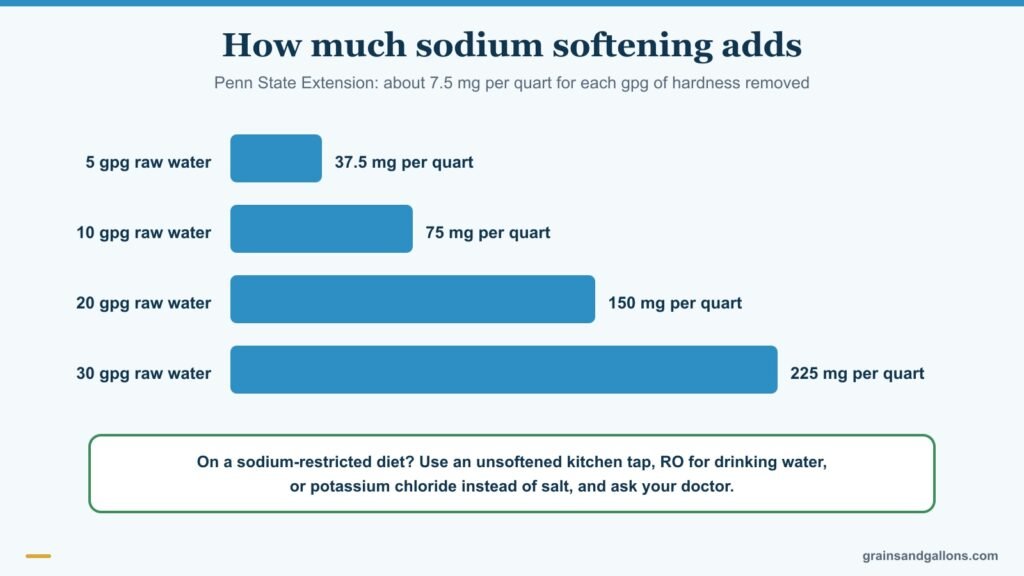
Softened water contains more sodium than the water that went in, and the amount rises with how hard your water was. Penn State Extension's water softening guide puts it at about 7.5 mg per quart for each gpg of hardness removed. So 10 gpg water picks up roughly 75 mg per quart; 20 gpg water about 150 mg.
For most people that's a small part of daily sodium. If you're on a sodium-restricted diet or have high blood pressure, talk to your doctor and consider a kitchen tap that bypasses the softener, a reverse osmosis filter for drinking water, or switching to potassium chloride, covered in our potassium chloride salt guide. More detail in sodium in softened water and water softeners for low-sodium diets.
How to get a little hardness back
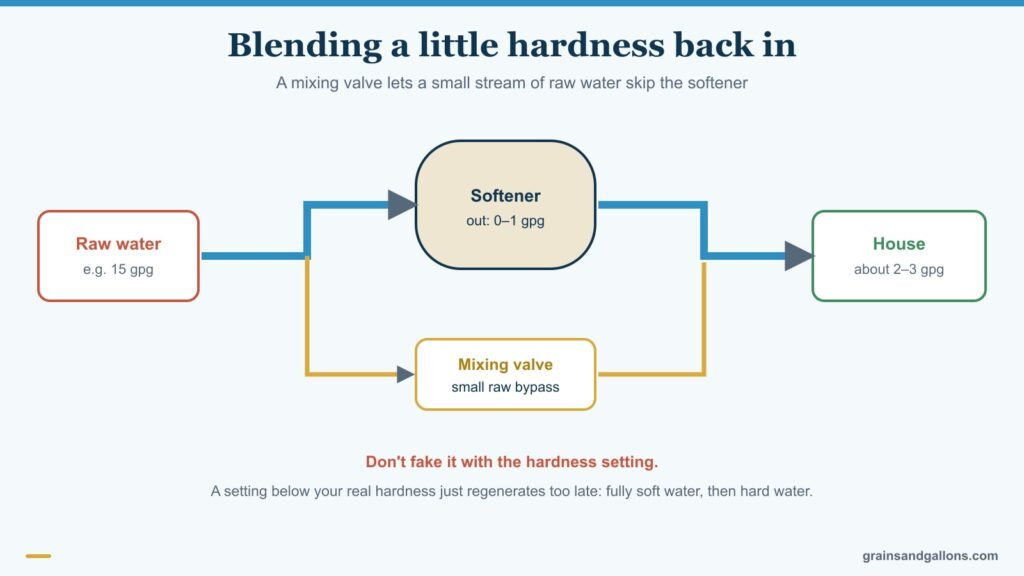
Plenty of people would simply rather have 2 or 3 gpg than zero. That's a preference, and it's fine. Your options:
- A blending (mixing) valve. Some softener valves and bypass assemblies include an adjustable mixing feature that lets a little raw water through. Not all do; check your valve's manual or ask your installer. Test the blended water and adjust until you hit your target.
- Keep certain taps unsoftened. A kitchen cold tap on a bypass line gives you hard water for drinking and cooking while the rest of the house stays soft. Minnesota's health department suggests an unsoftened tap for cooking and drinking, and notes many people soften only hot water.
- Don't lower the hardness setting. Setting the softener's hardness number below your real hardness doesn't make partly soft water. It just makes the softener regenerate too late, so you get fully soft water and then hard water before the next regeneration.
FAQ
Is it bad if my water softener reads 0 gpg?
No. A reading of 0 to 1 gpg after the softener means it's working as designed. It only becomes a concern if your water is also acidic, if you're filling a pool, or if you're limiting sodium.
Why does soft water feel slimy?
Without calcium and magnesium, soap doesn't form scum, so it rinses off more completely and your skin's natural oils stay put. That slick feel is normal. Using less soap makes it less noticeable.
Can soft water damage pipes?
Not on its own in most homes. The risk comes when water is also low in pH, which is aggressive toward copper. Raise the pH with a neutralizer and check for blue-green stains or pinhole leaks.
Can water be too soft to drink?
For most people, no; softened water is safe to drink. It contains extra sodium in proportion to how hard your water was. People on sodium-restricted diets should ask their doctor and consider an unsoftened tap, reverse osmosis or potassium chloride.
How do I make my water less soft?
Use a blending or mixing valve if your softener has one, or plumb a kitchen tap around the softener. Don't turn the hardness setting down below your real hardness; that just makes the softener run out between regenerations.
Use less soap before you turn the softener down
So, can water be too soft? At home, rarely for pipes, appliances or your health. What usually needs adjusting is how much soap you use and, for a few households, pH, sodium or pool chemistry. Cut back on soap first, test pH if you're on a well, and blend in a little hardness only if you prefer it.