

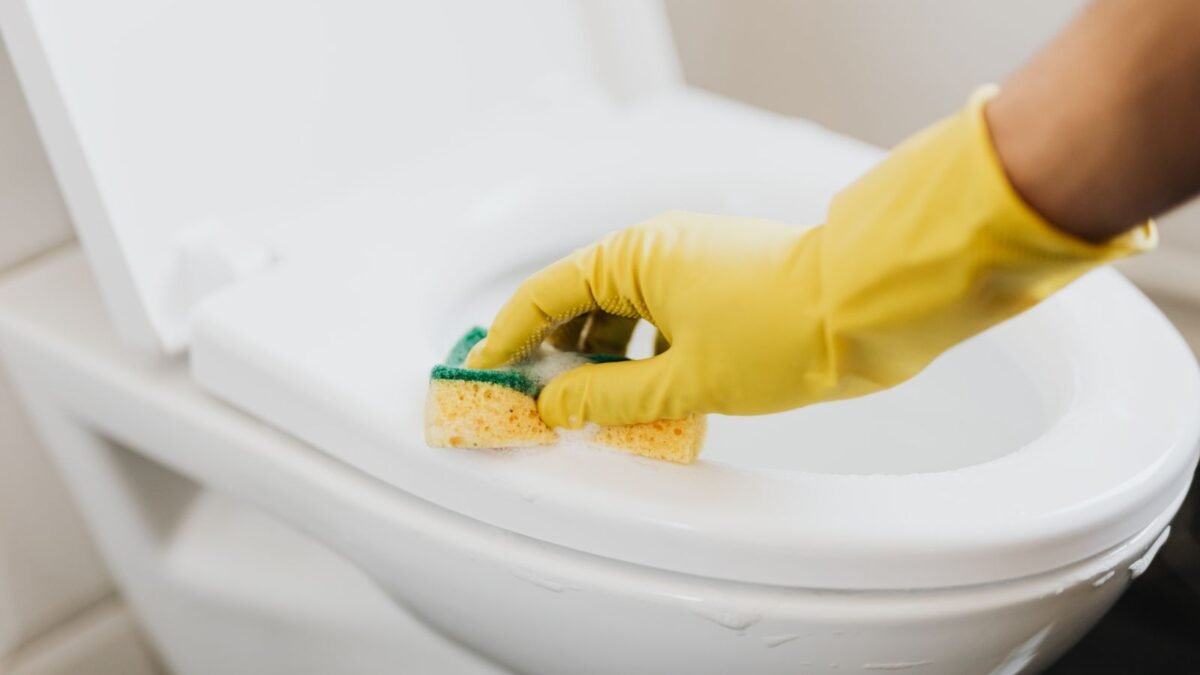
Quick Answer: Bleach cleaners don't dissolve hard water rings. You need an acid. Zep Acidic Toilet Bowl Cleaner is the strongest everyday option, a hydrochloric acid gel that clings under the rim. For a ring that's been there for years, lower the water level and finish with a Pumie pumice stone. If the ring is orange or brown, it's iron, and Super Iron Out will do more than any limescale cleaner.
Disclosure: As an Amazon Associate, Grains & Gallons earns from qualifying purchases.
The blue gel you've been squirting under the rim every Saturday is probably a bleach or "oxi" formula. Those are fine for germs and useless against the ring. That ring is rock: calcium carbonate left behind at the waterline, where the bowl water slowly evaporates and leaves another thin layer of minerals every day. Bleach can't dissolve rock. Acid can.
So the real question isn't which brand. It's what color is your ring, because that tells you which chemistry to use.
In this guide
- Read the ring first
- What we looked for
- The acid gels, strongest first
- Pumie Toilet Bowl Ring Remover: when nothing else moves it
- Super Iron Out: for orange and brown rings
- The drain-the-bowl method (works with any acid)
- Is cleaning enough, or is the water the problem?
- Quick answers to the questions people actually ask
Read the ring first
| Ring color and feel | What it usually is | Reach for |
|---|---|---|
| White to beige, crusty, rough | Calcium and magnesium scale | Zep Acidic, Lysol Lime & Rust, or Zep Home Pro Stain Eliminator |
| Orange, rust-red, brown streaks below rim jets | Iron | Super Iron Out |
| Gray or black, sometimes slimy | Manganese, mold or bacteria trapped in scale | Acid cleaner, then pumice; see our black-ring guide |
| Any color, rough, survived two acid treatments | Thick, layered scale | Pumie stone |
Most homes on hard water have a mix: a white crust that slowly turns tan or gray as dirt and minerals build up together. Our guide to the hard water ring in a toilet goes deeper on why it forms right at the waterline, and the black or gray toilet ring guide covers the dark variety specifically.
What we looked for
We picked cleaners by active ingredient first, since that decides whether a product can touch scale at all. Then we checked safety data sheets for strength and hazards, and looked at practical details like gel thickness, nozzle shape and septic compatibility. Pumice made the list because owner reports are almost unanimous: on a thick ring, mechanical removal is what finally works. We didn't test these hands-on. Everything below comes from labels, SDS documents and reading through owner feedback.
The acid gels, strongest first
Zep Acidic Toilet Bowl Cleaner
Zep's safety data sheet lists hydrochloric acid at 5% to under 10%. That makes it noticeably stronger than most supermarket toilet cleaners, and it's why cleaning crews keep it on the cart. Zep sells it as a 10% acid gel for toilets and urinals, thick enough to cling under the rim and down the sides instead of sliding straight into the water, with an angled neck for getting under the rim. The Amazon listing is a four-pack, which covers a whole house for a long time.
- Best for: a white or tan ring that weekly cleaners haven't touched, plus scaled-up rim holes.
- Know before you buy: it's corrosive. The SDS warns about severe skin burns and eye damage and says not to breathe the mist. Wear gloves and eye protection, run the fan, and keep it away from chrome flush handles and metal trim. Never mix it with bleach or any other cleaner, because acid plus bleach releases chlorine gas.
- Not for: homes with toddlers who get into cabinets, or anyone who wants to spray and leave a toilet unattended where kids or pets can reach it.
Lysol Lime & Rust Toilet Bowl Cleaner
This is the one to buy if you only want one bottle under the sink. Lysol markets it for limescale, rust and hard water stains, as a clinging gel that also disinfects, and labels it septic-safe. That combination makes it a good weekly cleaner on hard water. Regular use stops the ring from building up to the point where you need Zep or pumice.
- Best for: routine weekly cleaning when hard water is the main problem.
- The tradeoff: it isn't as aggressive as Zep on a ring that's already thick. Think of it as maintenance, not rescue.
Zep Home Pro Stain Eliminator Toilet Bowl Cleaner
Zep's Home Pro line is aimed at homeowners rather than cleaning crews. The Pro-Strength Stain Eliminator is sold specifically to dissolve limescale and rust stains in toilet bowls, in a thick formula that clings to the bowl for longer contact and an angled spout for getting under the rim. It comes as a single 24 oz bottle, so it's a sensible pick for a second bathroom or if you don't want a four-pack of the Acidic gel.
- Best for: a second or third bathroom, or regular upkeep between heavier treatments.
- The tradeoff: the listing doesn't give its acid strength, so don't assume it matches the Acidic gel on a thick ring. You'll get better results if you lower the water level first (method below). Treat it with the same precautions as any acid cleaner, and never mix it with bleach.
Pumie Toilet Bowl Ring Remover: when nothing else moves it
Some rings have been building for a decade. Acid softens the outer layer, the bowl refills, and the core never dissolves. A pumice stone grinds it off instead. Pumie's TBR-6 is a pumice block on a handle, so your hand doesn't go into the bowl, and the brand says it's safe for porcelain.
How to use it without damaging the bowl:
- Keep the stone and the surface wet the whole time. Dry pumice is what scratches.
- Use light pressure and short strokes. The stone wears away along with the ring, which is normal.
- Porcelain or vitreous china only. Don't use it on plastic seats, painted surfaces, colored acrylic, or anything with a glaze you're unsure about. Test a small spot under the rim first.
The three-pack makes sense because the stone gets used up on a heavy ring.
Super Iron Out: for orange and brown rings
Orange streaks running down from the rim holes aren't limescale. They're iron, and limescale cleaners often barely lighten them. Iron Out is made for rust stains. The brand lists toilet bowls and tanks, sinks, tubs, laundry, appliances and even water softeners among its uses. It's a powder, so you sprinkle it into the bowl or dissolve it in the tank water.
- Best for: well water homes with iron, or city homes with older iron pipes.
- The tradeoff: it does little to white calcium scale. If your ring is two-tone, use Iron Out first for the orange, then an acid gel for what's left.
Iron stains that keep coming back are a water problem, not a cleaning problem. If you're on a well, read whether a water softener can remove iron before you buy a lifetime supply of cleaner.
The drain-the-bowl method (works with any acid)
The acid has to touch the ring, and the ring sits exactly at the waterline, the one place the cleaner gets diluted fastest. So lower the water:
- Turn off the supply valve behind the toilet and flush. The bowl level drops.
- Push the remaining water down the drain with a toilet brush or plunger, or bail it out with a disposable cup, until the ring is exposed and dry.
- Apply the acid gel directly to the ring and under the rim.
- Let it sit for the time on the label. With Zep, keep the bathroom fan running and don't leave the room for long.
- Scrub, then use pumice on any spots that are left while the bowl is still empty.
- Turn the water back on and flush twice.
While the bowl is empty, check the small holes under the rim. If they're crusted shut, the bowl won't rinse properly and the ring will come back faster. Our guide to clogged toilet rim jets shows how to open them.
Is cleaning enough, or is the water the problem?
If you're scraping a ring every month, your water is probably well past moderate hardness. Check your number against our breakdown of what hardness level is too hard. A softener won't remove an existing ring, but it stops a new one from forming. After that, a toilet only needs ordinary cleaning.
Quick answers to the questions people actually ask
Can I leave an acid cleaner in the bowl overnight? Follow the label's contact time. Overnight soaks with strong acids mostly add fumes, not results. For heavy rings, two shorter rounds with the water lowered work better, with pumice for what's left.
Will acid damage my toilet? Glazed vitreous china handles toilet-bowl acids well, which is why the products exist. The parts to worry about are metal: chrome handles, the bolt caps, and brass fittings in the tank. Wipe off any splashes right away, and don't pour acid cleaners into the tank unless the label says to.
Are these septic-safe? Lysol labels its Lime & Rust cleaner as septic-safe. Normal-dose use of acid toilet cleaners gets heavily diluted in a septic tank. Bulk dumping of any cleaner is a different story. Use what the label calls for, not the whole bottle.
What about vinegar, baking soda or cola? Vinegar is a weak acid. With the water lowered and several hours of contact, it can soften a light ring. It won't touch a thick one. Baking soda is alkaline, so it doesn't dissolve scale. The fizz you see when you combine them is the two cancelling each other out. Cola contains some phosphoric acid, but at a much lower concentration than a real cleaner.
Do in-tank tablets prevent rings? Some help a little. Many are bleach-based and do nothing for scale. If you use one, choose a product that says it's safe for tank parts, and keep an eye on the flapper.