


Quick Answer: To set up a dishwasher after a water softener, cut your detergent roughly in half, set any built-in softener (common on Bosch, Miele and other European-designed models) to its lowest hardness level, and turn rinse aid down one step rather than off. Too much detergent in soft water causes the permanent cloudy etching people blame on the softener.
Running a dishwasher after a water softener goes in takes a few small changes. If the glasses now have a faint rainbow haze or there are suds on the door seal, nothing is broken: the machine is still set up for your old water. Detergent is formulated for average-to-hard water, and part of every scoop exists to tie up calcium and magnesium. Take those minerals away and that chemistry goes to work on the glass instead.
In this guide
- Is the kitchen hot line really softened?
- Cut the detergent dose before anything else
- Set the built-in softener to its lowest hardness
- Lower rinse aid one step, but don't switch it off
- Choose gentler cycles for good glassware
- Haze, film or suds? Read the dishes
- A two-week schedule for a dishwasher after a water softener
- Descale the machine once for a clean baseline
- FAQ
- Less detergent is the adjustment that matters most
Is the kitchen hot line really softened?
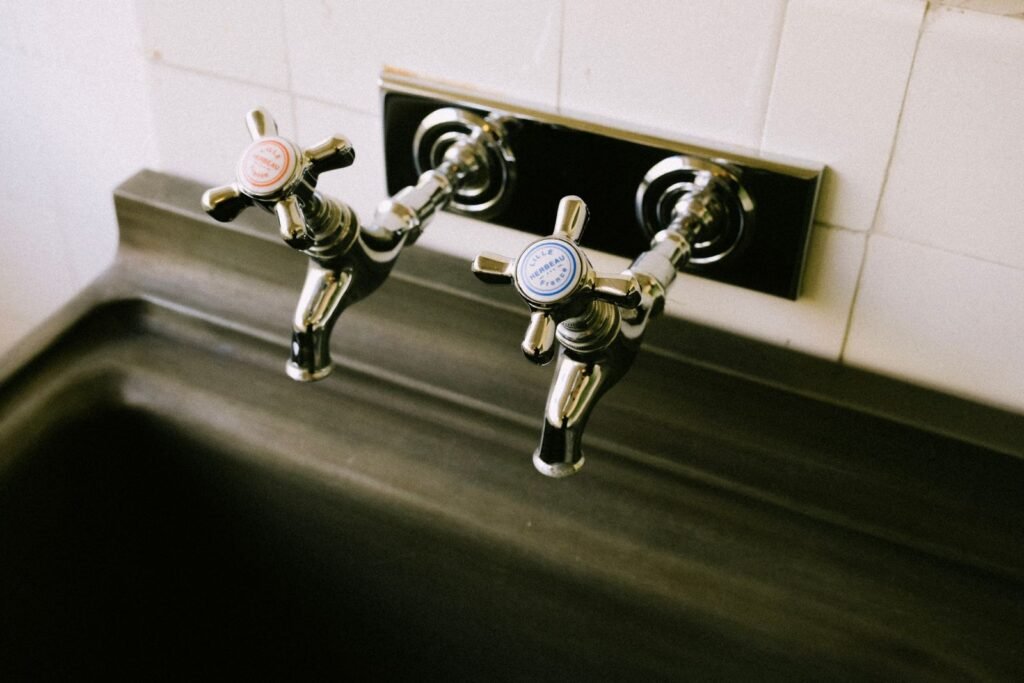
Check this before touching any settings. Most dishwashers draw from the hot line under the kitchen sink, which is softened if the water heater sits after the softener. But some installers leave the kitchen on a bypass for drinking water, and the dishwasher can end up on that unsoftened line.
Test the kitchen hot tap with a hardness strip. Near zero means everything below applies. If it still reads hard, leave your settings alone and check the plumbing. Our guide on how to test water hardness at home covers strips versus drop kits if you want an exact number.
Cut the detergent dose before anything else
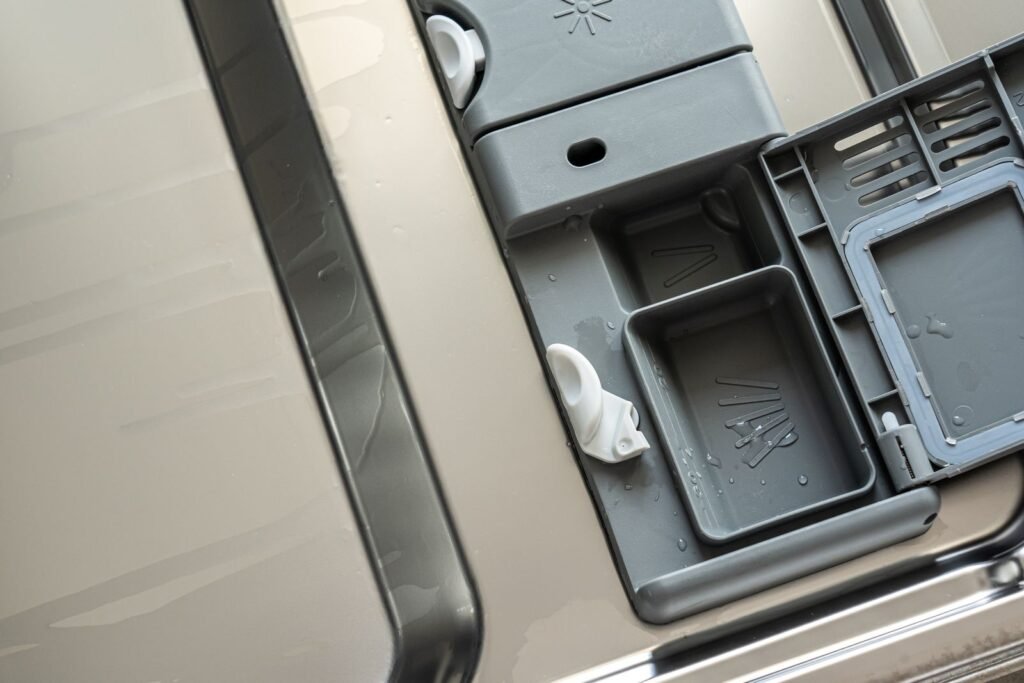
This is the change that prevents etching. Whirlpool's own etching and cloudy glassware troubleshooting page lists excessively soft water and too much detergent as causes, and suggests filling the dispenser halfway or using less.
- Powder or gel: Start at about half your old dose. Fill the main cup to roughly its halfway line and skip the prewash cup.
- Pods and tablets: A pod is a fixed dose you can't split. If you see haze or suds, switch to powder or gel so you can control the amount.
- Watch for two weeks. Clean dishes with no film? Try a little less. Food staying stuck on? Go back up a bit.
The goal is the smallest dose that gets things clean. There's more on the reasoning, plus laundry, in how much detergent to use with soft water.
Set the built-in softener to its lowest hardness

A salt reservoir in the bottom of the tub means your dishwasher has its own small ion-exchange softener. With a whole-house softener ahead of it, that unit has almost nothing left to do, so set its water hardness to the softest level. Bosch's quick reference guide, for example, shows a hardness table running from H00 (soft) to H07 (hard). The button sequence to change it differs by model and brand, so follow your own manual.
Whether you can stop adding salt depends on the model: some stop drawing it at the lowest setting, others still expect a little. Keeping some in the reservoir doesn't hurt. Use only salt sold for dishwashers, never softener pellets or table salt; here are our picks for dishwasher salt.
Lower rinse aid one step, but don't switch it off
Rinse aid makes water sheet off instead of beading, so dishes dry with fewer spots. Soft water already sheets better, so you usually need less. Sub-Zero's guidance for its Cove dishwashers is a good example: on units with a built-in softener it says to set rinse aid dosage to 1 and warns that too much rinse aid with soft water leaves residue in the tub.
Turn the setting down one step. Streaky or tacky glasses mean too much; spots or wet plastics mean too little. Don't turn it off: modern dishwashers dry with less heat and many rely on rinse aid to get dishes dry at all. Our roundup of rinse aids that work in hard and softened water covers the main options.
Choose gentler cycles for good glassware

Detergent strength is only half of what etches glass; heat and time are the other half. Whirlpool notes that long, hot cycles can speed up etching and suggests quick, low-temperature cycles for glassware you care about.
Skip "high temp," "sanitize" and "pots and pans" options for loads that are mostly glasses, use the normal or eco cycle for everyday loads, and try the air-dry or energy-saving dry setting for crystal and thin stemware. This matters most in the first weeks, while you're still finding the right dose.
Haze, film or suds? Read the dishes
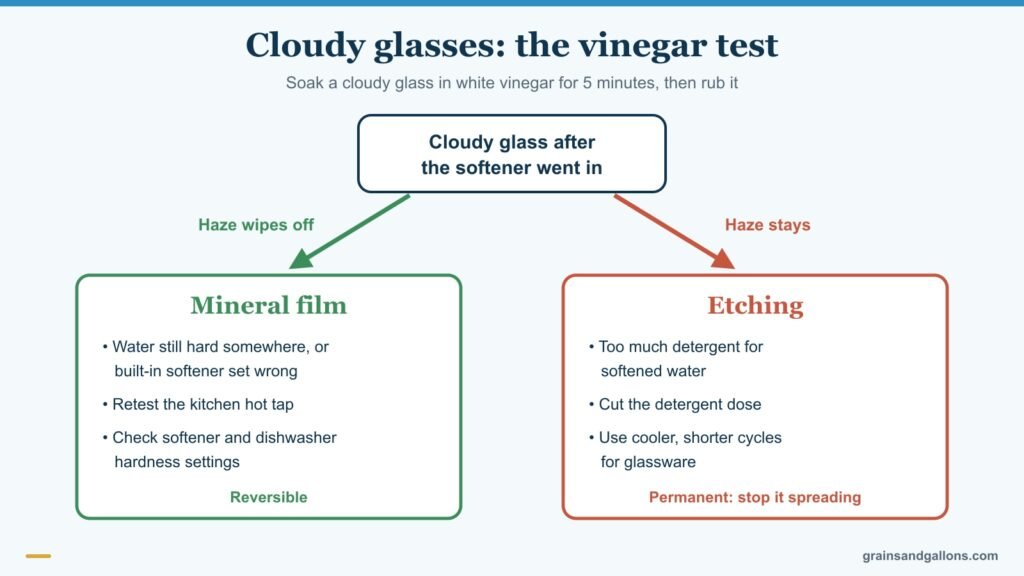
After a few cycles, use this table to decide what to change.
| What you see | Most likely reason | What to change |
|---|---|---|
| Rainbow or milky haze that won't come off | Etching from too much detergent in soft water | Cut detergent further, use gentler cycles for glassware |
| White film that comes off with vinegar | Mineral residue: water still hard somewhere, or built-in softener misconfigured | Retest the kitchen hot tap, check softener settings |
| Suds on the door seal or puddled in the tub | Too much detergent | Cut the dose |
| Streaks or a tacky feel | Too much rinse aid | Lower the rinse aid setting |
| Spots and wet plastics | Too little rinse aid | Raise it one step |
| Food residue left behind | Dose now too low, or a dirty filter | Raise detergent slightly, clean the filter |
To tell etching from mineral film, soak a cloudy glass in white vinegar for five minutes and rub it. If it clears, it was mineral film; see white film on dishes. If it stays cloudy, the glass is etched. That can't be reversed, but lowering detergent stops it getting worse. There's a fuller version of this test in cloudy glasses: etching or hard water?
A two-week schedule for a dishwasher after a water softener

- Day 1: Test the kitchen hot water, set the built-in softener to its softest setting, cut detergent to half and lower rinse aid one step.
- Days 2 to 7: Run normal loads and change nothing; leftover hard-water film takes a few cycles to clear.
- Day 7: Check glasses under a bright light and adjust detergent or rinse aid using the table above, one change at a time.
- Day 14: Settle on your dose and write it on tape inside the cabinet door so everyone uses the same amount.
Change one thing at a time, or you won't know which change caused a new problem.
Descale the machine once for a clean baseline
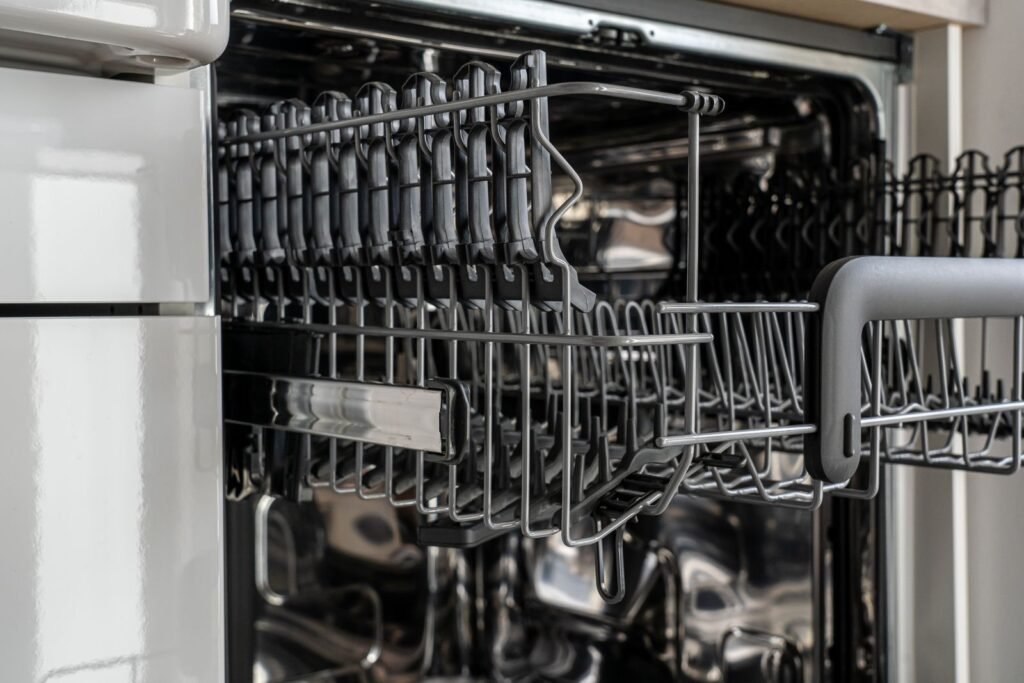
Years on hard water leave scale on the heating element, spray arms and filter, and soft water won't dissolve it quickly. One descaling cycle with a dishwasher cleaner, or citric acid on an empty hot cycle if your manual allows it, lets you judge the new settings on a clean machine. If the element is heavily crusted, see what hard water does to a dishwasher heating element.
FAQ
Should I set my dishwasher water hardness to zero with a water softener?
Yes, if your dishwasher has a built-in softener and the kitchen hot line tests near zero. Set it to the lowest level the menu allows (on Bosch that's H00). The internal softener then has almost nothing to do and uses little or no salt.
Do I still need dishwasher salt if I have a water softener?
Often not, but it depends on the model. Some machines stop drawing salt at the lowest hardness setting; others still expect a small amount. Your manual will say. Leaving some dishwasher salt in the reservoir does no harm.
Why are my glasses cloudy after installing a water softener?
Usually because you're still using a hard-water detergent dose. The extra detergent attacks the glass and causes etching. Soak a glass in vinegar: if the haze stays, it's etching, so cut detergent and use cooler cycles.
Can I keep using dishwasher pods with soft water?
You can, but a pod's fixed dose is often too much for softened water, especially on light loads. If you see haze or suds, switch to powder or gel.
Less detergent is the adjustment that matters most
Of the three settings that change on a dishwasher after a water softener, the detergent dose does the most good or harm. Get it down to the smallest amount that cleans, set the built-in softener to its lowest level, trim rinse aid a step, and give it two weeks. Do that early and your glassware stays clear.